
Why the 'best' fluoride removal method depends on your influent
The right fluoride removal process is the one that matches your influent chemistry, co-ion matrix, pH window, discharge limit and sludge-disposal route — not a single ranked winner. The 2024 SCIREA review of industrial wastewater treatment compares four process families explicitly because each fits a different chemistry and cost profile, with the World Health Organization drinking-water guideline of 1.5 mg/L fluoride as the universal compliance target (Firouzi et al., SCIREA Journal of Environment Vol. 8, Issue 3, June 2024). The five process families covered in this comparison are precipitation/coagulation (including Fe(VI) ferrate), adsorption, ion exchange, membrane separation (RO, nanofiltration, electrodialysis reversal), and electrochemical methods; hybrids — typically precipitation followed by adsorption or RO — are the norm in industrial procurement, not the exception.
Precipitation and coagulation: the low-cost workhorse
The 2024 SCIREA review states that coagulation is easier to implement and lower in cost than adsorption, ion exchange and membrane filtration, and within the coagulation family it explicitly recommends Fe(VI) (potassium ferrate) over conventional Fe(III) and aluminium salts for the steel industry because of lower environmental hazard, better efficiency and a more suitable price (Firouzi et al., SCIREA Journal of Environment Vol. 8, Issue 3, June 2024). For semiconductor HF wastewater, the same review cites Chang & Liu (J. Environ. Eng. 133(4), 2007), which documents precipitation as the bulk step but produces a metal-fluoride sludge that still has to be dewatered and disposed of. Where the supplied research is silent — for aluminium smelter, glass etching and phosphate-fertiliser matrices — the right move is to ask the vendor for jar-test data on the actual plant influent rather than accept a generic removal figure, and to size the PLC-controlled coagulant and pH-adjusters dosing skid and the downstream lamella clarifier for fluoride sludge separation to the measured dose-response curve, not a textbook default.
Adsorption: where 2026 research is moving fast
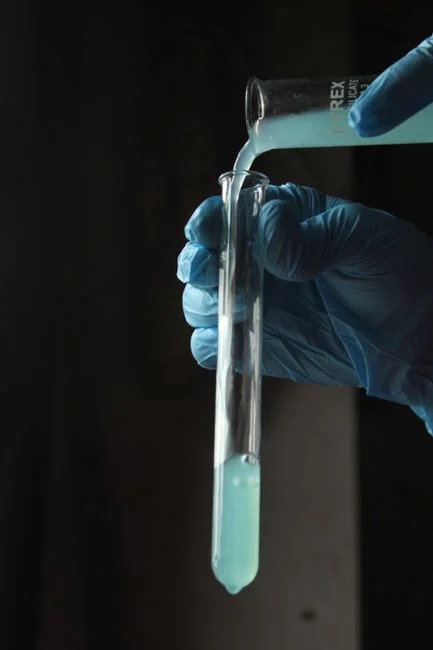
Two 2026 peer-reviewed studies define the current frontier of cerium-based fluoride adsorption. Xu C et al. (ACS Omega 11(38):57394-57407, 17 Sep 2026) report a cerium-modified red mud (Ce-RM) that removed more than 97% of fluoride at an initial F⁻ of 20 mg/L, pH 3 and 0.4 g/L dosage, with an equilibrium adsorption capacity of about 56 mg/g; kinetics followed pseudo-second-order behaviour and the Freundlich isotherm fitted better than Langmuir, indicating heterogeneous multilayer uptake with partial monolayer adsorption. Lin X et al. (Nanomaterials 16(16):1015, 17 Aug 2026) report a hierarchical Ce-Al-La-MOFs@PPy composite with a maximum Langmuir adsorption capacity of 216.92 mg/g at 45 °C, optimum pH 5, metal-to-ligand molar ratio 3:1, the same pseudo-second-order kinetic signature and a chemisorption mechanism driven by electrostatic attraction and Ce/La coordination exchange. FTIR and XPS evidence in both 2026 papers points to ligand exchange and metal-fluoride complexation, which is why cerium- and lanthanum-bearing media keep outperforming legacy activated alumina. Both studies are batch-scale on synthetic or single-source real wastewater, so media column lifetime, regenerant consumption and replacement frequency are data the buyer must request before procurement — none of these are quantified in the supplied research.
Ion exchange and membrane separation: high-purity polishing routes
The 2024 SCIREA review cites ion exchange (Chubar et al., J. Colloid Interface Sci. 291(1), 2005) and reverse osmosis (Ghasemipanah, Desalination & Water Treatment 51(25-27), 2013) as documented options, but treats both as higher-cost than coagulation. Electrodialysis reversal is documented for fluoride removal from brackish groundwater (Patrocinio et al., J. Environ. Chem. Eng. 7(6), 2019; Aliaskari & Schäfer, Water Research 190, 2021, both cited in SCIREA 2024); it produces a brine concentrate that has to be managed. The engineering trade-off is straightforward: ion exchange and RO/NF deliver the lowest residual fluoride and the clearest path to water reuse, but they generate spent brine or concentrate that simply shifts the disposal problem downstream — so the cost of the polishing step has to be evaluated against the cost of the concentrate disposal route, not against the polishing step alone. For a reuse-grade polishing train, an industrial RO system for fluoride polishing to reuse quality typically sits downstream of a coagulation or adsorption bulk step, with the concentrate routed to evaporation, crystallisation or a brine-management line.
Electrochemical and hybrid systems: where the 2026 frontier sits
The 2024 SCIREA review references electrochemical water purification as an emerging route (Alkhadra et al., Chem Rev 122(16), 2022), but the supplied research does not report a site-validated electrochemical fluoride removal figure, so this section stays qualitative. The practical procurement reality is that hybrid configurations dominate: coagulation or precipitation as the low-cost bulk step to knock fluoride down from the influent range, then adsorption or RO as the polishing step to reach the WHO 1.5 mg/L drinking-water guideline. The procurement question is therefore rarely "coagulation OR adsorption" but "which combination reaches 1.5 mg/L at the lowest five-year cost of ownership", and that cost is driven by chemical dose, sludge volume, media replacement and concentrate disposal — none of which the supplied research quantifies for any specific site. For a hybrid train that needs a particulate and colloidal barrier ahead of RO or an adsorption column, an industrial UF system for pretreatment ahead of fluoride polishing is the typical unit operation specified.
Fluoride removal methods at a glance: parameter comparison
The table below summarises mechanism, indicative influent range, target effluent versus the WHO 1.5 mg/L guideline, sludge or by-product profile, and the source supporting each row. Cells where the supplied research is silent are marked "Vendor jar-test required" rather than filled with an assumed value.
| Process family | Mechanism | Indicative influent F⁻ | Target effluent vs WHO 1.5 mg/L | Sludge / by-product | Key data source |
|---|---|---|---|---|---|
| Coagulation / precipitation (incl. Fe(VI) ferrate) | Co-precipitation of metal-fluoride solids; Fe(VI) also oxidises co-contaminants | Vendor jar-test required (no general number supplied) | Can reach near 1.5 mg/L with polishing; single-stage rarely sufficient for strict reuse | Metal-fluoride sludge requiring dewatering and disposal | Firouzi et al., SCIREA J. Environment Vol. 8 Issue 3, June 2024 |
| Adsorption (Ce-RM, Ce-Al-La-MOFs@PPy) | Ligand exchange, Ce/La-F complexation, electrostatic attraction | 20 mg/L demonstrated (Ce-RM); Langmuir capacity 216.92 mg/g at 45 °C, pH 5 (Ce-Al-La-MOFs@PPy) | >97% removal reported at 20 mg/L influent (Ce-RM); polishing to <1.5 mg/L feasible with adequate dose | Spent adsorbent; column lifetime not quantified in supplied research | Xu C et al., ACS Omega 11(38):57394-57407, 17 Sep 2026; Lin X et al., Nanomaterials 16(16):1015, 17 Aug 2026 |
| Ion exchange | Selective anion exchange on resin | Documented for low-to-moderate F⁻ (Chubar et al., 2005) | Can reach <1.5 mg/L with adequate resin loading | Spent regenerant brine | Chubar et al., J. Colloid Interface Sci. 291(1), 2005, cited in SCIREA 2024 |
| Membrane (RO, NF, electrodialysis reversal) | Size/charge exclusion (RO/NF); ion migration (EDR) | Documented for brackish groundwater (Patrocinio 2019; Aliaskari & Schäfer 2021) | Lowest residual fluoride; clearest reuse path | Brine concentrate requiring disposal or further treatment | Ghasemipanah, Desalination & Water Treatment 51(25-27), 2013, cited in SCIREA 2024 |
| Electrochemical | Electrode-driven fluoride migration or co-precipitation | Vendor pilot required (no site-validated number supplied) | Emerging; performance matrix not supplied | Electrode sludge / spent electrolyte | Alkhadra et al., Chem Rev 122(16), 2022, cited in SCIREA 2024 |
Choosing the right process for your industry matrix
Industry matrix drives the choice because the co-ions and pH around the fluoride define which mechanism still works. For steel pickling and steel-mill wastewater the 2024 SCIREA review recommends Fe(VI) coagulation as the primary step on cost and environmental grounds (Firouzi et al., June 2024). For semiconductor HF wastewater, precipitation is the documented bulk step (Chang & Liu, 2007, cited in SCIREA 2024), typically followed by adsorption or ion-exchange polishing to reach reuse quality — a configuration detailed in the semiconductor HF wastewater hybrid system design guide. For aluminium smelter, glass etching and phosphate fertiliser streams, high co-ion strength and variable pH favour adsorption or ion exchange polishing after a precipitation bulk step — but the supplied research does not quote a single site-validated removal percentage for these matrices, so request site-specific pilot data. For drinking-water polishing or strict reuse targets at 1.5 mg/L, RO, NF or electrodialysis reversal are the documented polishing routes, with concentrate management as the dominant constraint.
| Industry matrix | Recommended primary step | Recommended polishing step | Key constraint |
|---|---|---|---|
| Steel pickling / steel-mill wastewater | Fe(VI) coagulation (SCIREA 2024) | Adsorption or sedimentation clarification as required | Sludge disposal cost |
| Semiconductor HF wastewater | Precipitation (Chang & Liu 2007, cited in SCIREA 2024) | Adsorption or ion exchange to reuse quality | High-purity effluent demand |
| Aluminium smelter / glass etching / phosphate fertiliser | Precipitation (vendor jar-test required) | Adsorption or ion exchange | High co-ion strength; site pilot needed |
| Drinking-water / reuse polishing at 1.5 mg/L | Pre-coagulation as needed | RO, NF or electrodialysis reversal (SCIREA 2024) | Brine / concentrate management |
For the bulk-removal step across most matrices, a DAF unit for fluoride-laden sludge thickening ahead of dewatering is the typical solids-separation stage.
What to ask a fluoride removal equipment supplier in 2026
Turn the comparison above into a structured vendor evaluation by anchoring every question to a specific data point from the supplied research. First, request jar-test or pilot data on the actual plant influent — not a generic removal curve — because the 2026 adsorbent results were measured at specific pH, dosage and initial F⁻ values: pH 3 and 0.4 g/L for Ce-RM (Xu C et al., ACS Omega 11(38):57394-57407, 17 Sep 2026) and pH 5 at 45 °C for Ce-Al-La-MOFs@PPy (Lin X et al., Nanomaterials 16(16):1015, 17 Aug 2026). Second, ask for media lifetime, regenerant or replacement cost, and sludge volume per kg F⁻ removed — these are the OPEX lines the 2024 SCIREA review does not quantify. Third, confirm in writing that the proposed train reaches the WHO 1.5 mg/L drinking-water guideline under peak influent, not just average, and verify the concentrate or brine disposal route for any RO, NF or ion-exchange step. For a peer reference on how this checklist maps onto another heavy-metal decision, see the sibling heavy-metal removal comparison guide, and for a full plant-level procurement framework including concentrate management, see the zero-liquid-discharge plant buyer's guide.
Frequently Asked Questions
What is the cheapest fluoride removal method for industrial wastewater?
The 2024 SCIREA review states that coagulation is the lowest-cost and easiest-to-implement option among precipitation, adsorption, ion exchange and membrane filtration, and within coagulation it specifically recommends Fe(VI) potassium ferrate for the steel industry on price, efficiency and environmental grounds (Firouzi et al., SCIREA Journal of Environment Vol. 8, Issue 3, June 2024). The supplied research does not publish vendor CAPEX or OPEX numbers, so for any other matrix the buyer must request site-specific quotes tied to a measured dose-response curve, not a catalogue figure.
Which fluoride adsorbent has the highest reported capacity in 2026 peer-reviewed work?
Lin X et al. (Nanomaterials 16(16):1015, 17 Aug 2026) report a maximum Langmuir capacity of 216.92 mg/g at 45 °C and pH 5 for Ce-Al-La-MOFs@PPy, which is higher than the approximately 56 mg/g equilibrium capacity reported for cerium-modified red mud at pH 3 and 0.4 g/L dosage by Xu C et al. (ACS Omega 11(38):57394-57407, 17 Sep 2026); both are batch-scale results, so the buyer must ask for column-scale lifetime and replacement data before specifying either.
How do I size a fluoride removal system for a semiconductor HF wastewater stream?
Precipitation is the documented bulk step for semiconductor HF wastewater (Chang & Liu, J. Environ. Eng. 133(4), 2007, cited in SCIREA 2024), and it is normally followed by adsorption or ion-exchange polishing to reach the WHO 1.5 mg/L guideline. The supplied research does not publish a single site-validated removal percentage for this matrix, so the buyer must request a site-specific pilot and treat any vendor single-pass removal claim as unverified until it is.
What compliance and supply-chain risks should I check before selecting a supplier?
Confirm in writing that the proposed train meets the WHO 1.5 mg/L drinking-water guideline under peak influent, and verify the concentrate or brine disposal route for any RO, NF, electrodialysis reversal or ion-exchange step, because spent-brine management is the dominant downstream constraint in the 2024 SCIREA review. Also ask for media origin, batch-to-batch consistency and lead time for replacement adsorbent or resin, since the 2026 cerium-based adsorbents are recent academic materials and full-scale supply chains are not documented in the supplied research.