What a Decanter Does in Sewage Sludge Handling
A decanter centrifuge is a continuously operating solid–liquid separation device used in sewage sludge handling to thicken or dewater sludge. Sludge is fed into a rotating horizontal bowl; an internal scroll rotates at a slightly different speed, conveying denser solids along the bowl wall toward a conical discharge end while clarified liquid (centrate) overflows the opposite end. The high gravitational force (G-force) generated by bowl rotation compacts solids, producing a thickened or dewatered cake and a clarified centrate stream. In a wastewater treatment plant, the decanter typically sits after primary clarification or after aerobic/anaerobic digestion, ahead of further mechanical dewatering such as a filter press, and ahead of biosolids reuse, incineration, or stabilization. Because sludge management represents approximately 50% of total WWTP running costs (Applied Sciences, 2019), the decanter's performance directly drives OPEX.
Inside a sewage sludge handling train, the decanter is one of three structural choices the literature identifies for sludge minimization: reduce solids production in the water line, reduce water content through thickening and dewatering, or reduce volatile solids through stabilization (Applied Sciences, 2019). The decanter sits in the second category and handles it continuously rather than in batches. In thickening duty it lifts a dilute feed toward a workable underflow for digestion; in dewatering duty it pushes a digested or secondary sludge toward a cake dry enough for transport or combustion.
The two duties are not interchangeable. A thickening decanter runs on a 0.5–2% dry solids (DS) feed and targets a 5–8% DS underflow, while a dewatering decanter typically takes a 2–4% DS feed and aims at a higher cake solids target. The same machine can be configured for either, but the polymer dose, G-force and bowl-speed profile are re-tuned, which is why most plants either specify the duty at quotation or accept a compromise on one or both ends. Sludge management is roughly half of total WWTP running cost, so any percentage point recovered at the dewatering step flows through to OPEX.
How a Decanter Centrifuge Works: The Physics and the Hardware
A decanter centrifuge separates sludge by exploiting the density difference between solids and water under an amplified gravitational field. The sludge enters the rotating bowl through a feed tube and is accelerated to bowl speed, usually through an internal accelerator or by the scroll itself. Solids settle against the bowl wall; the clarified liquid phase forms an inner annular pool, the "pond," and exits over adjustable weir plates at the opposite end of the bowl.
The scroll rotates inside the bowl at a slightly different speed, known as the differential speed. This speed difference is the mechanism that moves settled solids along the bowl toward the conical beach, where further dewatering occurs before the cake is ejected through ports at the small end of the cone. Differential speed is the primary control on solids throughput: too high, and residence time on the beach collapses, dragging wet cake out of the unit; too low, and the scroll torques out or solids back up the pool.
Sedimentation velocity scales with the G-force generated by bowl rotation, so raising bowl speed sharpens solids capture and improves centrate clarity. The trade-off is mechanical: higher G means higher power draw, higher wear on the scroll and bowl, and a narrower operating window for the differential. Cake dryness is driven primarily by beach length and residence time rather than by G-force, which is why dewatering units tend to have a longer conical section than thickening units. Pond depth, set by the weir radius, controls clarification efficiency; a deeper pond gives the centrate more residence time at the cost of higher centrate solids loading near the cake discharge end.
Full enclosure of the bowl and casing gives the decanter an operational advantage when the feed is odorous, anaerobic, or warm — typical of digested sludge or primary sludge from a package sewage treatment plant. Vapors stay contained, which is a reason digesters are routinely paired with enclosed scroll-type centrifuges downstream.
Key Design and Operating Parameters

The parameter set an engineer tunes on a decanter is consistent across manufacturers, even when the numeric ranges are not published in the open literature. The list below identifies the trends to carry into a vendor meeting.
| Parameter | Effect of increasing it | Trade-off |
|---|---|---|
| Feed flow | Higher solids throughput | Reduced residence time, wetter cake, higher centrate TSS |
| Feed solids concentration | Higher hydraulic load on the scroll | Higher achievable cake DS, but torque-limited |
| Bowl speed (G-force) | Better centrate clarity, sharper separation | Higher power draw, higher wear, narrower differential window |
| Differential speed | Higher solids transport rate | Shorter beach residence, lower cake dryness |
| Scroll torque | Allows thicker feed or higher differential | Torque limit sets the operational ceiling; high-torque trips stop the unit |
| Pool depth (weir setting) | More clarification residence time | Higher pond loading near cake end; can re-entrain fines |
| Polymer type and dose | Better flocculation, sharper capture | Cost, residual polymer in cake, downstream impact on reuse |
| Hydraulic capacity | Larger unit, higher capital | Must match worst-case chemically loaded sludge flow |
| Cake dryness target | Drives beach length and polymer dose | Higher downstream transport and energy-recovery value, but more polymer and torque |
| Centrate quality (TSS) | Favors high G, shallow pond, robust flocculation | Centrate returns to the head of the plant; high TSS raises BOD load on the water line |
The engineer should treat the table as a qualitative map and ask the vendor for guaranteed values tied to the actual feed characterization. Upstream conditions matter: P-removal with metal salts has been observed to raise sludge volume by ~60% at primary plants and ~35% at secondary plants when targeting 1.0 mg P/L (Schmidtke, 1981), and a rule-of-thumb from the same source puts sludge volume from a conventional activated sludge plant with P-removal to 1 mg P/L at roughly 0.5% of the influent hydraulic load. The decanter feed rate must be sized against the chemically augmented case, not the un-augmented average.
Where the Decanter Fits in the Sludge Train
Placement is the primary factor in decanter specification, as the unit's function changes based on whether it sits before or after the digester. In a typical municipal train the flow is: primary clarifier underflow → pre-thickening decanter (or gravity/DCF thickener) → anaerobic digester → post-digestion decanter (or a final mechanical dewatering step) → biosolids storage, transport, or thermal treatment. In a plant that skips digestion, the decanter often goes directly after the biological stage as a combined thickening-dewatering step, which simplifies the train but pushes the full dewatering duty onto one unit.
For plants targeting energy recovery, the decanter protects the digester. Fine solids washout from a poorly tuned decanter shortens digester retention, drops gas yield, and pulls more volatile solids into the centrate recycle. A post-digestion decanter, by contrast, accepts already-stabilized solids and is judged mainly on cake dryness and centrate quality. The energy case is real: downstream gasification of digested sludge requires 0.14–0.55 kWh/kg water, versus 0.12–0.5 kWh/kg water for activated sludge (Applied Sciences, 2019), so upstream dewatering performance directly changes downstream energy bills. In the US, biosolids output is reported at a calorific value of ~12 MJ/kg, comparable to low-grade coal (International Plasma Technology Center), which only delivers that value if upstream dewatering has removed enough water to keep the combustion self-sustaining.
For municipal plants, sizing and placement decisions often begin from a reference layout such as a package sewage treatment plant skid; the sludge train inside a packaged unit is usually constrained, so the decanter duty must be matched to a defined feed rather than tuned on site.
Decanter vs. Other Thickening and Dewatering Options
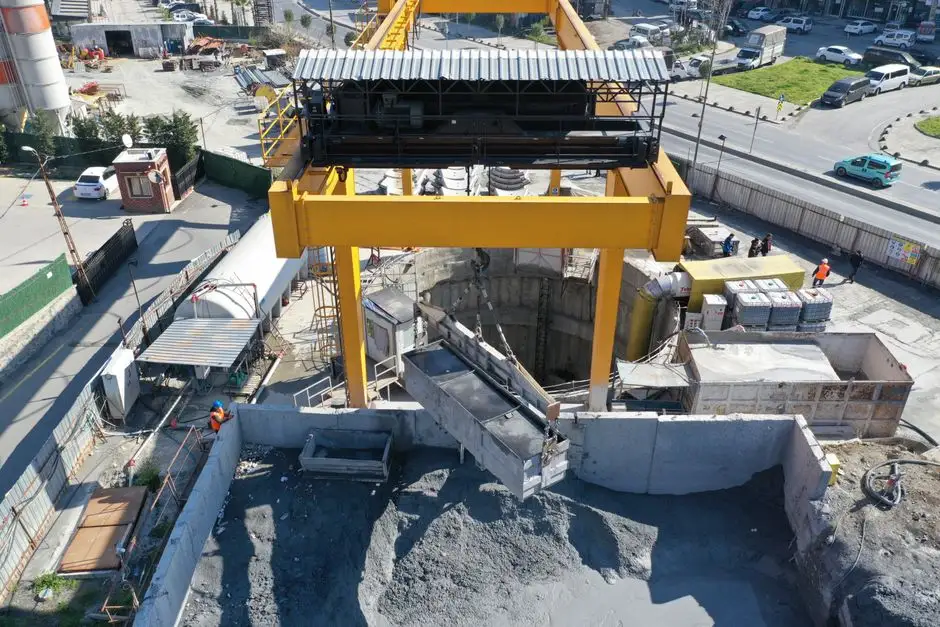
The comparison is typically between a decanter at thickening duty versus a gravity thickener or DAF, and a decanter at dewatering duty versus a plate-and-frame filter press or a belt press. Gravity thickeners win on OPEX and simplicity; they lose on footprint, odor containment, and sensitivity to upstream variability. Dissolved air flotation captures FOG-laden streams effectively, but the chemical and air-saturation systems drive capital and operating cost up, which is a consideration when a dissolved air flotation unit is being weighed against a single decanter.
On the dewatering side, a plate and frame filter press typically delivers higher cake dryness than a decanter, but it is batch, labor-intensive, and exposed. A decanter trades the last few cake-solids points for continuous, enclosed, low-operator-input operation. For plants with odor, hydraulic, or plot constraints — and for plants handling digested or otherwise odorous sludge — the closed-vessel operation and small footprint are usually decisive.
The decision should be OPEX-driven, not first-cost driven. With sludge management at approximately 50% of total WWTP running costs (Applied Sciences, 2019), the difference between 22% and 28% cake solids is a transport-and-disposal number that compounds every truckload for the life of the plant, which is the same logic applied when a plant compares municipal WWTP cost and specification models across different unit processes.
Sizing, Selection and Operating Checklist
The inputs the buyer should gather before talking to any vendor are: influent hydraulic load, expected DS concentration at each sludge stream, target underflow DS or cake DS, centrate TSS limit, available footprint, odor-control constraints, and polymer preference. Missing any of these at the quotation stage typically forces a conservative vendor assumption that costs throughput or cake dryness later.
Size the unit against the worst-case chemically loaded sludge flow, not the average. P-removal with metal salts at 1.0 mg P/L has been observed to add ~60% sludge at primary plants and ~35% at secondary plants (Schmidtke, 1981), and a conventional activated sludge plant with P-removal to 1 mg P/L approaches 0.5% of the influent hydraulic load as sludge volume (Schmidtke, 1981). Confirm the downstream outlet before signing: agricultural reuse (about 59% of EU biosolids by 2010, Applied Sciences, 2019), landfill, incineration, or sludge-to-cement end-use options each set a different cake-dryness and stabilization target. Finally, confirm the polymer dosing skid and flocculation tube sizing with the centrifuge vendor; this is the single most under-specified item at quotation, and an automatic polymer dosing skid sized independently of the centrifuge is a common source of poor capture and high residual polymer in the cake.
Frequently Asked Questions
What is the typical cost of a decanter centrifuge for a municipal WWTP?
Vendors provide pricing based on hydraulic capacity (m³/h), target cake dryness, and the feed solids concentration at each sludge stream. Asking for a single all-in number without those three inputs will produce a non-comparable quotation across vendors.
How do I choose between a decanter centrifuge and a filter press for the dewatering step?
Match the choice to the operating constraint rather than first cost. A decanter is the right pick when continuous operation, enclosed vapor handling, and low operator input are priorities. A plate-and-frame filter press is the right pick when the highest possible cake dryness justifies batch operation and a higher labor input. Confirm polymer, footprint, and downstream outlet targets with both vendors before deciding.
Where does the decanter go in a plant with anaerobic digestion?
Typically one decanter pre-thickens primary and secondary sludge before the digester to protect digester hydraulic retention, and a second decanter dewaters the digested sludge before biosolids storage, transport, or thermal treatment. The pre-thickening decanter is judged on underflow consistency; the post-digestion decanter is judged on cake dryness and centrate quality.
What biosolids end-use should the decanter be designed for?
Tie the cake-dryness target to the confirmed end-use, as each outlet has a different