Why Chromium Removal Is a Speciation Problem, Not a Concentration Problem
There is no single best chromium removal method — the right choice depends on whether the chromium is trivalent Cr(III) or hexavalent Cr(VI), the target discharge limit, influent concentration and the plant's tolerance for sludge. In chrome tanning, only 60–70% of the chromium salts fix onto the hide, so roughly 30–40% of the initial chromium ends up in solid and liquid waste streams (S2, Applied Water Science 2020). That mass balance is why tannery, metal-finishing and electroplating plants keep paying for chromium trains long after concentration has been reduced.
The chemistry drives the train selection. Cr(III) hydroxide begins to precipitate at approximately pH 6.5, given a solubility product Kps = 6.7×10⁻³¹ (Applied Sciences, 2020, S5), which means alkaline precipitation is fundamentally a Cr(III) strategy, not a Cr(VI) one. Hexavalent chromium is the species regulated as carcinogenic, and it stays in solution across the same alkaline window where Cr(III) drops out — which is exactly why most industrial trains begin with a reduction step (typically FeSO₄ at low pH) before any hydroxide precipitation is attempted. A plant that skips speciation and only watches the total-Cr meter buys the wrong equipment.
In 2026 the procurement question is no longer "which method gives the highest removal % in a paper?" It is "which combination of methods fits my Cr(III)/Cr(VI) split, my discharge limit and my sludge-disposal route?" The three filters that select a train are influent speciation, regulatory target, and the plant's appetite for sludge or its budget for a closed-loop Cr recovery loop.
Six Method Families at a Glance
The peer-reviewed literature on chromium removal groups the viable options into six families: chemical precipitation, coagulation/flotation, adsorption (including biosorption), ion exchange, membrane separation (UF, RO, electrodialysis, membrane bioreactor), and electrochemical methods (S2, Applied Water Science 2020). They are not interchangeable because each one operates on a different mechanism and produces a different side-stream.
Precipitation and coagulation work by raising pH so that Cr(III) hydroxide drops out of solution as a settleable solid. Adsorption and biosorption move Cr ions onto a solid surface (activated carbon, chitosan, bacterial or fungal biomass) where they can sometimes be eluted for recovery. Ion exchange swaps Cr ions onto a resin that is later regenerated, producing a small concentrated eluate. Membrane separation rejects Cr ions physically — RO for reuse, electrodialysis for selective Cr(VI) transport. Electrochemical methods use an applied current to reduce Cr(VI) to Cr(III) directly in the cell, often with sludge-minimising cathode materials.
The next three sections walk through each family with the reported removal numbers from the literature, and the matrix that follows puts them on the same axes so they can be compared in a single view.
Chemical Precipitation and Coagulation: The Industrial Baseline
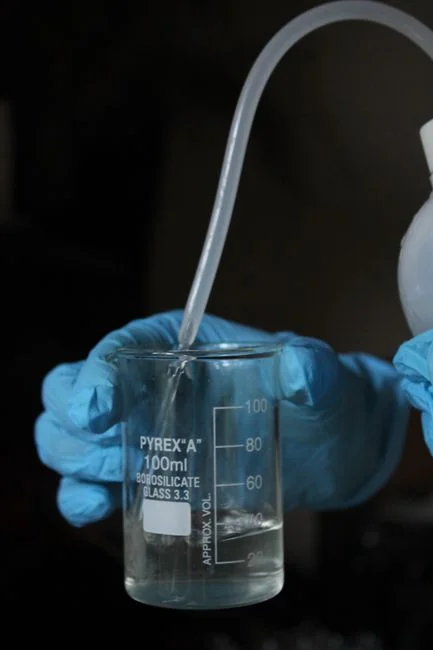
Alkaline precipitation is still the workhorse of industrial chromium trains because it is well understood, scales predictably, and the chemistry is forgiving. Ramakrishnaiah and Prathima (2012, via S2) reported 99.7% Cr removal from synthetic wastewater using NaOH and Ca(OH)₂ at 100 mg/L combined dose and pH 7, with sludge production described as minimal. Akbal and Camci (2010, via S2) reached 99.9% Cr removal with NaOH, Ca(OH)₂ or MgO in a chemical coagulation study. Ferric chloride combined with polymer coagulants gave 84–97% total Cr removal at different blend ratios (Amuda et al., via S2), and Haydar and Aziz (2009, via S2) showed that cationic polymers alone can replace metal salts to deliver 96–97% Cr removal on real tannery effluent.
The economic case for precipitation strengthens once a recovery loop is added. Minas et al. (via S2) dissolved the precipitated Cr(OH)₃ sludge in concentrated H₂SO₄ at roughly pH 2.8 and recovered about 30% of the chromium, which was then blended with 70% fresh basic chromium sulphate and re-used in the tanning bath. That is a real closed-loop number, not a theoretical one, and it changes the OPEX calculation for any plant that can absorb H₂SO₄ handling.
The deal-breaker of precipitation is that it is poorly selective for Cr(VI) and it produces a sludge volume that has to be dewatered and landfilled (or, increasingly, sent for hazardous-waste stabilisation). A PLC-controlled chemical dosing system for precipitation trains keeps pH and reagent stoichiometry inside the tight window that the 99.7% figure requires. Almost every plant pairing precipitation with a separate Cr(VI) reduction step upstream, and the literature treats this as the default rather than an option.
Adsorption and Biosorption: High Capacity, Sludge-Light Polishing
Adsorption and biosorption are best framed as polishing or recovery steps, not as bulk Cr(VI) reducers. Esmaeili et al. (via S2) demonstrated 98.86% Cr(III) removal on low-cost activated carbon produced from sugar-industry waste, an unusually high number for an adsorbent. For Cr(VI), Sivakumar (2015, via S2) reported 88.3% removal at 15 g dose, 150 min contact time and pH 4 on activated carbon. Chitosan is the most studied biopolymer: the Applied Sciences 2020 study (S5) reports a Langmuir maximum of 138.04 mg Cr per gram of chitosan at pH 3.8, with 95% of equilibrium reached in 2 h, and about 76% of the adsorbed Cr recovered by washing the spent chitosan with 0.1 M EDTA.
Biosorption with microbial biomass gives lower but still useful loadings. Mythili and Karthikeyan (2011, via S2) measured 94.5 mg/L Cr uptake by Bacillus spp. at pH 7 and 37 °C, and 72.3 mg/L uptake by Staphylococcus spp. at pH 8 and 37 °C. Srivastava and Thakur (2006, via S2) reached about 85% Cr removal in a fungal bioreactor at pH 6. The numbers are not interchangeable — they are specific loadings under specific pH and contact-time conditions — but the pattern is clear: living or dead biomass gives moderate capacity at near-neutral pH, which is the operating window where Cr(III) has already precipitated.
Two operational caveats matter for procurement. First, the chitosan paper (S5) explicitly notes that zinc and cadmium compete with chromium for chitosan sites, so any real tannery or metal-finishing stream carrying mixed heavy metals will see its Cr capacity drop. Second, the cost driver is adsorbent life and regeneration, not the headline capacity: the EDTA regeneration step in the chitosan study shows that the chromium can be recovered, but the reagent and downtime have to be priced in.
Ion Exchange, Membrane and Electrochemical Methods
When precipitation alone cannot meet the discharge limit, the plant usually moves to one of three specialty routes. Ion exchange resins polish low-concentration streams to very low residual Cr, but every regeneration cycle produces a small, highly concentrated eluate that has to go back through the precipitation stage — so ion exchange is rarely a stand-alone answer. Membrane methods give the best reuse-quality water: Yamamoto and Win (1991, via S2) reported 95.4–97.7% Cr removal in a submerged bioreactor (SBMR), and Sadyrbaeva (2016, via S2) reached about 90% Cr(VI) removal with a liquid-membrane electrodialysis cell. RO and UF are typically used as the final barrier before a chrome reuse loop, which is the configuration where a plant can justify the membrane replacement cost.
Electrochemical reduction is the family the older review articles gloss over, even though it has the strongest sludge-minimisation case. Rana et al. (via S2) reported 98.5% electrochemical removal of Cr from industrial effluent using carbon aerogel electrodes under acidic conditions. The MDPI 2019 kinetic study (Peng et al., S3) gave 86.45% Cr(VI) reduction at 100 g/L H₂SO₄, 50 A/m², 70 °C, 180 min and 500 rpm stirring, with the reduction rate following Kobs = k·[H₂SO₄]¹·[j]⁴·exp(−4170/RT). That kinetic expression is useful because it lets a design engineer size current density and acid feed against a target reduction percentage without running a full bench trial.
The honest summary is that ion exchange wins on polishing at low influent Cr, membranes win when the objective is reuse, and electrochemistry wins when the plant has a hard ceiling on sludge volume. None of them is a stand-alone bulk Cr(VI) treatment, and the procurement decision is usually a hybrid train. Where a plant intends to push polished water back into a chrome bath, an RO polishing step for chrome reuse loops is the configuration the literature points to.
Head-to-Head Comparison Matrix
The table below puts the six method families on the same axes. Every removal % is tied to the source it came from; the "best for" column is a procurement-engineer shorthand for the use case where the literature supports the choice. The matrix is the single view you can lift into a board document.
| Method family | Reported Cr removal | Optimal pH window | Key side-stream / waste | Main limitation | Best for |
|---|---|---|---|---|---|
| Chemical precipitation (NaOH / Ca(OH)₂) | 99.7% (Ramakrishnaiah & Prathima 2012, via S2) | 7–9 | Cr(OH)₃ sludge, ~30% recoverable with H₂SO₄ (Minas et al., via S2) | Poor selectivity for Cr(VI); sludge disposal cost | Bulk Cr(III) reduction across the plant |
| Coagulation / flotation (FeCl₃ + polymer, or cationic polymer) | 84–97% (Amuda et al., via S2); 96–97% (Haydar & Aziz 2009, via S2); 99.9% (Akbal & Camci 2010, via S2) | 7–9 | Metal-hydroxide or polymer sludge | Polymer cost; sludge handling | Tannery / mixed metal lines needing fast clarification |
| Adsorption / biosorption (activated carbon, chitosan, biomass) | 98.86% Cr(III) on sugar-industry AC (Esmaeili et al., via S2); 88.3% Cr(VI) on AC (Sivakumar 2015, via S2); 138.04 mg/g chitosan at pH 3.8 (S5) | 3.8 (chitosan Cr(III)); 4 (AC Cr(VI)); 6–8 (bacterial / fungal) | Spent adsorbent; regenerable with 0.1 M EDTA (76% recovery, S5) | Capacity drops with competing ions (Zn, Cd on chitosan, S5); adsorbent lifetime cost | Polishing and Cr recovery; low-sludge finish |
| Ion exchange | Pollishing to sub-mg/L residual (qualitative, S2) | Near-neutral | Regeneration eluate, small volume, high Cr | Resin cost; eluate must be re-precipitated | Final polishing on low-concentration streams |
| Membrane (UF / RO / ED / SBMR / MBR) | 95.4–97.7% SBMR (Yamamoto & Win 1991, via S2); ~90% Cr(VI) liquid-membrane ED (Sadyrbaeva 2016, via S2) | Feed pH adjusted upstream | Concentrate retentate; membrane replacement | Fouling; capex vs throughput | Reuse loops; final barrier for chrome baths |
| Electrochemical reduction | 98.5% with carbon aerogel electrodes (Rana et al., via S2); 86.45% Cr(VI) reduction at 100 g/L H₂SO₄, 50 A/m², 70 °C, 180 min (Peng et al. 2019, S3) | Acidic (H₂SO₄ medium) | Minimal sludge; cathodic deposit | Energy density; electrode cost at scale | Low-sludge Cr(VI) reduction where sludge is the binding constraint |
No single number in the matrix is universal. Each removal % came from a specific influent concentration, dose and contact time in the cited study, and the same method can drop well below the headline figure when the influent chemistry shifts. Reproduce the bench number on the actual plant stream with jar tests before committing to a procurement contract.
How to Choose the Right Train for Your Plant in 2026
The decision sequence is short and defensible. First, confirm the speciation: is the influent dominated by Cr(III), Cr(VI), or a mix? Cr(III) is a precipitation problem; Cr(VI) is a reduction-plus-precipitation problem. Second, fix the regulatory target — the tighter the discharge limit, the more polishing stages you have to fund. Third, look at the sludge-disposal route: if landfill capacity is constrained or the waste hauler is expensive, electrochemical reduction or adsorption with regeneration starts to win on total cost of ownership, even if the headline chemical cost is higher. Fourth, decide whether a closed-loop Cr recovery is on the table; if the plant can re-use the recovered chromium in its own bath, the Minas et al. (via S2) ~30% recovery with H₂SO₄ at ~pH 2.8 turns sludge from a cost into a credit.
The hybrid pattern that the literature supports for most 2026 builds is reduction (FeSO₄ at low pH, or electrochemical reduction in a divided cell) → alkaline precipitation in a lamella clarifier for Cr(III) hydroxide settling → ion exchange or adsorption for polishing → multi-media filter as a polishing step → RO only if the polished water is being sent to a reuse loop. Each stage absorbs a different failure mode of the one before it, which is why single-method trains almost always under-perform jar-test predictions on real plant water.
On cost, the supplied research does not give $/m³ figures for any of these methods, and inventing a number would mislead procurement. The cost-influencing inputs the buyer must obtain from vendors are: chemical dose (kg of NaOH or Ca(OH)₂ per m³), sludge mass (kg dry solids per m³ treated), electricity for the electrochemical cell (kWh per kg Cr reduced), adsorbent lifetime (cycles before replacement), and membrane replacement frequency. A line-item quote on each of those, against the plant's actual flow and influent Cr, is the only defensible way to compare bids. Two related reads from this site that sit alongside this decision are the DAF vs clarifier for mining and metals wastewater guide and the 2026 mining and metals pretreatment compliance piece; for plants that have to hit both Cr and COD limits, the electroplating wastewater COD removal guide is the natural next step.
Frequently Asked Questions
What is the most cost-effective chromium removal method for a mid-sized tannery?
For most mid-sized tanneries, alkaline precipitation with NaOH or Ca(OH)₂ remains the lowest-capex option, with the cited 99.7% Cr removal benchmark at 100 mg/L dose and pH 7 (Ramakrishnaiah & Prathima 2012, via S2). The cost driver is the sludge-handling line, not the reagent line, so a plant should request a vendor quote that itemises sludge mass (kg dry solids per m³) and disposal cost, and compare that against the ~30% closed-loop Cr recovery number from Minas et al. (via S2) when H₂SO₄ re-use is feasible.
How do I pick a supplier for a chromium removal train without overpaying?
Ask each bidder for a side-by-side mass balance on your actual influent — Cr(III) and Cr(VI) split, flow rate and target discharge limit — together with jar-test or pilot data on your stream, not on a synthetic. Cross-check the quoted reagent doses against the published numbers (e.g., 100 mg/L NaOH + Ca(OH)₂ at pH 7 in S2; 100 g/L H₂SO₄ at 50 A/m² and 70 °C in S3) so a vendor cannot quote a chemistry that has no peer-reviewed support. A supplier that cannot reproduce its claimed removal % on your jar test should be excluded.
When is electrochemical reduction a better choice than FeSO₄ chemical reduction?
Electrochemical reduction with carbon aerogel electrodes reached 98.5% Cr removal under acidic conditions (Rana et al., via S2), and the MDPI 2019 kinetic study (S3) gives a design equation (Kobs = k·[H₂SO₄]¹·[j]⁴·exp(−4170/RT)) that lets a plant scale current density to a target reduction %. It is the better choice when the plant has a hard ceiling on sludge volume or on FeSO₄ handling, and it is the worse choice when electricity is expensive relative to chemical cost — a trade-off the vendor quote has to make explicit.
Can a chromium removal train be designed for water reuse, not just compliance?
Yes, but the train has to end in a membrane barrier. The literature supports RO and electrodialysis as the final stage: Yamamoto and Win (1991, via S2) reported 95.4–97.7% Cr removal in SBMR, and Sadyrbaeva (2016, via S2) reported about 90% Cr(VI) removal with liquid-membrane electrodialysis. To justify the capex, the plant needs a quantified reuse target (m³/day back into the process) and a closed-loop mass balance showing that the recovered Cr can re-enter the bath, as in the Minas et al. (via S2) H₂SO₄ dissolution route.