Why Patna data centres need a dedicated wastewater and blowdown plan in 2026
India holds roughly 4% of the world's freshwater for about 18% of its population, and around 75% of India's data-centre capacity is concentrated in water-stressed states (Schneider 2026-09, citing World Bank 2026-03 and ETVBharat 2026-08). A 100 MW data centre can draw up to 2 million litres of water per day, and a 1–10 MW Patna build exceeds the 5,000 L/day threshold that triggers India's 2025 bulk-user wastewater reuse rule (IDE Tech 2026; India Water Portal as cited in Schneider 2026-09).
Cooling-tower blowdown at 4 cycles of concentration runs 25–30% of makeup water as purge, with TDS at 4–8× makeup and 1,200–6,000 mg/L absolute, so a Patna plant using hard Ganga-side groundwater faces both volume and quality pressure (Genesiswatertech). Direct discharge fees in water-stressed regions now exceed $5–15 per 1,000 gallons, and some jurisdictions cap discharge TDS below 1,500 mg/L, which means a Patna facility on municipal sewer risks consent refusal unless blowdown is polished (Genesiswatertech). The BEE 2023 District Cooling Guidelines push treated wastewater for cooling-tower makeup, and the 2025 rules require bulk users above 5,000 L/day to increase treatment and reuse, making treated-water makeup the 2026 design baseline (Schneider 2026-09; BEE 2023 District Cooling Guidelines). Effective water management requires separating sanitary waste from cooling-tower blowdown to optimize treatment efficiency.
The two streams a Patna data centre actually has to treat
Sanitary and wash wastewater from a data-centre support building is a low-volume, high-COD stream with site-specific loading—typically ranging from 250–600 mg/L COD and 150–300 mg/L TSS—which should be confirmed by influent sampling before train selection. This stream is best handled with an MBR or packaged STP rather than a blowdown RO train, because biological oxidation performs the primary treatment. Cooling-tower blowdown is a high-volume, high-TDS stream enriched in calcium, magnesium, silica, alkalinity, and accumulated biocides, corrosion inhibitors, scale inhibitors, and dispersants (Genesiswatertech). Suspended solids in blowdown typically run 10–50 mg/L from corrosion products, biofilm fragments, and airborne dust; biological content—planktonic bacteria, algae, and biofilm-forming organisms—is present even in well-maintained systems (Genesiswatertech). Where a legacy Patna site uses chromate or high-phosphate cooling-water chemistry, those carryover species block reuse and discharge routes and must be identified in the influent characterisation before selecting a treatment train (Genesiswatertech). Treating these two streams separately allows the EPC team to right-size the MBR and the membrane train independently, reducing costs and accelerating the consent process.
Building the 2026 Patna treatment train: pretreatment → RO → ZLD
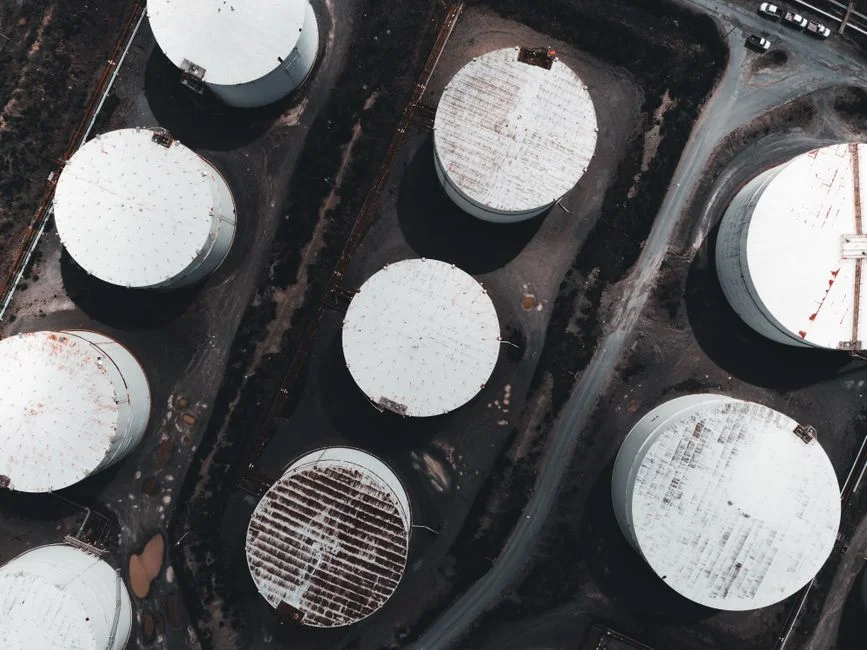
Unit operations must be sequenced to protect downstream equipment. Pretreatment starts with side-stream self-cleaning spiral filters rated at 10–25 micron, sized at 1–5% of circulation flow, which cut blowdown TSS and protect membranes; this step requires $50,000–200,000 capex for typical data-centre installations with minimal OPEX beyond solids disposal (Genesiswatertech). A hollow-fibre ultrafiltration skid at 0.01–0.1 micron removes residual colloids, bacteria, and high-MW organics at 90–95% recovery, operating at 10–30 psi (Genesiswatertech). The primary separation step is an industrial RO system, which removes 95–99% of dissolved solids at 150–400 psi and produces permeate of 10–50 mg/L TDS suitable for cooling-tower makeup; recovery on blowdown is 50–85%, limited by scaling as concentrate TDS rises (Genesiswatertech). Where hardness is the binding constraint—common in Patna groundwater with high calcium and magnesium—NF at 75–150 psi delivers 70–85% recovery with permeate TDS at 30–50% of feed, often representing the lowest-capex separation path (Genesiswatertech). For concentrate management, MVC achieves 95–98% recovery on RO concentrate with distillate below 10 mg/L TDS, consuming 15–25 kWh per 1,000 US gallons at $1–3 million capex for a 10,000–30,000 GPD unit (Genesiswatertech). A high-recovery alternative uses a fluidized-bed reactor that precipitates silica, calcium carbonate, and other scaling salts as dense pellets, combined with dynamic-RO operation to reach approximately 95% recovery with permeate silica around 1 mg/L (IDE Tech 2026). The sanitary sidestream is handled with an MBR membrane bioreactor system (submerged PVDF, sub-1 µm effluent) so the same plant can meet both reuse and discharge consents through one operator interface.
Sizing the train for a 1 MW, 5 MW and 10 MW Patna build
Blowdown at 4 cycles of concentration is 25–30% of makeup water, meaning a 1 MW Patna site needs only a small RO train, a 5 MW site requires skid-mounted NF + RO, and a 10 MW site justifies a full MVC or hybrid high-recovery train (Genesiswatertech). A 50,000 GPD RO skid on blowdown costs roughly $250,000–500,000 installed, with OPEX of $1.50–3.00 per 1,000 gallons including energy, antiscalant, membrane replacement, and maintenance—a figure the bid team must translate into ₹/kL for the Indian cost line and confirm against site-specific energy tariffs (Genesiswatertech). Full ZLD for data-centre blowdown sits in the $3–8 million capex band with $5–15 per 1,000 gallons OPEX and 95–99% water recovery, justified only when the Bihar State Pollution Control Board consent prohibits brine discharge or freshwater costs are punitive (Genesiswatertech). The 2026 sweet spot for a 5–10 MW Patna hyperscale site is partial ZLD: RO at 50–75% recovery feeding an MVC at 95% recovery, providing 85–95% overall system recovery with minimal liquid discharge (Genesiswatertech). A packaged MBR for the sanitary/wash sidestream in the 10–2,000 m³/day range delivers near-reuse-quality effluent in roughly 60% of the footprint of a conventional activated-sludge plant.
| Parameter | 1 MW Patna build | 5 MW Patna build | 10 MW Patna build |
|---|---|---|---|
| Approximate blowdown at 4 cycles | Small RO train (skid) | Skid-mounted NF + RO | Full MVC or hybrid high-recovery train |
| RO skid capex (50,000 GPD reference) | $250,000–500,000 installed (Genesiswatertech) | $250,000–500,000 installed (Genesiswatertech) | $250,000–500,000 installed (Genesiswatertech) |
| RO skid OPEX | $1.50–3.00 per 1,000 gallons (Genesiswatertech) | $1.50–3.00 per 1,000 gallons (Genesiswatertech) | $1.50–3.00 per 1,000 gallons (Genesiswatertech) |
| Full ZLD capex | Not economic at this scale | $3–8 million (Genesiswatertech) | $3–8 million (Genesiswatertech) |
| Full ZLD OPEX | Not economic at this scale | $5–15 per 1,000 gallons (Genesiswatertech) | $5–15 per 1,000 gallons (Genesiswatertech) |
| Recommended architecture | Side-stream filtration + UF + RO | Side-stream filtration + UF + RO, partial ZLD candidate | RO + MVC at 85–95% system recovery |
| Sanitary stream handling | Packaged MBR or STP (10–2,000 m³/day class) | Packaged MBR sized to sanitary load | Packaged MBR sized to sanitary load |
The numbers above are drawn from the Genesiswatertech commercial reference and must be re-priced against Patna electrical tariffs, civil costs, and import duties before they are finalized on a bid sheet.
2026 Patna compliance, cost and supplier checklist
The compliance baseline is the BEE 2023 District Cooling Guidelines and the 2025 rules requiring bulk users above 5,000 L/day to implement wastewater treatment and reuse (Schneider 2026-09; BEE 2023 District Cooling Guidelines; India Water Portal). Every unit in the train must be documented against Bihar State Pollution Control Board consent conditions, specifically TDS, chloride, and biocide residual limits, and operator WUE reporting must rely on source-level data (Schneider 2026-09, citing Data Center Knowledge). Supplier shortlisting should confirm UF, RO, and MBR references on Indian data-centre or process-water duty, factory-tested skid packaging, local service coverage in Patna or eastern India, and guaranteed supply of consumables—membranes, resin, and salt—within agreed SLAs; pricing for a PLC-controlled antiscalant and biocide dosing skid and RO and UF membrane spares should be locked into the SLA. Closed-loop direct-to-chip cooling can recirculate more than 95% of coolant and should be evaluated to reduce the scale of the reuse train (Schneider 2026-09). For comparable Indian data-centre scopes, the 2026 Vadodara data-centre blowdown guide and the Thailand ZLD process and buyer's guide detail these unit operations applied to different source water and discharge rules.
Frequently Asked Questions
What TDS does Patna cooling-tower blowdown actually run at?
Cooling-tower blowdown TDS is typically 4–8× higher than makeup water, falling in the 1,200–6,000 mg/L band depending on cycles of concentration and source water quality (Genesiswatertech). A site-specific water analysis on the Ganga-side intake or municipal supply is required before final train sizing.
Does a Patna data centre legally have to reuse wastewater in 2026?
Yes, if daily draw exceeds 5,000 L, per the 2025 Indian bulk-user rule cited by Schneider 2026-09, with the BEE 2023 District Cooling Guidelines as the technical baseline. Bihar State Pollution Control Board consent conditions translate the national rule into site-specific TDS, chloride, and biocide limits.
Is full ZLD worth it for a Patna data centre?
Full ZLD is only recommended above the hyperscale threshold or where the BSPCB refuses brine discharge; otherwise, partial ZLD with RO at 50–75% recovery feeding an MVC at 95% recovery is the 2026 sweet spot (Genesiswatertech).
How much does a blowdown RO train cost in 2026, and how do I pick a Patna supplier?
A 50,000 GPD RO skid on blowdown costs roughly $250,000–500,000 installed with OPEX of $1.50–3