Why Thai Factories Are Moving to Zero Liquid Discharge in 2026
Industrial RO concentrate and process brine in Thailand costs plants USD 25–60 per m³ to haul and landfill, and that gate fee has climbed roughly 18% year-on-year since 2023 as fewer licensed sites accept liquid industrial waste (HydropureWater field data, 2025). A typical Samut Prakan textile dye house discharging 200 m³/day of mixed dyebath effluent now treats a brine line that exceeds the Thailand PCD 2026 compliance guide TDS ceiling of 3,000 mg/L for coastal outfalls or 500 mg/L for inland factories — a gap no conventional biological plant can close. Thailand generates an estimated 4–5 million m³/year of RO concentrate and industrial brine from textile, electronics, and plating operations, with no single national disposal statistic published, so the driver is best framed at the plant level: every site that RO-retrofitted in the last decade now owns a brine problem it cannot legally discharge and cannot afford to truck.
Four forces are converging in 2026. First, the Eastern Economic Corridor industrial park permits in Rayong, Chachoengsao, and Chonburi require zero liquid discharge (ZLD) or near-ZLD for new semiconductor and automotive plating tenants. Second, OEM ESG audits from Honda, Toyota, Samsung, and Sony supply chains are pushing Tier 1 suppliers toward closed-loop water systems. Third, the 2019 Enhancement and Conservation of National Environmental Quality Act (B.E. 2562) is being enforced more visibly, with PCD inspectors issuing non-compliance notices at textile and palm oil sites in 2025. Fourth, outdoor brine evaporation simply does not keep up — a solar crystallizer field test reached 48.0 kg/m² per day on real seawater RO brine at 21.6 wt% (Springer/Nature Communications, 2021), which still requires several hectares to handle a 50 m³/day industrial stream. A mechanical ZLD train is the only year-round answer for most Thai sites.
What a ZLD System Actually Does: Process Flow and Mass Balance
A ZLD train recovers 95–99% of an industrial wastewater feed as reusable permeate plus dry salt, with no liquid leaving the site boundary. The architecture has four stages, and each stage has a defined inlet and outlet specification that a Thai plant engineer can measure.
Stage 1 — Equalization and pretreatment. Raw effluent enters an equalization tank for pH and flow dampening, then a DAF pretreatment unit sized at 4–300 m³/h removes free oils, FOG, and suspended solids down to roughly 30–50 mg/L. A downstream multi-media filter polishes TSS below 5 mg/L to protect the RO membranes. Without this stage, RO scaling and biofouling will collapse recovery within weeks on a Thai textile or plating feed.
Stage 2 — High-recovery reverse osmosis. A high-recovery industrial RO system operates at 70–85% recovery as standard, with brackish-water designs reaching 95% on optimized feeds (HydropureWater engineering benchmark, 2026). Permeate is reused in rinsing, cooling, or boiler feed; concentrate moves to thermal concentration at 5–8% TDS (50,000–80,000 mg/L).
Stage 3 — Thermal concentration. An MEE (multiple-effect evaporator) or MVC (mechanical vapor recompression) polishes the RO concentrate from 5–8% TDS up to 20–25% TDS. This is the highest-energy step in the train and the focus of the MEE vs. MVC decision in the next section.
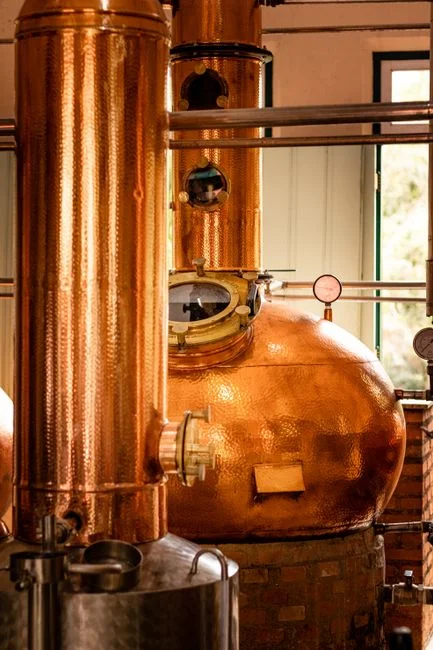
Stage 4 — Crystallizer. A forced-circulation or draft-tube-baffled crystallizer takes the 20–25% TDS feed to saturation and produces a dry salt cake (typically <5% moisture) plus condensed water returned to the permeate tank. A research benchmark from a solar crystallizer hit 2.42 kg/m²·h under one-sun illumination on 21.6 wt% seawater RO brine (Springer/Nature Communications, 2021) — useful as a research reference, but Thai industrial plants rely on electrically heated or steam-heated crystallizers for year-round, rain-independent operation.
Mass balance, 100 m³/day feed at 5,000 mg/L TDS: roughly 85 m³/day permeate (reused), about 14 m³/day evaporation to atmosphere as water vapor, and approximately 0.7 tonne/day of dry salt sent to a licensed waste handler or sold as a by-product. No liquid leaves the fence.
MEE vs. MVC vs. Crystallizer: Choosing the Right Evaporation Stage
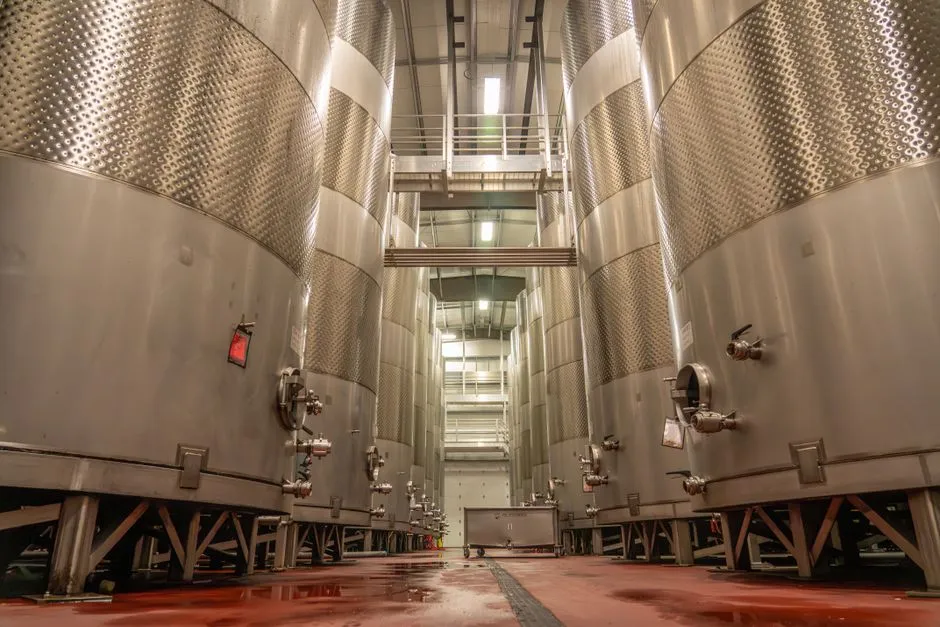
The single most expensive decision in a ZLD train is which thermal stage to buy. The three options overlap on influent TDS, but the operating economics are very different — and in Thailand, the right pick depends on whether you have cheap biomass steam or cheap grid power.
| Parameter | MEE (3–6 effects) | MVC | Forced-circulation crystallizer |
|---|---|---|---|
| Feed TDS range | 3,000–15,000 mg/L | 15,000–80,000 mg/L | >200,000 mg/L (saturated) |
| Driver | Steam (low-pressure 0.3–0.6 MPa) | Electricity (compressor) | Steam or electricity |
| Specific energy | 0.25–0.40 kg steam per kg H₂O evaporated | 15–25 kWh per m³ evaporated | 25–40 kWh per m³ + small steam |
| Output concentration | Up to 20–25% TDS | Up to 20–25% TDS | Dry salt cake + distillate |
| Capex share of ZLD train | ~30–40% | ~35–45% | ~20–30% |
| Best fit in Thailand | Plants with on-site biomass boiler or process steam header | Plants on cheap grid power, no steam | All plants — required at end of train |
Decision rule for Thai plants: if saturated steam is available below roughly USD 8/tonne (typical of a palm oil mill with biomass boiler or an EEC plant with waste-heat recovery), MEE wins on operating cost. If steam is purchased or unavailable and grid electricity sits below USD 0.07/kWh (the MEA tariff band for off-peak industrial users in 2026), MVC wins. A hybrid MEE + MVC train is the most common Thai configuration in 2025–2026: MEE strips the bulk volume down to 8–12% TDS using cheap steam, then an MVC polishes the last stage to crystallization feed concentration, halving the electricity load of a stand-alone MVC. The crystallizer is non-negotiable — it is where the final salt and the final condensate are separated, and a MEE maintenance cost guide shows that scaling and corrosion in the crystallizer are the top two OPEX drivers in year two onward.
Thailand PCD Compliance: How ZLD Removes the Permit Risk
Thailand's PCD effluent standards for industrial wastewater cap BOD at 20 mg/L, COD at 120 mg/L, TDS at 3,000 mg/L for coastal discharge or 500 mg/L for inland factories, and impose tight limits on heavy metals — full values are in the Thailand PCD 2026 compliance guide. A brine stream at 50,000–80,000 mg/L TDS cannot meet any of those numbers, so the permit risk is structural: either the plant does not discharge, or it will be in violation. The 2019 Enhancement and Conservation of National Environmental Quality Act and PCD Notification framework are the legal basis for non-compliance action, and 2025 saw a measurable uptick in enforcement notices at textile and palm oil sites.
ZLD eliminates the discharge permit risk by removing the discharge itself. There is no effluent to sample, no outfall to monitor, and no concentration limit to argue with the inspector. For EEC-located automotive and semiconductor plants, OEM ESG audits increasingly require ZLD or near-ZLD as a condition of supplier qualification, and a ZLD installation is the cleanest response to those audit questionnaires. One downstream obligation remains: the salt residue from the crystallizer is classified as industrial waste under Thai law and must be sent to a licensed disposal facility, or characterized and sold as a by-product (sodium chloride, sodium sulfate, or mixed salt depending on feed chemistry). The disposal pathway should be locked in before the crystallizer is ordered, because the salt's classification drives material-of-construction choices for the crystallizer body and agitator.
2026 CAPEX and OPEX Benchmarks for a Thailand ZLD Plant
Budget sanity-check ranges for a Thai ZLD installation in 2026, including pretreatment, RO, evaporator, crystallizer, civil works, and PLC/SCADA (HydropureWater engineering estimates, 2026; ±20% subject to feed chemistry and site conditions):
| Feed capacity | CAPEX range (USD) | OPEX range (USD/m³ feed) | Typical payback |
|---|---|---|---|
| 50 m³/day | 1.1M – 2.6M | 1.20 – 2.90 | 4–6 years |
| 100 m³/day | 2.2M – 5.8M | 1.00 – 2.40 | 3–5 years |
| 500 m³/day | 9M – 22M | 0.85 – 1.80 | 3–5 years |
OPEX breaks down into three blocks. Energy is the largest at 60–75% of OPEX — typical energy cost is USD 0.85–2.40 per m³ of feed, dominated by either steam (MEE) or electricity (MVC). Chemicals for antiscalant, pH adjustment, and cleaning-in-place run USD 0.05–0.18 per m³. Labor and routine maintenance add USD 0.12–0.30 per m³, with annual maintenance typically 3–5% of CAPEX. Thai MEE plants increasingly pair with biomass boilers (palm oil mills in Surat Thani and Krabi) or waste-heat recovery from process exhausts (electronics fabs in the EEC) to cut steam cost below the USD 8/tonne threshold. Payback is calculated against current concentrate disposal cost: landfill gate fee plus transport at USD 25–60 per m³ of concentrate, which means a 100 m³/day plant sending 20 m³/day to landfill avoids USD 180,000–440,000 per year in disposal alone — enough to clear the 3–5 year payback on the lower end of the CAPEX range.
Buyer's Checklist: Specifying a ZLD System for a Thai Plant
Hand this list to the EPC or vendor before the proposal stage.
- Define the feed. Daily flow (m³/day), influent TDS (mg/L), pH range, temperature, and key ions (Cl⁻, SO₄²⁻, Ca²⁺, SiO₂). Specify target water recovery: 95%, 98%, or 99%.
- Confirm energy. Available steam pressure (MPa) and tonnes per hour, or grid kVA and tariff band (USD/kWh). This decides MEE vs. MVC, not vendor preference.
- Specify the salt destination. Licensed landfill, sale to a third party, or reuse in process. The salt purity and moisture target flow from this decision.
- Lock the material of construction. SS316L is the baseline; duplex 2205 or titanium is required for chloride-rich brines above 150,000 mg/L Cl⁻.
- Require PLC with remote monitoring. A digital KPI dashboard guide explains the specific tags to specify so the plant team can track recovery, specific energy, and crystallizer performance from a control room or phone.
Frequently Asked Questions
What influent TDS range is a ZLD system designed for in Thailand? A typical Thai ZLD train handles 1,000–80,000 mg/L TDS across the RO and thermal stages, with the crystallizer operating on saturated brine above 200,000 mg/L. Feeds above 80,000 mg/L benefit from a falling-film evaporator ahead of the RO.
How much does a ZLD system cost per m³ of feed in Thailand in 2026? OPEX runs USD 0.85–2.40 per m³ of feed for a 100–500 m³/day plant, with energy at 60–75% of the total. CAPEX for a turnkey 100 m³/day train is USD 2.2M–5.8M including civil works.
Does a ZLD system eliminate the Thailand PCD discharge permit requirement? Yes. Because the plant produces no liquid effluent, the surface-water discharge permit under PCD Notification is no longer the binding constraint; the remaining permit scope covers salt disposal and stack emissions from the evaporator.
MEE or MVC — which is cheaper to operate in Thailand? MEE is cheaper when steam is below USD 8/tonne, typical of biomass-equipped palm oil or EEC plants. MVC is cheaper when steam is purchased and grid power is below USD 0.07/kWh. Most 2026 Thai installations use a hybrid MEE + MVC train.
What happens to the salt from a ZLD crystallizer in Thailand? The salt cake is classified as industrial waste under the 2019 National Environmental Quality Act and must go to a licensed facility, or be characterized and sold as a by-product. Plan the disposal route before the crystallizer is ordered.
For the full PCD effluent value table and the 2026 permit pathway, see the Thailand PCD 2026 compliance guide; for the RO stage that sits upstream of the evaporator, see the high-recovery industrial RO system product page.
Related Equipment
- plate and frame filter press — specifications, capacity range, and technical data