Why Routine Effluent Monitoring Misses Real Risk
Ahmed (J Water Health 24(8):1187–1204, 23 Jul 2026) sampled six treated effluents from the Chattogram Export Processing Zone and benchmarked each against ECR 2023 and WHO guidelines. The physicochemical panel — including Pb and Cr — passed the legal floor, yet a parallel ecotoxicity and GIS analysis still flagged a 2-km high-risk discharge corridor potentially exposing 50,000–75,000 residents. The same study correlated an integrated Effluent Quality Index with Daphnia magna EC50 at R² = 0.84 (p < 0.01), demonstrating that a single composite index tracks biological response better than any individual compliance number.
For an industrial plant, the implication is operational: a discharge permit is a legal minimum, not a safety certificate. Parameters that "pass" on a routine report can still create ecological liability, insurance exposure, and community-health risk. The Chattogram evidence is the clearest published proof that routine monitoring alone is structurally blind to the risks a board, regulator, or insurer is actually asking about — and that an additional assessment layer is required to demonstrate safety, not just compliance.
The 2026 Integrated Risk Assessment Framework
The Chattogram EPZ study (Ahmed, J Water Health 24(8):1187–1204, 23 Jul 2026) is transferable because it specifies four discrete modules an industrial plant can replicate at its own outfall. Run them in sequence and the output is a defensible, regulator-ready risk picture that single-parameter monitoring cannot produce.
Module 1 — Physicochemical panel plus priority metals. Replicate the Chattogram design: standard parameters plus Pb and Cr, sampled at the discharge point using methods with detection limits below the ECR 2023 and WHO thresholds. Module 2 — Acute ecotoxicity with Daphnia magna EC50. The same study uses cladoceran EC50 because it captures bioavailability that total-metal analysis misses; total-Pb can be compliant while the dissolved fraction is acutely toxic. Module 3 — Metal speciation with Visual MINTEQ. Applied in the same Chattogram study to separate the bioavailable fraction of Pb and Cr from the inert fraction, so risk is attributed to the species that actually reaches a receptor. Module 4 — GIS receptor mapping. Geocode the discharge point and overlay population, abstraction, and ecological layers to define a defensible high-risk corridor — the Chattogram study produced a 2-km corridor affecting 50,000–75,000 residents.
Synthesise the four modules into a single Effluent Quality Index (EQI) and verify it tracks ecotoxicity, targeting R² ≥ 0.8 against EC50, as reported by Ahmed (2026). The four modules, their inputs, and the equipment implications are summarised below.
| Module | Input | Method / Tool | Output Used For |
|---|---|---|---|
| 1. Physicochemical + priority metals | Composite sample at discharge point, n ≥ 6 | Lab analysis, detection limits below ECR 2023 / WHO | Baseline compliance screen; input to EQI |
| 2. Acute ecotoxicity | Whole-effluent sample | Daphnia magna EC50, 48 h | Biological response; correlation target for EQI |
| 3. Metal speciation | Filtered, stabilised sample (-20 °C) | Visual MINTEQ (free ion activity, bioavailable fraction) | Distinguishes bioavailable Pb/Cr from inert fraction |
| 4. GIS receptor mapping | Discharge coordinates, population, abstraction, ecological layers | GIS overlay | Defines high-risk corridor and exposed population |
When to Add Genotoxicity and Microbial-Pathogen Testing

The Chattogram four-module framework covers physicochemical compliance, acute ecotoxicity, metal speciation, and spatial exposure. Two matrices routinely exceed that envelope and need an additional test layer.
For pulp and paper, textile, dye, and pharmaceutical discharges, add an in vivo micronucleus assay modelled on the paper-mill design (Singh et al., BBRC). The protocol uses Channa punctatus (or an equivalent local species) exposed at 10%, 25%, and 50% v/v effluent against a Mitomycin C 2 mg/L positive control, 40 fish per aquarium, with endpoints read at 24, 48, and 72 h. Erythrocyte micronuclei in fish are a documented genotoxicity marker for industrial discharges (Singh et al., BBRC). This arm is commissioned when the product stream contains chlorinated organics, dye intermediates, or pharmaceutical residues that Daphnia EC50 will not flag.
For municipal-style effluents, plants discharging near abstraction points, or any site with downstream recreational use, add a microbial-pathogen panel. The South Africa review (S2, Int J Environ Res Public Health) documents that treated wastewater remains a documented microbial-pollution pathway to surface water under growing hydraulic load, even where South Africa targets 0.5% of GDP on sanitation. The policy point is not the budget figure; it is that well-funded national programmes are still treating microbial risk, so an individual plant cannot assume the issue is solved upstream. The anodizing wastewater COD removal guide also documents how high-COD streams complicate downstream disinfection, which makes a microbial-pathogen baseline particularly important for metal-finishing sites.
Mapping Each Risk Indicator to a Treatment Unit
Once the framework produces a risk profile, the question is which unit operation closes which gap. The mapping below is the engineering translation of the Chattogram four-module output.
If Module 1 shows persistent suspended solids, FOG, or colloidal load driving turbidity, route to a Dissolved Air Flotation (DAF) pre-treatment unit ahead of biological treatment. DAF is the established pre-treatment for FOG and colloidal matrices in food, pulp and paper, textile, and metalworking effluents. If Module 2 (Daphnia magna EC50) or the genotoxicity arm (Channa punctatus micronucleus) flags residual toxicity that biological treatment is not removing, escalate to an MBR membrane bioreactor upgrade with PVDF membranes (0.1 µm pore) to retain biomass and biomass-bound micropollutants. If Module 3 (Visual MINTEQ) shows a high bioavailable fraction of Pb or Cr, add an ion-exchange or chemical precipitation stage with PLC-controlled chemical dosing to lock metal speciation into the inert fraction. If Module 4 (GIS) shows a populated or abstracted corridor, add a polishing or disinfection barrier: UV disinfection polishing for chlorine-resistant protozoa, or on-site generated chlorine dioxide where a residual is required.
| Risk Indicator (Module) | Trigger | Treatment Unit | Function |
|---|---|---|---|
| Module 1 — TSS, FOG, turbidity | Persistent suspended/colloidal load at outfall | Dissolved Air Flotation (DAF) | Removes FOG and colloids upstream of biology |
| Module 2 — Daphnia EC50 / micronucleus | Residual or genotoxic response after biology | MBR (PVDF, 0.1 µm) | Retains biomass and biomass-bound micropollutants |
| Module 3 — Visual MINTEQ bioavailable Pb/Cr | High bioavailable metal fraction | Chemical precipitation / ion exchange with PLC dosing | Drives speciation to inert fraction |
| Module 4 — GIS populated / abstracted corridor | Receptor exposure within corridor | UV steriliser or on-site ClO2 | Microbial barrier before discharge |
Step-by-Step: Commissioning a 2026 Risk Assessment
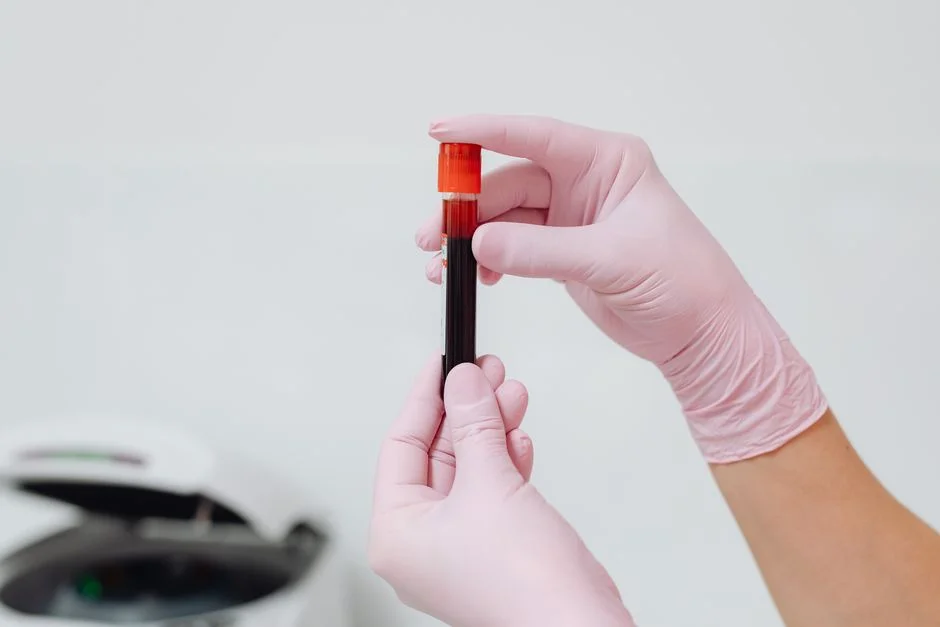
Procurement-ready execution sequence, drawn from the Chattogram design and the additional arms above.
Step 1 — Define the assessment boundary. Fix the discharge point, receiving water body, downstream receptors, and applicable standard: ECR 2023, WHO guidelines, EU UWWTD 91/271/EEC, or 40 CFR 403 pretreatment for US industrial discharges. Step 2 — Plan sampling. Composite sampling at the outlet for physicochemical plus Pb/Cr, with n ≥ 6 as in the Chattogram design; parallel Daphnia magna EC50 acute tests; water samples stabilised at -20 °C for speciation work, as specified in the paper-mill micronucleus study (Singh et al., BBRC). Step 3 — Run Visual MINTEQ speciation and GIS corridor mapping in parallel with the lab work to avoid sequential delay on the critical path. Step 4 — Synthesise into EQI, correlate against EC50 (target R² ≥ 0.8 per Ahmed 2026), and produce a high-risk corridor map with population and abstraction overlays. Step 5 — Translate findings into treatment-unit upgrades using the indicator-to-unit mapping in the previous section, and re-test at the same boundary to demonstrate closure to the regulator, insurer, or board.
Frequently Asked Questions
How much does a 2026 integrated effluent risk assessment cost?
None of the supplied research sources provide a price for an integrated effluent risk assessment, so a fixed budget cannot be quoted. What a buyer should request from a lab or consultant is a line-item scope that explicitly covers the four Chattogram modules (physicochemical + Pb/Cr panel, Daphnia magna EC50, Visual MINTEQ speciation, GIS corridor mapping) plus the optional genotoxicity or microbial-pathogen arms, and confirm that the deliverables include a quantified EQI and a defensible corridor map rather than a compliance certificate alone. For a metal-finishing site discharging under 40 CFR 413, the lab scope should also reference the applicable subcategory limits so pretreatment compliance is addressed in the same work order.
Which treatment unit should we procure first to close the biggest risk gap?
The supplied research does not rank equipment by cost-effectiveness, so the correct first procurement decision is driven by which Chattogram module is flagging risk at your specific outfall. The Chattogram four-module framework (Ahmed, J Water Health 24(8):1187–1204, 23 Jul 2026) maps each indicator to a specific unit: FOG and colloidal load points to Dissolved Air Flotation (DAF) pre-treatment; residual or genotoxic toxicity points to an MBR membrane bioreactor upgrade; bioavailable Pb or Cr points to chemical precipitation or ion exchange with PLC-controlled dosing; and a populated or abstracted GIS corridor points to UV or on-site ClO2 polishing. A defensible procurement sequence therefore starts with the assessment, not the equipment purchase, so the unit ordered is the one that closes the actual gap.
Do we still need Daphnia EC50 if our physicochemical numbers already pass ECR 2023?
Yes, because the Chattogram study (Ahmed, J Water Health 24(8):1187–1204, 23 Jul 2026) explicitly shows effluents that pass the regulatory floor can still produce an ecotoxicological response and a populated high-risk corridor. The EQI–EC50 correlation of R² = 0.84 (p < 0.01) in that study is the evidence that biological response and physicochemical compliance are not redundant measurements, so dropping EC50 to save cost removes the test that justifies the safety claim.
When is a micronucleus or microbial-pathogen arm worth commissioning on top of the four modules?
The Chattogram four-module framework does not cover genotoxicity or microbial pathogens, so those arms are added when the matrix or receptor profile warrants them. The paper-mill micronucleus study (Singh et al., BBRC) supports an in vivo Channa punctatus assay for pulp and paper, textile, dye, and pharmaceutical discharges, while the South Africa review (S2, Int J Environ Res Public Health) supports a microbial-pathogen panel for municipal-style effluents, plants near abstraction points, and any site with downstream recreational use. The decision is matrix- and receptor-driven rather than routine.