Why Maracaibo is a special case for data center water
Maracaibo sits on the shores of a warm, slightly brackish lake in a tropical climate where ambient wet-bulb temperatures push evaporative cooling systems hard, so operators must run aggressive cycles of concentration to keep the cooling capacity sized for the IT load. A 100 MW facility can use up to 2 million liters of water per day (S5, IDE), and roughly 57% of global data centers draw from potable supplies (S4, UGA, citing Mytton 2021), so any Maracaibo site is competing for the same surface water that agriculture and the city of Maracaibo already depend on.
Cooling-tower blowdown in that regime lands in the 1,200–6,000 mg/L TDS band, 4–8× the makeup water concentration, dominated by calcium, magnesium, alkalinity, and silica (S1, Genesis Water Tech). A water-stressed basin, combined with Venezuelan discharge regulation, makes a generic inland-blowdown design inappropriate: the finish step has to be a unit operation that local operators in Zulia state actually know how to run. Stabilization ponds are exactly that unit operation: IWA Publishing documents microorganism removal performance for stabilization ponds in Maracaibo, validating them as an accepted local treatment paradigm (S2).
What comes out of a Maracaibo cooling tower
Blowdown quality, not volume, is the design driver. The species that come out of a Maracaibo cooling tower at 4–6 cycles of concentration are predictable from makeup water and treatment program, and they map directly onto the membrane and thermal steps that follow (S1, Genesis Water Tech). Three families matter: scaling minerals, suspended solids, and treatment chemistry; a fourth, biological content, is the wildcard that decides whether RO can run without biofouling excursions.
- Scaling minerals. TDS 1,200–6,000 mg/L, with calcium, magnesium, alkalinity, and silica concentrated proportionally; these species drive heat-exchanger fouling and RO membrane scaling risk.
- Suspended solids. 10–50 mg/L of corrosion products, biofilm fragments, and airborne particulates, present even with basin-side strainers in place.
- Treatment chemistry. Biocides, scale inhibitors, corrosion inhibitors, and dispersants accumulate at the cycles-of-concentration factor; legacy chromate and high-phosphate programs add heavy metals and phosphorus to the disposal problem.
- Biological content. Planktonic bacteria, algae, and biofilm-forming organisms survive in well-maintained systems and must be neutralized before any RO or reuse step.
A representative Maracaibo makeup-to-blowdown mass balance is shown below; cycles of concentration are a project input, and the engineer should recompute against an actual Lake Maracaibo intake analysis before specifying membranes.
| Parameter | Lake Maracaibo makeup (typical) | Blowdown at 4 COC | Blowdown at 6 COC | Driver for downstream step |
|---|---|---|---|---|
| TDS (mg/L) | 200–400 | 1,200–1,600 | 1,800–2,400 | RO recovery limit, MVC brine load |
| Calcium as CaCO₃ (mg/L) | 80–150 | 320–600 | 480–900 | Antiscalant dose, RO recovery ceiling |
| Magnesium as CaCO₃ (mg/L) | 30–60 | 120–240 | 180–360 | Sulfate scaling risk |
| Silica (mg/L as SiO₂) | 10–25 | 40–100 | 60–150 | RO recovery ceiling, MVC scaling |
| Alkalinity as CaCO₃ (mg/L) | 100–180 | 400–720 | 600–1,080 | pH adjustment, MVC scaling |
| Suspended solids (mg/L) | <5 | 10–30 | 20–50 | UF loading, side-stream filter sizing |
The intake numbers in the second column are typical ranges for a tropical surface water with moderate mineralization; verify against the actual Lake Maracaibo analysis at the intake point. Suspended-solids and iron loading on the basin side are best handled with a multi-media filter sized at 1–5% of circulation flow, since that step drops the particulate load enough to protect the downstream UF and RO trains.
The 2026 treatment train that actually works
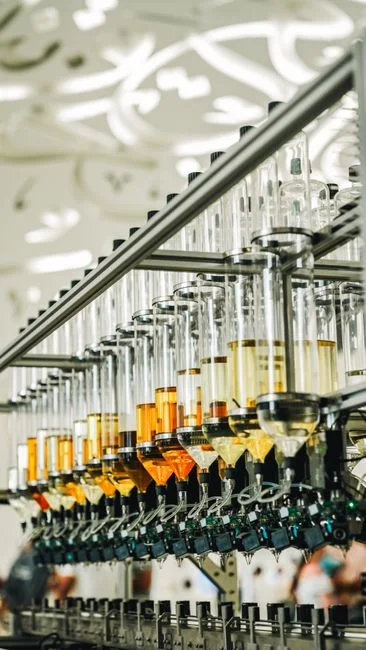
The 2026 architecture for a Maracaibo data center is a four-stage train built in the order the water actually fouls. Skipping a stage to save CAPEX almost always shows up as higher OPEX within a year, because the next membrane downstream takes the load it was not designed for.
- Stage 1 — side-stream filtration. 1–5% of circulation flow through 10–25 micron self-cleaning screens, CAPEX $50,000–$200,000 installed (S1, Genesis Water Tech). This is the lowest-cost step per unit of suspended-solids removed, and it lets the cooling system run at higher cycles of concentration so the rest of the train is smaller.
- Stage 2 — ultrafiltration (UF). 0.01–0.1 micron pore size, 10–30 psi operation, 90–95% recovery, permeate-backwash every cycle and chemical cleaning every 1–3 months depending on feed (S1, Genesis Water Tech). UF is the workhorse pretreatment in front of any RO step because it removes the bacteria and colloids that would otherwise foul RO membranes within weeks. A hollow-fiber UF system at this position is the standard 2026 specification.
- Stage 3 — brackish-water reverse osmosis. 50–85% recovery, 95–99% TDS rejection, permeate 10–50 mg/L TDS, 150–400 psi operation, with antiscalant injection to control silica and calcium sulfate (S1, Genesis Water Tech). A 50,000 GPD unit runs $250,000–$500,000 installed with $1.50–$3.00/kgal OPEX (S1). The permeate can be returned to the cooling tower as high-quality makeup. An industrial RO system at this position is the standard 2026 specification for a hyperscale train.
- Stage 4 — optional mechanical vapor compression (MVC). 95–98% recovery on the RO concentrate, distillate below 10 mg/L TDS, brine concentrated to 20–30% dissolved solids, CAPEX $1–3M for 10,000–30,000 GPD, energy 15–25 kWh per 1,000 US gallons of distillate (S1, Genesis Water Tech). MVC only earns its place where the grid and discharge rules justify it, which is the central question for any Maracaibo site.
A combined RO + MVC configuration routinely hits 85–95% overall system recovery with minimal liquid discharge (S1, S5). For sizing, the most defensible cross-check is the IDE MAXH₂O Brine Desalter case, which operated at around 95% recovery on a hybrid-cooling-tower blowdown stream and drove silica in the permeate down to about 1 mg/L (S5, IDE).
| Stage | Function | Key operating point | Recovery | CAPEX (USD) | OPEX signal |
|---|---|---|---|---|---|
| Side-stream filtration | Drop suspended solids, enable higher COC | 10–25 micron, 1–5% of circ flow | — | 50,000–200,000 | Solids disposal, minimal |
| Ultrafiltration | Remove bacteria, colloids, high-MW organics | 0.01–0.1 micron, 10–30 psi | 90–95% | Part of pretreatment package | Permeate backwash, CIP 1–3 months |
| Brackish RO | TDS, hardness, silica, chemical removal | 150–400 psi, antiscalant | 50–85% | 250,000–500,000 at 50,000 GPD | 1.50–3.00/kgal |
| MVC (optional) | Concentrate RO reject, recover distillate | 15–25 kWh/kgal distillate | 95–98% of concentrate | 1–3M at 10,000–30,000 GPD | Energy-dominated |
Reuse, discharge, or ZLD: the Maracaibo decision
Cooling-tower makeup reuse is the highest-value end-state for almost every Maracaibo site: 60–85% recovery, elimination of most discharge fees, and a real reduction in freshwater draw (S1, Genesis Water Tech). The reuse stream is then blended back into the cooling-tower makeup under a documented water-quality plan, and a closed-loop or hybrid cooling architecture can be evaluated in parallel to cut water use by up to 70% versus open evaporative systems (S4, UGA). For more on reuse chemistry and the dosing side of that blend, the 2026 industrial RO overview in our 2026 industrial RO overview walks through the same logic for manufacturing plants.
Discharge compliance is increasingly uneconomic in water-stressed basins: direct-discharge fees in the $5–15/kgal band and TDS caps below 1,500 mg/L make untreated blowdown discharge a non-starter in many jurisdictions (S1, Genesis Water Tech). A chemical-conditioning step at the front of the train, sized and selected against the actual blowdown analysis, is what keeps the rest of the train inside its design envelope; for that, a packaged automatic chemical dosing system at the right injection point is the 2026 standard. Full ZLD delivers 95–99% recovery and a manageable solid waste stream, but at $3–8M CAPEX and $5–15/kgal OPEX it is only justified where discharge is prohibited or freshwater is unavailable (S1). For most Venezuelan sites, a partial-ZLD approach that concentrates blowdown by 80–90% via RO + MVC, with the small remaining brine either deep-well injected or hauled, captures most of the benefit at a fraction of full-ZLD cost (S1). A side-by-side reading of hyperscale water constraints and CAPEX realities is in our Vadodara data center blowdown guide, which reaches a similar partial-ZLD conclusion for an Indian water-stress context. For a complementary view of risk-control and compliance framing on the equipment side, our zero-risk equipment guide for industrial wastewater walks through the defensibility question in more detail.
Maracaibo-specific finish: stabilization ponds and a low-cost polish
Stabilization ponds are the locally validated final-stage polish for any data-center wastewater that still carries biological oxygen demand or residual nutrients after RO, and IWA Publishing documents microorganism removal performance for stabilization ponds in Maracaibo (S2). A pond polish after the RO (or after the MVC distillate blend) is capital-light, uses available land, and aligns with the operating experience of local utilities in Zulia state. Final disinfection before any landscape-irrigation or toilet-flush reuse should use a chemical-free step such as UV, which a packaged UV sterilizer sized to the polished flow handles without re-introducing biocides into the reuse stream, and a high-efficiency sedimentation tank ahead of the UV polishes out the residual suspended solids that would otherwise shield microorganisms from the UV dose. If irrigation is not feasible, the polished effluent can be returned to the cooling-tower makeup blend under a documented reuse quality plan, and a ZLD verdict for the Venezuelan grid in 2026 is: feasible for a partial-ZLD configuration at hyperscale, and only economic for full ZLD where a hyperscaler is willing to pay for water-positive status and grid constraints allow it.
Frequently Asked Questions
What feed-water analysis do I need before sizing a Maracaibo blowdown train?
You need a full ionic suite on the Lake Maracaibo intake (cations, anions, silica, alkalinity), plus a separate analysis of the blowdown stream at the project's design cycles of concentration, plus the cooling-water treatment program's chemical inventory (S1, Genesis Water Tech). Without both makeup and blowdown analyses, RO recovery and antiscalant dose cannot be defended to a Venezuelan environmental authority.
How much will the treatment train cost in CAPEX and OPEX for a 5–20 MW Maracaibo site?
Order-of-magnitude CAPEX for a 50,000 GPD RO skid is $250,000–$500,000 installed with $1.50–$3.00/kgal OPEX (S1, Genesis Water Tech); a 10,000–30,000 GPD MVC evaporator adds $1–3M CAPEX (S1), and full ZLD for a hyperscale site runs $3–8M CAPEX with $5–15/kgal OPEX (S1). Request a site-specific budgetary number from suppliers based on your actual intake analysis and design COC, since the spread is wide.
Which supplier or equipment-maker should I select for a hyperscale Maracaibo project?
Select on documented reference plants in Latin America, membrane and chemical guarantees against the actual feed analysis, and local service coverage in Zulia state for commissioning and consumables. Ask each bidder for two reference sites running on tropical surface water at recovery above 75% and a 12-month membrane-life warranty, and reject bidders who cannot name them.
Is full ZLD economically defensible in Maracaibo in 2026?
For most Maracaibo sites, partial ZLD concentrating blowdown by 80–90% via RO + MVC is the defensible answer; full ZLD at $3–8M CAPEX and $5–15/kgal OPEX is only justified where discharge is prohibited or freshwater is unavailable (S1, Genesis Water Tech). For a 5–20 MW site, run the partial-ZLD economics first and only step up to full ZLD if the off-taker investor requires zero liquid discharge as a contractual condition.
Related Equipment
- industrial RO system — specifications, capacity range, and technical data