What a containerized MBR STP actually contains
A containerized MBR is a pre-assembled ISO container that integrates a biological aeration stage, a membrane tank with submerged ultrafiltration modules, a PLC panel, and pre-treatment screening into a single transportable unit. According to HUBER's description of the MENA-Water range, the package includes all main components inside the housing, with additional equipment supplied for installation in external structures such as buffer tanks and sludge storage.
The ultrafiltration membranes sit in the 2–100 nm pore-size range, with Pure Aqua's MBR-C specifically using hollow-fiber modules with a nominal pore size of 0.04 µm, built with thermally induced phase separation (TIPS) polyvinylidene difluoride (PVDF). Feed water first passes through a 1.5 mm drum screen before entering the bioreactor, where microorganisms decompose organic content at ambient temperature, then overflows to the membrane tank where UF retains bacterial flocs, suspended solids, colloids, and viruses.
Replacing the secondary clarifier with membranes allows higher mixed-liquor suspended solids and a substantially smaller footprint, which is the core reason a full sewage treatment plant fits inside an ISO container. The membrane surface is kept clean by continuous coarse-bubble air scouring, with MENA-Water stating the membranes do not need regular chemical cleaning except for one or two maintenance clearings per year.
MENA-Water offers two configurations: a U-Version, where aeration and buffering take place inside underground water tanks beneath the container, and an I-Version, where everything is fully integrated inside the container for mobile applications or sites that may need to be relocated. For a typical Rotterdam housing-block or construction-site camp scope, the HydropureWater integrated MBR system matches the same ISO-container, plug-and-play delivery model described in the MENA-Water commercial literature.
Rotterdam regulatory envelope you must design to
Any packaged MBR discharging treated effluent in the Rotterdam area must ultimately satisfy the EU Urban Waste Water Treatment Directive (91/271/EEC), which sets the secondary biological treatment thresholds for BOD, COD, and total suspended solids. The directive is the binding framework referenced in supplier documentation for compact treatment systems targeting municipal-style effluents.
Rotterdam projects involve multiple discharge points. The treated stream can be routed either to surface water under the waterschap (for example Hoogheemraadschap van Schieland en de Krimpenerwaard) or to the municipal sewer, and the two routes have different local limits. The Hoogheemraadschap's permit envelope and the Rotterdam municipality's sewer discharge rules must be confirmed in parallel with the EU UWWTD envelope before the container is ordered.
Pure Aqua's MBR-C datasheet reports treated-water parameters that sit below the typical EU UWWTD 91/271/EEC secondary biological treatment thresholds for BOD, COD, and TSS, with the explicit caveat that the values do not represent guarantees. MENA-Water adds that the treated water is suitable for irrigation reuse, which is relevant where Rotterdam housing associations or camp operators want to close part of the water loop. For projects that must hit tighter nitrogen or phosphorus limits, the advanced nutrient removal construction guide covers the additional anoxic and tertiary stages a packaged MBR may need to be paired with.
Step-by-step sizing math for a Rotterdam residential or camp project
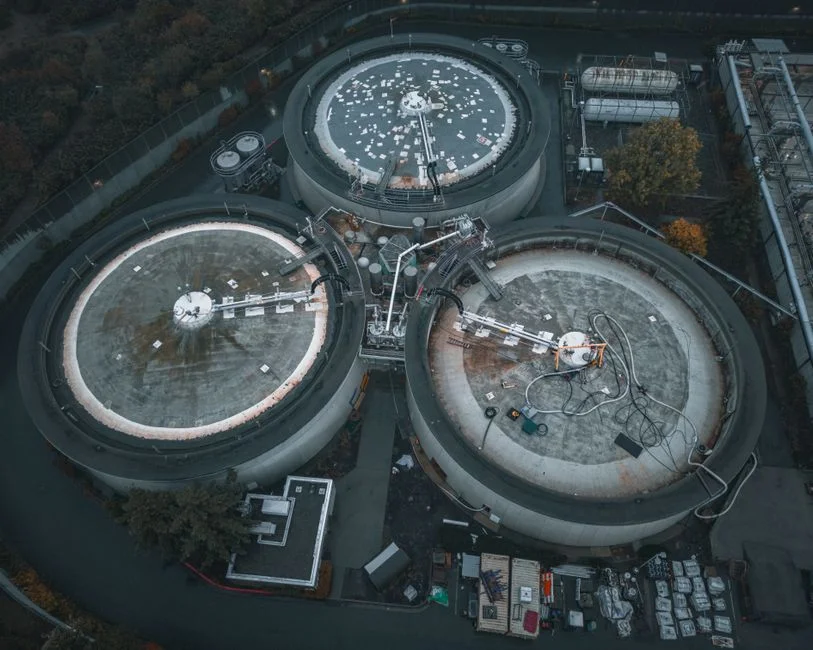
The sizing exercise starts with two numbers: the design population and the per-capita flow. The following steps integrate these inputs with supplier hydraulic envelopes to determine the required system capacity.
Step 1 — Establish the design population. Count permanent residents for a Rotterdam housing block, or beds × expected occupancy turnover for a student residence, refugee or seasonal-worker camp, or construction-site camp. Document the assumption; camps with visitor surges must be sized on the peak occupancy, not the average.
Step 2 — Convert to daily flow. Pure Aqua uses 50 gpd per capita as the population-loading baseline. Convert this into litres using the IDA Handbook 2019 factor: 1 m³ = 264.2 US gallons = 1,000 L. For example, 200 people × 50 gpd = 10,000 gpd = roughly 37.9 m³/day at average loading.
Step 3 — Apply a peak factor. Morning and evening campaign flow in residential blocks typically warrants a peak factor of 2.0–2.5× the average; camps with shift change or meal-time surges may justify higher. State the chosen factor as a project assumption so it can be reviewed during tender.
Step 4 — Check the design temperature window. Pure Aqua's standard operating envelope is 20–30°C with a design point of 20°C. Rotterdam winter sewage temperatures sit below 20°C, so the membrane sizing, aeration capacity, and any container heating or insulation must be reviewed with the supplier.
Step 5 — Check the upstream sewer profile. The standard pre-treatment is a 1.5 mm drum screen. For camps with high grit, wipes, or construction debris, add fine screening ahead of the container. The selected DF series PVDF flat sheet MBR modules can be cross-checked against the screened feed quality before order.
| Step | Input | Source / conversion |
|---|---|---|
| 1. Design population | Residents, beds × turnover | Project brief, occupancy profile |
| 2. Average daily flow | 50 gpd per capita | Pure Aqua MBR-C datasheet |
| 2. Unit conversion | 1 m³ = 264.2 US gal = 1,000 L | IDA Handbook 2019 |
| 2. Large-flow conversion | 1 MIGD = 4,546 m³/d; 1 MGD = 3,785 m³/d | IDA Handbook 2019 |
| 3. Peak factor | 2.0–2.5× average (state as assumption) | Engineer judgement |
| 4. Temperature window | 20–30°C operation; 20°C design | Pure Aqua MBR-C datasheet |
| 5. Pre-treatment | 1.5 mm drum screen standard | Pure Aqua MBR-C datasheet |
Choosing 20-ft vs 40-ft HC (and when to stack containers)
The sizing result is converted into a procurement specification by matching the peak daily flow to the container envelope. MENA-Water states that more than 1,200 m³/day can be filtered in one 40-foot ISO container, which is the upper bound for a single skid. Below that, the choice between a 20-ft HC and a 40-ft HC depends on the calculated peak flow, the available site footprint, and whether the plant is permanent or relocatable.
Use the IDA Handbook 2019 conversions when reading datasheets that quote US or imperial units: 1 MIGD = 4,546 m³/d and 1 MGD = 3,785 m³/d. A 20-ft HC container is appropriate for small Rotterdam residential blocks or sub-100-person camps once the 50 gpd per capita × peak factor calculation is applied; default to 40-ft HC where the daily volume approaches the multi-hundred m³/day band. For sites expected to be relocated — construction-site camps, temporary refugee accommodation, seasonal-worker housing — the MENA-Water I-Version, fully integrated inside the container, is the correct choice. For permanent Rotterdam housing, the U-Version with underground buffering tanks reduces the visible above-ground plant footprint.
If the camp is expected to grow, specify multi-container trains with intermediate buffer tanks rather than over-sizing a single skid; modular trains also let the operator stage capacity additions without taking the duty plant off-line. The HydropureWater integrated MBR system follows the same ISO-container logic and is the reference point when cross-checking a Rotterdam specification against the MENA-Water and HUBER product data.
| Configuration | Typical hydraulic envelope | Best fit in Rotterdam |
|---|---|---|
| 20-ft HC ISO (I-Version) | Sub-100-person camps, small housing blocks | Construction-site camps, seasonal-worker housing, relocatable plants |
| 40-ft HC ISO (I-Version) | Multi-hundred m³/day, up to >1,200 m³/day per skid | Larger student residences, refugee camps, mixed residential developments |
| 40-ft HC ISO (U-Version) | Same hydraulic envelope, underground buffer tanks | Permanent Rotterdam housing blocks where visible footprint must be minimised |
| Multi-container train | Sums of single-skid envelopes with intermediate buffer | Phased camps, developments with planned occupancy growth |
Electrical, footprint, and ambient design constraints for Rotterdam sites
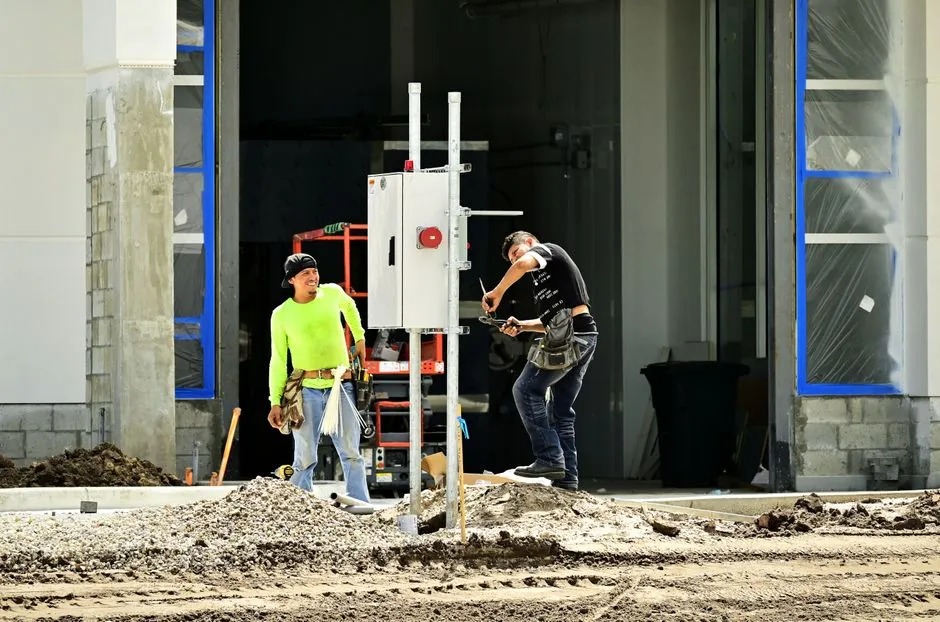
The standard electrical supply on a Pure Aqua MBR-C is 460V/3Ph/60Hz. Dutch sites run on 400V/3Ph/50Hz, so the supplier must confirm a reconfigured or EU-rated panel before order — this mismatch is a common reason Rotterdam-bound containers fail the site acceptance test if it is not caught in the specification stage.
Pure Aqua's standard operating temperature range is 20–30°C with a 20°C design point. Rotterdam winter sewage temperatures sit below 20°C, so the membrane sizing, aeration capacity, and any container heating or insulation must be reviewed with the supplier. The container format itself is built as a 40-ft or 20-ft high-cube ISO with insulated walls, a zero water-leakage claim, and a seaworthy structure per the Pure Aqua MBR-C datasheet.
Built-in membrane cleaning and air-scouring is standard, with standby pumps and remote monitoring available as options. Plan space on site for the drum screen, the anoxic zone for denitrification, and any additional pre- or post-treatment skids the supplier specifies. For Rotterdam projects that need a separate fine-screen stage ahead of the container, the GX Series rotary mechanical bar screen covers the pre-treatment slot.
Commissioning, monitoring, and lifecycle checks
Commissioning risk on a packaged MBR is driven by the requirements set at the purchase order stage. MENA-Water offers remote monitoring from the back office plus on-site installation and start-up support, which is useful for Rotterdam housing associations and camp operators that do not have in-house wastewater staff. HUBER provides similar support, including consultation via remote monitoring, installation, start-up, and maintenance activities.
The membrane cleaning schedule is light: MENA-Water states the membranes do not need regular chemical cleaning except for one or two maintenance clearings per year. Pure Aqua adds that MBR-C systems are pre-engineered in CAD and factory-tested, and that turn-key delivery with quick turnaround is the standard commercial model. Specify a Factory Acceptance Test (FAT) and a Site Acceptance Test (SAT) in the purchase order, and tie the retention to performance against the EU UWWTD 91/271/EEC envelope rather than a generic datasheet curve.
Plan for spare membrane elements, dosing-chemical storage, and a sludge-handling route at the specification stage; the container will produce waste activated sludge that must be routed to a licensed receiver. For the membrane spares and post-treatment polishing step, the RO/UF membrane filter elements line and the plate-frame filter press for sludge dewatering cover the two operational inputs that most often get left out of the original Rotterdam scope. Engineers who want to compare this packaged route against a conventional activated-sludge baseline can review the MBR vs conventional activated sludge cost comparison and the sizing a containerized MBR STP in Yangon piece for an out-of-region sizing parallel.
Frequently Asked Questions
What population can one 40-ft containerized MBR handle in Rotterdam?
Frequently Asked Questions
What size containerized MBR do I need for a 200-person camp in Rotterdam?
For a 200-person camp, you should plan for a total hydraulic capacity of approximately 30 to 40 cubic meters per day (m³/day). This calculation is based on an industry-standard allowance of 150 to 200 liters per person per day to account for showers, laundry, and kitchen facilities.
A single 40-foot high-cube containerized Membrane Bioreactor (MBR) system is typically sufficient for this load, provided it is fitted with high-flux membranes. It is recommended to include a 10-15% buffer in your sizing to accommodate peak morning and evening flow periods common in temporary worker accommodations.
How many m³ per day can a single 40-ft ISO container MBR actually treat?
A standard 40-foot ISO containerized MBR can treat between 25 m³/day and 60 m³/day depending on the organic loading (BOD/COD) and the membrane surface area installed. Systems optimized for high-density configurations can push up to 80 m³/day if the influent characteristics are primarily domestic wastewater.
Performance is ultimately governed by the Flux Rate, typically ranging from 15 to 25 LMH (liters per square meter per hour). Exceeding these design parameters in a compact 40-ft footprint will lead to rapid membrane fouling and increased chemical cleaning frequency.
What effluent standards does a containerized MBR in Rotterdam need to meet under EU rules?
In the Netherlands, containerized MBR systems must adhere to the Urban Waste Water Treatment Directive (91/271/EEC) and local Rijkswaterstaat regulations. Effluent must generally meet a BOD5 of <10 mg/L, TSS of <5 mg/L, and total nitrogen (TN) levels below 10 mg/L if discharging into sensitive surface waters.
Due to the high density of Dutch waterways, local water boards (Waterschappen) often impose strict phosphorus limits, frequently requiring tertiary chemical dosing for phosphate precipitation to achieve <1 mg/L P-total before discharge.
Can a containerized MBR run on Dutch 400V/3-phase power, or does the panel need to be reconfigured?
Yes, standard containerized MBR units are fully compatible with the Dutch 400V/50Hz 3-phase power grid. Most international MBR manufacturers utilize standard industrial control panels that are pre-wired for this voltage as it is the European standard.
If you are sourcing a unit from a non-EU market, ensure the electrical components—specifically pumps, blowers, and the PLC—are rated for 400V/3-phase/50Hz. No major reconfiguration is required beyond ensuring the main circuit breaker is sized correctly for the total connected load, usually ranging between 15kW and 30kW for a 40-ft unit.
How long does it take to deliver and commission a containerized MBR STP in the Netherlands?
The typical lead time from order to delivery for a containerized MBR in the Netherlands is 12 to 16 weeks, assuming the unit is being manufactured or retrofitted to project specifications. This timeline includes the procurement of specialized membrane modules and the assembly of the internal piping and control logic.
Once the container arrives on-site in Rotterdam, physical installation and final commissioning—including pressure testing, PLC calibration, and biological seeding—generally take 5 to 10 working days. Factors such as permit approval speed and site readiness for influent/effluent piping connections are the primary variables that may extend this timeline.