What 'sizing' a containerized MBR STP actually means in Monterrey
A bid-defensible sizing package for a containerized MBR (membrane bioreactor) sewage treatment plant in Monterrey is not one number — it is four outputs: a design flow in m³/day, a container count in 20-foot or 40-foot high-cube ISO frames, an electrical load, and a climate envelope. Each output is calculated separately, signed by a different discipline, and challenged by a different reviewer at Servicios de Agua y Drenaje de Monterrey or SEMARNAT.
The membrane principle is what makes the four-output package small enough to fit on a truck. In a conventional activated-sludge plant, a secondary clarifier separates biomass from clarified water; in an MBR, that clarifier is replaced by submerged ultrafiltration membranes with a pore size of 2–100 nm, as documented in HUBER's MENA-Water MBR product literature (S5). Because the membrane retains all suspended solids and biomass, the same biological load fits in a much smaller tank — small enough to be pre-assembled inside a standard ISO container, factory-tested, and shipped to a residential community or construction camp in Nuevo León as a plug-and-play unit.
The drivers in the Monterrey metropolitan area are residential developments on the periphery of the city and temporary or permanent worker camps linked to nearshoring investment. Both have a known headcount, a known discharge point, and a reviewer who will ask for the four outputs in writing. The rest of this article walks through each one using the two quantitative benchmarks in the research: the per-capita flow figure from Pure Aqua's MBR-C product page (S3) and the container-capacity figure from MENA-Water's published specifications (S2). For a related sizing approach in another arid-region city, see the parallel method used in sizing a containerized MBR STP in Amman.
Step 1: Convert population into a design flow in m³/day
The starting point is a headcount and a documented per-capita flow. Pure Aqua's MBR-C product page lists "Approximate Population (50 gpd per Capita)" as the sizing basis for their containerized system, and 50 US gallons per day converts to roughly 189 L per capita per day, or 0.19 m³/capita/day (S3). Multiplying the design population by 0.19 gives a baseline average daily flow before any peaking or losses.
Two worked examples illustrate the method, not the final answer. A 200-person residential development in the Monterrey suburbs yields about 38 m³/day at 0.19 m³/capita. A 500-person construction or mining worker camp yields about 95 m³/day. Both are average dry-weather figures, not the number the hydraulic engineer will sign off on.
The next move is a peaking factor, which converts the average into the peak instantaneous flow the membranes and feed pumps must handle. For residential gravity sewer systems, a multiplier in the 1.5–2.0× band is standard practice; for camps, where shower blocks and meal periods concentrate demand, the factor is higher. The exact factor used must be recorded on the design basis sheet that goes to the water utility reviewer, but no local regulation value is reproduced here because the research does not provide one. Buyers should request the peaking factor assumption in writing from the EPC and confirm it against the local norm of record.
Subtract any reliable non-sewage component — infiltration into manholes, sump pump discharge, stormwater cross-connections — only if it can be quantified; otherwise, leave it out and accept the conservative result. Undersizing at this step is the most common commissioning problem in Mexico because infiltration in aging collection networks routinely doubles the design flow. If a 24-hour composite sample is available, calibrate the per-capita number against it before finalizing.
| Input | Source | Value | Notes |
|---|---|---|---|
| Per-capita flow | Pure Aqua MBR-C (S3) | 50 gpd ≈ 0.19 m³/capita/day | Average dry-weather basis; document the conversion |
| Residential peaking factor | Engineering practice (no local value in research) | Commonly 1.5–2.0× | Confirm with the engineer of record |
| Camp peaking factor | Engineering practice (no local value in research) | Higher than residential | Driven by shower/meal concurrency |
| Infiltration/inflow | Site-specific | Subtract only if quantified | Otherwise accept conservative result |
Step 2: Match design flow to the right container envelope
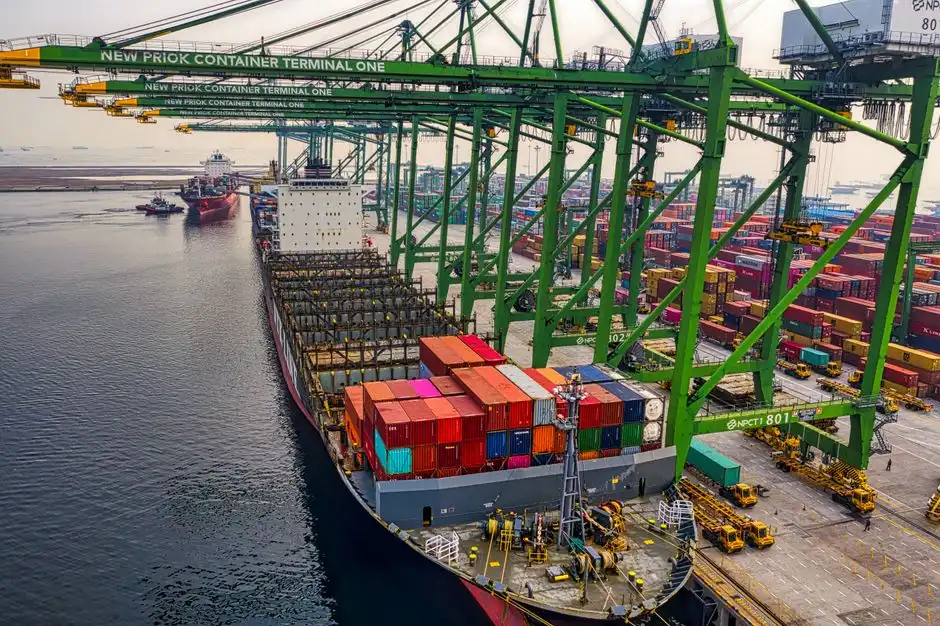
Once the m³/day figure is defensible, it is converted into a container count using a published envelope. MENA-Water's product literature states that "more than 1200 m³/day can be filtered in one 40-feet ISO container," and that containerized MBR plants are standardized and available in different sizes (S2). Pure Aqua's MBR-C ships in either 40-foot or 20-foot high-cube containers depending on capacity, confirming the 20'/40' HC pair as the standard envelope choice (S3).
Inside the container, the membrane modules drive the count. The DF flat-sheet MBR module range (32–135 m³/day per unit, 0.1 µm pore size) determines how many cassettes fit a given frame; the DF flat-sheet MBR module range (32–135 m³/day per unit) is the typical building block for a HydropureWater bid. For a flow band of about 50–150 m³/day, a single 40-foot HC container with multiple DF cassettes usually dominates. Below about 50 m³/day, a single 20-foot HC container plus a separate buffer or aeration tank is usually cheaper than forcing the same flow into a 40-foot frame. Above roughly 1,000 m³/day, multiple 40-foot units are paralleled; the published MENA-Water figure of "more than 1,200 m³/day per 40-foot container" (S2) should be treated as an envelope upper bound, not a guaranteed steady-state throughput.
The decision rule for a Monterrey bid is therefore: estimate the count by dividing peak design flow by the per-container envelope, then add one container's worth of redundancy if the camp is remote and the EPC carries a liquidated-damages clause for downtime. The full HydropureWater MBR system (10–2,000 m³/day) range covers everything from a 50-home subdivision to a multi-thousand-person camp without re-architecting the process.
| Design flow band | Typical envelope | Source | Bidder action |
|---|---|---|---|
| Below ~50 m³/day | One 20' HC + buffer/aeration tank | Pure Aqua MBR-C (S3) | Price 20' HC option; verify cassette count fits |
| ~50–150 m³/day | One 40' HC with multiple DF cassettes | MENA-Water (S2); HydropureWater DF range | Request module layout drawing |
| ~150–1,000 m³/day | One 40' HC; add units in parallel at the high end | MENA-Water envelope (S2) | Confirm treatment per container, not nominal |
| Above ~1,000 m³/day | Multiple 40' HC units | MENA-Water (S2); HydropureWater 10–2,000 m³/day range | Model hydraulic split between containers |
Step 3: Lock in the electrical and control scope
The electrical line item is where Monterrey bids are most often under-priced. Pure Aqua's MBR-C specification lists the supply as 460V/3Ph/60Hz, an operating temperature range of 68–86°F (20–30°C), and a design temperature of 68°F (20°C) (S3). The bidder should treat 460V/3Ph/60Hz as the baseline and explicitly call out three Monterrey-specific items: voltage stability, optional anoxic denitrification, and PLC panel climate rating.
Voltage stability matters because Nuevo León's industrial feeders can sag during summer peak demand, and a sag that drops the aeration blower below its torque curve will starve the membranes of air scour and trigger a shutdown. Confirm whether the site has a dedicated transformer, a diesel genset, or both; price the genset and ATS as a separate line if the camp load is critical. Standby feed-water pumps for redundancy should be priced in if the camp cannot tolerate a 12-hour outage; Pure Aqua's MBR-C feature list includes "standby pumps for redundancy" as a separately priced option (S3).
Controls and instrumentation should match the siting. A container left outdoors in Apodaca or García needs a PLC panel rated for direct sun and ambient above 40°C, plus remote monitoring so the operator does not have to drive in for every alarm. The MBR-C option list also includes a "built-in membrane cleaning and air scoring system" and a remote monitoring package (S3) — both should be on the bid sheet as explicit items, not buried in a "controls" lump sum. If the discharge goes to a sensitive receiver, the optional anoxic zone for denitrification (NO3 removal) flagged in the MBR-C feature list (S3) is the cheapest way to meet a total-nitrogen limit without a separate tertiary stage.
Step 4: Apply Monterrey-specific climate, reuse and compliance adjustments
The 20–30°C operating range published for the MBR-C (S3) covers most of the year in Monterrey's hot semi-arid climate, but summer ambient peaks at the membrane skid can exceed the manufacturer's limit if the container is in direct sun. The bidder should request an ambient-temperature derating curve from the membrane supplier or, failing that, a solar-shade roof over the container. Air-scour blower capacity is typically the first item to suffer at high ambient, so a higher-HP blower or a VFD should be priced as a contingency.
Pre-treatment is not optional. Pure Aqua's MBR-C uses a drum screen with 1.5 mm perforation to protect the submerged UF membranes (S3) — every bid should include that screen, sized for the peak flow from Step 1, and located upstream of the container. Skipping it is the fastest way to void the membrane warranty.
If the project targets reuse for landscape irrigation or toilet flushing, the MBR effluent already meets reuse-grade suspended-solids limits because the UF membranes retain all biomass and most colloids; a polishing step such as the UV sterilizer water treatment unit handles the disinfection side. The compliance check, however, is local: NOM-001-SEMARNAT-2023 sets the discharge limits, and the receiving body classification (río, presa, suelo) determines which parameter set applies. No specific limit values are reproduced here because they are not in the supplied research; the consultant of record must pull the current NOM-001-SEMARNAT-2023 table and the receiving-body classification before the bid goes in. A useful parallel reference is the Mexico NOM-001-SEMARNAT hospital wastewater engineering guide, which walks through the same compliance workflow for a different building type.
OPEX sizing is simplified by the membrane maintenance regime. MENA-Water's product literature states that the membranes "don't need regular chemical cleaning except one or two maintenance clearings per year" because the filter surfaces are continuously aerated through bubble diffusers (S2). That means chemical-cleaning dosing pumps, neutralization tanks, and operator hours can be sized for one or two annual events, not monthly CIP cycles — a real cost saving versus conventional UF skids.
When a containerized MBR is the wrong choice for a Monterrey project
Containerized MBRs are not the right answer for every load. For very small residential clusters or remote camps below the lower end of the HydropureWater MBR range (10 m³/day), or where the developer wants a buried installation for aesthetic or HOA reasons, a WSZ underground package plant with trailer-mounted mobile option is usually cheaper and faster to permit. The WSZ range covers 1–80 m³/h and ships in a form factor that disappears below grade.
For industrial flows with high fats, oils, and grease (food processing, refinery, metalworking) or high suspended solids, the MBR container should not be the first treatment step. A dissolved air flotation (DAF) machine upstream of the MBR container removes the emulsified load that would otherwise foul the membranes. The DAF skid is placed ahead of the container, not inside it; the MBR still polishes to reuse grade.
HydropureWater has documented project precedents that bracket the realistic range: a hospital installation in Mexico City, plus sizing guides for residential loads in Almaty, Amman, and Tokyo. The Monterrey residential or camp bid sits squarely inside that range — small enough to need a documented per-capita benchmark, large enough to justify a 40-foot HC envelope and reuse polishing.
Frequently Asked Questions
What per-capita flow should I use to size a containerized MBR for a residential project in Monterrey?
Use the Pure Aqua MBR-C benchmark of 50 gpd per capita, which converts to about 0.19 m³/capita/day, then apply a peaking factor documented on the design basis sheet (S3). For a 200-home development, multiply the design population by 0.19 to get the average daily flow, then peak it by the factor your engineer of record signs off on.
How many ISO containers do I need for a 500 m³/day camp STP near Monterrey?
Based on the MENA-Water envelope of "more than 1,200 m³/day can be filtered in one 40-feet ISO container" (S2), a 500 m³/day camp fits in a single 40-foot high-cube container with the DF flat-sheet cassette layout. Confirm the cassette count against the HydropureWater module range (32–135 m³/day per unit) and ask the supplier for the hydraulic-split drawing at peak flow.
What is the typical cost envelope and lead time for a containerized MBR in Mexico?
The supplied research does not include a published price or delivery window for the Monterrey market, so a buyer must request a current quotation in writing from each shortlisted supplier and ask for an itemized shipping, installation, and commissioning schedule. Treat any verbal price as a placeholder until the quote is countersigned.
How do I screen MBR suppliers for a Nuevo León bid?
Shortlist suppliers that publish a per-container hydraulic envelope with a named membrane pore size, a documented electrical specification, and a Monterrey or northern-Mexico reference project. Confirm in writing that the bid includes the drum screen, the air-scour blower, and either the standby pump or a documented genset interface; suppliers that exclude those items in the base price are offloading scope.