Step 1 — Build the Flow Basis for Your Guadalajara Site
The sizing flow basis for any containerized MBR in Guadalajara is the per-capita wastewater generation rate, multiplied by the population served. Pure Aqua's MBR-C catalogue rates each model at 50 US gpd per capita (≈190 L per capita per day), so use 190 L/c/d as the residential baseline for a housing development or a permanent community (S4). For a worker camp, a construction dormitory or a seasonal school, shared kitchens, central showers and communal laundry typically drop per-capita demand to 130–150 L/c/d, roughly 20–30% lower than full-time residential flow, because fixtures are centralized rather than per-dwelling (qualitative, derived from standard camp-design practice; not stated numerically in the supplied research).
Before locking the number, cross-check it against the local water-supply baseline published by CONAGUA or CEA-Jalisco for the specific municipality. If the official per-capita figure is higher than the 190 L/c/d baseline, use the higher of the two as the conservative sizing input — Guadalajara potable-water coverage in some fringe zones is metered above 200 L/c/d, and using a lower number risks an undersized biological stage. Add a contingency of 10–15% for unaccounted connections such as irrigation reuse taps, swimming-pool backwash, staff housing, guard-house water and on-site laundry before passing the figure to the MBR supplier (qualitative sizing margin; no specific percentage is supported in the supplied research).
| Occupancy type | Per-capita flow (L/c/d) | Per-capita flow (US gpd) | Typical drivers |
|---|---|---|---|
| Permanent residential community | 190 | 50 | Per-dwelling kitchens, showers, laundry; MBR-C catalogue baseline (S4) |
| Worker / construction camp | 130–150 | 34–40 | Centralized shower blocks, mess hall, shift schedules |
| Seasonal school or training facility | 100–130 | 26–34 | Day population, low overnight load, cafeteria peak |
| Hospitality / hotel workers' housing | 160–180 | 42–48 | Mid-range fixtures, on-site cafeteria |
Step 2 — Apply a Peaking Factor and Convert to m³ per Day
Average daily flow is not what the membrane tank and feed pumps have to handle — the design value is the peak daily flow. Apply a peaking factor of 1.3–1.5 for residential communities, where morning and evening discharge cycles dominate, and 1.5–2.0 for camps and shift-based dormitories, where shower blocks, mess halls and shift changes create sharper hydraulic peaks. The sizing formula is straightforward: Peak flow (m³/d) = Population × per-capita flow (L/c/d) ÷ 1000 × peaking factor.
Worked example A — 300 residents at the 190 L/c/d residential baseline: 300 × 190 ÷ 1000 = 57 m³/d average, then × 1.4 = ~80 m³/d peak. That peak falls between the MBR-C-13.2K-06 (50 m³/d in a 1×20' container) and the MBR-C-26.4K-10 (100 m³/d in a 1×40' container), so a 1×40' model is the conservative selection (S4). Worked example B — 200-person worker camp at 140 L/c/d: 200 × 140 ÷ 1000 = 28 m³/d average, then × 1.7 = ~48 m³/d peak, which sits inside the MBR-C-13.2K-06 single 20' container envelope (S4). Both examples are derived from the MBR-C model table and the per-capita rates in Step 1.
| Scenario | Population | L/c/d | Average (m³/d) | Peaking factor | Peak (m³/d) | Suggested MBR-C model |
|---|---|---|---|---|---|---|
| Residential community | 300 | 190 | 57 | 1.4 | ~80 | MBR-C-26.4K-10 (100 m³/d, 1×40') |
| Worker camp | 200 | 140 | 28 | 1.7 | ~48 | MBR-C-13.2K-06 (50 m³/d, 1×20') |
| School / training facility | 500 | 120 | 60 | 1.5 | ~90 | MBR-C-26.4K-10 (100 m³/d, 1×40') |
| Hospitality worker housing | 400 | 170 | 68 | 1.4 | ~95 | MBR-C-26.4K-10 (100 m³/d, 1×40') |
Step 3 — Select the Containerized MBR Model
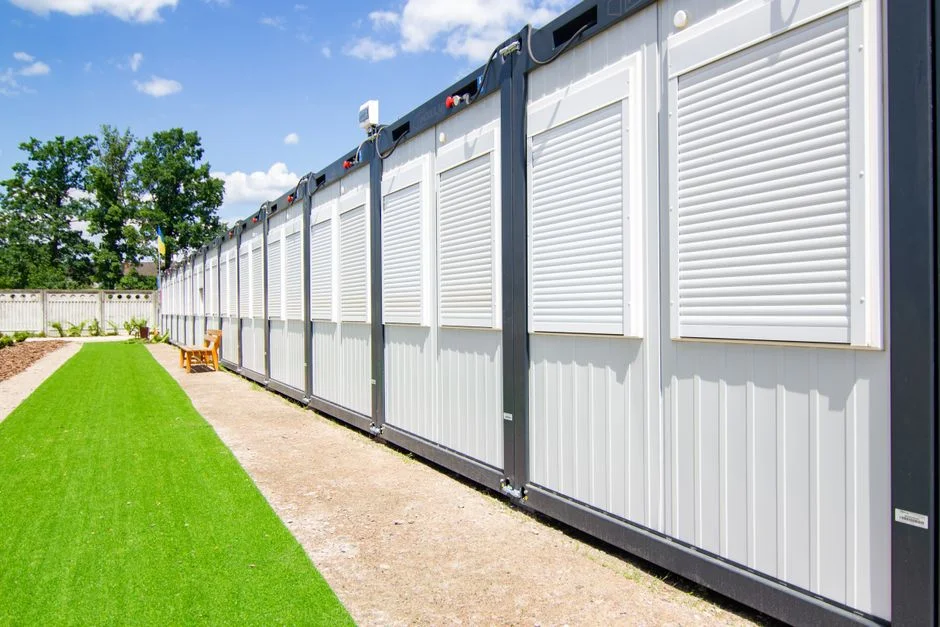
Once the peak flow in m³/d is known, the model selection comes from a four-line catalogue. Pure Aqua's MBR-C series offers 50, 100, 150 and 190 m³/d, each built around 2 membrane skids of 316 stainless steel and shipped in either one 20' or one 40' high-cube ISO container (S4). The 50 m³/d unit ships in a single 20' container; the 100, 150 and 190 m³/d units each ship in a single 40' HC container. The standard internal package is identical across the line: a 1.5 mm drum screen pre-treatment, an anoxic zone for denitrification, a fine-bubble aeration tank, submerged 0.04 μm PVDF hollow-fibre membrane modules with integrated air-scour, a built-in chemical-cleaning system, standby feed pumps and remote monitoring (S4).
Seaworthy container construction, insulated walls, zero-leakage welded internal piping and skid pre-wiring mean that site work is limited to a level concrete pad, an electrical drop, an inlet sewer and a discharge pipe (S4). The submerged PVDF hollow-fibre UF membranes act as an absolute barrier to bacteria and most viruses, which eliminates the secondary clarifier, the tertiary sand filter and most disinfection stages that a conventional activated-sludge plant would otherwise require (S2, S5). The out-of-basin membrane configuration also allows future capacity expansion by adding additional membrane skids inside the same container or by adding a parallel container, a useful feature for a housing development built in phases (S2). For a peer-level comparison of MBR against conventional activated sludge, see the MBR vs conventional activated-sludge comparison guide for industrial sites.
| Model | Flow (m³/d) | Flow (gpd) | Population @ 50 gpd | Membrane skids × modules | Container | Permeate BOD / TSS / NH4-N |
|---|---|---|---|---|---|---|
| MBR-C-13.2K-06 | 50 | 13,211 | 265 | 2 × 3 | 1 × 20' HC | <10 / <5 / <2 mg/L |
| MBR-C-26.4K-10 | 100 | 26,421 | 529 | 2 × 5 | 1 × 40' HC | <10 / <5 / <2 mg/L |
| MBR-C-39.6K-16 | 150 | 39,631 | 793 | 2 × 8 | 1 × 40' HC | <10 / <5 / <2 mg/L |
| MBR-C-50.2K-20 | 190 | 50,198 | 1004 | 2 × 10 | 1 × 40' HC | <10 / <5 / <2 mg/L |
Source: Pure Aqua MBR-C data sheet (S4). For an integrated package using an integrated MBR membrane bioreactor system with the same duty envelope, confirm the skid count and the container ISO class on the quotation.
Step 4 — Apply Guadalajara-Specific Design Constraints
A generic MBR sizing must be checked against four Guadalajara-specific constraints before the purchase order is cut: altitude, ambient and wastewater temperature, electrical supply, and discharge compliance. The city sits at roughly 1,566 m above sea level, and ambient air temperature typically ranges 5–32°C across the year, with wastewater temperatures generally within the 20–30°C operating window of standard MBR-C designs (S4). At elevations above 1,500 m, aeration blower curves must be re-rated for the local atmospheric pressure; transfer efficiency at 1,566 m is materially lower than at sea level, so the supplier should be asked to confirm blower selection against site altitude rather than publishing a sea-level curve.
Standard MBR-C electrical supply is 460V/3Ph/60Hz, which matches Mexican industrial three-phase service; a 220V/3Ph site requires a step-up transformer or a quoted electrical variant (S4). The final effluent must meet NOM-001-SEMARNAT-1996 and any CEA-Jalisco concession conditions for BOD, TSS, fecal coliforms and pH. The MBR-C permeate of BOD <10 mg/L, TSS <5 mg/L and NH4-N <2 mg/L (S4) generally sits inside the river/lake and coastal discharge tables of NOM-001-SEMARNAT, but the discharge body classification must be confirmed against the project's specific concession. For sites where the effluent is intended for landscape irrigation under Jalisco reuse rules, add a pipeline UV sterilizer or a chlorine dioxide generator downstream to meet the microbiological targets for restricted irrigation.
Containerized MBR vs Buried Package Plant for Guadalajara
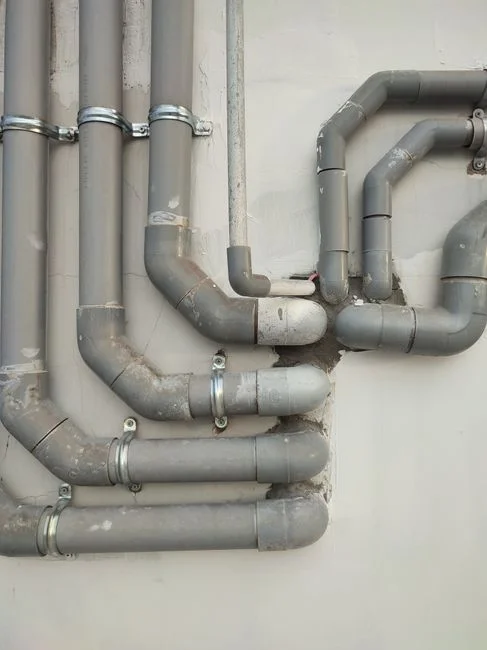
The decision between a skid-in-ISO-container MBR and a buried package plant is driven by project duration, site visibility, schedule pressure and effluent quality. A containerized MBR ships 80–90% pre-built, requires only a level concrete pad, and can be commissioned in days, making it the lower-risk choice for remote camp sites and for residential projects on tight schedules (S2, S5). Buried integrated package plants such as the underground WSZ package sewage treatment plant hide below grade, leave the surface free for landscaping or parking, and suit permanent residential communities where aesthetics and zero above-ground footprint matter.
A containerized MBR typically achieves lower BOD, TSS and ammonia than a buried A/O contact-oxidation plant at the same hydraulic load because the UF membrane retains biomass at much higher MLSS, enabling near-reuse quality (S2, S4). Capital cost per m³/d is usually higher for the containerized MBR, but total installed cost is often lower once civil works, clarifiers, tertiary filtration and a larger footprint are eliminated (S4, S5). The decision rule is straightforward: choose containerized MBR when project duration is under 10 years, the site is remote, the schedule is tight, or the effluent is intended for reuse; choose a buried package plant when the project is permanent, above-ground equipment must be hidden, and a lower capital cost is prioritized. For a parallel sizing workflow at altitude, the Almaty containerized MBR sizing guide and the Amman containerized MBR sizing guide apply the same four-step method to Central Asian and Levantine sites.
| Criterion | Containerized MBR (ISO skid) | Buried package plant (WSZ-type) |
|---|---|---|
| Civil work on site | Level concrete pad only (S2, S5) | Excavation, backfill, concrete works |
| Commissioning time | Days (S2) | Weeks to months |
| Above-ground visibility | One or more ISO containers | None, fully buried |
| Typical effluent BOD / TSS | <10 / <5 mg/L (S4) | Higher, requires tertiary polishing |
| Relocation | Yes, designed for redeployment (S2, S5) | No, permanent installation |
| Best fit | Camps, remote sites, <10-yr projects, reuse | Permanent residential, aesthetics-driven sites |
Cost Benchmarks and Lead-Time Reality Check
Containerized MBR package plants are typically quoted as a single skid-in-container price. Final landed cost in Mexico should be confirmed line-by-line with the supplier for shipping, import duties, crane rental, electrical hookup, Spanish-language PLC HMI and on-site commissioning — these cost components vary materially by port of entry and site access, and no specific percentage is stated in the supplied research. Pure Aqua's MBR-C series ships in standard 20' or 40' ISO containers, which are accepted by any standard truck or intermodal haulier and simplify logistics from US or Asian factories into the Port of Manzanillo or the Port of Veracruz (S4).
Factory acceptance testing on the assembled container, a membrane integrity test certificate, and a Spanish-language O&M manual tailored to CEA-Jalisco reporting should be requested at quotation, not at delivery. The buyer should also request the supplier's standard lead-time band for the selected model in writing; specific week-counts are not stated in the supplied research, so confirm them per quote.
Frequently Asked Questions
What budget envelope should I plan for a containerized MBR in Jalisco?
Containerized MBR plants are quoted as a single skid-in-container price plus site-dependent adders. The supplied research does not state a specific MXN or USD figure per m³/d for the MBR-C line, so request a written line-item quotation from at least two suppliers that separates equipment, shipping to Manzanillo or Veracruz, import duties, crane rental, electrical hookup and commissioning. Use that line-item total as your budgeting input rather than an assumed industry range (qualitative guidance; no numeric quotation in S4).
How do I choose between a 20' and a 40' container for a 300-person residential project?
Apply the four-step method above. For 300 residents at 190 L/c/d and a 1.4 peaking factor, the peak flow is ~80 m³/d, which falls between the MBR-C-13.2K-06 (50 m³/d, 1×20') and the MBR-C-26.4K-10 (100 m³/d, 1×40') models. Selecting the 100 m³/d 1×40' unit gives a ~25% margin above peak flow and leaves room for the 10–15% contingency for unaccounted connections discussed in Step 1 (S4).
Does the MBR-C permeate meet NOM-001-SEMARNAT for a Jalisco discharge?
The MBR-C permeate specification is BOD <10 mg/L, TSS <5 mg/L, NH4-N <2 mg/L (S4). Those values generally sit inside the river/lake and coastal discharge tables of NOM-001-SEMARNAT-1996, but the receiving-body classification and any CEA-Jalisco concession conditions must be confirmed against the specific project, because stricter fecal-coliform or pH limits can apply.
Should I specify a 220V/3Ph or 460V/3Ph electrical supply?
Standard MBR-C electrical supply is 460V/3Ph/60Hz (S4). Mexican industrial three-phase service at 460V is available in most Guadalajara industrial parks, so a 460V/3Ph site is the cleanest match. A 220V/3Ph site will require either a step-up transformer or a quoted electrical variant — confirm that line item at the RFQ stage rather than after the purchase order is issued.
Related Equipment
- DF-series PVDF flat-sheet MBR modules — specifications, capacity range, and technical data
- underground WSZ package sewage treatment plant — specifications, capacity range, and technical data