
What a Hyderabad data center actually has to treat
A data center in Hyderabad, Sindh produces three distinct wastewater streams, each requiring a different management strategy. The dominant stream is cooling-tower blowdown — the controlled purge that prevents dissolved solids from concentrating beyond safe limits in the recirculating loop. A second stream appears only if the design uses once-through condenser cooling with a raw-water source, resulting in a discharge that is thermally loaded but chemically near-raw. The third stream consists of domestic sewage from staff and cafeteria operations, characterized by a BOD and pathogen profile unrelated to cooling chemistry. Treating these as one combined stream is a common mistake in early P&ID conversations and leads to oversized equipment or failure to meet SEPA standards.
The working benchmark for blowdown volume sizing is 25–30% of makeup water at 4 cycles of concentration (Genesis Water Tech, 2026). Applied to a ~1 MGD facility, that puts blowdown at roughly 250,000–300,000 gallons per day. Hyperscale sites scaling up to the 5 MGD upper bound for cooling-water demand (Commercial Water Lab, citing UGA CAES TP-121, June 2026) project blowdown in the 1.25–1.5 MGD range before any recovery step. Hyderabad's high wet-bulb temperature increases the evaporative fraction of the cooling tower, which forces either higher cycles of concentration or a larger blowdown stream for the same heat-rejection duty. The first data point to lock with the client is the design makeup-water rate and the target cycles of concentration, as every downstream calculation depends on those two variables.
Blowdown chemistry and why Sindh's makeup water makes it harder
Five characteristics define a blowdown stream, and each drives a different treatment decision. Elevated TDS at 1,200–6,000 mg/L — typically 4–8× the makeup water — sets the osmotic pressure on any RO system and determines whether the concentrate can be discharged. Scaling minerals (calcium, magnesium, silica, alkalinity) concentrate in the same ratio and define the antiscalant program and the maximum recovery an RO can reach before silica or calcium-sulfate precipitation forces a clean-in-place. Treatment chemicals — biocides, scale and corrosion inhibitors, and dispersants — accumulate in the blowdown, rendering legacy chromate or high-phosphate cooling programs incompatible with membrane reuse and SEPA discharge; these chemistries must be retired upfront. Suspended solids at 10–50 mg/L from corrosion products, biofilm fragments, and airborne dust determine whether side-stream filtration is sized at the 1% or 5% end of its range. Biological content, including planktonic bacteria, algae, and biofilm-forming organisms, requires control before any membrane step to prevent fouling (Genesis Water Tech, 2026).
Sindh's makeup water is a critical factor for engineers to address. The first laboratory deliverable for any Pakistan project should be a full ionic suite: TDS, total hardness as CaCO₃, silica, chloride, sulfate, iron, and manganese. Without this data, membrane selection, antiscalant dosing, and cycles-of-concentration targets remain speculative. The Hyderabad plant must optimize for a fundamental trade-off: pushing cycles higher reduces blowdown volume but increases silica and TDS risk in the recirculating water, which compresses the RO recovery window and shifts the design toward ZLD. The same arithmetic that makes high cycles attractive for water savings increases the cost per cubic meter for the downstream treatment train.
| Parameter | Typical blowdown range | Design driver |
|---|---|---|
| TDS | 1,200–6,000 mg/L | RO osmotic pressure, discharge eligibility |
| Hardness (Ca, Mg) | 4–8× makeup | Antiscalant selection, RO recovery ceiling |
| Silica | Scales with cycles | RO recovery limit, MVC brine handling |
| Suspended solids | 10–50 mg/L | Side-stream filter sizing, UF flux |
| Biocides / inhibitors | Accumulated dose | Membrane compatibility, SEPA biocide residual |
Treatment train options for blowdown reuse, discharge, or ZLD
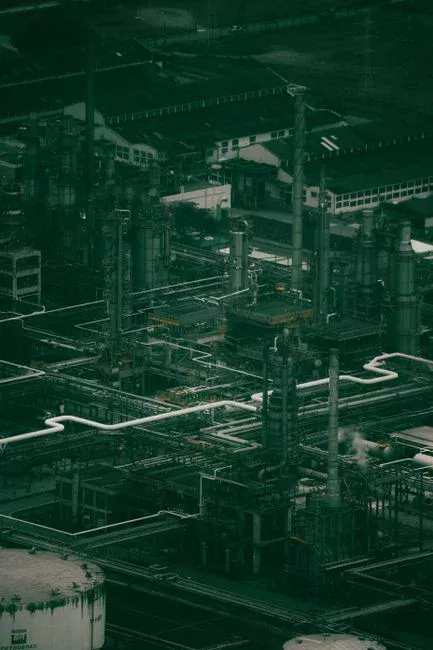
The choice of endpoint dictates the treatment train. Three strategic options exist: cooling-tower makeup reuse at 60–85% recovery, discharge compliance, and zero liquid discharge (ZLD) at 95–99% overall recovery. Because discharge to the LBOD system in Hyderabad is under scrutiny (Qureshi et al., 2015), reuse serves as the defensible default, while ZLD acts as a hedge if SEPA consent is denied.
Side-stream filtration is a non-negotiable first step to ensure system longevity. Self-cleaning spiral or sand/multimedia filters at 10–25 µm, sized at 1–5% of circulation flow, reduce suspended solids to levels that downstream membranes can tolerate (Genesis Water Tech, 2026). The membrane core then uses ultrafiltration at 0.01–0.1 µm pore size, 10–30 psi, and 90–95% recovery, ahead of an industrial RO system operating at 150–400 psi, 95–99% salt rejection, and 50–85% recovery. Where hardness is the binding constraint, nanofiltration at 75–150 psi and 70–85% recovery provides a lower-pressure softening option. A multi-media filter ahead of UF and a properly specified ultrafiltration system protect the RO from particulate and biological fouling.
For ZLD or near-ZLD, RO concentrate moves to mechanical vapor compression, which provides distillate below 10 mg/L TDS at 95–98% recovery and 15–25 kWh per 1,000 US gallons, with a crystallizer converting the final brine to solid cake (Genesis Water Tech, 2026). Reported ZLD capital costs range from $3–8 million with operating costs of $5–15 per 1,000 gallons; these figures serve as indicative ranges rather than Pakistan-specific quotations. Local electricity tariffs and Sindh-specific brine-disposal routes must be confirmed with the client to accurately define the ZLD business case.
| Endpoint | Typical recovery | Indicative CAPEX band | OPEX band | When it fits |
|---|---|---|---|---|
| Cooling-tower makeup reuse | 60–85% | Side-stream + UF + RO | Lower; offsets freshwater | Default for most sites |
| Discharge compliance | N/A — flow-through | Lowest | $5–15 per 1,000 gal discharge fees | Where reuse is infeasible |
| ZLD (MVC + crystallizer) | 95–99% | $3–8 million | $5–15 per 1,000 gal | Water-scarce, no discharge path |
Discharge, pretreatment, and the SEPA/NEQS envelope in Sindh
In Sindh, any facility discharging more than 10 m³/day of industrial wastewater requires SEPA consent and must comply with NEQS values. Cooling-tower blowdown is classified as industrial wastewater, and Hyderabad sites face review regarding TDS, heavy metals, BOD, and biocide residuals. The receiving environment in lower Sindh is already under pressure, as Qureshi et al. (2015) document untreated sugar-mill effluent discharging into the LBOD network at levels exceeding NEQS and WHO limits. A new data center sending untreated blowdown to this drainage system will be subject to strict regulatory oversight.
Discharge economics reinforce the case for reuse. Genesis Water Tech (2026) reports that direct discharge fees in water-stressed regions often exceed $5–15 per 1,000 gallons, with some jurisdictions capping discharge TDS below 1,500 mg/L. For Hyderabad, the combined savings from avoided discharge fees and freshwater pumping costs typically provide a faster return on investment for a reuse train than for a discharge-compliant polish step. Engineers must obtain the current SEPA-applied NEQS values from the authority before finalizing the P&ID to ensure compliance.
Sustainability trade-off: water savings vs. energy and chemicals
Water savings from blowdown reuse are substantial, but the carbon and chemical footprint require tracking from the project's inception. The Open Engineering LCA (Cartagena Vaca et al., 2026) indicates that a reuse train roughly doubles global warming potential compared to freshwater, rising to over 5× for a UF+RO configuration, primarily due to treatment energy. The study also reports an indirect water penalty of 0.93 L/m³ from upstream electricity and chemical inputs, which should be included in client ESG reports. The carbon math improves under a decarbonized grid, as the water savings accrue at full value while the GWP penalty decreases over the system's service life. An automatic chemical dosing system sized to the actual blowdown load maintains an accurate chemical footprint.
Pre-design checklist for a Hyderabad data center
Before freezing the P&ID, the engineer requires five inputs: a recent makeup-water analysis (TDS, hardness, silica, chloride, sulfate, iron, manganese), target cycles of concentration, the desired reuse-versus-discharge split, peak hourly blowdown, and documentation from a pre-consultation with SEPA regarding the NEQS schedule. Design decisions to lock early include the reuse/discharge/ZLD strategy, the RO recovery target, the brine disposal pathway, and the grid carbon-intensity assumptions. Operational integrations should specify side-stream filtration at 1–5% of circulation flow, an antiscalant program compatible with the RO membrane, and a biocide rotation that protects membranes; a chlorine dioxide generator is a recommended choice for biocide control. Where sewage and sludge handling are required, an MBR integrated wastewater treatment system for the domestic stream and a plate-frame filter press for sludge dewatering provide a complete solution.
Frequently Asked Questions
What does a Hyderabad data center blowdown treatment train cost in 2026?
While Pakistan-specific pricing is unavailable, indicative US/EU costs for a 50,000 GPD RO unit range from $250,000–500,000, with operating costs of $1.50–3.00 per 1,000 gallons (Genesis Water Tech, 2026). Side-stream filtration typically costs $50,000–200,000, and full ZLD systems range from $3–8 million in capital with $5–15 per 1,000 gallons in operating costs. Site-specific quotes must account for local tariffs, SEPA permitting fees, and brine-disposal routes.
How do I pick a supplier for a Sindh data center water reuse system?
Suppliers should be selected based on documented experience with high-TDS blowdown (1,200–6,000 mg/L inlet to RO), the ability to supply an integrated train, and a willingness to warrant the RO at the specified recovery targets. Require the supplier to confirm membrane and antiscalant compatibility with the actual makeup-water analysis and to provide a reference list of installations operating at similar TDS and silica loads. Written statements on lead times for MVC and crystallizer skids are essential, as these are typically long-lead items.
Does Hyderabad's climate change the cycles-of-concentration I should target?
Hyderabad's high wet-bulb temperature increases the evaporative fraction of the cooling tower, requiring either higher cycles of concentration or a larger blowdown stream to maintain heat rejection. The cycles target must be balanced against the client's makeup-water analysis, particularly regarding silica and calcium sulfate limits, and the SEPA-discharge TDS ceiling. Higher cycles reduce blowdown volume but compress the RO recovery window and increase the likelihood of requiring ZLD.
Is discharge to the LBOD drainage system a realistic option for blowdown?
Untreated blowdown discharge to LBOD tributaries is not recommended for a new Hyderabad facility. Qureshi et al. (2015) document that the LBOD network already receives untreated industrial effluent subject to NEQS compliance, and new industrial discharges are strictly reviewed for TDS, heavy metals, BOD, and biocide residuals. A discharge-compliant polish step is technically feasible, but reuse is generally the more cost-effective and faster-to-permit path given the high discharge fees reported in water-stressed regions (Genesis Water Tech, 2026).