
Why Tema Needs Decentralized Domestic Sewage Treatment
The Tema Metropolitan Area combines the Tema port, the Sakumono industrial enclave, beachside resorts and large worker camps whose wastewater loads sit outside the centralized sewer trunk. A 2026 build for any of these sites — an estate, hotel, hospital or factory HSE retrofit — is therefore almost always specified as a decentralized package plant rather than a connection to a future interceptor sewer.
Domestic wastewater is the mixed stream from household sinks, showers, toilets and washing machines carrying food particles, oils, chemicals and human waste (greenlivinganswers.com). That means a Tema plant must treat both greywater and blackwater in one envelope; a greywater-only skid or a single-stage septic tank will fail the moment kitchen and laundry flows are added.
Three local design drivers push the design space toward buried, fully automated, low-operator packages. First, coastal saline groundwater in areas like Sakumono and Community 25 raises the bar on tank corrosion protection and on any discharge to soakaway. Second, sandy, high-permeability soils mean conventional soakaway drainage fields fail unless the effluent quality is genuinely tertiary. Third, intermittent grid power makes conventional activated-sludge works with large blowers uneconomic, so the practical answer is a buried A/O package or a containerized membrane bioreactor (MBR) with low specific energy demand and an on-site buffer.
If the proposed site falls inside a planned sewer interceptor alignment and the connection is committed before 2027, a package plant is the wrong answer. For everything else in the Tema catchment, decentralized packaged or MBR-based STPs are the default procurement route.
The Standard Treatment Train — What Every Tema Plant Must Include
The reference process for domestic sewage is preliminary screening → primary sedimentation → secondary biological treatment → tertiary nutrient removal → disinfection, with sludge treatment running in parallel to that water line (greenlivinganswers.com). Any supplier quotation that skips a stage or merges screening with grit removal into a single chamber should be treated with caution.
Preliminary screening removes rags, plastics and grit, and for Tema the sand/grit load is unusually heavy because of wind-blown sand and the informal paving around worker camps. Bar-screen headworks should be specified with adequate aperture and a grit chamber sized for the local load rather than a temperate-climate default. Primary sedimentation then settles the bulk of settleable solids as primary sludge, which is raked to the sludge line.
Secondary biological treatment in the supplied options uses activated sludge, trickling filters, rotating biological contactors or modern biofilm carriers (greenlivinganswers.com). For packaged Tema plants the practical choices are anoxic/aerobic (A/O) contact oxidation in a buried tank, or a submerged MBR with PVDF membranes rated at 0.1–1 μm, both of which combine nitrification and denitrification in a single envelope. The tertiary stage then polishes residual nitrogen and phosphorus — total nitrogen is the focus of the MABR programme at Severn Trent's Minworth WWTP and is a useful benchmark when sizing the biological nutrient removal (BNR) envelope (Oxymem).
Disinfection is by chlorination, ultraviolet (UV) radiation or ozonation (greenlivinganswers.com). UV is widely specified in Tema because there is no chlorine residual to handle and it is effective against chlorine-resistant organisms, while chlorine dioxide is preferred when the plant also feeds a hospital or hotel hot-water loop where biofilm control matters. Sludge handling must be specified in the same tender: thickening, digestion, dewatering (e.g. a sludge dewatering press) and disposal or reuse as soil conditioner or anaerobic-digestion feedstock (greenlivinganswers.com).
| Stage | Unit operation | Typical Tema design note |
|---|---|---|
| Preliminary | Bar screen + grit chamber | Size for sand/grit load; specify SS304 contacts |
| Primary | Sedimentation / clarifier | Typically integrated into A/O or MBR package |
| Secondary | A/O contact oxidation or submerged MBR | 0.1–1 μm PVDF membranes where MBR specified |
| Tertiary | BNR polishing (N, P) | Calibrate against MABR/IFAS upgrade path |
| Disinfection | UV-C or chlorine dioxide | Match to reuse end-use and chlorine policy |
| Sludge | Thickening, digestion, dewatering | Plate-and-frame press for < 500 m³/day sites |
Process Options Compared: Septic+Drainage vs WSZ A/O Package vs MBR
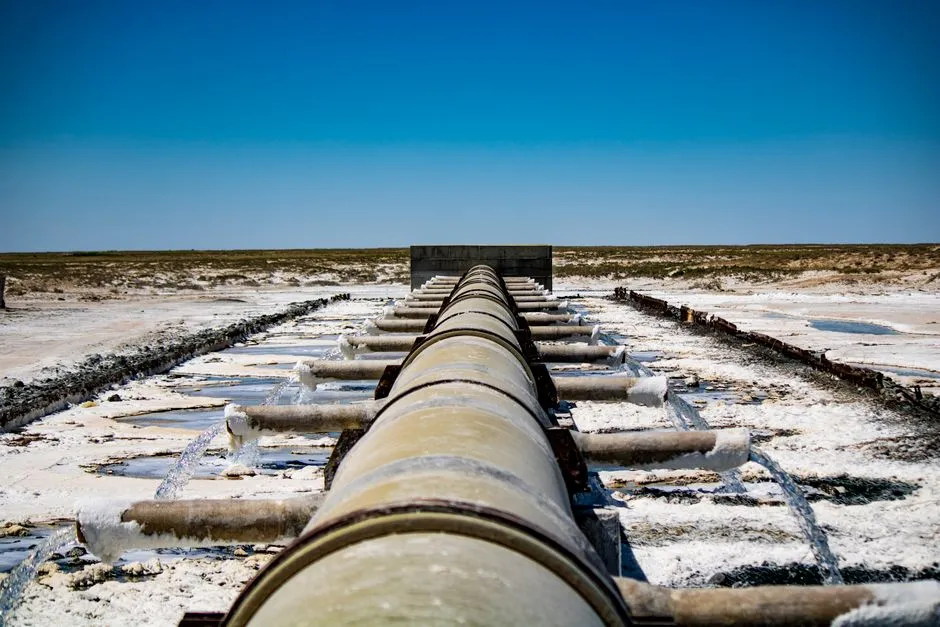
Three process families cover almost every Tema tender between 5 m³/day and 500 m³/day. The choice is driven by influent strength, available footprint, reuse intent and operator skill, not by CAPEX alone.
Option 1 — septic tank plus drainage field or filter well. Gravity-driven, no electricity, low cost, suitable for individual houses and very small rural sites where soil permeability allows the design (Kyriienko et al. 2018, doi:10.32347/2411-4049.2018.3.59-67). It is not adequate for a Tema hotel, hospital or estate of more than a handful of households because it cannot meet nutrient limits on permeable sandy soils and it has no real disinfection barrier.
Option 2 — buried A/O packaged plant, for example a buried A/O packaged STP. This combines anoxic/aerobic contact oxidation, sedimentation and disinfection in a single buried unit, rated 1–80 m³/h, fully automated with no on-site operator required, and can be installed below grade with landscaping above or trailer-mounted for mobile deployment. It is the right answer for the bulk of Tema hotels, schools and worker camps.
Option 3 — containerized MBR, using a containerized MBR system. Integrated activated sludge with submerged PVDF membrane filtration, sub-micron filtrate, around 60% smaller footprint than conventional plants, and scalable from roughly 10 to 2,000 m³/day. It is preferred where the effluent must approach reuse quality for irrigation or toilet flushing. A DAF pre-treatment skid is added in front of the biological stage when the influent carries high FOG, oil or colloidal load — relevant for Tema food-processing estates — but is not a substitute for biological treatment.
| Process family | Typical flow range | Footprint | Operator skill | Best-fit Tema use |
|---|---|---|---|---|
| Septic + drainage field | Up to ~5 m³/day | Large (soakaway) | None | Single homes, very small rural sites |
| Buried A/O package | 1–80 m³/h | Small (buried) | Low (automated) | Hotels, schools, estates, worker camps |
| Containerized MBR | 10–2,000 m³/day | ~60% of conventional | Low–medium (membrane care) | Reuse-quality effluent, tight sites |
| MABR / IFAS retrofit | Drop-in modules | Uses existing tanks | Medium | Retrofit only, not new build |
Meeting Ghana EPA L.I. 2249 and Tema Metropolitan Assembly Requirements
Every Tema plant has to clear two consents before commissioning: an Environmental Protection Agency discharge permit under the EPA Act 490 framework, and a Tema Metropolitan Assembly planning/building consent. The implementing instrument cited for domestic discharge in adjacent Ghana buyer-guide material on HydropureWater is L.I. 2249 (Environmental Quality Standards for Discharge), and that is the schedule the tender document should reference verbatim when calling out effluent quality.
The parameter families a Tema tender should specify, with the exact numeric limits confirmed against the current L.I. 2249 schedule at tender stage, are BOD, COD, total suspended solids, total nitrogen, total phosphorus, pH, faecal coliforms, residual chlorine, and oil & grease — the standard regulated set for domestic effluent in the general process literature (greenlivinganswers.com). For projects near potable water sources or with planned reuse, also align the effluent to the Ghana Standards Authority drinking-water specification for the parameters carried over to the reuse end-use, so the same envelope is defensible to both EPA and GSA reviewers.
Disinfection equipment for the tertiary step should be specified to recognised disinfectant standards — chlorine dioxide generators compliant with EPA, EU Drinking Water Directive 98/83/EC and WHO Guidelines, and UV systems selected against the same baseline. The design package submitted with the Tema Metropolitan Assembly permit application should already show EPA pre-clearance for the discharge point and a hydrogeology note covering saline intrusion and groundwater mounding, because the coastal water table is shallow across most of the metropolis.
| Parameter family | Why it matters for Tema | Tender action |
|---|---|---|
| BOD / COD / TSS | Conventional organics and solids envelope | Confirm limits vs current L.I. 2249 schedule |
| Total nitrogen / phosphorus | Eutrophication control on the Sakumono lagoon | Specify BNR stage; MABR retrofit if existing |
| Faecal coliforms | Reuse and bathing-water protection | Validate UV dose or ClO2 residual |
| pH, residual chlorine, oil & grease | Standard regulated set | Online monitoring on the discharge line |
| Reuse carry-over parameters | Irrigation / toilet flushing end-use | Align to GSA drinking-water spec |
Sizing and Cost Considerations for a 2026 Tema Build
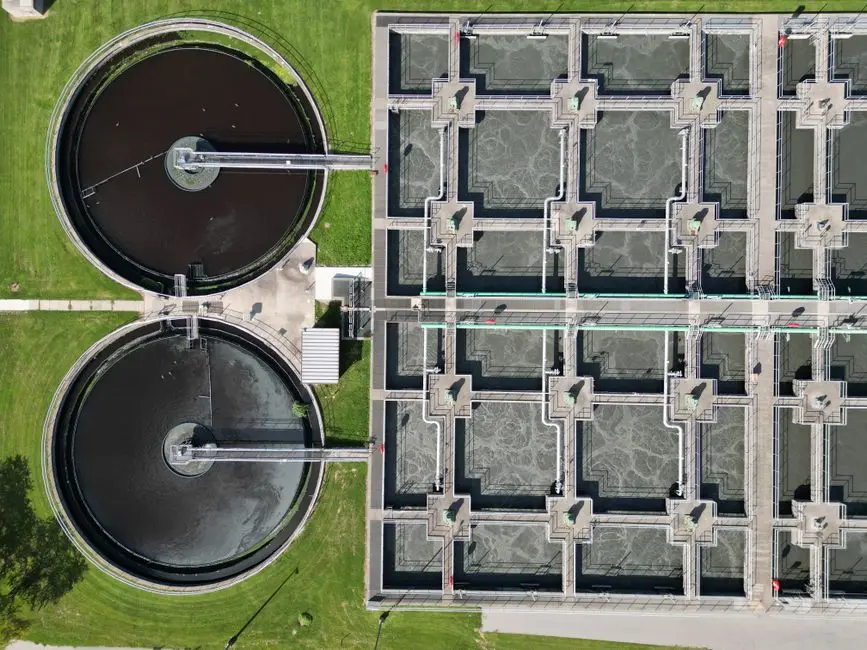
Sizing starts with the average population served, per-capita wastewater generation (a West African urban context typically sits in the 80–150 L/person/day band, but the exact figure must be confirmed with the design engineer against local benchmarks and any GSA reuse assumption), a peak occupancy factor for hotels and worker camps, and a safety margin for organic and hydraulic load. The list is qualitative until those four inputs are pinned down for the specific site.
Equipment cost bands vary widely with material (carbon steel vs SS304/SS316), automation level, disinfection choice, and shipping to Tema port plus clearing. The responsible move is to request a sized quotation from at least three shortlisted suppliers and benchmark it against the qualitative scale of adjacent HydropureWater Ghana buyer guides such as the rural Ghana sewage sourcing guide and the Ghana hotel wastewater engineering guide, rather than against a generic imported price list. Do not commit to a numeric range without those three quotations in hand.
Whole-life OPEX is dominated by energy, which favours low-energy processes such as MABR/IFAS retrofits and MBR flat-sheet modules; by chemical dosing for phosphorus polishing; by membrane replacement; and by sludge handling. Build OPEX into the tender evaluation alongside CAPEX, otherwise the cheapest skid on paper becomes the most expensive plant to run. For supplier context on low-energy operation, the qualitative claim in the MBR product literature is that flat-sheet submerged MBRs draw substantially less energy than external cross-flow designs — a figure to be confirmed against the supplier's specific pump and blower duty points.
Choosing a Supplier for a Tema Domestic STP
A shortlist for a 2026 Tema build should be qualified against a fixed checklist before any factory visit. The checklist is short on purpose: it is the set of documents a Tema-based project engineer can actually verify.
| Vetting item | What to ask for | Why it matters in Tema |
|---|---|---|
| EPA L.I. 2249 reference plants | Commissioning reports in Ghana or West Africa | Confirms the supplier can meet local effluent limits |
| Factory acceptance test (FAT) video | Unedited FAT for the exact skid being quoted | Prevents skid-vs-catalogue substitution |
| ISO 9001 certification | Current certificate, scope covering STP builds | Quality system baseline |
| After-sales coverage | Engineer resident in Accra/Tema, response SLA | Spare parts and membrane replacement in days, not months |
| Performance guarantee | Bonded to the L.I. 2249 parameter list | Aligns commercial risk with discharge risk |
| Process match | Buried A/O, MBR, or hybrid per the comparison table | Match the supplier to the process, not the other way round |
Match the supplier's product line to the comparison table in the previous section. If the bid is for a buried A/O package, the supplier should be able to deliver a complete buried envelope with screening, biological stage and disinfection in one tank, plus a matching DAF pre-treatment skid where the influent is greasy, a UV-C disinfection unit sized to the design flow, and a dewatering press for the sludge line. Before final sizing, insist on a site influent characterisation covering BOD, COD, TSS, TN, TP, salinity and temperature; do not let a supplier size a plant on assumed values.
Frequently Asked Questions
Which domestic sewage process should I specify for a Tema hotel of 50 rooms?
A buried A/O packaged plant sized to the design flow, with a UV-C disinfection unit, is the typical answer for a 50-room hotel on a tight site where no reuse is planned. If the hotel plans to reuse treated effluent for irrigation or toilet flushing, step up to a containerized MBR for the reuse-grade filtrate. Confirm the choice against a measured influent characterisation rather than a generic per-room allowance.
What is the binding Ghana compliance document for a Tema STP?
The binding instrument is the Environmental Protection Agency Act 490 discharge permit, with effluent limits set against the L.I. 2249 (Environmental Quality Standards for Discharge) schedule as cited in adjacent Ghana buyer guides on HydropureWater. The exact numeric limits for BOD, COD, TSS, TN, TP, pH, faecal coliforms, residual chlorine and oil & grease must be pulled from the current L.I. 2249 schedule at tender stage and pasted verbatim into the specification.
How do I size the plant when occupancy peaks on weekends?
Size on the average dry-weather flow plus a peak occupancy factor for hotels and worker camps, then add a safety margin for organic and hydraulic load. For a Tema hotel, request a daily-flow profile from the operator covering the last 12 months rather than relying on a generic per-room figure, and ask the design engineer to confirm per-capita generation against local benchmarks before signing the sizing report.
How do I compare a Chinese supplier against a European one for a Tema build?
Run both through the same vetting checklist: L.I. 2249 reference plants in West Africa, current ISO 9001 certificate, FAT video for the quoted skid, Accra/Tema after-sales coverage, and a performance guarantee bonded to the discharge parameter list. Then request a sized quotation from each on identical influent data, identical flow and identical effluent limits, and benchmark the landed cost in Tema port — including clearing and last-mile delivery — against three quotations before shortlisting. Two quotations is not enough to defend the choice to a Tema Metropolitan Assembly reviewer.