What an Effluent Treatment Plant Must Deliver in Ghana
An effluent treatment plant (ETP) in Ghana is a facility that brings industrial wastewater — from sectors such as textiles, food and beverage, mining, and pharmaceuticals — to the limits set by Ghana Standard GS 1212:2019 before discharge or reuse. A 2025 review of industrial wastewater management in Ghana found that conventional systems frequently fail to remove pharmaceuticals, antimicrobial-resistance markers, and metals documented in Accra–Legon and mining-belt surveys.
The same review reported Ghana-specific energy benchmarks: ultrafiltration at 0.10–0.45 kWh·m⁻³, anaerobic MBR at 0.15–0.40, aerobic MBR at 0.4–2.3, and reverse osmosis at 0.6–1.5 kWh·m⁻³, with constructed wetlands as low as $0.03–0.08·m⁻³ in OPEX where land permits. A full-scale Accra plant combining UASB with a trickling filter has reached 611 ± 275 Nm³·d⁻¹ of biogas at 65% methane and a plant specific energy of 0.23–0.31 kWh·m⁻³, demonstrating that near-energy-neutral operation is feasible in Ghana today.
Two anchors frame every design decision on a Ghanaian ETP. The first is GS 1212:2019, the discharge and reuse standard that the Ghana Standards Authority applies to trade effluent. The second is the PURC electricity tariff schedule, which decides whether an aerated or membrane train is financially sustainable at the design flow rate. The 2025 review of industrial wastewater management in Ghana (S3) treats both as binding constraints, not optional refinements, and reports its technology ranges against that regulatory and tariff backdrop. Any process train proposed to a director should be mapped to a specific GS 1212:2019 limit and to a PURC-billed kWh figure before it is approved.
The influent reality is harder than the textbook case. The same review reports that Ghanaian industrial effluents carry pharmaceuticals, antimicrobial-resistance markers, and heavy metals — particularly in the Accra–Legon monitoring and mining-belt surveys cited in S3 — that conventional biological treatment alone does not remove. That finding forces a polishing or disinfection step on virtually every train, and it rules out the assumption that a well-run activated-sludge plant is sufficient. The practical question for the engineer is not "is biological treatment enough" but "what polishing step, sized to the influent, closes the gap to GS 1212:2019."
Core Process Trains Used for Ghanaian Industrial Effluent
The realistic technology menu in Ghana breaks into four families: biological, membrane, nature-based, and polishing. The 2025 review (S3) reports Ghana-specific energy ranges for three of them, and these are the figures that should appear in a budgetary comparison rather than imported textbook values. Ultrafiltration sits at 0.10–0.45 kWh·m⁻³, anaerobic MBR at 0.15–0.40 kWh·m⁻³, aerobic MBR at 0.4–2.3 kWh·m⁻³, and reverse osmosis at 0.6–1.5 kWh·m⁻³. Constructed wetlands are reported separately as $0.03–0.08·m⁻³ in OPEX, with land availability as the binding constraint.
The biological anchor on the menu is the full-scale Accra plant documented in the same review: a UASB followed by a trickling filter, producing 611 ± 275 Nm³·d⁻¹ of biogas at 65% methane, with a plant SEC of 0.23–0.31 kWh·m⁻³ and documented periods near energy neutrality (S3). For a process engineer in Ghana, that combination is the most defensible biological precedent — not because it is the only option, but because it is the option with published full-scale Ghanaian operating data. Any anaerobic front-end proposed to a director should be benchmarked against that Accra reference before procurement.
Membranes and nature-based polishing close the train. DAF and lamella clarification handle the high suspended solids and emulsified FOG that foul membranes and starve biological stages, particularly on food-and-beverage and textile sites. UF or aerobic MBR is the typical polishing step, with reverse osmosis reserved for sites where reuse value justifies the energy and the brine management cost. S3 explicitly flags RO as appropriate only for high-value reuse with brine management, and warns that RO is not a default polishing step. Constructed wetlands sit alongside this menu as a primary or polishing step where land is available and discharge is the target; the 2025 review reports the $0.03–0.08·m⁻³ OPEX band for that option, but no Ghana-quantified CAPEX band. AOPs and hybrid trains are noted as a pilot gap in S3, not as procurement-ready technology.
| Technology | Ghana-specific energy or OPEX range | Source | Where it fits on a Ghanaian site |
|---|---|---|---|
| Ultrafiltration (UF) | 0.10–0.45 kWh·m⁻³ | S3 (2025 review) | Polishing on low-strength streams; reuse-grade effluent where RO is not justified |
| Anaerobic MBR (AnMBR) | 0.15–0.40 kWh·m⁻³ | S3 (2025 review) | High-strength streams with energy recovery and tight effluent targets |
| Aerobic MBR | 0.4–2.3 kWh·m⁻³ | S3 (2025 review) | Sites with skilled operators and reuse value; default where land is tight |
| Reverse osmosis (RO) | 0.6–1.5 kWh·m⁻³ | S3 (2025 review) | High-value reuse only, with documented brine management |
| UASB + trickling filter (Accra full-scale) | Plant SEC 0.23–0.31 kWh·m⁻³; 611 ± 275 Nm³·d⁻¹ biogas at 65% CH₄ | S3 (2025 review) | High-strength streams; closest Ghanaian precedent for energy-positive biological stage |
| Constructed wetland | $0.03–0.08·m⁻³ OPEX | S3 (2025 review) | Land-rich sites; primary or polishing step where reuse is not required |
Matching the Train to Your Influent and Discharge Target
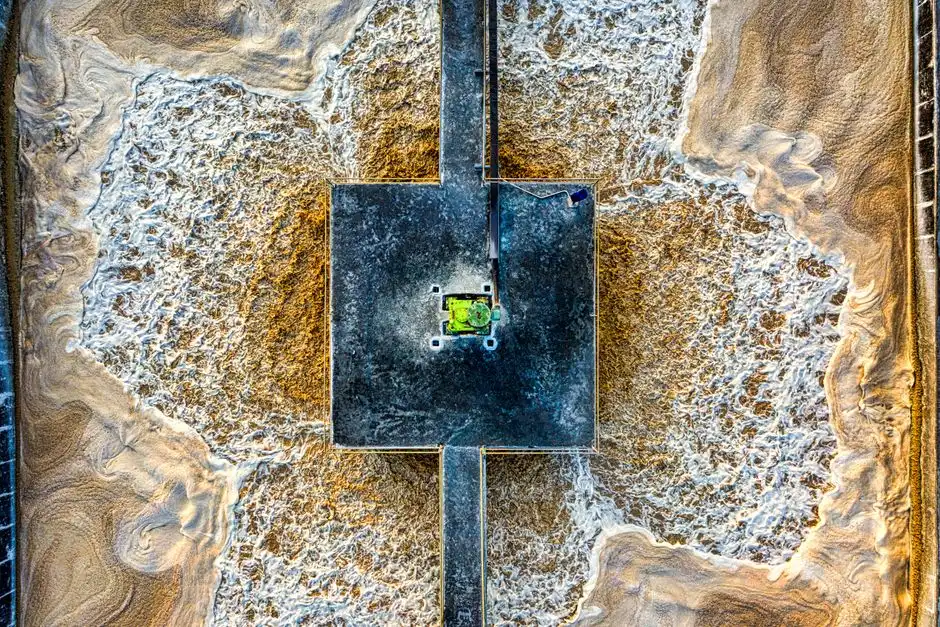
Process selection collapses to two axes: the discharge target (GS 1212:2019 compliance versus reuse for boiler or process water) and the influent strength (high-strength versus low-strength). Every defensible train in Ghana can be written as a function of those two variables, and the 2025 review (S3) is explicit that the four technology bands it reports map to those categories rather than to industry sectors. The decision rule below is built directly from that mapping.
For a high-strength industrial stream — abattoir, brewery, distillery, or strong textile effluent — the Ghanaian precedent is anaerobic front-end with a polishing step. Lead with UASB or AnMBR for energy recovery, then polish with MBR or UF, and benchmark the biological stage against the Accra full-scale UASB + trickling filter data (S3: 611 ± 275 Nm³·d⁻¹ biogas at 65% methane, plant SEC 0.23–0.31 kWh·m⁻³). The energy-recovery case is the difference between an ETP that is a cost centre and one that is a near-energy-neutral asset, and it is documented at full scale in Ghana, not only in international literature.
For a low-strength stream or a reuse-grade target, UF or aerobic MBR is the default where operators are available. RO enters only when reuse value justifies the brine-management burden, which S3 flags explicitly as a Ghanaian constraint, not a generic design caution. For land-rich sites with no reuse requirement, a constructed wetland is the headline economic case at $0.03–0.08·m⁻³ OPEX (S3), provided the discharge target is met at the wetland outlet. In every case, retain a polishing and disinfection step — UF or UV — because the Ghanaian influent contains AMR markers and pharmaceuticals that a biological stage alone does not destroy, and the 2025 review names these as the contaminants conventional systems most often fail to remove.
| Influent strength | Discharge target | Recommended train (Ghana precedent) | Anchor data |
|---|---|---|---|
| High-strength (brewery, distillery, abattoir, strong textile) | GS 1212:2019 compliance | UASB or AnMBR → UF/MBR polishing → disinfection | Accra UASB + trickling filter, plant SEC 0.23–0.31 kWh·m⁻³; AnMBR 0.15–0.40 kWh·m⁻³ (S3) |
| Low-strength (F&B rinse, light textile, pharma rinse) | GS 1212:2019 compliance | DAF/lamella → aerobic MBR or UF → UV | Aerobic MBR 0.4–2.3 kWh·m⁻³; UF 0.10–0.45 kWh·m⁻³ (S3) |
| Any strength, reuse for boiler or process | Reuse-grade (boiler/process) | Biological → UF → RO with brine management → UV | RO 0.6–1.5 kWh·m⁻³ (S3); brine handling is a Ghanaian-specific design constraint |
| Any strength, land-rich, no reuse | GS 1212:2019 compliance | Biological pretreatment → constructed wetland | Constructed wetland OPEX $0.03–0.08·m⁻³ (S3); land is the binding constraint |
Energy, OPEX, and the PURC Tariff Reality
On a Ghanaian ETP, electricity is the largest controllable OPEX line, and the 2025 review (S3) is explicit that PURC tariffs make it the dominant variable for membrane and aerated trains. That is why the published kWh·m⁻³ ranges matter more than turnkey quotes: a small swing in the PURC-billed rate can move a membrane train from affordable to unaffordable at the design flow rate, while a constructed wetland's $0.03–0.08·m⁻³ OPEX band (S3) is largely insulated from tariff movements because its energy demand is small.
The order-of-magnitude gap between trains is the first number to put in front of a finance team. RO at 0.6–1.5 kWh·m⁻³ is roughly 6–15× the energy of UF at 0.10–0.45 kWh·m⁻³ (S3), so the decision to add RO is a decision to multiply the electricity line by a factor, not to add a polishing step. The same logic applies to aerobic MBR at 0.4–2.3 kWh·m⁻³: the upper end of that range is driven by aeration intensity and is the figure the OPEX case should use, not the lower bound.
Energy recovery is the lever that changes the sign of the calculation. The Accra reference in S3 — 611 ± 275 Nm³·d⁻¹ of biogas at 65% methane, with periods near energy neutrality at a plant SEC of 0.23–0.31 kWh·m⁻³ — is not a side benefit. It is a direct offset to PURC-billed kWh, and the same review recommends biogas use and optimized aeration as the path to SDG 13 alignment. The supplier conversation should therefore include a quantified offset, not a "bigas for boiler" headline. Close the section by requesting a per-m³ energy and OPEX breakdown from any supplier, not a turnkey price, because the tariff assumption is what decides whether the case holds together at the director level.
Building the Equipment List for a Ghanaian ETP
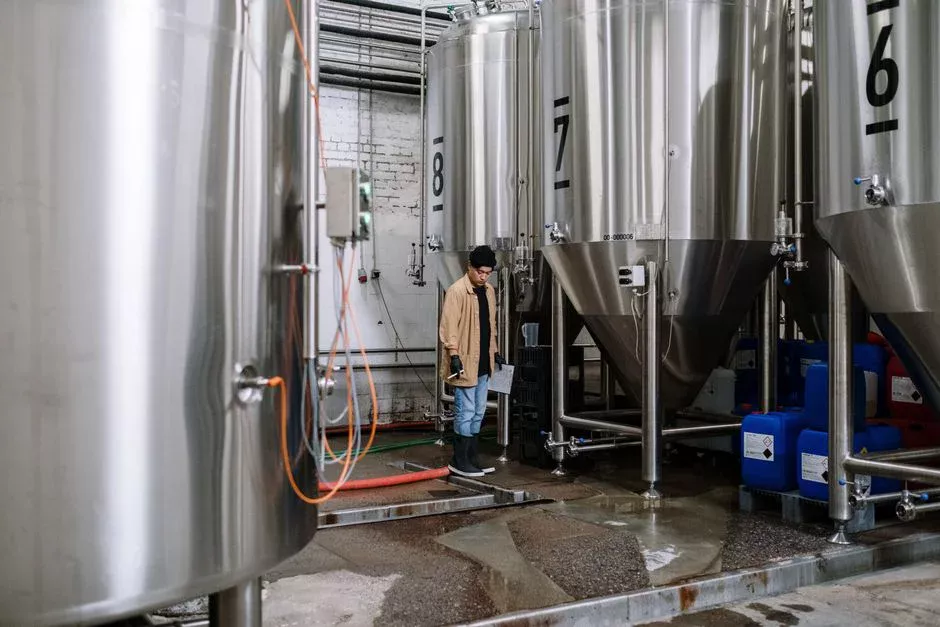
Once the train is chosen, the equipment list follows from the unit operations, not the other way round. Headworks is the first line of defence: a rotary mechanical bar screen protects downstream pumps and biological stages from rags, plastics, and grit common in Ghanaian combined or septic feeds. Primary separation is the next gate. A DAF system handles emulsified FOG and high suspended solids, which are typical on food-and-beverage and textile sites; where footprint is constrained, a lamella clarifier is the alternative.
The biological and membrane core is the train's centre of gravity. An MBR membrane bioreactor system is the default where the chosen train is aerobic MBR, sized to the influent load with PVDF membranes (0.1 μm flat sheet or 0.03 μm hollow fiber) matched to the waste profile. For a low-strength polishing step, an ultrafiltration skid covers the 0.10–0.45 kWh·m⁻³ band reported in the 2025 review (S3). Reuse polishing requires an RO system, but only with a documented brine management plan; the same review flags brine as a Ghanaian-specific constraint on RO.
Disinfection and sludge close the list. A UV sterilizer handles residual disinfection where reuse water is intended for human contact or process, and the 2025 review (S3) names AMR markers and pharmaceuticals as the reason a biological stage alone is insufficient. The sludge line is a plate and frame filter press, sized to the clarifier or MBR waste-activated-sludge yield. For textile sites, the upstream train overlaps with the textile wastewater treatment in Ghana guide; for land-rich polishing decisions, the constructed wetland design for industrial use reference covers the design inputs. Municipal and hospitality loads are covered separately under rural sewage treatment in Ghana and hotel and resort wastewater treatment in Ghana.
Frequently Asked Questions
Which Ghanaian standard applies to industrial effluent discharge, and where does it appear in a process design?
GS 1212:2019 is the discharge and reuse standard cited in the 2025 review (S3) as the compliance anchor for Ghanaian industrial ETP design. It should appear in a process design as the limit value each unit operation is sized to meet, with a documented compliance check at the outlet rather than a generic "treated to standard" claim. A buyer should request a parameter-by-parameter compliance matrix from any supplier, tied to the specific GS 1212:2019 limits for the sector.
Which train fits a textile or food-and-beverage site with limited operator skill?
For limited operator skill, the lower-energy end of the Ghana-specific ranges is the safer choice: UF at 0.10–0.45 kWh·m⁻³ or aerobic MBR at 0.4–2.3 kWh·m⁻³ (S3). UF as a polishing step over a biological front-end is the most operationally forgiving option; RO is not recommended where operator skill is constrained, because membrane cleaning and brine handling demand trained staff. A buyer should request the operator-skill assumptions the supplier used to size the train.
Which cost line items dominate on a Ghanaian ETP, and which figures are Ghana-specific?
Electricity is the largest controllable OPEX line under PURC tariffs, and the 2025 review (S3) is explicit on that. Ghana-specific figures from that review are UF 0.10–0.45 kWh·m⁻³, AnMBR 0.15–0.40, aerobic MBR 0.4–2.3, RO 0.6–1.5, and constructed wetland OPEX $0.03–0.08·m⁻³; the Accra full-scale UASB + trickling filter plant reached plant SEC 0.23–0.31 kWh·m⁻³ with 611 ± 275 Nm³·d⁻¹ biogas at 65% methane. A buyer should request a per-m³ energy and OPEX breakdown from the supplier, not a turnkey price, and should ask which line items are Ghana-quantified versus generic.
What must a credible ETP supplier demonstrate for a Ghanaian project?
A credible supplier should provide Ghana-specific energy figures from the 2025 review bands (S3) for the proposed train, reference plants operating in Ghana, and a compliance matrix that maps each unit operation to specific GS 1212:2019 limits. For RO proposals, they should document brine management explicitly, since the same review flags brine as a Ghanaian-specific constraint. Suppliers who quote only generic textbook energy ranges or who cannot name Ghanaian reference plants are not yet qualified to defend a process selection under PURC tariffs and GS 1212:2019.