Why Lomé's Climate and Infrastructure Change the Blowdown Question
Generic data-center blowdown guides are written for U.S. or European sites with stable municipal supply, temperate ambient wet-bulb temperatures, and well-defined POTW discharge permits. Lomé is none of those. Industry estimates put global reliance on water-based cooling at roughly 75–90% of data centers, with most large sites using open-loop evaporative cooling (KETOS, 2025). In evaporative systems, 70–80% of makeup water is lost to evaporation and the remaining 20–30% leaves as cooling tower blowdown (KETOS, 2025). That 70–30 split is the design starting point, and it interacts directly with Lomé's hot, coastal conditions, intermittent municipal supply, and limited reclaimed-water infrastructure.
The makeup source itself is a moving variable. A Lomé site will typically blend municipal potable water, borehole groundwater, and (where available) treated wastewater, and each source shifts the blowdown chemistry and the pretreatment needed upstream of any recovery skid (Genesis Water Technologies; KETOS, 2025). Discharge from facilities in the Lomé basin ultimately routes toward the Ébrié Lagoon and the Bight of Benin, so the compliance conversation has to include biological oxygen demand, salinity intrusion, and phosphorus load from legacy cooling-water chemistry — a frame that does not translate directly from U.S. discharge guidance (Genesis Water Technologies; KETOS, 2025). Treat the local climate, water source, and discharge setting as fixed inputs before any technology selection.
Blowdown Chemistry in a Tropical Coastal Cooling Tower
Blowdown total dissolved solids (TDS) typically runs 4–8 times the makeup water TDS and falls in the 1,200–6,000 mg/L range, driven by cycles of concentration and source water quality (Genesis Water Technologies). Pushing cycles of concentration higher in a hot climate cuts freshwater use but concentrates calcium, magnesium, silica, and alkalinity, all of which raise scaling risk and complicate biological control (Genesis Water Technologies). Suspended solids typically sit at 10–50 mg/L even with basin filtration, originating from corrosion products, biofilm fragments, and airborne particulates carried into the tower by coastal air (Genesis Water Technologies).
Treatment chemicals accumulate alongside dissolved minerals: biocides, corrosion inhibitors, scale inhibitors, and dispersants all concentrate in blowdown. Legacy programs using chromate or high-phosphate chemistries are a particular problem for both reuse and discharge, because they carry regulated metals and nutrients that the receiving environment cannot easily absorb (Genesis Water Technologies). Even well-maintained systems carry planktonic bacteria, algae, and biofilm-forming organisms that any downstream recovery membrane must be designed to handle (Genesis Water Technologies).
| Parameter | Typical Blowdown Range | Design Implication |
|---|---|---|
| TDS | 1,200–6,000 mg/L (4–8× makeup) | Sets RO operating pressure and antiscalant dose |
| Suspended solids | 10–50 mg/L | Demands side-stream and UF pretreatment |
| Hardness / silica / alkalinity | Concentrated vs. makeup | Limits cycles of concentration and RO recovery |
| Biocides and inhibitors | Concentrated; legacy chromate/phosphate programs problematic | Drives chemistry compatibility and discharge limits |
| Biological content | Planktonic bacteria, algae, biofilm fragments | Requires non-fouling chemistry and membrane CIP planning |
For coastal Lomé, a multi-media filter on the makeup or side-stream is the first line of defense against the particulates that arrive on sea breezes.
Pick the End-Use Strategy First: Reuse, Discharge, or ZLD
The right technology follows from the end-use objective. Three strategies dominate, and they have very different economics for a Lomé site.
Cooling-tower makeup reuse typically achieves 60–85% recovery and is the strongest economics for a site where freshwater is the binding constraint (Genesis Water Technologies). Discharge compliance is the right objective where a buyer can demonstrate acceptable TDS, phosphorus, and biocide residuals to the receiving environment and the local utility. In water-stressed regions, direct discharge fees above $5–15 per thousand gallons and TDS caps below 1,500 mg/L are already a live operating cost in some jurisdictions (Genesis Water Technologies). Zero liquid discharge (ZLD) is justified only where discharge is effectively prohibited and water is genuinely scarce, and it has to clear the bar of site power cost, grid stability, and brine disposal logistics; global CAPEX of $3–8M and OPEX of $5–15 per thousand gallons are not Lomé-specific numbers (Genesis Water Technologies).
A partial-ZLD approach that concentrates blowdown by 80–90% to reduce liquid waste volume is often the practical middle ground for West African sites where full crystallization is uneconomic (Genesis Water Technologies). Decide between these three before sizing equipment.
| End-Use Strategy | Typical Recovery | Global CAPEX Benchmark | OPEX Benchmark | Best Fit |
|---|---|---|---|---|
| Cooling-tower makeup reuse | 60–85% | RO skid $250K–$500K installed at 50,000 GPD | $1.50–$3.00/kgal (Genesis Water Technologies) | Water-limited Lomé sites |
| Discharge compliance | Variable | Process- and permit-dependent | Avoided discharge fees offset cost | Sites with viable sewer/utility access |
| Partial ZLD (concentrate reduction) | 80–90% volume reduction | Below full ZLD | Below full ZLD | Practical West African middle ground |
| Full ZLD | 95–99% | $3–8M (Genesis Water Technologies) | $5–15/kgal (Genesis Water Technologies) | Only where discharge is prohibited |
For most Lomé projects, the answer is reuse of RO permeate as cooling-tower makeup via an industrial RO unit for blowdown recovery, with discharge compliance as a fallback.
The Lomé Treatment Train: Side-Stream Filtration → UF → RO/NF → Optional MVC
The default execution order is: side-stream filtration, then ultrafiltration as RO pretreatment, then reverse osmosis (or nanofiltration) for reuse, with mechanical vapor compression as an optional concentrate polisher where discharge is constrained.
Side-stream filtration at 1–5% of total circulation flow, using self-cleaning spiral filters at 10–25 micron, is the foundation. Global CAPEX runs $50,000–$200,000 for typical data-center installations, and the water-quality improvement cascades through the whole loop (Genesis Water Technologies). Ultrafiltration (0.01–0.1 micron PVDF, 10–30 psi) is the standard pretreatment before RO/NF, with 90–95% recovery and 1–3 month cleaning intervals; it removes suspended solids, bacteria, viruses, and high-MW organics while letting dissolved salts pass (Genesis Water Technologies). An ultrafiltration pretreatment skid sized for the blowdown stream is the practical anchor for the membrane train.
Reverse osmosis removes 95–99% of dissolved solids, hardness, silica, and most treatment chemicals, producing permeate at 10–50 mg/L TDS suitable for direct cooling-tower makeup. Recovery on blowdown is 50–85%, limited by scaling; an automatic antiscalant and biocide dosing system is essential to hit the upper end of that range (Genesis Water Technologies). Nanofiltration is the lower-pressure alternative (75–150 psi, 70–85% recovery, permeate around 30–50% of feed TDS) when hardness and sulfate are the binding constraints rather than total TDS (Genesis Water Technologies).
Where discharge is constrained, mechanical vapor compression (MVC) polishes RO concentrate at 95–98% recovery, producing distillate below 10 mg/L TDS and a 20–30% solids brine. Global benchmark CAPEX is $1–3M for 10,000–30,000 GPD, with energy consumption of 15–25 kWh per 1,000 US gallons of distillate (Genesis Water Technologies). A combined RO + MVC train reaches 85–95% overall recovery with minimal liquid discharge, which is the realistic ceiling for most Lomé projects short of full crystallization (Genesis Water Technologies). Plan RO and UF membrane replacement elements into the operating budget from day one, because Lomé's logistics for spares is materially different from U.S. benchmarks.
| Stage | Function | Operating Parameters | Recovery | Global CAPEX Benchmark |
|---|---|---|---|---|
| Side-stream filtration | Particulate and biofilm control | 10–25 micron, 1–5% of circulation | n/a (in-loop) | $50K–$200K (Genesis Water Technologies) |
| Ultrafiltration (UF) | RO pretreatment; SS, bacteria, virus removal | 0.01–0.1 micron PVDF, 10–30 psi | 90–95% (Genesis Water Technologies) | Project-dependent |
| Reverse osmosis (RO) | Dissolved solids, hardness, silica, chemical removal | 150–400 psi, antiscalant dosed | 50–85% on blowdown (Genesis Water Technologies) | $250K–$500K at 50,000 GPD (Genesis Water Technologies) |
| Nanofiltration (NF) | Partial softening, sulfate reduction | 75–150 psi | 70–85% (Genesis Water Technologies) | Below RO at comparable capacity |
| Mechanical vapor compression (MVC) | RO concentrate polishing | 15–25 kWh/1,000 gal distillate | 95–98% of concentrate (Genesis Water Technologies) | $1–3M at 10,000–30,000 GPD (Genesis Water Technologies) |
| Combined RO + MVC train | High-recovery reuse with minimal liquid discharge | — | 85–95% overall (Genesis Water Technologies) | Sum of stages |
Matching Cooling Architecture to Lomé's Grid and Water Reality
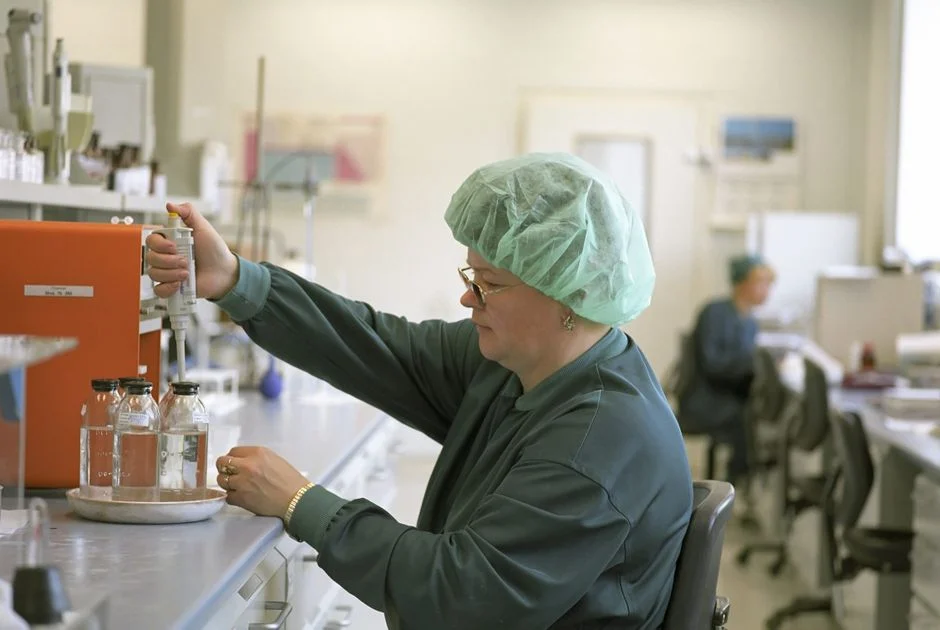
Blowdown volume is a function of cooling architecture, not just chemistry. Closed-loop or chilled-water designs can cut water consumption to roughly 5–10% of withdrawal by eliminating intentional evaporation, against the 70–80% loss seen in evaporative cooling (KETOS, 2025). A hybrid design — evaporative for the main heat-rejection loop with a closed-loop secondary for the IT room — is often the most pragmatic for tropical Lomé conditions where ambient wet-bulb temperatures run high (KETOS, 2025).
Free-air or adiabatic cooling is rarely a full answer in Lomé's climate but can trim peak evaporative demand during the cooler dry season (KETOS, 2025). The cooling architecture directly sets the water usage effectiveness (WUE) target. The industry-average WUE sits near 1.8 L/kWh, efficient sites reach about 1 L/kWh, and less efficient hot-climate sites run up to 9 L/kWh (KETOS, 2025). Choose the architecture first, then size the blowdown treatment train to the resulting volumetric load — not the other way around.
Cost, Logistics, and Compliance for a Lomé Project in 2026
Global CAPEX benchmarks to adapt, not copy verbatim: side-stream filtration $50,000–$200,000; a 50,000 GPD blowdown RO $250,000–$500,000 installed with OPEX $1.50–$3.00 per thousand gallons; MVC $1–3M for 10,000–30,000 GPD; full ZLD $3–8M at $5–15 per thousand gallons OPEX (Genesis Water Technologies).
Logistics factors specific to Lomé and coastal West Africa — port handling, containerization of skids, duty and VAT on imported electro-mechanical equipment, and the availability of membrane replacements and antiscalant supply — typically add materially to those global benchmarks. Request a Lomé-quoted figure from the supplier; do not extrapolate the U.S. range. The Greater Lomé sludge plants MoU reported on 2 October 2026 is a live signal that decentralized municipal wastewater and sludge infrastructure is being formalized in the Lomé basin; align discharge assumptions with the resulting standards rather than older national defaults. Cooling-water chemistry compatibility matters at design stage: legacy chromate and high-phosphate programs create reuse and discharge problems, so any blowdown recovery system should be paired with non-phosphate, low-toxicity chemistry, such as a tablet-based biocide and scale-inhibitor program supported by an on-site chlorine dioxide generator (Genesis Water Technologies).
Frequently Asked Questions
What CAPEX should a hyperscale operator in Lomé budget for a 50,000 GPD blowdown RO train?
Global CAPEX for a 50,000 GPD blowdown RO installed runs $250,000–$500,000, with OPEX of $1.50–$3.00 per thousand gallons treated (Genesis Water Technologies). For Lomé specifically, ask the supplier for a Lomé-quoted figure that includes port handling, containerization, import duty and VAT, and membrane-spare logistics, because coastal West African logistics typically add materially to the U.S. benchmark.
Is a West African site a good candidate for full zero liquid discharge?
Full ZLD is technically feasible but expensive. Global CAPEX runs $3–8M and OPEX $5–15 per thousand gallons, mostly from thermal energy for crystallization (Genesis Water Technologies). For a Lomé project, evaluate it against the actual power cost, grid stability, and brine disposal logistics, and consider a partial-ZLD approach that concentrates blowdown by 80–90% as a more realistic middle ground (Genesis Water Technologies).
Which discharge permits and compliance steps apply to a data center in Togo in 2026?
Engage early with the Togolese environmental authority for the EIA and discharge permit, and design the blowdown train around the standards the new Greater Lomé sludge plants MoU infrastructure will operate under (reported 2 October 2026), rather than older national defaults. Confirm limits for TDS, phosphorus, and biocide residuals directly with the regulator, because the Bight of Benin and Ébrié Lagoon discharge pathway is sensitive to nutrient and salinity loading.
How do I choose between nanofiltration and reverse osmosis for a Lomé blowdown recovery skid?
Pick RO when the binding constraint is total TDS, silica, or any legacy chromate or high-phosphate chemistry, because RO delivers 95–99% dissolved-solids removal and permeate at 10–50 mg/L TDS (Genesis Water Technologies). Pick NF when hardness and sulfate drive the limit and silica is low, because NF runs at 75–150 psi with 70–85% recovery and lower energy cost (Genesis Water Technologies). For tropical coastal blowdown with mixed cycles of concentration, RO is the safer default and NF is the value-engineered alternative.