
The 2026 Regulatory Stack for Mining and Metals Discharges Near Manvel
Mining and metals operations in the Manvel, Texas area must satisfy a three-layer regulatory stack before any water leaves the site: an NPDES permit, federal categorical pretreatment standards, and the local sewer-use ordinance enforced by the receiving POTW. Under the Clean Water Act, every U.S. mine generating process wastewater must hold an NPDES permit, which covers mine drainage, mineral processing, and stormwater runoff (per EPA NPDES industrial wastewater guidance, EPA.gov). Plants discharging to a POTW must additionally satisfy 40 CFR Part 430 for metal mining, 40 CFR Part 434 for coal mining, and the parallel 40 CFR Part 436 framework for mineral mining and processing, which EPA promulgated in 1975 and amended in 1976, 1977, 1978, and 1979 (per EPA 40 CFR Part 436, epa.gov).
The third layer is the local control authority. The receiving POTW enforces its own sewer-use ordinance with concentration or mass-based caps on TSS, iron, manganese, and pH, and these caps are frequently tighter than the federal categorical limits. A 2026 discharge envelope to design against is pH 6.0–10.0 (often restricted to 6.5–9.0), TSS ≤ 250–500 mg/L, total arsenic ≤ 0.5 mg/L, total iron and manganese ≤ 5–10 mg/L each, and oil & grease ≤ 100 mg/L; these are standard Texas POTW parameters, and the engineer must confirm the exact local numbers with the control authority before specifying equipment (per S1 2026 POTW baseline).
Two Failure Modes That Drive 2026 Compliance Risk Near Manvel
Manvel-area plants are cited for two specific failure modes: acute excursions and chronic accumulation. An acute excursion is a single pH or arsenic spike that triggers a Notice of Violation, a state referral, and potential consent-order remediation costs. Chronic accumulation is the more common 2026 risk: metals meet daily concentration limits but steadily build in the POTW's biosolids, which results in surcharges and capacity constraints for the mine (per S1 2026 POTW baseline).
The equipment design implication is the same for both modes. The defense is precise unit operations matched to specific influent concentrations, with PLC-controlled dose loops tied to online pH and ORP probes, and equalization upstream so feed variability does not pass through to the clarifier. Anything less leaves the operator one upset event away from a state NOV.
Stage 1 — pH Adjustment and Equalization
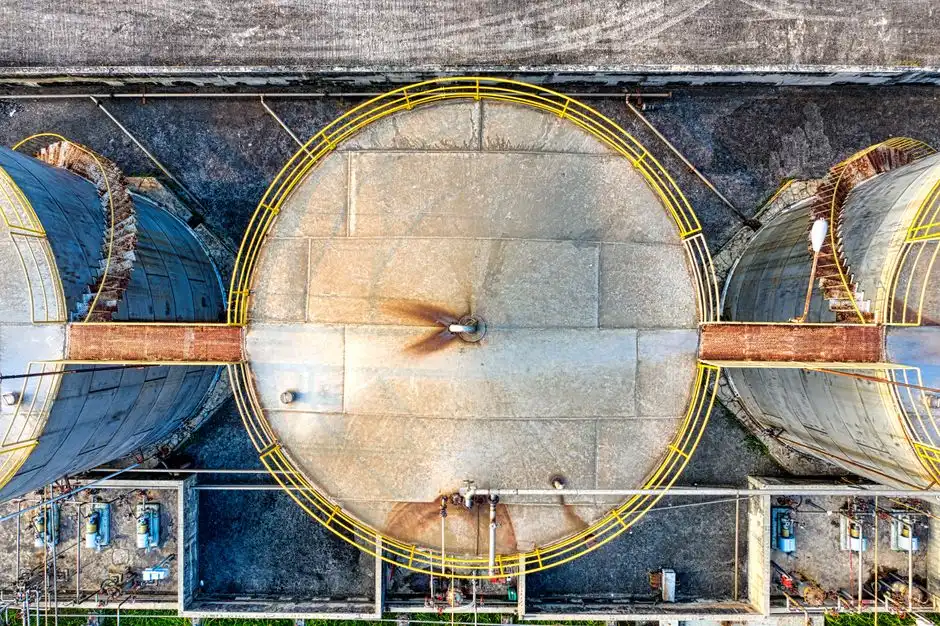
Raising pH is the first non-negotiable step on the P&ID to ensure dissolved iron, manganese, arsenic, and other heavy metals precipitate as hydroxides. Lime or caustic is dosed to neutralize acidic mine water and to drive the precipitation reaction; dose control is handled by a PLC-controlled chemical dosing skid linked to an in-line pH probe. The setpoint is typically 8.5–9.0 for maximum metal hydroxide precipitation when arsenic and lead are present, then adjusted back to 7.0–8.0 for discharge (per S1 2026 field data).
Equalization precedes the chemistry to ensure process stability. An equalization basin provides 20–30 minutes of holding time to smooth feed variability before Stage 2, which protects downstream floc formation from pH or flow swings. For arsenic(III) streams, oxidation to As(V) with ClO₂ or H₂O₂ must be staged before or during pH adjustment so the iron-arsenate co-precipitation that follows in Stage 2 is effective. If the oxidation step is skipped, arsenic passes through hydroxide precipitation and shows up as a chronic accumulation risk in the receiving POTW's biosolids.
Stage 2 — Coagulation and Flocculation
Coagulants neutralize colloidal charge, with standard 2026 choices being alum at 50–150 mg/L, ferric chloride at 30–100 mg/L, or polyaluminum chloride (PACl). The dose is delivered through the same PLC-controlled chemical dosing skid used in Stage 1, with the pump speed paced to flow. Anionic polyacrylamide flocculant is then dosed at 1–5 mg/L to bridge destabilized particles into settleable flocs in the 0.5–3 mm size range, with a hydraulic residence time of 15–25 minutes in a flocculation basin equipped with a low-shear paddle (per S1 2026 field data).
The coagulant selection matters for arsenic. Ferric-based coagulants are preferred when arsenic is present because iron co-precipitation drives 80–99% dissolved-metal removal at pH 6.5–9.0 (per S1 2026 field data). Alum is cheaper per kilogram but does not give the same iron-arsenate co-precipitation; PACl sits between the two. The 2026 P&ID should label which coagulant is being specified and the rationale, because that choice is what the receiving POTW will challenge during the permit review.
Stage 3 — Clarification: DAF or Lamella for the Manvel Decision
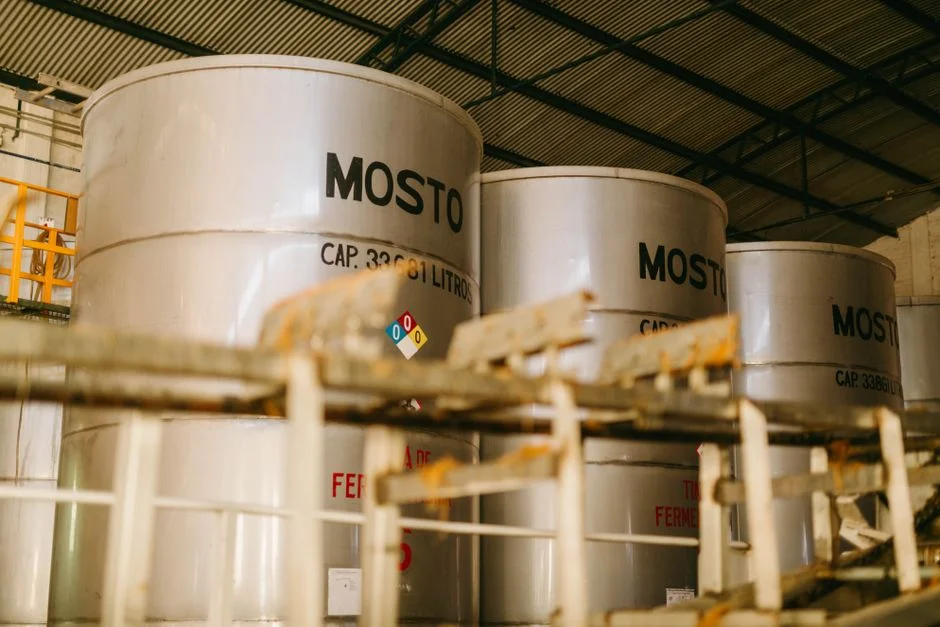
Choosing the right clarifier determines the success of solids removal for Manvel-area facilities. The choice between a DAF system and a lamella clarifier is not a preference question; it is a feed-character question. DAF is the right answer when the stream carries hydrocarbons — coal prep wash, truck wash, equipment washdown, metals-finishing rinse water — because DAF typically reduces influent TSS of 1,000–5,000 mg/L to under 100 mg/L while removing 90%+ of oil and grease using 20–80 µm whitewater micro-bubbles. Lamella is the more economical answer for high-TDS mineral slurries with low oil content, because inclined plates give a large effective settling area in a compact footprint for high-density metal precipitates (per S1 2026 selection logic).
The sizing drivers are different. DAF influent hydraulic loading runs 5–25 m³/m²·h; lamella surface loading rates are higher at 20–40 m/h on inclined-plate designs, so footprint and dry-solids loading drive the trade. When the influent carries hydrocarbons, the whitewater micro-bubbles attach to oil droplets and float them to the surface, which a lamella cannot do. When the influent is a high-density metal hydroxide slurry with no oil, lamella wins on capex and floor space. The decision rule: oil in the feed → DAF; no oil, high TSS, high specific gravity → lamella. If the clarifier overflow still carries 50–100 mg/L of fines, insert a multi-media filter upstream of UF to extend membrane life.
| Parameter | DAF | Lamella Clarifier |
|---|---|---|
| Best-fit feed | Hydrocarbon-bearing (coal prep, truck/equipment wash, metals-finishing rinse) | High-TDS mineral slurry, low oil, high-density metal precipitates |
| Influent TSS | 1,000–5,000 mg/L | 500–5,000 mg/L |
| TSS after clarification | < 100 mg/L | < 100–200 mg/L with plate design |
| Oil & grease removal | 90%+ via 20–80 µm whitewater micro-bubbles | Not effective for O&G |
| Hydraulic / surface loading | 5–25 m³/m²·h | 20–40 m/h on inclined plates |
| Footprint driver | Bubble contact zone + float scraping | Plate area for settling |
| Typical 2026 P&ID call | When O&G > 50 mg/L or feed is light/low-density | When O&G is low and precipitates are dense |
Stage 4 — Polishing Ultrafiltration to Meet 2026 TSS and Turbidity Limits
A 0.03 µm PVDF ultrafiltration system, or a 0.1 µm PVDF/ceramic SiC equivalent, polishes the clarifier overflow to less than 1 NTU turbidity and less than 5 mg/L TSS — the standard threshold for avoiding POTW surcharges. Design flux is 50–80 L/m²·h with TMP below 1.0 bar, and automatic backwash plus CIP is specified as standard (per S1 2026 field data).
Membrane material is the second decision. PVDF hollow-fiber is the default for standard 2026 mining polishing duty and tolerates feed turbidity up to 300 ppm with automatic backwash and air scour. Ceramic SiC is the upgrade for hot, abrasive, high-TDS mining feeds where PVDF would foul too quickly; the trade is higher capex per m² of membrane area against longer service life. RO and UF membrane elements should be specified as spare-stock items so a fouled element does not push the plant into an excursion while a replacement is on order.
Sludge Dewatering and Reuse: Closing the Mass Balance
Clarifier underflow, DAF float, and UF backwash solids all converge on the dewatering stage. Metal-laden sludge must be dewatered prior to disposal to keep the clarifier operating at design capacity; otherwise solids recycle back into the overflow and erode the TSS margin a 2026 spec was built around. A plate-and-frame filter press for metal-laden sludge dewatering is the industry standard, achieving 60–70% dry solids by weight, reducing cake volume, and recovering filtrate for plant recycling (per S1 2026 field data).
The sizing rule of thumb: 0.5–1.0 m³ of chamber volume per 50–80 kg of dry solids per cycle, with a 90–180 minute cycle time. Plants producing over roughly 2 dry tonnes of sludge per day should specify an automatic plate-shifter; below that, a manual press is acceptable. Treated effluent post-UF is suitable for cooling loops, dust suppression, or ore washing. In water-stressed Gulf-coast operations, recycling often recovers UF/RO capex within 18–36 months through freshwater cost avoidance (per S1 2026 field data). A brackish-water RO skid downstream of UF enables boiler feed, reagent make-up, or final rinse for metals recovery, but only with a concentrate management plan (ZLD or controlled evaporation) on the P&ID. The 2026 spec should not call RO without that plan in place. The screw press sludge dewatering guide covers the trade-offs of mechanical dewatering alternatives.
Frequently Asked Questions
What size filter press does a Manvel-area mine producing 3 dry tonnes of sludge per day need?
A plant producing ~3 dry tonnes/day falls in the range where an automatic plate-shifter is justified. Apply the sizing rule of 0.5–1.0 m³ of chamber volume per 50–80 kg of dry solids per cycle, with a 90–180 minute cycle time, and size the press for the daily total of clarifier underflow, DAF float, and UF backwash solids combined (per S1 2026 field data). The chamber volume and plate count are inputs the supplier needs from the engineer's mass balance before quoting.
How should a 2026 specifier choose between DAF and lamella for a Manval/Brazoria County mining or metals-finishing stream?
Match the unit operation to the feed. If the stream carries hydrocarbons — coal prep wash, truck or equipment washdown, metals-finishing rinse — specify a
Frequently Asked Questions
What 2026 discharge limits apply to a mining or metals plant discharging to a POTW near Manvel, Texas?
Facilities discharging to a Publicly Owned Treatment Works (POTW) near Manvel must comply with the City of Manvel’s Industrial Pretreatment Program and federal categorical pretreatment standards under 40 CFR Part 434 (Coal Mining) or Part 440 (Ore Mining and Dressing). While specific local limits are dictated by the POTW’s headworks analysis, typical 2026 requirements mandate Total Suspended Solids (TSS) below 30 mg/L, Oil and Grease under 50 mg/L, and stringent heavy metal concentration caps, such as Total Lead at 0.05 mg/L, Total Copper at 0.5 mg/L, and Total Zinc at 1.0 mg/L.
Do I need an NPDES permit if I send treated mining wastewater to the local sewer near Manvel?
No, a National Pollutant Discharge Elimination System (NPDES) permit is generally not required for indirect discharges to a sanitary sewer, as the NPDES program covers direct discharges into "Waters of the United States." Instead, you must obtain an Industrial Wastewater Discharge Permit from the local municipal authority. This permit will outline specific pretreatment requirements, monitoring frequencies, and reporting protocols necessary to protect the POTW’s biological treatment processes from process-specific pollutants.
How do I choose between a DAF system and a lamella clarifier for a mining wastewater stream near Manvel?
The selection depends primarily on the density and morphology of the suspended solids. A Dissolved Air Flotation (DAF) unit is preferred when the wastewater contains oils, greases, or light, hydrophobic particles with a specific gravity less than 1.0, as these will naturally float. Conversely, a lamella clarifier (inclined plate settler) is the optimal choice for high-density metal precipitates, such as metal hydroxides or mineral fines with a specific gravity greater than 1.2, as these require gravitational settling to achieve effective solid-liquid separation.
What is the capital cost range for a complete four-stage mining pretreatment skid in 2026, and what drives it?
For a standard industrial mining pretreatment skid—including pH adjustment, coagulation/flocculation, clarification, and tertiary filtration—capital costs typically range from $250,000 to $850,000. Price variance is driven by the required flow rate (measured in gallons per minute), the complexity of the chemical dosing automation, the metallurgy of wetted parts (e.g., 316L stainless steel versus high-density polyethylene), and the level of instrumentation required for real-time compliance reporting to local authorities.
How do I size a plate-and-frame filter press for metal-laden sludge from a Manvel-area mining plant?
Sizing is determined by calculating the daily mass of dry solids generated from the pretreatment clarifier and the desired cycle time. You must determine the sludge volume index (SVI) and the target cake solids percentage, which for metal hydroxides typically falls between 25% and 35% dry solids. The total chamber volume is calculated by dividing the daily sludge volume by the number of cycles per day, adding a 20% safety factor for operational variability, and selecting a press frame capacity that accommodates the resulting cubic footage of filter plates.