Why Salt Lake City Food and Beverage Factories Are Asking This Question in 2026
Salt Lake City–West Valley is a working dairy, snack-food, and craft-brew corridor, and the streams those plants send to the local POTW are exactly the ones DAF and gravity clarifier vendors name as their target applications. Kemco explicitly lists food processing as a primary DAF market because the technology is built around oils, greases, and suspended solids (Kemco Systems).
Clearwater Industries confirms the same point, noting that DAF is "ideal for wastewater streams with oil, grease, and impurities that float or have a low specific gravity" (Clearwater Industries). Ovivo's technology page adds a parallel case for the Ovivo Gravity Clarifier, describing it as a "key component in water and wastewater treatment" with "low maintenance, high reliability, and efficient sedimentation" (Ovivo). For a 2026 plant, the decision is not academic — local pretreatment programs and the nutrient sensitivity of the Great Salt Lake watershed mean floatable FOG, TSS, and BOD reductions are not just internal housekeeping, they are compliance inputs.
Discharge to a Utah POTW means the plant sits inside an EPA categorical and local pretreatment envelope, and the scraped research frames DAF as a standard physical-chemical step used to reach those limits for food processing plants (Kemco Systems). The cold Wasatch Front winter is the wildcard the supplied sources do not numerically answer. Lower influent temperature raises viscosity, slows chemical kinetics, changes micro-bubble behavior in a DAF, and lowers settling rates in a gravity clarifier. Treat winter temperature as a variable the vendor must address in pilot testing or with a guaranteed performance curve at your design low temperature.
How a DAF Actually Clarifies Food and Beverage Wastewater
A DAF unit clarifies by floating, not by settling. Clean water is pressurized in a side-stream, saturated with air, then released through a pressure-reduction valve into the float tank, where the dissolved air comes out of solution as 30–50 micron micro-bubbles (Clearwater Industries). Those bubbles nucleate on suspended particles, oils, greases, and pre-formed floc, and the combined buoyancy pulls the contaminant to the surface as a float blanket (Wikipedia). A surface skimmer sweeps the blanket into a collection trough, clarified water exits below the float layer and above any settled sludge, and most DAF designs include a sediment compartment for the heavier fraction (Clearwater Industries). The Wikipedia article on DAF summarizes the same logic: "the released air forms tiny bubbles which adhere to the suspended matter, causing the suspended matter to float to the surface of the water where it may then be removed by a skimming device" (Wikipedia).
Two practical constraints come with this design. First, the system cannot start on dirty water — the recirculation pump and air saturation system require clean feed, so the DAF tank is filled with clean water before wastewater is introduced (Clearwater Industries). Second, the feed is almost always chemically conditioned: coagulant, pH adjustment, and polymer flocculant are dosed upstream through flocculation tubes (15–45 second flash mix) or impeller mix tanks whose contact time is set by jar testing (Clearwater Industries). Kemco adds that this conditioning step "creates a thicker, more dewatered sludge that may need little to no further dewatering," which is why a DAF skid is often paired with a downstream filter press for cake disposal (Kemco Systems). Some DAF designs — the Clearwater DAF FPBC and FPHF — add parallel-plate or lamella packing inside the float tank to increase effective separation area and improve recovery of low-buoyancy particles (Clearwater Industries; Wikipedia). For a turnkey food-plant installation, a DAF system arrives as a pre-assembled skid with PLC-controlled chemical dosing, skimmer speed, and sludge discharge.
How a Gravity or Lamella Clarifier Handles the Same Stream
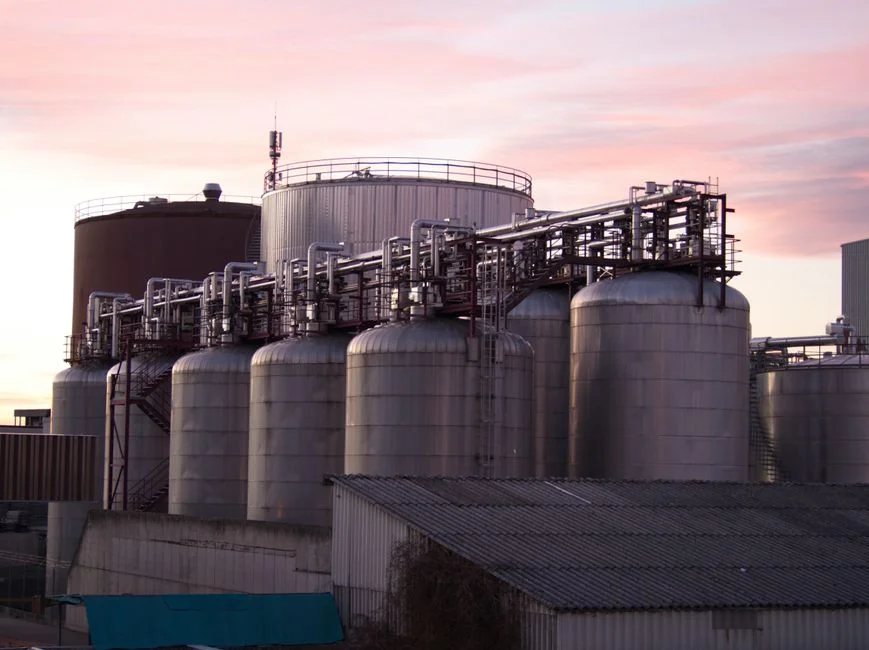
A gravity clarifier separates by letting settleable solids fall to a sludge bed under quiescent conditions while clarified water overflows a peripheral launder. The Ovivo Gravity Clarifier is described in the scraped source as a workhorse component: "low maintenance, high reliability, and efficient sedimentation" (Ovivo). For food and beverage plants that already have an upstream FOG removal step and want a simple, broadly understood polishing unit, a conventional gravity clarifier is the lowest-tech option on the table.
A lamella clarifier is the same physics in a tighter box. Inclined plates multiply the effective settling area inside a small footprint, and the manufacturer data lists surface loading rates of 20–40 m/h with sludge recirculation and integrated flocculation (HydropureWater product catalog). The catalog also states that lamella designs reduce coagulant and flocculant consumption by up to 30% compared with conventional basins, because denser floc settles faster along the plate surfaces (HydropureWater product catalog). That chemical saving is the structural reason a lamella clarifier is attractive on sites that want minimum operator attention and minimum polymer use.
The clarifier has one structural weakness on a FOG stream: it does not actively remove floatable oils and greases. Anything buoyant will ride the surface, not settle, so a high-FOG dairy or brew stream sent straight to a clarifier either needs a separate oil-skimming step upstream or it will see grease pass through. A lamella clarifier is best treated as a settleables polisher, not a FOG remover.
DAF vs Clarifier: Side-by-Side Engineering Comparison
The table below pairs each engineering parameter with the consequence a Salt Lake City food plant engineer cares about. Where the research publishes a number, the value is reproduced; where it does not, the cell names the input a buyer must request from a vendor.
| Parameter | DAF (Dissolved Air Flotation) | Gravity / Lamella Clarifier | Food-plant consequence |
|---|---|---|---|
| Primary mechanism | Pressurized air released as 30–50 micron micro-bubbles attach to particles and float them (Clearwater Industries; Wikipedia) | Gravity settling; lamella plates multiply settling area at 20–40 m/h surface loading (HydropureWater product catalog) | DAF wins on floatables; clarifier wins on settleables. |
| Hydraulic residence time | Circular DAF ≈ 3 minutes; rectangular DAF 20–30 minutes (Wikipedia) | Not published as a single canonical value in the scraped research — request a figure matched to your peak flow | DAF absorbs batch surges; clarifier needs steady flow. |
| Target contaminant | FOG, light suspended solids, emulsified matter, low-specific-gravity particles (Clearwater Industries; Kemco Systems) | Settleable solids; floatables must be skimmed separately (Ovivo; HydropureWater product catalog) | High-FOG dairy/brew streams favor DAF. |
| Footprint and skid integration | Pre-assembled COMPACT DAF skids up to ≈66 GPM single-skid; larger flows as modular two-skid systems (Clearwater Industries) | Compact steel lamella structure delivering 20–40 m/h in a small footprint (HydropureWater product catalog) | Both fit tight Wasatch Front sites; DAF skid cuts install time. |
| Chemical demand | Coagulant + pH adjustment + polymer flocculant, 15–45 s flash mix in tubes or longer in tanks set by jar testing (Clearwater Industries; Kemco Systems) | Lamella designs reduce coagulant and flocculant consumption by up to 30% vs. conventional basins (HydropureWater product catalog) | Lamella saves on chemistry; DAF spends on it. |
| Sludge character | Thick float that dewaters well on a filter press, reducing hauling cost (Kemco Systems) | More dilute sludge; often needs thickening before dewatering (Kemco Systems) | DAF float lowers downstream OPEX. |
| Cold-weather sensitivity | Bubble physics and chemical kinetics slow with temperature — vendor must guarantee performance at design low temp (research does not quantify this for SLC) | Settling rates fall as viscosity rises — request low-temperature settling data | Both units need a winter guarantee; neither is free of it. |
When a Salt Lake City Food Plant Should Choose DAF
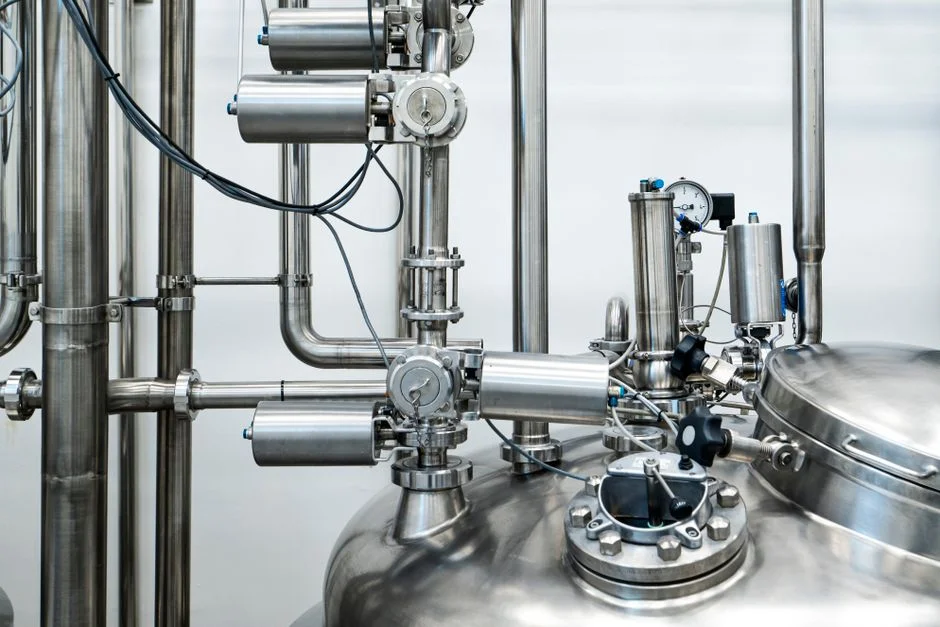
If the wastewater is high in FOG, light suspended solids, or batch surges, DAF is the right primary unit. Dairy, cheese, butter, and ice-cream plants send streams rich in milk fat and emulsified FOG that the Ovivo Flot-Star DAF, Clearwater DAF, and Kemco DAF product lines all explicitly target (Ovivo; Clearwater Industries; Kemco Systems). Brewery and beverage producers see batch discharges with high BOD surges and yeast carryover that benefit from DAF's short residence time and skimmer-based solids capture (Clearwater Industries). Meat, poultry, snack-food, and rendering plants generate floatable fats and protein colloids that align with the micro-bubble attachment mechanism (Kemco Systems).
On the site-construction side, a 2026 plant with a tight footprint and a tight schedule should look at the COMPACT DAF concept: a pre-assembled turnkey skid with chemical conditioning, sensors, instruments, and a PLC control panel that lets the operator adjust chemical dosing pumps, skimmer speed, and sludge discharge, with single-skid designs up to about 66 GPM and modular two-skid builds for larger flows (Clearwater Industries). Pair the DAF with an automatic chemical dosing package and a downstream filter press for sludge dewatering, and the result is a compact, PLC-controlled primary clarification train that handles FOG, TSS, and BOD loading peaks in one package. If you want a deeper cross-industry comparison before committing, the companion piece on DAF vs clarifier for petroleum wastewater walks through a similar decision matrix for a different matrix.
When a Gravity or Lamella Clarifier Is the Better Fit
A clarifier is the right answer when the stream is mostly settleable solids, flows are steady, and the site values low energy and minimal chemical use over compact footprint. Fruit and vegetable wash water, grain-handling effluent, and pre-settled food streams with low FOG all map cleanly onto a lamella clarifier's 20–40 m/h surface loading and sludge recirculation design (HydropureWater product catalog). The documented up-to-30% reduction in coagulant and flocculant consumption relative to a conventional basin is the single most attractive operating-cost number for a plant whose influent is already low in floatables (HydropureWater product catalog).
A conventional Ovivo Gravity Clarifier is also a defensible choice when a facility wants broadly understood equipment, very long service life, and minimum operator attention (Ovivo). Plants that already operate an upstream oil and grease removal step and need only solids polishing can specify a clarifier without paying for DAF aeration, saturation, and recycle equipment. For a side-by-side on a heavier matrix, the article on DAF vs clarifier for mining wastewater shows how the same DAF-or-clarifier logic plays out when the target contaminant shifts to settleable mineral solids rather than floatable FOG.
The 2026 Decision Framework: Matching the Unit to Your Influent
Use this four-step flow to convert the comparison into a single equipment decision.
- Quantify the FOG fraction. If floatables (oils, greases, light colloids) dominate the load, start with DAF. If settleables dominate, start with a lamella or gravity clarifier (Clearwater Industries; HydropureWater product catalog).
- Map flow variability. Batch processes with 3–5× peak-to-average swings favor DAF's short residence time — the circular DAF requires only about 3 minutes (Wikipedia). Steady 24/7 flows favor a lamella clarifier running continuous surface loading at 20–40 m/h (HydropureWater product catalog).
- Check the discharge envelope. Confirm local SLC POTW limits on FOG, TSS, BOD, and pH. The scraped research notes pH control with acid or caustic dosing is standard before the DAF, and Kemco flags that "discharge pH limits vary from region to region" with fines as the consequence of non-compliance (Kemco Systems). Build an automatic chemical dosing skid into the budget from day one.
- Plan downstream pairing. DAF float is thick and dewaters well on a filter press; clarifier sludge is thinner and may need thickening before dewatering (Kemco Systems). Whichever unit you choose, size the dewatering step at the same time.
Polymer selection is the other decision that ties everything together — for dosing-pump sizing and polymer makeup, the polymer pump selection guide walks through the matching process.
Data and Tests to Hand a Salt Lake City Vendor Before You Buy
The fastest way to turn this article into a defensible purchase is to send the vendor the same dataset you used to make the decision. The minimum package:
- 24-hour composite and grab samples for FOG, TSS, BOD, COD, pH, and temperature, with both average and documented peak flow rates (Clearwater Industries; Kemco Systems).
- A request for a jar-tested chemical recipe specifying the coagulant, pH adjuster, and flocculant doses, because Clearwater recommends jar testing to set the mix-tank contact time (Clearwater Industries).
- A guaranteed hydraulic loading curve at your design low winter temperature, since the scraped research does not quantify cold-weather performance for SLC; the vendor must answer it.
- A sludge mass balance with predicted float or sludge solids concentration and confirmation of dewatering compatibility with a filter press (Kemco Systems).
- PLC controls that allow adjustment of chemical dosing, skimmer speed, and sludge discharge — the same control philosophy Clearwater documents for the COMPACT DAF (Clearwater Industries).
If the vendor cannot give you a winter-temperature performance number or a jar-tested chemical recipe, the pilot test is not done.
Frequently Asked Questions
For a typical Salt Lake City dairy or brewery in 2026, is DAF or a clarifier the right primary unit?
For a dairy, brewery, snack-food, or meat-processing plant, DAF is the more defensible primary unit because floatable FOG, light suspended solids, and batch surges are exactly the streams Clearwater, Kemco, and Ovivo name as DAF applications (Clearwater Industries; Kemco Systems; Ovivo). A lamella clarifier becomes competitive only when FOG is already removed upstream and the load is mostly settleable solids (HydropureWater product catalog). The actionable check: ask each vendor for a guaranteed FOG removal efficiency at your design low winter temperature before signing.
What flow rate can a single skid DAF handle versus a lamella clarifier?
Clearwater's COMPACT DAF manages flows of 66 GPM or less on a single skid and uses a modular two-skid arrangement for larger flows (Clearwater Industries). A lamella clarifier is sized by surface loading at 20–40 m/h, so capacity scales with plate area, not with skid count (HydropureWater product catalog). The actionable check: ask the DAF vendor whether your peak flow fits a single skid or forces a two-skid price, and ask the lamella vendor for the plate area that supports your peak flow at design low temperature.
How much do chemicals and polymer add to annual operating cost for a DAF system?
The scraped research confirms DAF is chemically conditioned with coagulant, pH adjustment, and polymer flocculant dosed in flocculation tubes or mix tanks, and that the doses are set by jar testing (Clearwater Industries; Kemco Systems). A lamella clarifier documents up to 30% lower coagulant and flocculant consumption than a conventional basin (HydropureWater product catalog). The research does not publish a dollar-per-gallon chemical figure, so the actionable check: request a jar-tested dose recipe with annual chemical cost calculated at your local polymer and acid/caustic prices, not a generic range.
Can a DAF and a lamella clarifier be used together, and in what order?
Yes, and the standard order is DAF first, clarifier or biological step second. DAF removes floatable FOG and a large fraction of TSS, and the downstream unit polishes what is left. Wikipedia notes that some DAF designs themselves add lamella packing to enhance separation efficiency (Wikipedia), and Clearwater's DAF FPBC and FPHF are built on exactly that hybrid principle (Clearwater Industries). The actionable check: ask each vendor whether the DAF they are quoting already includes plate packing internally, so you do not pay for lamella area twice.
What discharge limits should a Salt Lake City food plant target when sizing a DAF?
Target the local POTW's categorical pretreatment limits for FOG, TSS, BOD, COD, and pH before specifying equipment. The scraped research notes that "discharge pH limits vary from region to region" and that pH control with automatic acid/caustic dosing is standard before a DAF (Kemco Systems). The actionable check: request the current SLC POTW discharge limits in writing and hand them to the DAF vendor as the basis of design before pilot testing.