Why Queens Blowdown Chemistry Forces a Different Train
New York municipal source water carries 100–250 mg/L hardness as CaCO3 and 100–400 mg/L total dissolved solids, well above the soft-water baseline many Western U.S. data centers design against, and that hardness accelerates calcium carbonate and calcium sulfate scale formation in cooling loops (HydropureWater, 2026). A 20–50 MW New York colocation site realistically draws 60,000–300,000 gpd before evaporation losses, and New York's older, denser sites hit per-MW numbers comparable to Loudoun County, Virginia's roughly 2.75 million gpd in 2023 because they often rely on air-cooled chillers in winter but switch to evaporative cooling during summer peak (HydropureWater, 2026, citing commercialwaterlab.com / UGA Extension TP-121, 2026).
New York falls in the moderate water-stress band, and roughly two-thirds of new data centers built since 2022 sit in water-stressed regions, so state-level TNFD-aligned reporting plus reviews under New York's Freshwater Wetlands Act now treat blowdown volume and salinity as permitting variables, not afterthoughts (HydropureWater, 2026, citing Bloomberg/Lincoln Institute, 2026). The receiving-water context for Queens is the Long Island Sound estuary, where salinity, temperature, and dissolved-oxygen sensitivity raise the cost of any SPDES surface-discharge path relative to a sewer path. A generic national blowdown sizing sheet built around soft western makeup will under-size softening, foul membranes early, and miss the dual NYC DEP / NYSDEC permit pathway that actually governs a Queens site.
Queens Blowdown Quality at Cycles of 4–6
At cycles of concentration (CoC) of 4–6, dissolved solids concentrate to 4–6× the makeup water chemistry, the operating window most New York evaporative systems target to keep blowdown volume manageable while staying under scale ceilings (HydropureWater, 2026). Typical blowdown at CoC 4–6 carries TDS of 1,500–2,500 mg/L, silica of 20–80 mg/L, calcium hardness of 400–1,500 mg/L as CaCO3, trace copper, iron, and zinc from corrosion, residual oxidizing or non-oxidizing biocides, and pH between 7.5 and 9.0 (HydropureWater, 2026). Genesis Water Tech reports a wider TDS range of 1,200–6,000 mg/L at higher cycles and notes that suspended solids from corrosion products, biofilm, and airborne particulates typically sit at 10–50 mg/L (Genesis Water Tech, 2026). Sparingly soluble salts — silica, calcium carbonate, calcium sulfate — set the scaling ceiling and force recovery to plateau at 75–80% on conventional brackish RO (HydropureWater, 2026, citing IDE Tech, 2026). Residual oxidizing biocides such as chlorine and bromine must be neutralized with sodium bisulfite before RO membranes, with a typical target of less than 0.1 mg/L free chlorine on the RO feed (HydropureWater, 2026). A New York site should run a quarterly analytical suite that includes TDS, hardness, alkalinity, silica, chloride, sulfate, iron, copper, free and total chlorine, and specific conductance so permit applications and reuse sizing rest on current data, not historical assumptions (HydropureWater, 2026).
| Parameter | Makeup (NYC main) | Blowdown at CoC 4–6 | Design implication |
|---|---|---|---|
| Hardness as CaCO3 | 100–250 mg/L | 400–1,500 mg/L | Size softener for peak CoC, not average |
| TDS | 100–400 mg/L | 1,500–2,500 mg/L (up to 6,000 at high CoC) | RO recovery capped at 75–80% by scaling |
| Silica (SiO2) | 5–20 mg/L | 20–80 mg/L | Drives side-stream FBR / dynamic-flush design |
| Free chlorine | 0.5–2.0 mg/L (distribution residual) | Variable, biocides present | SBS dosing to <0.1 mg/L upstream of RO |
| <5 mg/L | 10–50 mg/L | MMF + 5 µm cartridge, turbidity <1 NTU to RO | |
| pH | 6.8–8.0 | 7.5–9.0 | Reuse permeate must hit LSI ≈ 0 |
The Dual Permit Path: NYSDEC SPDES plus NYC DEP Pretreatment
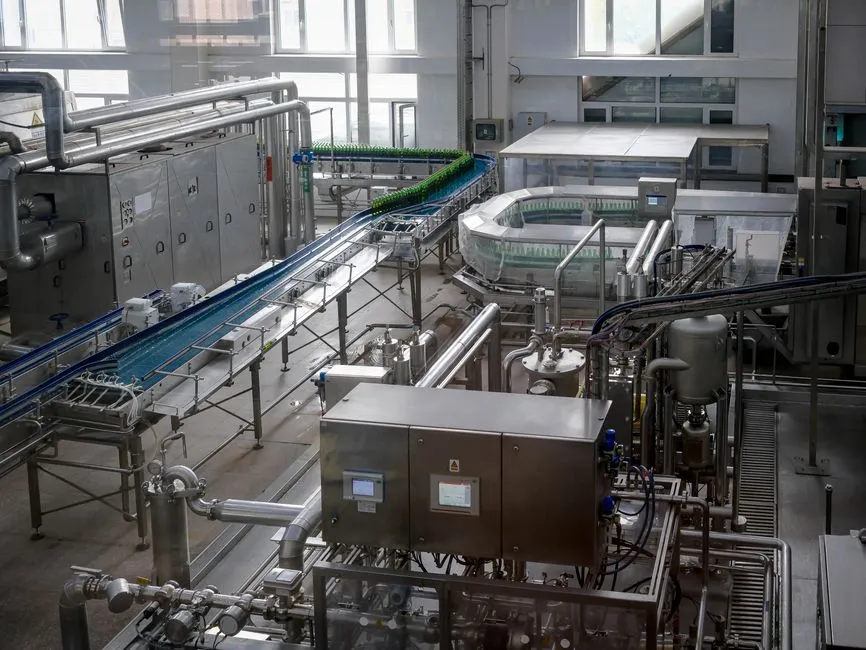
Direct discharge to surface waters in New York requires a State Pollutant Discharge Elimination System (SPDES) permit under 6 NYCRR Part 750, with site-specific effluent limits on TDS, chloride, sulfate, total suspended solids, metals, pH 6.5–8.5, temperature, and flow (HydropureWater, 2026). Discharge to a New York City or municipal sewer falls under the local Industrial Pretreatment Program at 40 CFR 403, and NYC DEP typically caps pH at 5.5–12, TSS at 250–350 mg/L, and applies categorical limits for copper, zinc, lead, and other metals (HydropureWater, 2026). Operators must confirm numeric limits with the receiving POTW before design freeze, because hidden caps on TDS, chloride, or sulfate are not always posted in the sewer-use ordinance (HydropureWater, 2026). Queens' receiving-water context — the Long Island Sound estuary — raises the cost of any surface-discharge path, so the practical default for a land-constrained colocation building in Long Island City or Maspeth is NYC DEP sewer, with a reuse train considered only when freshwater rates or TNFD disclosure targets justify the premium. Reuse as cooling-tower makeup clears NYSDEC Division of Water TOGS requirements and must show the recycled stream meets cooling-tower chemistry targets for cycles of concentration, silica, and hardness, while reuse that bleeds back to a sanitary sewer remains subject to NYC DEP pretreatment limits on residual biocides, corrosion inhibitors, and pH excursions (HydropureWater, 2026). Both reviews should be initiated before the RO skid is ordered, not after, with a typical 3–6 month engineering review window (HydropureWater, 2026).
| Pathway | Permit | Typical limits | Review window | Queens fit |
|---|---|---|---|---|
| Surface discharge | NYSDEC SPDES (6 NYCRR Part 750) | Site-specific TDS, Cl⁻, SO4, TSS, metals, pH 6.5–8.5, temperature, flow | 3–6 months engineering review | Costly near Long Island Sound; rare for colocation |
| NYC sewer | NYC DEP IPP (40 CFR 403) | pH 5.5–12, TSS 250–350 mg/L, categorical metals; confirm TDS/Cl⁻/SO4 caps with POTW | 3–6 months engineering review | Default for land-constrained colocation |
| Reuse as cooling-tower makeup | NYSDEC TOGS review + downstream sewer limits on any bleed | Cooling-tower chemistry targets (CoC, silica, hardness) | 3–6 months engineering review | Justified when freshwater >$6–8/1,000 gal or TNFD target in play |
A Queens-Ready 5-Step Blowdown Treatment Train
Step 1 — Pretreatment. A multi-media pretreatment filter drops turbidity below 1 NTU, followed by 5 µm cartridge filtration to protect the RO, with a PLC-controlled antiscalant and bisulfite dosing skid and a sodium bisulfite injection loop for chlorine neutralization on the RO feed (HydropureWater, 2026). An on-site chlorine dioxide generator upstream of the cooling loop keeps microbiological fouling under control without raising the halogen residual that would damage RO membranes downstream.
Step 2 — Softening and chemistry conditioning. A sodium-cycle ion exchange softener or lime softener drops hardness below 20 mg/L as CaCO3, after which antiscalant is dosed at 2–5 mg/L to inhibit silica and CaSO4 scaling in the RO (HydropureWater, 2026). Specify the dosing skid with redundant pumps and inline conductivity verification; chemical feed precision is the single most common reason reuse trains under-perform.
Step 3 — High-recovery RO. An industrial reverse osmosis skid operated at 75–80% local recovery feeds a side-stream fluidized-bed reactor or dynamic-flush RO design that pushes overall system recovery to 90–95%, with the IDE Tech MAXH2O architecture cited as a reference (HydropureWater, 2026, citing IDE Tech, 2026). The side-stream stage precipitates silica, calcium carbonate, and other sparingly soluble salts as compact pellets, leaving a NaCl-dominant brine that can be concentrated further without membrane scaling.
Step 4 — Polishing and stabilization. Permeate is degasified for CO2, then calcite-contacted or lime-stabilized to a Langelier Saturation Index near 0, and pumped to the cooling-tower makeup header (HydropureWater, 2026).
Step 5 — Concentrate management. The remaining brine is hauled off (deep-well injection is effectively unavailable in New York), sent to NYC DEP within pretreatment limits, or fed to a brine concentrator and crystallizer for zero liquid discharge where land is tight and disposal cost runs high (HydropureWater, 2026). For a New England comparison of the same train architecture, the Data Center Cooling Blowdown Treatment in Boston (2026 Guide) covers the side-stream stage in more detail.
Sizing a Packaged Skid for a 20 MW Queens Site
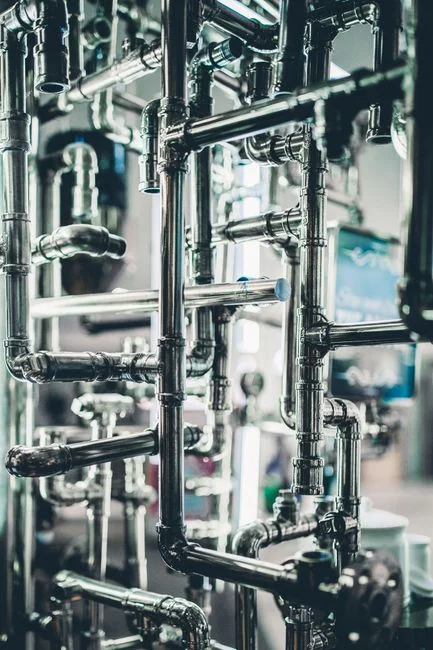
At 0.7–1.0 gallons per day per kW of evaporative cooling, a 20 MW Queens site draws 14,000–20,000 gpd of makeup water and produces 2,000–3,500 gpd of blowdown at CoC 5 (HydropureWater, 2026). A blowdown treatment skid sized for about 5 gpm (≈28.5 m3/day) is a realistic package unit for this profile, fitting on a single equipment pad within a 20-ft ISO container footprint — a real advantage on a land-constrained Long Island City or Maspeth parcel where the building pad and the loading dock already eat most of the lot (HydropureWater, 2026). Expected capital cost for the full reuse train sits in the $1.2–$2.5M band, with operating cost around $0.18–$0.35 per m3 treated in 2026, dominated by antiscalant consumption, periodic RO membrane elements and consumables replacement, and electrical load (HydropureWater, 2026). A discharge-only path falls in the $0.2–$0.5M pretreatment-only band, with sewer fees of $0.05–$0.12 per m3 for neutralization, while the reuse path adds the membrane, side-stream, and polishing CAPEX on top (HydropureWater, 2026). The reuse path raises electrical load by 0.05–0.15 kWh per m3 treated and requires operators to manage membrane cleaning cycles; vendors should be asked to back a 90+ day chemical-cleaning interval with reference plants (HydropureWater, 2026).
Choosing Between Discharge-to-Sewer and On-Site Reuse in Queens
Discharge-to-sewer is the right call when NYC DEP has hydraulic and treatment capacity, the site has no land for a reuse train, and freshwater rates sit below $4 per 1,000 gallons (HydropureWater, 2026). Reuse-as-makeup is the right call when freshwater cost exceeds $6–$8 per 1,000 gallons, NYC DEP's pretreatment program is restrictive on TDS or metals, or the operator has a public water-stewardship target it needs to clear (HydropureWater, 2026). Pushing cooling-tower cycles of concentration from 4 to 6 cuts makeup water demand by roughly 33%, and adding RO-based blowdown recovery can trim it another 30–50% on top of that (HydropureWater, 2026). The trade-off is real: a reuse train adds $1.2–$2.5M in capital cost for a 20 MW site, raises electrical load by 0.05–0.15 kWh per m3 treated, and requires operators to manage membrane cleaning cycles (HydropureWater, 2026). Direct discharge fees in water-stressed regions now exceed $5–15 per thousand gallons, and some jurisdictions have implemented TDS limits below 1,500 mg/L, which effectively prohibits discharge of concentrated blowdown without treatment (Genesis Water Tech, 2026). Sites already facing hyperscale compute growth and TNFD-aligned disclosure should weight the reuse path more heavily; sites with cheap sewer access and tight capex envelopes should default to discharge (HydropureWater, 2026).
| Decision driver | Discharge-to-sewer | On-site reuse |
|---|---|---|
| Permit pathway | NYC DEP IPP sign-off (40 CFR 403) | NYSDEC TOGS review plus sewer limits on any bleed |
| Indicative CAPEX (20 MW) | $0.2–$0.5M (pretreatment only) | $1.2–$2.5M (full RO + side-stream) |
| Indicative OPEX (2026) | $0.05–$0.12 per m3 sewer fees | $0.18–$0.35 per m3 antiscalant, membranes, power |
| Permit risk | POTW can reject high-TDS loads | TOGS and downstream sewer both reviewed |
| Footprint | Small (neutralization + filtration skid) | Larger (RO + side-stream + polishing) |
Queens RFQ Checklist and Common Pitfalls
Specify the target cycles of concentration, peak and average blowdown flow, full makeup water analysis, target permeate quality, recovery target, and discharge route before talking to vendors; vague RFQs guarantee scope creep later (HydropureWater, 2026). Confirm the RO design's chemical-cleaning interval: high-recovery designs should target 90+ days between cleans versus the 30–45 days typical of conventional brackish systems, and any vendor that cannot back that claim with reference plants should be asked harder questions (HydropureWater, 2026). Pitfall #1 is an under-sized softening stage that lets hardness breakthrough and fouls RO membranes within weeks of startup; the softener must be sized for peak CoC, not average flow (HydropureWater, 2026). Pitfall #2 is ignoring the local POTW's hidden cap on TDS, chloride, or sulfate, which are not always posted in the sewer-use ordinance; a quick call to NYC DEP's pretreatment coordinator before finalizing the discharge pathway saves a redesign (HydropureWater, 2026). For side-stream design cross-checks, the MBBR Design for Data Center Cooling Blowdown Reuse in Northern Virginia covers biological polishing stages that pair with the FBR approach, and the Ultrafiltration System Troubleshooting 2026 Field Guide covers TMP and CIP recovery procedures that apply to the upstream filtration stages. A defensible Queens train sequences pretreatment with a PLC-controlled antiscalant and bisulfite dosing skid, chemistry conditioning with a sodium-cycle ion exchange softener, high-recovery RO, polishing, and concentrate management so permeate hits cooling-tower makeup targets while the concentrate stays inside either SPDES or NYC DEP limits (HydropureWater, 2026).
Frequently Asked Questions
What permits does a Queens data center need for cooling-tower blowdown?
Any direct discharge to surface waters requires a NYSDEC SPDES permit under 6 NYCRR Part 750 with site-specific effluent limits on TDS, chloride, sulfate, metals, pH 6.5–8.5, temperature, and flow; discharge to the NYC sewer requires sign-off under the local Industrial Pretreatment Program at 40 CFR 403, and NYC DEP typically caps pH at 5.5–12, TSS at 250–350 mg/L, and applies categorical metals limits (HydropureWater, 2026). The reuse path additionally clears NYSDEC Division of Water TOGS requirements, and any reuse stream that subsequently bleeds to a sanitary sewer remains subject to NYC DEP pretreatment limits (HydropureWater, 2026). Confirm all numeric limits with the receiving POTW before design freeze.
How much does a packaged blowdown reuse skid cost for a 20 MW Queens site?
For a 20 MW site producing 2,000–3,500 gpd of blowdown, a packaged ~5 gpm reuse train in a 20-ft ISO footprint falls in the $1.2–$2.5M CAPEX band, with operating cost around $0.18–$0.35 per m3 treated in 2026, dominated by antiscalant, membrane replacement, and electrical load (HydropureWater, 2026). A discharge-only path falls in the $0.2–$0.5M pretreatment-only band with sewer fees of $0.05–$0.12 per m3 (HydropureWater, 2026). Buyers should request vendor budgetary proposals keyed to their actual makeup analysis, peak CoC, and discharge pathway rather than relying on these ranges as firm quotes, because site-specific TDS, chloride, and concentrate disposal route shift the totals.
What cooling-tower cycles of concentration are realistic for New York makeup water?
New York evaporative systems typically run at CoC 4–6 to keep blowdown volume manageable while staying under scale ceilings, which concentrates dissolved solids to 4–6× the makeup water chemistry and pushes blowdown TDS to 1,500–2,500 mg/L (HydropureWater, 2026). Pushing from CoC 4 to CoC 6 cuts makeup water demand by roughly 33%, and adding RO-based blowdown recovery can trim it another 30–50% on top of that (HydropureWater, 2026). At CoC 4–6 the softener and RO recovery cap become the binding constraints, not the cooling-tower fill.
What should a Queens engineer ask a blowdown skid vendor before signing an order?
Ask for the chemical-cleaning interval backed by reference plants — high-recovery designs should target 90+ days between cleans versus 30–45 days for conventional brackish systems (HydropureWater, 2026). Ask for the softener sizing basis, specifically whether it is sized for peak CoC, and ask for documentation that the proposed antiscalant program is compatible with the target recovery. Ask for confirmation that the concentrate management plan has been pre-discussed with NYC DEP's pretreatment coordinator, because hidden TDS, chloride, or sulfate caps are not always posted in the sewer-use ordinance and a surprise cap after delivery is the most common redesign trigger (HydropureWater, 2026).