
Why a Containerized MBR STP Fits Hong Kong Residential and Camp Sites
A containerized MBR STP integrates biological treatment and submerged PVDF ultrafiltration at a nominal pore size of 0.04 µm inside a standard 20-ft or 40-ft intermodal box, eliminating reactor casting and large clarifier excavations on cramped Hong Kong sites (Pure Aqua MBR-C datasheet, 2025; HydropureWater, 2026). The I-version, where aeration, buffer and membrane tanks all sit inside the container, is the right call for most Hong Kong estate and camp work because it is simpler to permit and simpler to lift out at project end; the U-version, with an underground buffer outside the box, is only justified on sites with a very tight above-grade footprint.
Mobility is the decisive advantage for construction camps and worker dormitories on 2–5 year horizons, where the unit can be redeployed without demolishing civil works. Submerged UF produces near-reuse-quality permeate (BOD <5 mg/L, TSS <1 mg/L per the Pure Aqua envelope, 2025), which supports toilet-flushing or landscape irrigation reuse on sites where the Hong Kong Water Authority reclaimed-water network is not available. For a quotation-ready datasheet on the equipment itself, request the integrated MBR membrane bioreactor system data file before finalising the RFQ.
Hong Kong Per-Capita Flow by Occupancy Type
Hong Kong residential living is dense and vertical, with residents in high-rise estates typically using 130–180 L/c/d when water fixtures are metered and pressure is restricted. The Western 50 gpd (≈190 L/c/d) default overstates true consumption and will oversize the plant. Construction camps and worker dormitories with shared showers, kitchen messes and laundry run 200–250 L/c/d; holiday camps, transit facilities and catering-heavy sites can exceed 250 L/c/d. Visitor and shift-changeover loads are routinely under-counted — add 5–10% to the design headcount for camps with daily gate traffic, and add an explicit 10–15% safety margin for schools, guesthouses or catering-heavy sites before rounding up to the next standard packaged size (10, 25, 50, 100 m³/day). Validate the chosen per-capita figure against a one-week on-site water-use survey before locking the design — site reality in Hong Kong varies block by block, and a village house in the New Territories with a single kitchen and shared bathroom behaves nothing like a Yuen Long construction camp with three shift messes. The table below maps the envelope against the four occupancy profiles most procurement leads will see.
| Occupancy profile | Typical per-capita flow (L/c/d) | Headcount adjustment | Reference design figure |
|---|---|---|---|
| High-rise residential (full-time, metered) | 130–180 | +0% (steady) | 150 L/c/d working value |
| Village house redevelopment (mixed use) | 160–200 | +5% for visitors | 180 L/c/d working value |
| Construction camp / worker dormitory (shared facilities) | 200–250 | +5–10% for shift changeover | 220 L/c/d working value |
| Holiday camp / NGO dormitory (catering-heavy) | 220–280 | +10–15% safety margin | 250 L/c/d working value |
Calculating ADWF and PWWF for a Hong Kong Camp
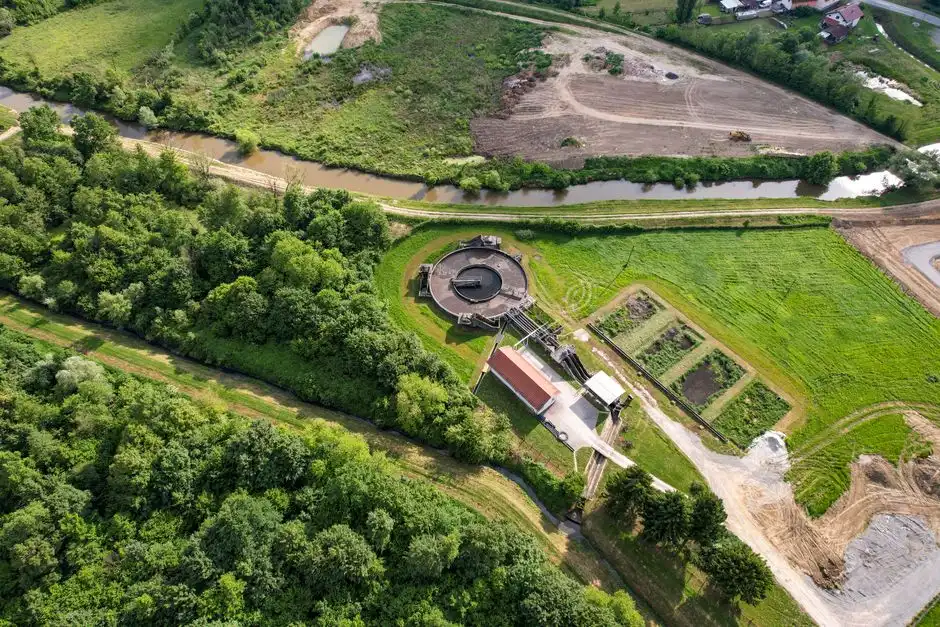
Average dry weather flow sets the biology baseline: ADWF (L/day) = Population × per-capita flow (L/c/d). Peak wet weather flow is what the membrane tank, equalisation and screen chamber must actually accept, and Hong Kong's monsoon season (May–September) drives inflow and infiltration into shallow sewers, soakaways and yard gullies; use a peak factor of 2.0–2.5 for camps with informal drainage and 1.5–1.8 for sealed, roof-drained residential estates. PWWF (m³/day) = ADWF × peak factor. BOD load drives the aeration sizing: BOD (kg/day) = ADWF (m³/day) × BOD concentration (g/m³); Hong Kong domestic sewers typically measure 250–400 mg/L BOD, with catering-heavy camps running 500–700 mg/L BOD plus 30–60 mg/L FOG that must be removed upstream of the membranes (HydropureWater, 2026).
Worked example — 70-person construction camp in Yuen Long, 220 L/c/d, peak factor 2.25: ADWF = 70 × 220 = 15,400 L/day ≈ 15.4 m³/day; PWWF = 15.4 × 2.25 ≈ 34.7 m³/day. BOD load at 500 mg/L raw influent (catering on site): 15.4 × 0.500 = 7.7 kg BOD/day, which lands inside a 5–6 m³ aerobic reactor at the 8,000–12,000 mg/L MLSS band used in containerised MBRs (HydropureWater, 2026). The 34.7 m³/day PWWF figure is the basis for every downstream sizing decision, including equalisation volume, screen chamber sizing, and container selection.
Translating PWWF into Container Size and Membrane Area
The stock container envelope for a packaged MBR is a 20-ft high-cube unit for up to about 50 m³/day, a 40-ft high-cube unit for 50–200 m³/day, and parallel containers for larger flows (Pure Aqua MBR-C, 2025; WaterAcademia, as cited in HydropureWater, 2026). Membrane area is the procurement-critical figure: Membrane area (m²) = design flow (L/h) ÷ design flux (L/m²·h); at 20 L/m²·h the Yuen Long 70-person example needs about 36 m² of PVDF area, well inside a single 20-ft cassette (HydropureWater, 2026). Biology sizing: Reactor volume (m³) = ADWF × HRT; at 8 hours HRT, 15.4 m³/day ADWF implies a 5.1 m³ bioreactor, small enough to fit inside a 20-ft container alongside the membrane cassette. Add 20–30% spare capacity above PWWF for population growth, seasonal load spikes, and future reuse upgrades. For the Yuen Long example, a single 20-ft unit sits comfortably inside its envelope; a 40-ft unit is justified only if the camp doubles in size or is phased over two construction seasons. For the membrane cassette itself, request the DF-series flat-sheet MBR membrane module datasheet to confirm element count and replacement interval.
| Container format | Flow envelope (m³/day) | Membrane area needed (at 20 L/m²·h) | Indicative Hong Kong population (220 L/c/d, PF 2.25) | Site footprint |
|---|---|---|---|---|
| Single 20-ft HC | Up to ~50 | ~50 m² | ≤100 persons (PWWF ≤50 m³/day) | Standard flatbed; tight New Territories access needs check |
| Single 40-ft HC | 50–200 | 50–200 m² | 100–400 persons (PWWF 50–200 m³/day) | Standard flatbed; needs longer clear approach for village-house lanes |
| Parallel 20-ft units (one duty, one standby) | Up to ~100 | ~100 m² | Phased camps, peak surge risk | Reserve space for the parallel pad at day one |
| Parallel 40-ft units | 200+ | 200+ m² | Large holiday camps, multi-block redevelopments | Multiple flatbed deliveries; civils permit lead time dominates |
Hong Kong-Specific Integration Risks
Hong Kong's subtropical ambient sits inside the 20–30°C MBR operating window (Pure Aqua MBR-C, 2025), so no heating or cooling is required, but typhoon-season rainfall and high groundwater make a sealed container floor and zero-leakage wall design essential. Hong Kong supplies are 220V/50Hz single-phase (BS sockets) and 380V/3-phase, which differs from the 460V/3-phase/60Hz many stock containerised MBR units ship with (Pure Aqua, 2025) — specify a step-down transformer or a voltage-matched build at quotation, and size a standby genset with auto-changeover for typhoon-related outages that can last several hours. Confirm the receiving environment — government sewer, storm drain, soakaway or irrigation reuse — and the relevant EPD discharge standard under the Water Pollution Control Ordinance and the Technical Memorandum on Effluent Discharge before specifying polishing. A packaged UV sterilizer for effluent polishing is the standard add-on where reuse or unrestricted irrigation is intended. A fully automatic PLC with remote monitoring is appropriate for camps with no full-time operator; sites in the New Territories with intermittent staffing should specify remote telemetry rather than rely on-site attendance. For upstream screening of rags, sand and plastics that routinely enter camp greywater, a GX Series rotary mechanical bar screen on the inlet chamber protects the membranes and extends cleaning intervals.
Common Sizing Mistakes on Hong Kong Projects
Using 190 L/c/d as a default overstates Hong Kong residential consumption and forces the purchase of an unnecessarily large container; alternatively, it gets applied inconsistently and leaves biology under-loaded if influent reality is lower. Designing at ADWF instead of PWWF is the second failure mode — once the May–September monsoon arrives, the bioreactor turns anaerobic and the membrane fouls rapidly. Skipping the grease trap on catering camps is the third: FOG that reaches the membrane surface halves flux within weeks, and FOG loading of 30–60 mg/L in raw camp influent is a known driver of fouling (HydropureWater, 2026). Omitting standby power is the fourth: typhoon-related grid outages stop aeration and biomass crashes; specify a genset sized to blowers plus permeate pump, not just to the panel. Forgetting sludge storage is the fifth: a 15 m³/day MBR wastes 30–50 L/day of waste-activated sludge at roughly 1% solids that must be trucked off-site, so size sludge holding and a plate-and-frame filter press for sludge dewatering on day one. For a peer review of the same risk list applied to a comparable high-density tropical context, the Accra residential and camp sizing guide walks the same checklist in a different regulatory frame.
Frequently Asked Questions
What size containerized MBR does a 70-person Hong Kong construction camp actually need?
Using 220 L/c/d, peak factor 2.25, and 20 L/m²·h design flux, the Yuen Long worked example gives ADWF ≈ 15.4 m³/day, PWWF ≈ 34.7 m³/day, and about 36 m² of PVDF membrane area. A single 20-ft high-cube container sits comfortably inside this envelope with 20–30% spare capacity for population growth or seasonal load spikes; a 40-ft unit is justified only if the camp doubles in size or is phased (Pure Aqua MBR-C, 2025; HydropureWater, 2026). For procurement,
Frequently Asked Questions
What is the typical cost of a containerized MBR STP for a 50-person camp in Hong Kong?
For a 50-person camp, a containerized Membrane Bioreactor (MBR) system typically ranges from HKD 600,000 to HKD 1,200,000, depending on the specific influent load and the level of automation required. This estimate covers the pre-fabricated unit, including fine screening, aerobic tanks, membrane filtration modules, and disinfection systems.
Note that this pricing excludes site-specific civil works, such as foundation pads, electrical grid connection, and raw sewage inlet piping, which can add 20% to 40% to the total project cost in Hong Kong's high-labor-cost environment.
How do I choose between a 20-ft and a 40-ft containerized MBR for a residential project in Hong Kong?
The choice depends primarily on the hydraulic loading rate and the required retention time. A 20-ft unit is generally suitable for flows up to 10–15 m³/day, while a 40-ft unit is required for flows ranging from 20–50 m³/day to accommodate the necessary membrane surface area and aerobic reactor volume.
Space constraints are critical in Hong Kong; a 20-ft unit offers a smaller footprint but requires more frequent sludge removal. A 40-ft unit provides greater operational stability and higher sludge handling capacity, which is preferable for residential sites with fluctuating occupancy rates.
What influent sampling do I need before finalizing MBR sizing for a Hong Kong site?
Before sizing, you must conduct a 7-day representative flow and load analysis to determine the Biochemical Oxygen Demand (BOD5), Total Suspended Solids (TSS), Total Nitrogen (TN), and Total Phosphorus (TP) concentrations. In Hong Kong residential settings, influent BOD5 typically ranges from 200–350 mg/L.
Additionally, sampling for fats, oils, and grease (FOG) is mandatory, as high levels can cause premature membrane fouling. If the site includes a canteen, a grease trap with a minimum 24-hour retention time must be installed upstream to ensure the influent oil concentration remains below 50 mg/L.
How long does delivery and commissioning of a containerized MBR STP for a Hong Kong camp?
The total lead time from order confirmation to operational handover is typically 16 to 22 weeks. This includes 10–14 weeks for off-site manufacturing and testing, and 4–8 weeks for shipping, site installation, and biological seeding.
Commissioning involves a 2-week acclimatization period for the biomass to reach a stable Mixed Liquor Suspended Solids (MLSS) concentration of 8,000–12,000 mg/L. During this phase, performance testing is conducted to ensure the permeate meets the design discharge specifications before final handover.
Does a containerized MBR STP in Hong Kong need to meet EPD discharge standards for reuse?
Yes, any effluent discharge or reuse must strictly comply with the Environmental Protection Department (EPD) "Technical Memorandum on Effluent Standards." For inland waters or sensitive areas, the system must meet Group A or B standards, often requiring fecal coliform levels below 100 CFU/100ml.
If the treated water is intended for non-potable reuse (such as toilet flushing or landscape irrigation), it must meet the more stringent Water Supplies Department (WSD) requirements for reclaimed water. This necessitates continuous online monitoring of turbidity (typically < 2 NTU) and free residual chlorine levels to ensure public health safety.