
Why Madurai Needs Decentralized Domestic Sewage Treatment
Madurai City Corporation generated 162.80 MLD of wastewater in 2014, and the two municipal STPs covering the city have a combined capacity of 170.50 MLD — 125 MLD at Avaniyapuram and 45.50 MLD at Sakkimangalam (Amarnath & Sridevi, 2016, International Journal of Current Research and Academic Review). That arithmetic leaves no buffer for unsewered residential colonies, apartment complexes, small hotels, schools, and commercial sites that fall outside the municipal network.
Untreated sewage escaping from these pockets causes documented externalities in the Madurai district, including a decline in cropped area, lower crop income, increased fallow lands, worsening water quality, and higher rates of skin and lung diseases (Amarnath & Sridevi, 2016). The same study recommends that solutions to sewage pollution must consider the intensity of these externalities and pursue proper STP functioning with recycling. For a developer or society committee in Madurai, a building-level or campus-level packaged sewage treatment plant serves as the necessary infrastructure to close the gap the two municipal plants cannot.
What Counts as Domestic Sewage and What Must Be Removed
Domestic sewage consists of combined blackwater (toilet) and greywater (kitchen, bath, laundry) streams from residential and similar establishments. The contaminant categories that any residential STP must address are suspended solids, organic load (BOD and COD), nutrients (ammonia, total nitrogen, phosphorus), pathogens, and fats-oils-grease (FOG) where food-waste lines tie into the same sewer. Vermifiltration work on septic-tank domestic sewage confirms that decentralized systems can be engineered around filtration combined with biological action when land area permits, making them a credible alternative to centralized networks in semi-arid regions (Mangore & Mhindu, 2016, IntechOpen). For a Madurai buyer, the key is determining which of these contaminant categories the proposed equipment can reliably remove given the local peak flow pattern and any reuse target. The system specification must be tied to those target removals rather than to a generic national standard.
Process Flow Used in Modern Residential STPs
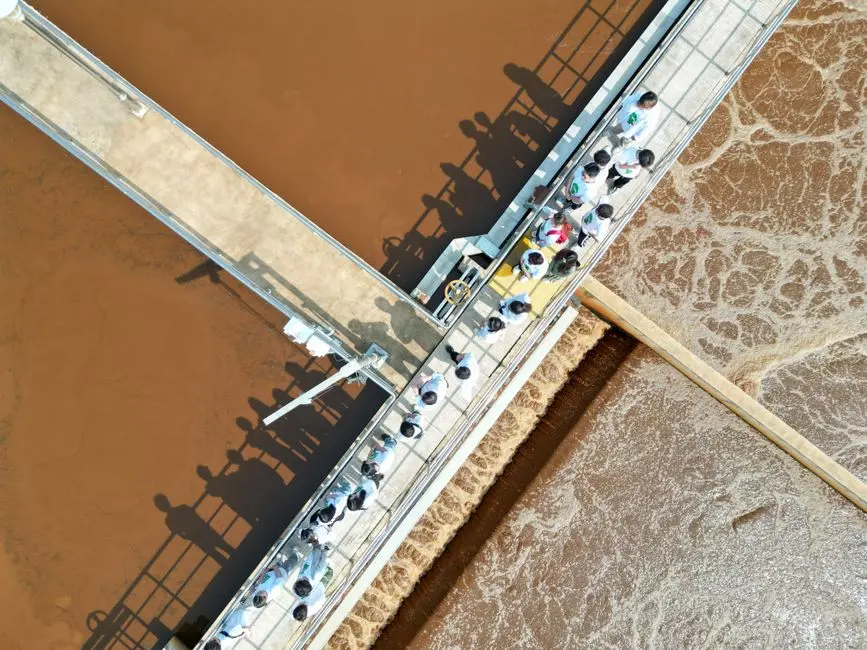
A modern residential sewage treatment plant follows a six-stage train. Selecting the right sequence ensures consistent effluent quality regardless of daily influent fluctuations. Stage 1 is screening, where a rotary mechanical bar screen at the headworks removes rags, plastics, and coarse debris before they damage downstream biological equipment. Stage 2 is primary treatment and equalization, where grit settles out and flow is buffered so that morning and evening peak loads from a residential society do not shock the biological stage. Stage 3 is biological treatment — either anoxic/aerobic (A/O) contact oxidation in a packaged plant, or activated sludge coupled with a submerged MBR membrane in an MBR system — which removes BOD/COD and nitrifies ammonia. Stage 4 is clarification or separation, carried out by a lamella clarifier in conventional packages or by the MBR membrane itself, which retains biomass while passing clarified water. Stage 5 is disinfection, normally UV-C sterilization or chlorine dioxide, delivering the final microbial barrier before reuse or discharge. Stage 6 is sludge handling, where a plate and frame filter press or a sludge drying bed dewaters wasted activated sludge into a handleable cake for off-site disposal.
| Stage | Function | Typical Equipment |
|---|---|---|
| 1. Screening | Remove coarse debris, rags, plastics | Rotary mechanical bar screen |
| 2. Primary / Equalization | Buffer peak flow, settle grit | Equalization tank, grit chamber |
| 3. Biological | Remove BOD/COD, nitrify ammonia | A/O contact oxidation or MBR activated sludge |
| 4. Clarification / Separation | Separate biomass from clarified water | Lamella clarifier or submerged membrane |
| 5. Disinfection | Final microbial barrier | UV-C sterilizer or chlorine dioxide |
| 6. Sludge handling | Dewater wasted sludge | Plate and frame filter press / drying bed |
WSZ Buried A/O Package Plant vs MBR Membrane Bioreactor
For a residential society, apartment block, gated community, or small hotel in Madurai, the choice involves two primary decentralized architectures. The WSZ buried A/O package sewage treatment plant combines anoxic/aerobic biological contact oxidation with sedimentation and disinfection in a single buried unit rated for 1–80 m³/h, is fully automated, and can be installed below grade with landscaping above or mounted on a trailer for mobile deployment (HydropureWater product catalog). The MBR membrane bioreactor system uses submerged PVDF membrane filtration after activated sludge, achieves sub-micron effluent quality at less than 1 μm filtration, occupies roughly 60% less footprint than a conventional activated-sludge plant of equal capacity, and is rated for 10–2,000 m³/day with near-reuse-quality effluent (HydropureWater product catalog). The DF-series PVDF flat sheet MBR module uses 0.1 μm PVDF membranes with an integrated aeration box for continuous scouring, delivers 32–135 m³/day per module, consumes 10–20× less energy than external cross-flow systems, and has individually replaceable membrane elements (HydropureWater product catalog). Choosing between these systems depends on the end-use of the treated water; WSZ is the lower-capex option for discharge to a sewer or drain, while MBR is the right choice when treated water is intended for toilet flushing, gardening, or ground-water recharge.
| Parameter | WSZ Buried A/O Package | MBR Membrane Bioreactor |
|---|---|---|
| Core process | Anoxic/aerobic contact oxidation + sedimentation + disinfection in one buried unit | Activated sludge + submerged PVDF membrane filtration |
| Capacity range | 1–80 m³/h | 10–2,000 m³/day per system; 32–135 m³/day per DF module |
| Effluent quality | Suitable for sewer/drain discharge | Sub-micron, near-reuse quality |
| Footprint | Buried, landscaped over or trailer-mounted | ~60% smaller than conventional activated sludge |
| Automation | Fully automated, no operator required | Automated; membranes individually replaceable (DF) |
| Best fit | Discharge to sewer/drain, lower capex priority | Toilet flushing, irrigation, ground-water recharge, tight footprint |
Sizing a Residential STP for a Madurai Project
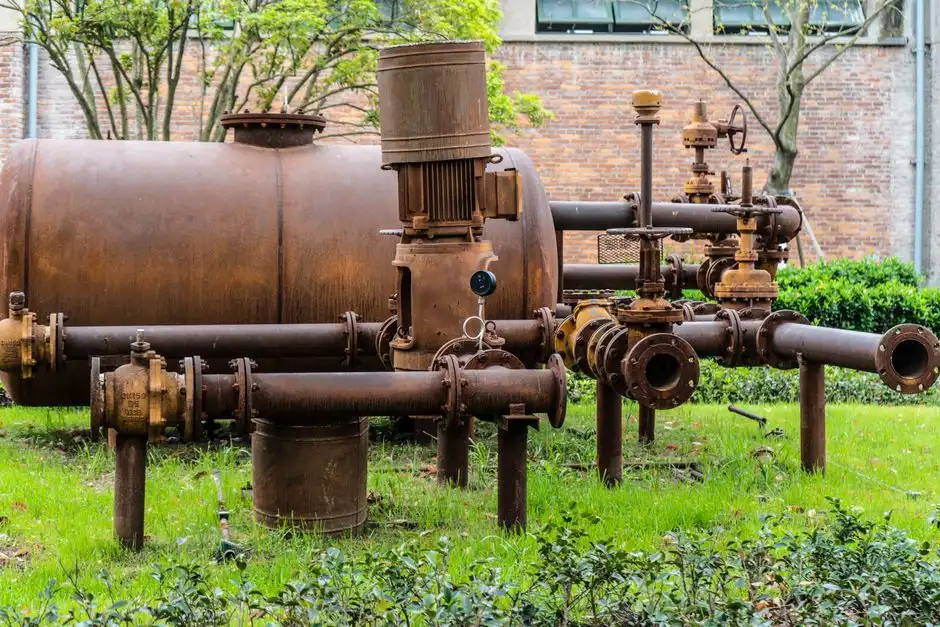
Domestic sewage flow is estimated from a per-capita liters-per-day figure multiplied by the population equivalent, then multiplied by a peaking factor to account for morning and evening surges. Within the WSZ envelope of 1–80 m³/h, this maps to small communities of roughly 20–1,500 residents depending on the per-capita assumption, while MBR systems covering 10–2,000 m³/day span a single apartment block up to a large township (HydropureWater product catalog). If the project includes a commercial kitchen, laundry, or small clinic, additional loading from FOG, lint, or pathogens must be added to the design before selecting the equipment size. A lamella clarifier for high-rate settling placed upstream of the biological stage is useful in many Madurai layouts where storm and sanitary lines are partially combined, as it cuts the solids load going into the biological stage and protects membranes in MBR configurations.
Matching Treated-Water Use to Disinfection Choice
Disinfection choice depends on the final application of the treated water. A UV-C sterilizer for reuse loops delivers chemical-free disinfection effective against chlorine-resistant Cryptosporidium and Giardia with no by-products or taste change, making it suitable for toilet flushing or landscape irrigation (HydropureWater product catalog). Where a residual disinfectant is required in the reuse loop — for example in cooling-tower makeup or hospital effluent — an on-site chlorine dioxide generator is specified instead, producing ClO₂ at 50–20,000 g/h on demand (HydropureWater product catalog). For gardening or ground-water recharge via a recharge well, filtration plus UV is typically sufficient; for toilet flushing and washing, an additional residual disinfectant is commonly specified on top of UV. Reuse potential in a semi-arid Tamil Nadu context is a significant factor when choosing MBR over a basic buried package.
Equipment Checklist Before Approving a Vendor Proposal
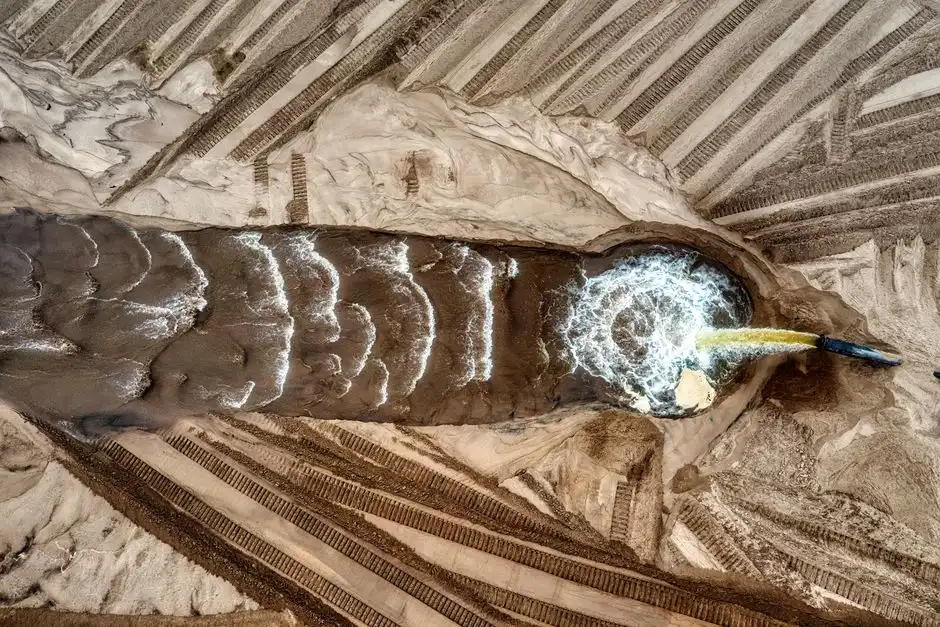
Comparing competing bids requires verifying specific technical requirements. Confirm the headworks includes a rotary mechanical bar screen with stainless rake teeth and overload protection to safeguard downstream stages (HydropureWater product catalog). Confirm whether the biological stage is a buried A/O package (WSZ) or an MBR, and request the design BOD/COD and ammonia-removal basis in writing. For an MBR, request PVDF material, nominal pore size (≤0.1 μm for the DF series), aeration design, and confirmation that membrane elements are individually replaceable (HydropureWater product catalog). Confirm whether a plate and frame filter press is included for sludge dewatering or whether sludge will be trucked off-site, as this directly affects lifetime operating cost (HydropureWater product catalog). Confirm PLC control, the alarm list, and whether the system is designed to run without a dedicated operator. Cross-check the sizing against a sizing a containerized MBR STP guide and an advanced nutrient removal construction guide before signing.
| Item | What to confirm in writing |
|---|---|
| Headworks | Rotary mechanical bar screen, stainless rake teeth, overload protection |
| Biological stage | WSZ A/O or MBR; design BOD/COD and ammonia-removal basis |
| Membrane (if MBR) | PVDF, ≤0.1 μm pore, aeration design, individual element replacement |
| Sludge handling | Plate and frame filter press on-site, or off-site trucking arrangement |
| Automation & power | PLC control, alarm list, no dedicated operator required |
Frequently Asked Questions
What is the realistic cost of a domestic sewage treatment plant for a Madurai apartment complex?
Capex for a packaged residential STP scales with capacity, materials, and whether the system is MBR or conventional A/O. The HydropureWater product catalog defines the WSZ envelope at 1–80 m³/h and the MBR envelope at 10–2,000 m³/day, but prices vary by project requirements. Ask each vendor for a budget offer broken down by headworks, biological stage, membrane (if MBR), disinfection, sludge handling, and PLC to allow for a like-for-like comparison.
How do I pick a vendor for a residential STP in Tamil Nadu?
Shortlist suppliers that can document prior residential installations of similar size, supply a written design basis (BOD/COD/NH₃ removal and effluent target), and provide a spares and membrane-replacement quote. Confirm the proposal includes a rotary mechanical bar screen, PLC automation, and either a plate and frame filter press or a defined sludge-disposal route, and check that the supplier supports TNPCB sewer discharge documentation.
Does a residential society in Madurai need approval from TNPCB to install an STP?
Any premises generating domestic sewage that is reused or discharged outside the municipal network must meet TNPCB discharge parameters, and the developer should file the relevant consent application before commissioning. Request the supplier's compliance note and your consultant's filing checklist before purchase.
Can treated water from a packaged STP be reused for gardening or toilet flushing?
An MBR system at <0.1 μm filtration followed by UV-C disinfection produces near-reuse-quality water suitable for toilet flushing, landscape irrigation, and ground-water recharge, while a WSZ package is typically sized for sewer/drain discharge (HydropureWater product catalog). If reuse is the project goal, specify MBR and confirm the disinfection stage in writing.