Why a Containerized MBR, and Why It Is Different in Kinshasa
Kinshasa has no municipal sewer network at the scale a residential estate, worker camp or IDP/refugee site requires, which forces every site to treat its own wastewater to a reuse envelope rather than to a discharge consent (HydropureWater hotel guide, 2026-01). That changes the engineering problem: the plant must produce water clean enough for landscape irrigation, toilet flushing and grounds maintenance, not merely compliant for sewer discharge.
A packaged containerized MBR is the only packaged plant that delivers this envelope without a tertiary clarifier, because it combines an activated-sludge reactor with submerged ultrafiltration in a single tank. SIGMADAF specifies the flat-plate membrane at a nominal pore of 0.4 μm and an average of 0.2 μm, which physically blocks nearly all biomass from the permeate stream and lets the reactor run at mixed-liquor suspended solids (MLSS) of 6,000–12,000 mg/L — roughly 3–4× higher than a clarifier-based train (SIGMADAF, undated). That high MLSS is the engineering reason the unit fits inside an ISO container or 20/40 ft skid and tolerates the shock loads an intermittent camp or residential block actually generates. For a 25–50 m³/day residential or camp project in DRC, the HydropureWater MBR membrane bioreactor system is the standard skid envelope to specify, and the rest of this guide walks through the sizing math that makes the procurement defensible.
Building the Average Dry-Weather Flow for a Residential or Camp Load
The first defensible number is the average dry-weather flow (ADWF), built bottom-up from per-capita demand, kitchen and laundry contributions, and then a peaking factor (PF) on top. Use a per-capita band rather than a single value: residential blocks in tropical Central Africa sit at the lower end of the domestic envelope, schools and hostels in the middle, and worker or IDP camps at the higher end because shower, laundry and cooking frequency is greater. The HydropureWater hotel guide (2026-01) uses 250 L per guest-night for a 4-star tropical property as a high anchor; a camp planner should treat that as an upper bound and select downward for a residential block, with worker/IDP camps sitting closer to 200 L per person per day.
| Stream | Unit demand | Source |
|---|---|---|
| Residential occupant (low) | ~150 L per person per day | Lower bound of tropical domestic envelope (HydropureWater 2026-01) |
| Worker / IDP camp resident (high) | ~200 L per person per day | Higher shower and laundry frequency |
| Camp mess kitchen | ~30–40 L per cover per day | Hotel cover basis adapted to camp (HydropureWater 2026-01) |
| On-site laundry | ~50–70 L per machine cycle | Hotel cycle basis (HydropureWater 2026-01) |
Add non-domestic streams explicitly so the average daily flow is auditable. The hotel worked example in the HydropureWater Kinshasa hotel guide (2026-01) — 120 rooms × 0.75 × 250 L + 80 covers × 40 L + 90 machine cycles × 60 L = 31,100 L/day — is the structural template to copy, with population replacing guest-nights and with a separate mess-cover and laundry-cycle line. Then apply a 1.2 peaking factor to capture the morning-shoulder surge when an entire camp showers, eats and starts laundry inside a 60–90 minute window (HydropureWater 2026-01). Round the peak figure up to the next standard 10, 25 or 50 m³/day skid, because custom-engineered units add 4–6 weeks of factory lead time on top of the 8–10 week standard build — a delay no Kinshasa residential or camp opening date can absorb (HydropureWater 2026-01).
Worked example for a 500-person residential estate with an attached 100-cover camp mess and on-site laundry: 500 × 150 L = 75,000 L/day from occupancy; 100 × 35 L = 3,500 L/day from the mess; 30 machine cycles × 60 L = 1,800 L/day from laundry. ADWF = 80,300 L/day. Apply 1.2 PF → 96.4 m³/day peak. Specify two 50 m³/day HydropureWater MBR skids operating in parallel for built-in redundancy and to keep each unit inside the standard lead-time band. A single-train plant would lose its only cassette to a chemical clean and the site would lose its irrigation source for 24–48 hours. For an analogous tropical sizing walk-through on a different residential profile, the La Paz containerized MBR sizing guide follows the same ADWF → PF → standard-skid logic at altitude.
Choosing the Membrane Geometry: Flat-Sheet PVDF for Kinshasa
The membrane choice determines long-term OPEX, FOG tolerance, and how forgiving the plant is of operator error — three variables a residential or camp operator will live with for the next decade. Two geometries dominate: flat-sheet (plate) and hollow-fiber. Flat-sheet modules keep clear channels between panels, run at high MLSS, and tolerate the occasional solids excursion that a camp or residential block produces after a holiday or mess event. SIGMADAF specifies the flat-plate film at a nominal pore of 0.4 μm and an average of 0.2 μm (SIGMADAF, undated); the HydropureWater DF series flat-sheet membrane module uses 0.1 μm pore PVDF and ships 80–225 m² of membrane area per cassette, delivering 32–135 m³/day per module depending on the loading. Energy use for the submerged flat-sheet design runs 10–20× lower than external cross-flow systems (HydropureWater DF module, 2026).
| Parameter | Flat-sheet (DF series) | Hollow-fiber UF |
|---|---|---|
| Pore size | 0.1 μm (DF) / 0.4 μm nominal, 0.2 μm avg (SIGMADAF) | Typically 0.01–0.1 μm |
| FOG / hair tolerance | High — clear channel between plates | Low — sensitive to fouling |
| MLSS tolerance | 6,000–12,000 mg/L (SIGMADAF) | Lower |
| Chemical CIP offline time | Rare; in-situ CIP supplied | 24–48 h cassette removal (HydropureWater 2026-01) |
| Energy vs. cross-flow | 10–20× lower (DF module) | Higher aeration demand |
| Camp/residential suitability | Defensible default | Acceptable only with strict pretreatment |
Hollow-fiber UF packs more area per cubic metre but is more sensitive to FOG, hair and oil fouling — exactly the contaminants a camp or residential stream produces. Once a fiber bundle fouls, recovery usually requires a chemical soak that takes the cassette offline for 24–48 hours (HydropureWater 2026-01); in a single-train camp plant that means an effluent excursion and a regulatory exposure. For Kinshasa, specify a DF series flat-sheet PVDF cassette with the in-situ CIP package, sized to deliver the design flow at 28–32 °C mixed liquor. Material note: SIGMADAF's flat-plate membrane is chlorinated polyethylene and explicitly PFAS-free; PVDF alternatives are the industry default and offer similar chemical resistance (SIGMADAF, undated).
Pretreatment Train: Screen, Grease Trap and Equalization
Hair, fats, oils, grit and lint must never reach the membrane tank. SIGMADAF explicitly warns against introducing these into the MBR reactor because they coat the membrane surface, accelerate biofouling, and force clean-in-place cycles that would otherwise be quarterly (SIGMADAF, undated). A camp or residential stream carries all five in unusual concentration — hair from accommodation blocks, cooking oil from the mess, lint from on-site laundry, grit from access roads, and emulsified FOG from showers — and pretreatment is therefore the single highest-leverage engineering decision in the whole specification.
Specify the train in this order, ahead of the membrane tank. First, a rotary mechanical bar screen at 1–3 mm aperture; the GX series rotary mechanical bar screen is the standard headworks match for packaged MBRs. Second, a DAF unit or grease trap on the kitchen and laundry streams; the HydropureWater DAF unit handles 4–300 m³/h and is the appropriate match for camp-mess and on-site laundry flows. Third, a flow-equalization buffer with 6–8 hours of average retention ahead of the membrane tank, fitted with a coarse-bubble aeration grid to keep FOG emulsified and prevent a floating layer from forming (HydropureWater 2026-01). Skipping or undersizing the pretreatment train is the most common reason packaged MBRs fail on hospitality and camp sites within the first 12 months; if the vendor proposal does not show a screen, a DAF or grease trap, and an equalization tank ahead of the membrane tank, treat that as a no-go regardless of membrane pricing (HydropureWater 2026-01).
Tropical and Grid-Power Derating for Kinshasa
A packaged MBR designed for a temperate European or Chinese climate is not the same animal as one bound for Kinshasa. Three site conditions drive the spec. First, ambient mixed-liquor temperature of 28–32 °C accelerates biological kinetics but also accelerates membrane fouling, so the cassette must be rated for that band (HydropureWater 2026-01). Second, grid power in Kinshasa is intermittent, with outages of minutes to hours several times a week; the PLC must have auto-restart on power return, the permeate pump needs a 10–15 second ride-through, and the diesel standby must be sized for aeration plus permeate only — not for backwash (HydropureWater 2026-01). Third, dry-season ambient air reaches 35 °C in the afternoon and will kill unprotected electronics; specify an air-conditioned container for blowers and controls (HydropureWater 2026-01). The marginal cost of these tropical adjustments is typically 8–12% of the skid price; the operational risk reduction is large enough that any vendor quote omitting them should be sent back for requote (HydropureWater 2026-01). The Brussels containerized MBR sizing guide uses the same tropical-derating framework and is worth reading in parallel for the contrast with a temperate grid.
Effluent Targets, Sludge and Reuse on the Camp Site
The regulatory target for a packaged MBR STP in DRC is the 2022 MBR benchmark envelope: <10 mg/L TSS, BOD5 <5 mg/L, and >91% COD removal (Journal of Environmental Management, 2022, cited by Seven Seas via the HydropureWater 2026-01 Kinshasa hotel guide). Write those numbers into the purchase specification as a vendor performance guarantee tied to liquidated damages, not as a typical-result statement. Sub-surface or drip irrigation of camp grounds is realistic at this envelope; for any spray irrigation near mess halls or accommodation blocks, add a HydropureWater UV sterilizer downstream to bring fecal coliform to non-detect (HydropureWater 2026-01). Waste-activated-sludge production is low but still requires dewatering; the hotel guide cites 0.3–0.5 kg dry solids per m³ treated for a hotel load, and the same band is the defensible assumption for a camp or residential load until site-specific data is available (HydropureWater 2026-01). Specify a HydropureWater plate-and-frame filter press sized to the MBR's waste-sludge production, and require the vendor to deliver a commissioning report with influent and effluent analyses within 30 days of opening, in the format the Ministry of Environment expects — that is the document the regulator will ask for first (HydropureWater 2026-01).
Cost Envelope and Procurement Window for Kinshasa
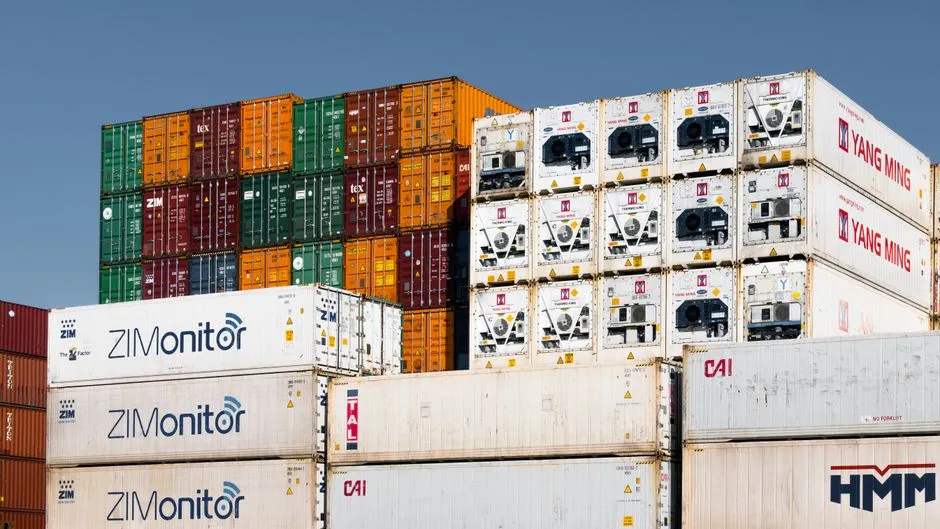
For a packaged MBR with flat-sheet PVDF membranes, DAF pretreatment, equalization tank and UV polish, the FOB price band for a 25–50 m³/day unit is consistent with the hotel-guide envelope in the HydropureWater 2026-01 Kinshasa hotel guide; landed cost in Kinshasa typically runs 1.8–2.2× the FOB figure once Matadi ocean freight, overland transport, civils, standby power, commissioning and one year of consumables are added (HydropureWater 2026-01). Standard 10/25/50 m³/day skids carry an 8–10 week factory build and Factory Acceptance Test window; custom-engineered units outside the standard sizes add 4–6 weeks of lead time and 15–25% to the price (HydropureWater 2026-01).
| Line item | Duration / cost band | Source |
|---|---|---|
| Factory build + FAT (standard skid) | 8–10 weeks | HydropureWater 2026-01 |
| Custom-engineered unit additional lead time | +4–6 weeks | HydropureWater 2026-01 |
| Custom-engineered unit price premium | +15–25% | HydropureWater 2026-01 |
| Ocean freight to Matadi | 4–6 weeks | HydropureWater 2026-01 |
| Overland + DRC customs to site | 2–3 weeks | HydropureWater 2026-01 |
| Total procurement window | 14–18 weeks (+1 week buffer per leg) | HydropureWater 2026-01 |
| Landed-cost multiplier vs. FOB | 1.8–2.2× | HydropureWater 2026-01 |
| Flat-sheet PVDF membrane replacement | Year 7–10 | HydropureWater 2026-01 |
| Hollow-fiber membrane replacement | Year 5–7 | HydropureWater 2026-01 |
Plan a 14–18 week total procurement window: 8–10 weeks factory build, 4–6 weeks ocean freight to Matadi, 2–3 weeks overland and DRC customs to site; add 1 week buffer on each leg because Matadi port congestion and Kinshasa customs are the two failure points even good projects underestimate (HydropureWater 2026-01). FOG control at the headworks is the single biggest variable on the membrane-replacement interval. For deeper design-criteria context, the MBR system design criteria 2026 guide covers the same envelope against a regulatory baseline.
Frequently Asked Questions
What per-capita flow should I use to size a containerized MBR for a residential block or worker camp in Kinshasa?
Use a band rather than a single value: ~150 L per person per day for a residential block, rising toward ~200 L for a worker or IDP camp where shower, laundry and cooking frequency is greater (HydropureWater 2026-01). The HydropureWater hotel guide uses 250 L per guest-night as a high anchor for a 4-star tropical property; treat that as the upper bound and select downward for a residential profile. Add mess and laundry streams explicitly, then apply a 1.2 peaking factor to capture the morning surge.
How much does a packaged containerized MBR STP for a 25–50 m³/day camp or residential project in Kinshasa actually cost landed?
The HydropureWater 2026-01 Kinshasa hotel guide cites a $90K–$160K FOB band for a 25–30 m³/day packaged MBR with flat-sheet PVDF, DAF, equalization and UV polish, and $200K–$280K FOB for a 50 m³/day unit; landed cost in Kinshasa typically runs 1.8–2.2× the FOB figure once Matadi ocean freight, overland transport, civils, standby power, commissioning and one year of consumables are added (HydropureWater 2026-01). For a project-specific number, request a written quote that itemizes FOB equipment, ocean freight, overland to site, civils scope, standby generator, commissioning and the first-year consumables basket, then apply the 1.8–2.2× multiplier to set the contingency band.
How do I pick between flat-sheet and hollow-fiber MBR membranes for a Kinshasa camp or residential site?
Specify flat-sheet PVDF as the default. Flat-sheet modules tolerate the FOG, hair and lint that a camp or residential stream produces, run at MLSS of 6,000–12,000 mg/L, and use 10–20× less energy than external cross-flow designs (SIGMADAF, undated; HydropureWater DF module, 2026). Hollow-fiber packs more area per cubic metre but fouls faster on the same stream; a chemical recovery soaks the cassette offline for 24–48 hours, which in a single-train plant is an effluent excursion and a regulatory exposure (HydropureWater 2026-01). Require the vendor proposal to name the membrane geometry, the pore size, the cassette area, and the in-situ CIP package before comparing quotes.
What is the realistic lead time and customs risk for delivering a containerized MBR STP to Kinshasa?
Plan a 14–18 week procurement window: 8–10 weeks factory build and Factory Acceptance Test, 4–6 weeks ocean freight to Matadi, and 2–3 weeks overland transport and DRC customs clearance to site, with 1 week buffer on each leg because Matadi port congestion and Kinshasa customs are the two failure points that even good projects underestimate (HydropureWater 2026-01). For a Kinshasa hotel project tied to a fixed opening date, the same HydropureWater 2026-01 hotel guide recommends pre-clearing the customs broker during the ocean-freight leg rather than after the container arrives at Matadi. Confirm with the vendor that the quotation is for a standard 10/25/50 m³/day skid; a custom-engineered unit outside those sizes adds 4–6 weeks and 15–25% to the price (HydropureWater 2026-01). For a parallel camp-procurement example with a different tropical logistics profile, the La Paz containerized MBR sizing guide applies the same 14–18 week structure at altitude.