Why Brussels residential and camp projects are choosing containerized MBR STPs
A containerized MBR (membrane bioreactor) is a pre-engineered wastewater treatment plant built inside a standard 20 ft or 40 ft shipping container, combining biological treatment and membrane filtration in a single factory-tested module (wateracademia.com, 2026). Because the unit arrives requiring only water and power connections, on-site civil works are reduced to a slab, a feed pipe and an outlet — a significant advantage on tight Brussels infill sites, on construction or refugee camps, and on seasonal event sites where permanent structures are not wanted.
This format suits the Brussels context for three practical reasons. First, many small-community and camp sites in the Brussels-Capital Region have constrained footprints where a concrete-tank sequencing batch reactor is hard to permit. Second, the containerized MBR membrane bioreactor system is scalable: parallel containers can be added as a residential estate builds out or as a camp's peak occupancy grows. Third, mobility is built in — the system can be relocated with relative ease when a construction camp demobilises or a seasonal site closes (dynatecsystems.com).
On effluent quality, a properly sized containerized MBR produces permeate with BOD, TSS, TKN and ammonia well below typical discharge limits, which is the engineering basis for designing to EU Urban Waste Water Directive 91/271/EEC compliance for small communities (dynatecsystems.com). For an engineer justifying the technology class to a client or to Brussels-Environment (Leefmilieu Brussel), that combination — fast deployment, compact footprint, scalable, and discharge-compliant — is what makes the containerized MBR a defensible choice before the sizing math even starts.
The five-step sizing method for a Brussels containerized MBR
A structured five-step sequence allows for the sizing of a plug-and-play wastewater plant for any Brussels residential or camp project. The output is a defensible container count and a documented basis for the permit application.
Step 1 — Establish the population equivalent (PE). For a residential estate, sum the design occupancy. For a camp, take the peak occupancy and apply a loading factor to account for showers, catering and laundry that are not present in a typical household. The supplied research does not give a Brussels-specific PE figure, so confirm the count with the developer's housing schedule or the camp operator's site plan.
Step 2 — Convert PE to average daily flow. Multiply PE by a per-capita wastewater contribution in litres per person per day. The research does not provide a numeric per-capita value, so this number must be requested from the supplier and cross-checked against the Brussels-Environment permit conditions for the site. Document the value used in the design basis.
Step 3 — Apply a peak hourly factor. Residential mornings and camp shift-change showers create surge flows that exceed the daily average. Multiply the average flow by a peak factor to obtain the design hydraulic load. The peak-factor value is project-specific and must be confirmed with the designer based on diurnal pattern, storage in the upstream network, and the membrane skid's peak tolerance.
Step 4 — Match design flow to a containerized MBR model. Start with one 20 ft or 40 ft unit, then add parallel containers if a single unit is undersized (wateracademia.com). Paralleling is a documented feature of the format and is the standard way to scale beyond a single skid's rated flow.
Step 5 — Verify against EU and Brussels requirements. Check that the chosen configuration meets EU Urban Waste Water Directive 91/271/EEC expectations for the receiving environment, and, where a public sewer is available, confirm the Aquafin connection conditions before committing to a container count.
| Step | Input required | Output | Source of input |
|---|---|---|---|
| 1. Population equivalent | Design residents or peak camp occupancy × loading factor | PE (persons) | Developer / camp operator |
| 2. Per-capita flow | L/person/day | Average daily flow (m³/day) | Supplier + Brussels-Environment permit |
| 3. Peak factor | Peak/average ratio | Peak hourly flow (m³/h) | Designer judgement |
| 4. Container selection | Rated m³/day per 20 ft and 40 ft unit | Number of containers, paralleled | Supplier rated curve (wateracademia.com) |
| 5. Compliance check | 91/271/EEC limits + Aquafin conditions | Permit-ready sizing | EU directive + Aquafin |
20 ft vs 40 ft container: choosing the right format
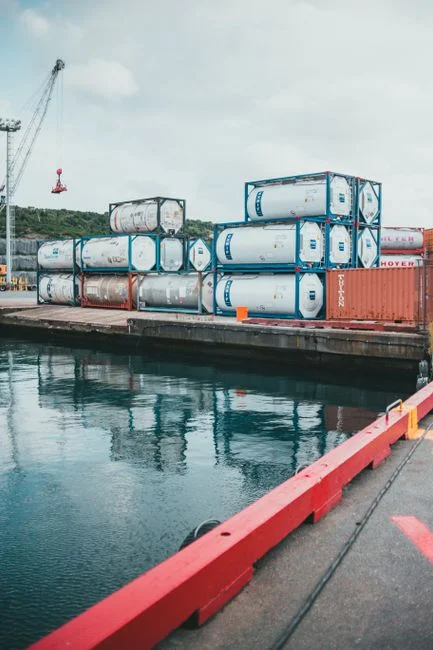
The choice between a 20 ft and a 40 ft container depends on flow requirements, available footprint, and site access for heavy machinery. The supplied research confirms that both formats are plug-and-play, require only water and power connections, and can be relocated with relative ease (wateracademia.com; dynatecsystems.com), but the research does not give a numeric m³/day rating per container. That rated flow must be requested from the shortlisted suppliers before final selection.
Use a 20 ft container for smaller residential blocks and camp sub-clusters where the design flow fits a single skid's rating. Use a 40 ft container for larger residential communities and main camp process trains that need more membrane area, larger blower rooms, or integrated sludge storage in a single footprint. Where a single 40 ft unit is still undersized, parallel additional containers rather than over-specifying one — the modular format is designed for paralleling (wateracademia.com).
Logistics differ mainly in delivery. A 40 ft unit is heavier and longer, which can be a constraint on narrow Brussels streets, on camps with soft ground, or on sites where the crane reach is limited. A 20 ft unit is easier to lift into a tight courtyard but requires more parallel units to reach the same flow, multiplying the connection and maintenance points. The MBR membrane module design criteria guide covers the hydraulic side of this choice in more detail.
| Parameter | 20 ft container | 40 ft container |
|---|---|---|
| Typical use | Small residential block, camp sub-cluster | Larger community, main camp train (wateracademia.com) |
| Site access | Easier Hiab/crane on tight sites | Needs more truck and crane room |
| Scalability | Add parallel 20 ft units | Add parallel 40 ft units (wateracademia.com) |
| Rated flow (m³/day) | Request from supplier | Request from supplier |
| Relocation | Plug-and-play, water + power only (wateracademia.com) | Plug-and-play, water + power only (wateracademia.com) |
Treatment train inside the container: from screening to disinfection
The container houses the full treatment train: inlet screening, biological reactor, membrane filtration, and permeate handling, all delivered as one factory-tested package (wateracademia.com). The engineer must specify the appropriate pre- and post-equipment around the box to ensure the train meets Brussels discharge targets.
Upstream of the container, install a rotary mechanical bar screen to protect the container's internals from rags, plastics and debris — a common feedstock in residential sewers and especially in temporary camps where solids control at source is weak. If the project must meet low phosphorus limits, include an automatic chemical dosing system ahead of the membranes; the membrane stage can deliver low phosphorus with supplemental metal-salt addition (dynatecsystems.com), but only if the dosing skid is sized and piped into the recycle line.
Downstream, plan for a sludge handling line sized to the MBR's waste-activated-sludge production rate. A plate and frame filter press is a common match for containerized plants because it produces a dry cake that can be containerised and removed from camp or estate sites without a liquid sludge hauler. If the effluent is destined for reuse within the camp or for residential irrigation, specify a UV sterilizer on the permeate line to address any residual bacterial loading before the reuse loop. For background on the membrane step itself, the how an MBR works process explainer is a useful reference for permit reviewers.
Brussels and EU compliance checkpoints before you order
EU Urban Waste Water Directive 91/271/EEC acts as the controlling instrument for packaged sewage treatment plants discharging in the Brussels-Capital Region, including the small-community threshold that most residential and camp projects fall under. The design must demonstrate that the chosen container configuration will meet those limits at the design flow and at the peak hourly flow.
Engage Brussels-Environment (Leefmilieu Brussel) early to confirm whether the effluent can be discharged to the public sewer or must be reused on-site, and to lock in the monitoring frequency the permit will require. Where a public sewer is the receptor, contact Aquafin to confirm connection conditions, sampling access, and any pretreatment requirements they will impose on top of the EU directive.
Document the expected permeate quality — BOD, TSS, TKN and ammonia well below discharge limits (dynatecsystems.com) — in the permit application, supported by the supplier's reference plant data. If a phosphorus limit applies to the discharge point, factor the metal-salt dosing capability into the membrane skid selection from the start (dynatecsystems.com), not as a retrofit after delivery. For projects in neighbouring jurisdictions, the Luanda containerized MBR sizing guide and the Algiers containerized MBR sizing guide show how the same compliance logic is applied in other regulatory contexts.
Inputs to request from your containerized MBR supplier
Send every shortlisted supplier the same technical request to ensure quotations are comparable. The minimum list, based on the supplied research, is:
- Rated design flow in m³/day per 20 ft and per 40 ft container, including peak flow tolerance, and the number of containers required at the project's design flow with paralleling logic documented (wateracademia.com).
- Footprint, lifting weight, and connection points (water in, water out, power, sludge) for site layout and crane planning.
- Expected permeate quality versus EU Urban Waste Water Directive 91/271/EEC limits, plus the chemical dosing approach if phosphorus control is in scope (dynatecsystems.com).
- Remote-monitoring and PLC scope, and the operator skill level required, since containerized MBRs are marketed as low-operator plants (wateracademia.com).
Ask for reference plants of similar PE and flow range, and for the delivery terms that confirm the plug-and-play claim: what is included in the factory test, what is shipped loose, and what the site erection scope actually is. The answers determine the real cost and the real schedule, both of which matter when a Brussels permit window or a camp mobilisation date is fixed.
Frequently Asked Questions
How long does it take to deliver and install a containerized MBR STP in Brussels?
Containerized MBRs are designed for fast deployment and plug-and-play installation, with no civil works required beyond a slab and connections (wateracademia.com). A specific lead time in weeks or months is not given in the research, so request the factory build slot, shipping time to Antwerp or Zeebrugge, and the on-site erection duration in writing from each shortlisted supplier before committing to a project programme.
What does a containerized MBR sewage treatment plant cost for a Brussels residential or camp project?
The supplied research contains no price data for a containerized MBR, and no indicative euro-per-PE or euro-per-m³ figure should be inferred from the sources. Request a per-container quotation from each supplier that is inclusive of the upstream bar screen, the chemical dosing system if phosphorus control is in scope, the sludge dewatering press, and any UV or chlorine dioxide disinfection on the permeate line, so the totals are directly comparable across bids.
Does a containerized MBR meet EU Urban Waste Water Directive 91/271/EEC for small communities in Brussels?
A properly sized