What a Containerized MBR STP Actually Is
A containerized MBR (membrane bioreactor) sewage treatment plant packages the full biological and membrane-filtration train inside one or more ISO 20-ft or 40-ft high-cube (HC) shipping containers, factory-tested so the unit arrives on site ready for pipe and power connection. MENA-Water, a regional packager of these systems, states that more than 1,200 m³/day of MBR capacity can be filtered inside a single 40-ft ISO container, with internal tanks built from stainless-steel sheets and bubble diffusers keeping the membrane surfaces continuously aerated to limit fouling.
Inside the container, the train typically runs: influent drum screen (1.5 mm perforation on the Pure Aqua MBR-C reference build) → anoxic zone for denitrification → aerobic bioreactor with fine-bubble diffusers → submerged UF membrane cassette → disinfection → treated-water buffer. MAK Water's MBR product description follows the same sequence, with the addition of an upstream balance tank and downstream treated-effluent tank. The membrane step is the unit operation that distinguishes MBR from conventional activated sludge: Pure Aqua's MBR-C uses hollow-fiber UF membranes with a nominal 0.04 µm pore size, while flat-sheet PVDF modules in the HydropureWater DF series use 0.1 µm pores, both well below the 1 µm threshold that retains bacterial flocs, suspended solids and most viruses. MENA-Water reports a 99.9999% reduction in virus and bacteria at the membrane stage, the headline performance claim versus a settling-tank secondary clarifier. For procurement teams, the practical implication of this definition is that a "containerized MBR STP" is shorthand for a single skidded package that includes bioreactor tanks, membrane cassettes, aeration, cleaning/air-scour system, control panel and, on most builds, an integral disinfection stage — all of which must be enumerated in the supplier's scope of supply. For a packaged integrated MBR wastewater treatment system, the container footprint, the membrane type and the factory test scope are the three specifications that determine whether the unit is truly "plug and play" on a Luanda site.
Luanda Site Conditions That Change the Sizing
Luanda sits in the tropical coastal belt of Angola, with ambient air temperatures that match the design window of mainstream packaged MBRs: Pure Aqua's MBR-C is rated for an operating range of 20–30°C with a design point of 20°C, so the Luanda climate does not require external cooling or heating of the bioreactor. The conditions that do change the sizing are logistical and electrical rather than thermal. Angola's grid is 220–240 V at 50 Hz, which conflicts with the 460 V / 3-phase / 60 Hz default supply that Pure Aqua publishes for the MBR-C — this is a specification gap to flag at purchase order stage rather than a design problem. Luanda's municipal supply is intermittent, and many peri-urban residential blocks and remote construction or oil-and-gas camps receive water by bowser (trucked delivery) rather than from a continuous piped network, which means the sewage strength entering the plant can be higher and more variable than the "domestic strength" envelope that MAK Water uses to rate its standard MBR. This camp-versus-residential distinction is one of the most common sources of under-sizing: a workforce camp with shift-change showers, central laundry and mess-hall kitchens produces a sharper diurnal peak than a fully plumbed European estate, and the engineer should request the client's shift schedule, meal times and laundry window before finalising the peak factor. Effluent reuse is also relevant in Luanda: gated communities increasingly specify treated effluent for landscape irrigation and toilet flushing, and packaged MBRs can meet reuse criteria when the supplier includes a post-treatment polishing step such as the disinfection stages Pure Aqua and MENA-Water both list as options on their standard builds. Together, these overlays — voltage/frequency mismatch, intermittent power, water-trucking duty cycle, and optional reuse polishing — define the Luanda-specific adjustments that a Europe- or US-based sizing spreadsheet will not capture by default.
Step 1 — Build the Design Flow for a Luanda Camp or Residence
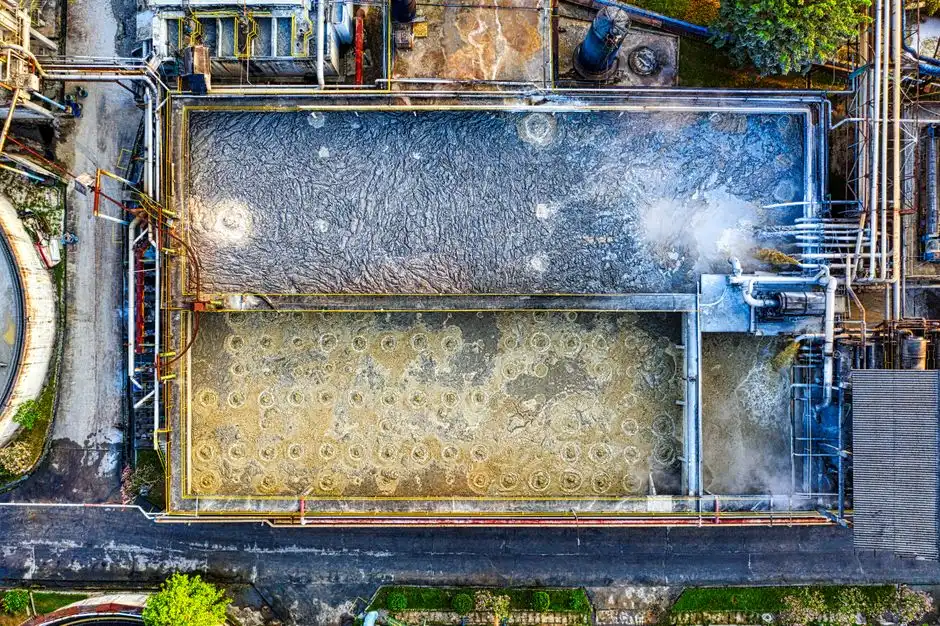
The single most important input to a containerized MBR sizing is the design flow in m³/day, and the calculation has four auditable steps. Step 1a — Fix the design population. A 500-person construction camp on the outskirts of Luanda and a 200-unit peri-urban residential block at roughly 3.5 persons per unit both land near a 700-person design population, which keeps the two use cases in the same flow band. Step 1b — Apply a per-capita wastewater flow. Pure Aqua's MBR-C reference sizing table uses 50 gpd per capita (≈190 L/d) to convert population into approximate capacity; for water-trucked Luanda camps, actual consumption is often lower than the piped-network assumption, so the per-capita number should be confirmed with the client and documented as a project-specific input. Step 1c — Convert to m³/d using a single unit convention. The IDA Water Security Handbook defines 1 m³ = 1,000 L and 1 MIGD (million imperial gallons per day) = 4,546 m³/d, so any supplier quote issued in US gallons or imperial gallons can be reconciled to the metric m³/d figure used in the design basis. Step 1d — Apply a peak factor to size the buffer and the membrane flux. The peak factor itself is not invented here; the engineer must collect the shift-change pattern, meal times and laundry schedule from the operator, because these inputs drive the diurnal peak that the equalisation buffer and the membrane cassette must absorb. For a 500-person camp with Pure Aqua's 50 gpd per capita figure, 500 × 190 L/d ≈ 95,000 L/d ≈ 95 m³/d average; the peak flow that drives the equalisation and membrane area sizing rises above this average according to the duty cycle the client reports.
| Parameter | Value / Input | Source / Action |
|---|---|---|
| Design population | 500 (camp) or 700 (200-unit residence at 3.5 p/unit) | Client brief |
| Per-capita wastewater flow | 50 gpd per capita ≈ 190 L/d | Pure Aqua MBR-C reference table |
| Average daily flow (500 p) | ≈ 95 m³/d | Calculated |
| Peak factor | To be confirmed | Request shift, meal and laundry schedule from operator |
| Unit conversion reference | 1 m³ = 1,000 L; 1 MIGD = 4,546 m³/d | IDA Water Security Handbook (2020-2021) |
Step 2 — Match Flow to Container and Module Capacity
With the average and peak flows from Step 1, the next step is to translate m³/d into an ISO container count and a membrane module configuration. MENA-Water's published benchmark is that more than 1,200 m³/day of MBR capacity can be packaged inside a single 40-ft ISO container, which is the upper-bound check on container count for any project in this size class. The lower-bound check is the membrane module itself: HydropureWater's DF series flat-sheet modules produce 32–135 m³/day each depending on the 80–225 m² membrane area configuration, so the engineer can size the cassette independently of the container shell and then verify that the chosen container has the floor area and headroom to accept it. For the 95 m³/d average flow of the 500-person Luanda camp, a single 20-ft or 40-ft HC container is normally sufficient; the choice between the two typically comes down to whether the design includes an integral treated-water buffer and disinfection package or just the membrane bioreactor skid. Several ancillaries share container space and must be reserved for in the layout: the drum screen pre-treatment, the anoxic and aeration tanks, the membrane cleaning/air-scour system, the control panel, and any optional standby pumps that Pure Aqua lists as standard options on the MBR-C. The container build specification also matters at the Luanda port: Pure Aqua's standard container is described as insulated, zero-water-leakage, enhanced-structure and seaworthy, which covers humid coastal storage and ISO-frame road transport from the port to the site. The decision framework for the engineer is therefore: confirm membrane module count from the flow target, confirm container count from the module footprint plus ancillaries, then verify both against the 1,200 m³/d-per-40-ft ceiling. For the membrane step, the DF series flat-sheet MBR module datasheet is the reference document to put on the supplier's desk.
| Capacity Reference | Value | Source |
|---|---|---|
| Upper-bound container capacity | More than 1,200 m³/day per 40-ft ISO container | MENA-Water MBR product page |
| Flat-sheet DF module flow range | 32–135 m³/day per module | HydropureWater DF series datasheet |
| Container envelope (Pure Aqua MBR-C) | 20-ft or 40-ft high-cube; insulated; zero water leakage; seaworthy | Pure Aqua MBR-C product page |
| Membrane pore size options | 0.04 µm hollow-fiber (Pure Aqua) or 0.1 µm flat-sheet (HydropureWater DF) | Pure Aqua; HydropureWater |
Step 3 — Specify the Treatment Train Around the Container
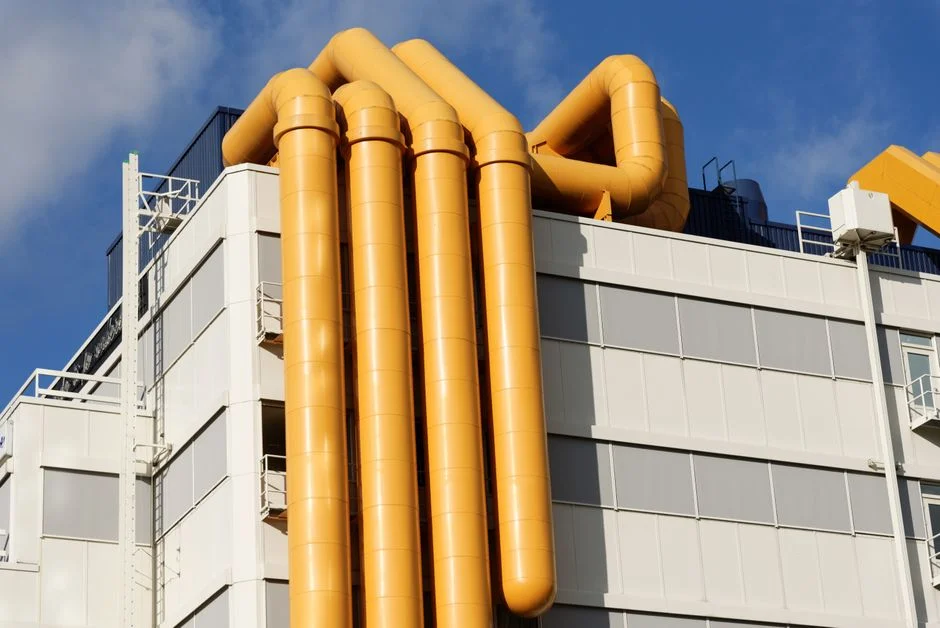
The containerized MBR is the core of the plant, not the whole plant; pre- and post-treatment items sit outside the ISO frame and must be specified separately because they often drive the total skid count. Pre-treatment starts with the drum screen at 1.5 mm perforation that Pure Aqua fits as standard on the MBR-C, and for camps with high rag or textile content, a rotary mechanical bar screen upstream is a sensible upgrade to protect the UF membranes. The biological stage is the standard anoxic-for-denitrification / aerobic-with-fine-bubble-diffusers train published for both the Pure Aqua MBR-C and the MAK Water MBR; the mixed-liquor suspended solids (MLSS) target is a supplier-specific number that drives both aeration blower sizing and membrane flux, so it must be confirmed in writing rather than assumed. Post-treatment is typically skid-mounted alongside the container: a chlorine dioxide generator or a UV sterilizer is the usual choice, with Pure Aqua and MENA-Water both listing disinfection inside their standard plug-and-play package. Sludge handling is the item most often under-specified: packaged MBRs produce low volumes of waste-activated sludge because of the high MLSS and long solids retention time, but a small sludge tank and a dewatering device such as a plate-and-frame filter press should still be on the bill of quantities to avoid an operational bottleneck six to twelve months after start-up. Finally, the electrical and control scope must be confirmed at the Luanda site against Angola's 220–240 V / 50 Hz supply: the Pure Aqua MBR-C default 460 V / 3-phase / 60 Hz is a common specification mismatch that must be resolved at the purchase order stage, not on site during commissioning. For engineers who want a worked example of the same workflow applied to a different climate, the containerized MBR STP sizing guide for Erbil covers the parallel Middle-East case in the same step-by-step format.
Step 4 — Sanity-Check the Sizing With a Supplier Checklist
Before any quote is converted into a purchase order, the sizing calculation should be cross-checked against the supplier's rated performance under five specific questions. First, confirm the rated average and peak flow at the Luanda design temperature: Pure Aqua's MBR-C is rated 20–30°C operating with a 20°C design point, and flux derates as the mixed-liquor temperature rises, so the supplier must state the m³/d figure at the Luanda operating temperature rather than at laboratory conditions. Second, request effluent quality guarantees for BOD, COD, TSS, total nitrogen and turbidity, and verify that the published typical values match the Angolan discharge standard or the project's reuse target. Third, ask for membrane type (hollow-fiber versus flat-sheet), pore size (0.04 µm Pure Aqua; 0.1 µm HydropureWater DF), expected membrane life and replacement cost, because these dominate the lifecycle OPEX. Fourth, confirm container dimensions, water-filled weight and the number of containers that fit on a standard 40-ft truck for Luanda road delivery, because the "plug and play" claim only holds if the entire plant arrives in a known and transportable number of ISO frames. Fifth, request the remote monitoring option — Pure Aqua and MAK Water both list remote monitoring on their MBR product pages — because it materially reduces site-visit cost for a remote Luanda camp. If the supplier cannot answer any of these five questions with a datasheet value, the quote is not yet comparable to its peers. The same checklist approach is used in the related MBR troubleshooting field guide and the domestic sewage treatment engineering guide, where the operator-side questions are framed in the same answer-with-a-datasheet style.
Frequently Asked Questions
How much does a containerized MBR STP cost for a 500-person camp in Luanda?
Capital cost depends on the container count, membrane area and the scope of pre- and post-treatment skids, none of which can be fixed without a confirmed average and peak flow plus a site-specific effluent specification. Request a line-item quote that breaks out the membrane module cost, the container cost, the disinfection skid and the sludge handling package separately, so the four cost drivers can be compared across suppliers on the same basis.
How do I choose between a 20-ft and a 40-ft HC container for a Luanda project?
Use MENA-Water's 1,200 m³/d-per-40-ft benchmark as the ceiling: if the design flow (with peak factor applied) is below that ceiling, a single 40-ft HC will usually accept the full bioreactor, membrane cassette, cleaning system and control panel with room to spare. Choose a 20-ft HC only when the design deliberately excludes an integral treated-water buffer or disinfection skid, and those items are supplied as separate skids alongside the container.
What peak factor should I use for a Luanda workforce camp versus a residential block?
The peak factor is an input to collect, not a number to assume: for a camp, the engineer needs the shift-change pattern, meal times and laundry schedule from the operator; for a residential block, the diurnal curve is smoother but the engineer still needs the morning and evening peak window from the developer's plumbing design. Document the assumed duty cycle in the design basis so the supplier's peak-flow guarantee can be checked against the same envelope.
What is the lead time for delivering a containerized MBR STP to Luanda?
Lead time is driven by membrane manufacturing slot, factory acceptance test scheduling and the shipping window from the supplier's port to Luanda. Request a written production schedule that fixes the FAT date, the ex-works dispatch date and the seaworthy container certification, and confirm the Angola-side customs broker is named in the supplier's shipping terms so the port-to-site transit can be tracked.