What Is a Wet Scrubber and How Does It Work?
A wet scrubber is a liquid-based air pollution control device that removes gases, vapors, fumes, and particulate matter from an industrial exhaust stream by contacting the dirty gas with a scrubbing liquid — most commonly water — that captures pollutants into droplets which are then collected as a wastewater stream (CECO, S4). The technology is highly versatile: packed-bed scrubbers target inorganic gases such as SO2, ammonia, H2S, chlorides, and fluorides; venturi scrubbers achieve up to 99% removal of mists 3 microns or larger; and quencher scrubbers reach up to 99.9% removal of acid or toxic gases from hot process streams (CECO, S4). The captured pollutants leave the air side as scrubber blowdown — a defined industrial wastewater stream that must itself be treated before discharge or reuse (Met-Chem, S3).
Two physical mechanisms do the work. For gases and vapors, absorption transfers the contaminant into the scrubbing liquid because the liquid is selected to chemically bind the target species (CECO, S4). For particulate matter, inertial capture forces dust and mist into liquid droplets, and collection efficiency is often directly proportional to the power input into the scrubber (CECO, S4). When an exhaust stream carries both gases and particulates, wet scrubbers are the only single air pollution control device that can remove both pollutants in one vessel (CECO, S4). The canonical engineering reference for these mechanisms is Hesketh, H.D., Wet Scrubbers, Second Edition (Routledge, doi:10.1201/9780203733899) (S1).
The link to the wastewater side of the problem is unavoidable: every droplet that captures a pollutant becomes part of a liquid stream. Once that stream is recovered from the scrubber sump, it is called scrubber blowdown, and it carries the same chemistry that was removed from the air (Met-Chem, S3). Treating the air side and the water side as one integrated compliance problem — rather than two unrelated engineering scopes — is the difference between a passing design and a permit headache.
Main Types of Wet Scrubbers and the Pollutants They Handle
Scrubber geometry is driven by the pollutant being controlled, and energy source for gas–liquid contact — not just the vessel shape — is what separates the four common configurations (CECO, S4). Packed-bed (also called packed-tower or "acid gas") scrubbers are used for inorganic fumes, vapors, and gases including chromic acid, hydrogen sulfide, ammonia, chlorides, fluorides, and SO2, with particulate collection ranging from 50–95% depending on dust loading (CECO, S4). Venturi scrubbers reach up to 99% removal of mists 3 microns or larger, and the Wet Particulate Venturi variant exceeds 99% on very fine particulates using only fan-induced static pressure — no pumps, spray nozzles, or recirculation piping (CECO, S4). Quencher scrubbers are a two-stage system in which a metallic quench stage cools hot gas and a downstream FRP scrubber stage with high-efficiency packing removes the corrosive species, achieving up to 99.9% removal of HCl, HF, SO2, and Cl2 (CECO, S4). NOx control wet scrubbers use high-efficiency wet oxidation or reduction in single or multiple stages, providing more than 99% total NOx removal and eliminating the visible red/brown plume (CECO, S4). Wet limestone or lime FGD scrubbers target SO2 from combustion streams and are often paired with particulate control, producing a reusable gypsum byproduct (HydropureWater FGD scrubber system, Product 14).
| Scrubber type | Primary target pollutants | Reported removal efficiency | Typical materials of construction |
|---|---|---|---|
| Packed-bed (acid gas) | SO2, H2S, NH3, HCl, HF, chromic acid, VOC (limited), PM at low loading | PM 50–95% depending on application; high mass-transfer efficiency for gases | FRP; UV-resistant PVC, PP, PE for outdoor duty |
| Venturi (general) | Mists ≥3 microns, coarse particulate | Up to 99% on mists ≥3 microns | Carbon steel, stainless, nickel alloys, FRP |
| Wet Particulate Venturi | Very fine particulates, metal machining dust, hygroscopic and corrosive dusts | >99% on very fine particulates | FRP common; geometry-driven, no spray nozzles |
| High-Velocity Super Venturi | Combined PM and gas absorption, high-temperature service | High collection; combined particulate + gas | Carbon steel, stainless, nickel alloys, or FRP |
| Quencher + scrubber (two-stage) | HCl, HF, SO2, Cl2 from hot corrosive streams | Up to 99.9% on acid or toxic gases | Quench: metallic; scrubber stage: FRP with high-efficiency packing |
| NOx wet scrubber | NOx (oxidation or reduction) | >99% total NOx removal; eliminates red/brown plume | Thermoplastic for full corrosion resistance |
| Wet lime/limestone FGD | SO2 from combustion; integrated PM control; gypsum byproduct | Designed for utility/combustion SO2 limits | Alloy or rubber-lined vessels; downstream mist eliminators |
Efficiency and Operating-Parameter Reference
Wet scrubbers as a class can eliminate more than 99% of airborne particulate matter when correctly specified (CECO, S4). Packed-bed scrubbers have a relatively low pressure drop compared with high-velocity geometries, which directly lowers fan power and operating cost (CECO, S4). Mass-transfer efficiency in a packed-bed scrubber is tunable after installation: changing the packing height or packing type improves removal without replacing the vessel, which is one reason packed-bed designs are common when feed chemistry is expected to vary (CECO, S4). For particulate capture, collection efficiency is often directly proportional to the power input into the scrubber, so venturi and high-velocity designs trade energy for efficiency (CECO, S4).
Before any vendor selection, a buyer should compile four operating variables: gas volume, pollutant concentration, temperature, and target removal efficiency (qualitative — no specific numeric ranges were supplied in the research). A vendor who asks for these four numbers and returns a guaranteed removal figure with a stated pressure drop has done the basic engineering; a vendor who quotes removal without them is selling a vessel, not a solution.
| Parameter | Packed-bed | Venturi / Wet Particulate Venturi | Quencher + scrubber | NOx wet scrubber |
|---|---|---|---|---|
| Best-fit pollutant | Inorganic gases (SO2, H2S, NH3, HCl, HF, chromic acid) | Mists ≥3 microns; very fine particulates (Wet Particulate Venturi) | Hot, corrosive acid gas streams (HCl, HF, SO2, Cl2) | NOx from process or combustion |
| Reported removal | PM 50–95%; high gas mass-transfer | Up to 99% mists; >99% very fine PM (Wet Particulate Venturi) | Up to 99.9% on acid/toxic gases | >99% total NOx; no visible plume |
| Pressure drop | Relatively low | Higher (energy input drives efficiency) | Two-stage; moderate | Application-specific |
| Tunability | Change packing height/type without new vessel | Throat geometry and water injection | Quench + scrubber stages sized separately | Single vs. multiple stage |
Materials of Construction: Matching the Scrubber to the Chemistry
Material selection is the most common reason a wet scrubber fails early in service. FRP (fiberglass-reinforced plastic) construction permits operation in highly corrosive atmospheres and is the standard vessel material for packed-bed scrubbers (CECO, S4). For outdoor installations requiring chemical resistance, UV-resistant PVC, polypropylene, and polyethylene thermoplastics are routinely offered as alternate vessel and duct materials (CECO, S4). In a quencher scrubber, the upstream quench stage is built from a suitable metallic material because it must absorb the thermal load of cooling hot gases; the downstream scrubber stage is then built in FRP and filled with high-efficiency packing and a mist eliminator (CECO, S4). For high-temperature or abrasive duty, venturi scrubbers and high-velocity super venturis are supplied in carbon steel, stainless steel, nickel alloys, or FRP depending on the gas chemistry (CECO, S4).
There is no universal compatibility table in the research; the correct material is dictated by the specific pollutant chemistry — chlorine, HCl, HF, SO2, NOx — and by temperature (qualitative). A written chemical-compatibility confirmation naming the worst-case inlet concentrations, the temperature window, and the chosen alloy or thermoplastic should be a contractual deliverable, not a footnote in the proposal.
Scrubber Blowdown: The Wastewater Side of Every Wet Scrubber
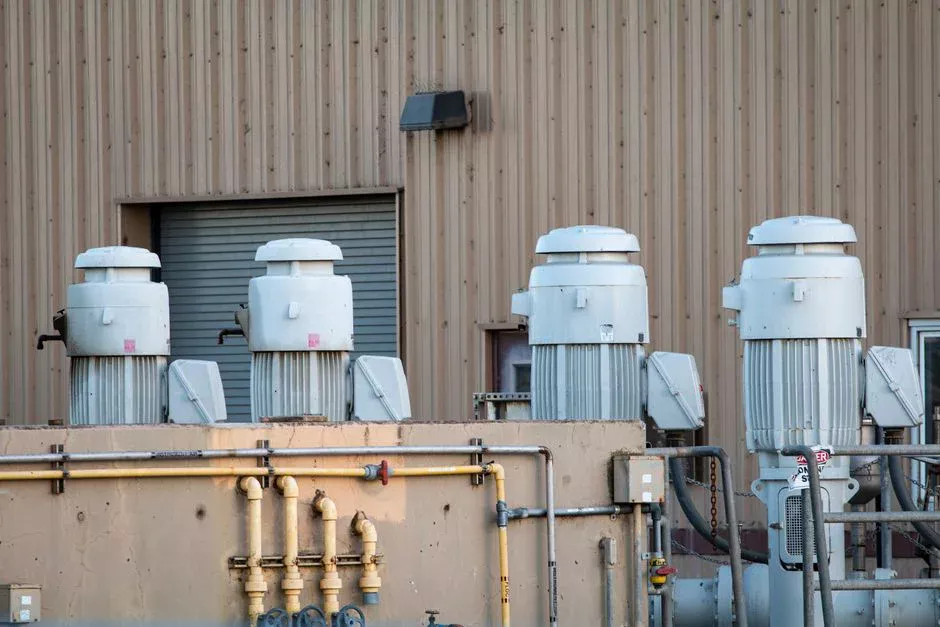
Every wet scrubber generates scrubber blowdown — wastewater created when the liquid droplets that captured the pollutants are recovered from the sump (Met-Chem, S3). The chemistry of the blowdown mirrors the chemistry of the air stream being treated: chrome plating, nickel plating, and other electroplating fumes produce blowdown loaded with chromic acid, nickel, and related species, but the same logic applies to any inorganic gas or PM stream captured upstream (Met-Chem, S3). For ammonium-rich wet scrubber wastewater, struvite precipitation is documented as a recovery route in the peer-reviewed literature (doi:10.1007/s11270-014-2062-2, S2).
Where discharge is not an option, a Zero Liquid Discharge (ZLD) train is the documented configuration: scrubber blowdown is held in a holding tank, pumped into a heated tank where an evaporator concentrates the wastewater, and the resulting slurry is pumped into a plate and frame filter press to capture the solids; clarified water from the press is returned to the heated tank for further evaporation (Met-Chem, S3). The evaporator heat source can be a gas-fired burner, a steam coil, or an electric heater, and the manifold and piping can be CPVC, carbon steel, or stainless steel (Met-Chem, S3). When the evaporation duty is small — on the order of 3 to 4 gallons per hour — an atmospheric evaporative tank using only ambient room heat is a documented low-cost option, with no added heat required (Met-Chem, S3). For plants that need to neutralize or precipitate metals upstream of the press, an automatic chemical dosing system sized to the blowdown flow is the usual control point. Designing the water side at the same time as the air side is what turns a scrubber project from a permitting risk into a closed-loop operation.
How to Choose a Wet Scrubber in 2026: A Decision Framework
A 2026 scrubber selection is a paired-compliance problem: air emissions on one side, wastewater discharge or reuse limits on the other. Running these five steps in order prevents the most common rework — discovering the blowdown chemistry after the vessel is on order.
- Define the pollutant and required removal efficiency. Gas, vapor, particulate, or a combination drives the geometry — packed-bed for inorganic gases, venturi for mists and fine PM, quencher for hot corrosive streams, NOx wet scrubber for nitrogen oxides (CECO, S4).
- Set the compliance target. The relevant frameworks in 2026 are EPA NSPS for new and modified sources in the US, EU Industrial Emissions Directive 2010/75/EU for European operations, and World Bank emission guidelines for projects in jurisdictions that adopt them. The vendor must provide documented proof of compliance for the chosen geometry against the target framework, not a generic "meets regulations" claim.
- Characterize blowdown volume and chemistry, then decide discharge, reuse, or ZLD. Holding-tank, heated evaporator, and filter-press sizing all depend on this step (Met-Chem, S3). If the chemistry is amenable to struvite or hydroxide precipitation, a clarifier or dissolved air flotation system ahead of the press cuts filter load and extends cloth life.
- Select materials of construction from the chemistry, temperature, and duty cycle. FRP, UV-resistant thermoplastics, alloys, or a hybrid metallic quench plus FRP scrubber (CECO, S4). The decision must be backed by a written chemical-compatibility confirmation.
- Shortlist suppliers that can deliver the integrated air + water train. A vendor that supplies only the scrubber vessel pushes the blowdown problem back onto the plant engineer. Request documented reference plants in your industry, a guaranteed removal figure with the operating variables used, and a blowdown mass balance that closes against your discharge permit or ZLD capacity. A 2026 shortlist for SO2-heavy duty typically includes a wet limestone or lime FGD system such as the HydropureWater FGD scrubber system paired with a downstream filter press for gypsum handling.
Suppliers are not interchangeable. The right shortlist criterion in 2026 is whether the vendor can take responsibility for both the air permit and the wastewater permit — the advanced nutrient removal in wastewater treatment and the scrubber are now the same conversation, not two procurements.
Frequently Asked Questions
What is the typical cost of a wet scrubber in 2026, and how should I budget for it?
The research corpus does not contain a unit price for wet scrubbers in 2026, so any single number would be invented. The defensible budgeting approach is to request a budget proposal tied to four operating variables from each shortlisted vendor: gas volume, pollutant concentration, inlet temperature, and target removal efficiency (CECO, S4). Ask the vendor to break the proposal into the scrubber vessel, the materials of construction upgrade (FRP vs. alloy vs. thermoplastic), and the blowdown treatment train (holding tank, evaporator, filter press, chemical dosing) so the line items can be compared on the same scope (Met-Chem, S3).
How do I pick the right supplier for a wet scrubber and blowdown treatment project?
Shortlist suppliers that can deliver the integrated air + water train and that can show documented reference plants in your industry with the same target pollutant (CECO, S4). For metals and mining operations near regulated watersheds, a supplier familiar with the 2026 pretreatment limits is a stronger fit than one selling only the air side — see the mining and metals pretreatment compliance guide for the type of integrated documentation to request. Require a written chemical-compatibility confirmation, a guaranteed removal figure with stated pressure drop, and a blowdown mass balance.
Which wet scrubber geometry is right for my pollutant?
Packed-bed (acid gas) scrubbers handle SO2, H2S, NH3, HCl, HF, and chromic acid, with PM collection from 50–95% depending on dust loading; venturi scrubbers handle mists 3 microns or larger with up to 99% removal, and the Wet Particulate Venturi exceeds 99% on very fine PM with no moving parts; quencher scrubbers handle hot corrosive streams (HCl, HF, SO2, Cl2) at up to 99.9% removal; NOx wet scrubbers handle nitrogen oxides at more than 99% total removal; wet FGD scrubbers handle SO2 from combustion with reusable gypsum byproduct (CECO, S4; HydropureWater FGD scrubber system, Product 14).
What inputs do I need to give a vendor before I can get a serious proposal?
Four operating variables define a workable design: gas volume, pollutant concentration (inlet and target outlet), temperature, and required removal efficiency (CECO, S4). On the water side, add the projected blowdown flow rate, the blowdown chemistry (metals, ammonium, acids, total dissolved solids), and the discharge path — sewer, surface water, reuse, or ZLD (Met-Chem, S3). For sizing of the dissolved air flotation pre-treatment step, a DAF design criteria guide helps set hydraulic loading and air-to-solids ratio before vendor engagement. A vendor who will quote without these numbers is selling a vessel, not a solution.