
Why Noida's Domestic Sewage Problem Is Different in 2026
Noida’s rapid expansion into a major residential, commercial, and industrial hub means that generic STP catalogs rarely fit the specific requirements of local projects (S3). The proliferation of housing societies, IT parks, corporate offices, and manufacturing facilities has increased the need for effective sewage management, creating wastewater streams with distinct pollutant loadings, peak factors, and reuse targets.
A high-rise residential society, a mid-sized hotel, a hospital campus, and an IT park each generate a different pollutant profile, and a single standard STP design is rarely the right answer for all of them (S3). This guide provides a Noida-specific decision framework: identify the generator, profile the pollutants, match the technology, and only then lock the footprint, reuse configuration, and compliance pathway.
What Domestic Sewage in Noida Actually Contains
Domestic sewage in Noida contains suspended solids, organic matter, biodegradable pollutants, BOD and COD, oil and grease, detergents, nutrients, and microorganisms and pathogens (S3). Each parameter drives a specific treatment stage: suspended solids require screening, grit removal, and clarification; BOD and COD require biological treatment; nutrients may need a tertiary polishing step; and pathogens require disinfection (S3). A housing society typically sees steady BOD/COD with low fats, oils, and grease, while a hotel or hospital adds significant kitchen FOG and a much higher pathogen load. The practical takeaway for a Noida project engineer is that pollutant profiling—not just average flow in kilolitres per day—must drive stage selection, sizing, and the disinfection envelope. Once those parameters are known, the treatment process becomes a direct response to the specific contaminants present.
How a Modern Noida Sewage Treatment Plant Is Built Stage by Stage
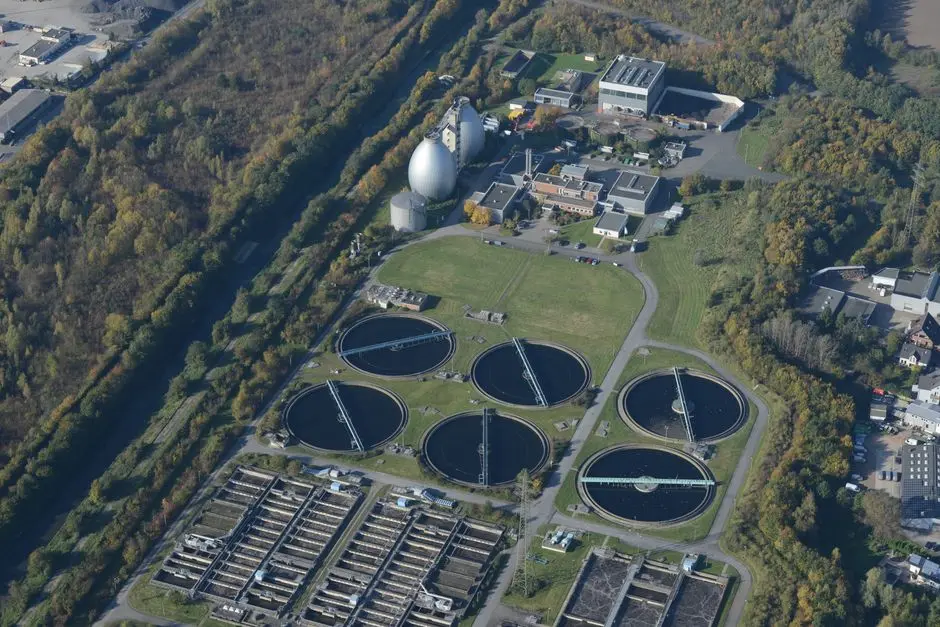
A modern Noida STP combines several treatment stages: screening, grit removal, equalization, biological treatment, clarification, tertiary filtration, disinfection, automation, and water-reuse systems (S3). Screening is the first stage and removes larger materials such as plastics, paper, and cloth, protecting pumps, valves, and downstream units (S3). Grit-removal arrangements then separate heavier inorganic particles such as sand and small stones, reducing abrasion in tanks (S3). Because sewage generation varies throughout the day, an equalization tank balances flow fluctuations to provide a stable feed for biological treatment (S3). Biological treatment reduces biodegradable organic matter through microbial activity—using MBBR, SBR, MBR, or activated sludge—and is the primary stage for cutting BOD and COD (S3). Clarifiers provide solid–liquid separation, while tertiary treatment—such as pressure sand filtration or ultrafiltration—provides polishing when higher-quality water is required (S3). Disinfection with chlorination or ultraviolet treatment reduces microbial contamination, with modern plants adding automation and sludge handling to complete the system (S3).
Choosing the Right STP Technology for a Noida Project
Selection of an STP technology for a Noida project must be based on wastewater characteristics, capacity, land availability, required effluent quality, energy consumption, and operational requirements (S3). MBBR (Moving Bed Biofilm Reactor) uses carrier media to provide surfaces for microbial growth, making it an efficient, compact biological treatment option (S3). SBR (Sequential Batch Reactor) carries out treatment phases sequentially within a reactor, offering operational flexibility (S3). MBR (Membrane Bioreactor) combines biological treatment with membrane filtration to provide high-quality water, which is useful when space is limited or advanced reuse is required (S3). Activated sludge remains a viable option for larger sites with ample land, though it typically requires a larger footprint than newer packaged systems (S3). Because CPCB compliance depends on site-specific consent conditions, technology, and maintenance, the chosen system must align with project-specific regulatory requirements rather than generic marketing labels (S3).
For a Noida housing society or commercial building on a tight footprint with garden and toilet-flushing reuse, MBBR-based packaged or underground systems are usually the most cost-effective fit; for a hospital, hotel, or IT park that needs near-reuse-quality water for cooling or flushing, the HydropureWater MBR membrane bioreactor wastewater treatment system is the stronger technical match. SBR sits between them—flexible but typically larger than MBBR and not as reuse-tight as MBR.
| Technology | How it works | Footprint | Treated-water quality | Best fit in Noida |
|---|---|---|---|---|
| MBBR | Biofilm on carrier media in aerated tank (S3) | Compact | Good for reuse in gardening/flushing | Housing societies, commercial buildings on tight plots |
| SBR | Sequential fill/react/settle/decant in one reactor (S3) | Moderate | Good; batch-controlled | Institutional campuses, mid-sized hotels |
| MBR | Biological stage + membrane filtration (S3) | Compact for the quality delivered | High; suitable for advanced reuse | Hospitals, IT parks, hotels targeting near-reuse quality |
| Activated sludge | Conventional suspended-growth biological stage (S3) | Large | Good with tertiary polishing | Larger sites with land and trained operators |
Decision Table: Matching Noida Project Type to STP Configuration
The right configuration in Noida is driven by average daily sewage flow, peak flow, organic loading, land availability, and reuse objectives (S3). Under-sizing risks peak-flow failure, while over-sizing increases capital, energy, and maintenance costs (S3). The table below serves as a starting envelope for early engineering. Common reuse applications in Noida include gardening, irrigation, toilet flushing, and cooling-tower make-up; the STP must be designed to the specific reuse target since different uses require different water quality (S3). A Noida engineer should request project-specific sizing from any short-listed supplier before finalizing a design.
| Typical Noida project | Expected sewage character | Suitable biological stage | Suitable tertiary | Footprint driver | Reuse outcome |
|---|---|---|---|---|---|
| High-rise housing society | Steady domestic BOD/COD, moderate pathogen load (S3) | MBBR or SBR (S3) | Pressure sand filter + disinfection (S3) | Tight; favours packaged or underground (S3) | Gardening, toilet flushing (S3) |
| Commercial complex / IT park | Diurnal peaks, mixed domestic load (S3) | MBBR or MBR (S3) | PSF + ACF or UF (S3) | Tight, modular (S3) | Flushing, cooling make-up, floor washing (S3) |
| Hotel or resort | High FOG, variable occupancy, high pathogen load (S3) | MBR or SBR (S3) | PSF + ACF/UF + UV (S3) | Moderate; basement plant common | Gardening, flushing, cooling (S3) |
| Hospital campus | High pathogen load, regulated discharge (S3) | MBR (S3) | UF or RO where required + UV (S3) | Tight; underground or basement | Flushing, cooling, landscape irrigation (S3) |
| Institutional campus (school, college) | Daytime peaks, mixed domestic load (S3) | MBBR or SBR (S3) | PSF + disinfection (S3) | Moderate; land often available | Gardening, flushing, grounds irrigation (S3) |
Footprint, Modularity, and Underground Options for Tight Noida Sites
Land availability is a primary constraint in Noida, particularly for high-rise residential and commercial developments (S3). STPs can be configured as compact, modular, packaged, underground, or containerized systems to suit specific site footprints (S3). Underground systems free up surface space for landscaping or parking, while modular and containerized plants speed up installation. The HydropureWater WSZ underground package sewage treatment plant combines anoxic/aerobic biological contact oxidation with sedimentation and disinfection in a single buried unit; it is fully automated, handles 1–80 m³/h, and is suitable for residential communities, hotels, and hospitals (S6). Regardless of the configuration, the plant layout must allow access for inspection, cleaning, and routine maintenance, meaning a buried package still requires a clear access shaft and adequate headroom (S3). For a deeper look at one tight-plot form factor, a containerized MBR STP sizing guide walks through the envelope decisions a Noida engineer faces when plot area is the binding constraint.
Compliance, Monitoring, and Sludge: What a Compliant Noida STP Actually Needs

Regulatory compliance depends on applicable standards, consent conditions, treatment technology, and the actual quality of treated wastewater (S3). Typical parameters include BOD, COD, TSS, pH, oil and grease, and microbiological limits set by the relevant regulatory framework (S3). Modern STPs use automation and instrumentation to monitor flow, pressure, pH, and tank levels, controlling pumps, blowers, and chemical dosing (S3). Automated equipment still requires trained personnel, regular inspections, and preventive maintenance, which is where many Noida plants fail due to inadequate operating contracts (S3). For the regulatory framing, the CPCB wastewater discharge requirements 2026 compliance guide outlines the parameters a Noida consent will reference.
Aeration blowers and pumps account for a significant share of an STP's operating energy, so designers should optimize aeration and use VFDs to balance energy use against effluent performance (S3). Sewage treatment also produces biological sludge that requires collection, stabilization, and dewatering to ease transport and disposal (S3). For projects generating significant sludge volumes, the HydropureWater plate-frame filter press is the standard unit specified downstream of the sludge thickener to bring cake solids to a transportable range.
Frequently Asked Questions
What size STP does a Noida housing society or commercial building actually need?
Size must be derived from average daily sewage flow, peak flow, organic loading, available land, and reuse objectives (S3). Under-sizing risks failure during peak periods, while over-sizing increases capital and maintenance costs (S3). Ask suppliers for the calculation sheet behind their quoted capacity—including peaking factors and loading assumptions—rather than accepting a kL/day figure at face value.
MBBR or MBR for a Noida domestic STP — which is better?
MBBR uses carrier media for microbial growth and is an efficient, compact option (S3). MBR combines biological treatment with membrane filtration to produce higher-quality water (S3). MBBR is generally the right answer for housing societies and commercial buildings targeting gardening and flushing reuse, while MBR is the better match when near-reuse-quality water is required for hospital discharge, hotel laundry, or cooling make-up.
How much does a domestic sewage treatment plant in Noida cost to install and run?
Capital cost is driven by technology, capacity, and the chosen form factor—such as underground or containerized systems (S3). Operating cost is dominated by energy usage for blowers and pumps (S3). Compare systems based on energy per kilolitre treated at the design reuse target rather than initial purchase price. Request a year-one energy estimate at design flow and confirm whether VFDs and automated cycles are included in the quote.
Can treated sewage from a Noida STP really be reused for flushing and gardening?
Yes; after appropriate treatment, reclaimed wastewater is suitable for gardening, toilet flushing, floor washing, and cooling-related applications (S3). Because different applications require different water quality, the treatment process must be designed to meet the specific reuse standard (S3). Specifying the reuse intent in the initial inquiry helps ensure the system is built for the correct output.
What should we check before selecting a sewage treatment plant manufacturer in Noida?
Evaluate the manufacturer's experience with similar projects, design capability, technology selection, and the quality of automation and components (S3). Verify that their "CPCB-compliant" claim aligns with your project's specific consent conditions rather than treating it as a generic label (S3). Ensure the manufacturer provides end-to-end support, including commissioning, operator training, and ongoing preventive maintenance services.