What an Effluent Treatment Plant in Chandigarh Actually Does
An effluent treatment plant in Chandigarh is a packaged or custom-built industrial wastewater system that screens, equalizes, biologically treats, clarifies, filters, and disinfects factory effluent before discharge or reuse, typically configured for the mixed chemical, pharmaceutical, food, and manufacturing load of the Chandigarh–Mohali–Baddi belt. The 2018 IJCMAS survey of Punjab CETPs at Ludhiana and Jalandhar confirmed chromium as the dominant metal contaminant, and a 2025 Langmuir study documented pharmaceutical API removal during ETP processing, so modern Chandigarh ETPs increasingly add membrane polishing and biological reduction stages. Selection should be driven by influent characterization, consent limits under the Water Act, 1974, available footprint, and the supplier's ability to provide hydraulics, automation, and sludge handling as one engineered scope.
An ETP is a chain of unit operations, not a single tank. The standard sequence in a regional industrial plant is screening to remove rags and large solids, flow and load equalization, primary clarification or dissolved air flotation for oils and suspended solids, biological treatment (aerobic, anaerobic, or membrane-supported), secondary clarification, tertiary filtration, disinfection, and sludge handling. Each stage has a defined job; skipping or undersizing one of them breaks the consent compliance of the whole train.
The functional split between a discharge-compliant plant and a reuse-grade plant is the most important cost and scope driver. A discharge plant typically ends at secondary clarification with disinfection, while a reuse plant adds a polishing step — sand/carbon filtration, membrane polishing, or both — to bring COD, TDS, and microbiological counts low enough for cooling-tower make-up, boiler feed, or horticulture. The University of Twente PhD thesis on direct nanofiltration of WWTP effluent (Schrader, doi:10.3990/1.9789036523325) confirmed nanofiltration as a suitable technology for polishing WWTP effluent to standards suitable for agricultural or potable reuse, which is why membrane polishing is now a routine upgrade path for ETPs in the region.
How Chandigarh Industrial Effluent Differs From Domestic Sewage
Chandigarh's industrial influent is more variable and more chemically specific than domestic sewage. A pharma API plant, a steel pickling shop, a dairy, and a textile unit all produce wastewater with different BOD/COD ratios, pH swings, color loads, TDS, fats-oils-grease (FOG), and surfactant profiles — which is why equalization and pH correction are non-negotiable, and why a domestic sewage design will not pass consent when retasked for a process stream.
The 2018 IJCMAS study of Common Effluent Treatment Plants at Ludhiana and Jalandhar (sample 1 from Ludhiana, sample 2 from Jalandhar) confirmed chromium as the dominant metal contaminant in both, with the indigenous isolate HM 16 (Micrococcus luteus) achieving 76.66% Cr(VI) reduction in 7 hours by the S-diphenyl-carbazide (DPC) method, and HM 2 reaching 46.76% over the same period. This matters for Chandigarh-region design: where the influent carries hexavalent chromium, the ETP must include either a chemical reduction stage (FeSO₄/Na₂S₂O₅ at low pH followed by neutralization) or a biological Cr(VI) reduction step, not just a generic aerobic tank.
Pharmaceutical API contamination is a parallel concern. The 2025 Langmuir study (PMID 39985456) validated encapsulation and oxidation strategies for multi-class API removal during ETP processing, covering chloramphenicol, β-lactam (amoxicillin), fluoroquinolone (ciprofloxacin), aminoglycoside (neomycin), tetracycline, antiparasitics (praziquantel, metronidazole), NSAIDs (phenylbutazone, ketoprofen), the vasodilator isoxsuprine, the antidepressant amitriptyline, and the antiviral amantadine. For a Baddi or Chandigarh pharma cluster, this is the evidence that a basic activated sludge plant will not deliver the polish a regulator or a downstream reuse customer will accept; advanced biological treatment, oxidation, adsorption, or membrane polishing is required for the residual API fraction.
ETP Process Technologies Compared for Chandigarh Plants
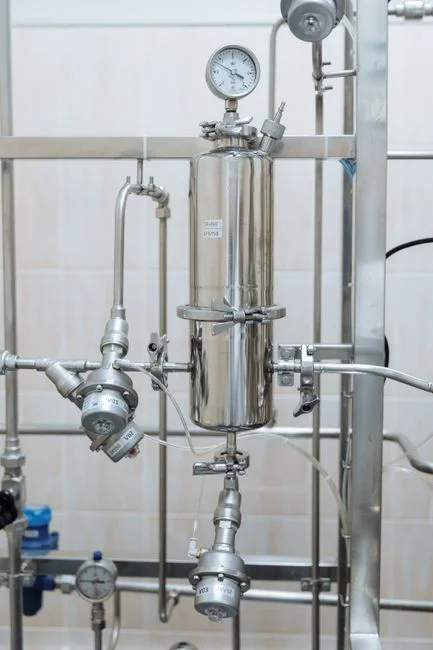
Choosing the core biological process is the first design decision. ASP (activated sludge process) is the workhorse for stable, discharge-only loads with adequate footprint; SBR (sequencing batch reactor) trades continuous flow for operational flexibility, which suits a plant with shift-based or batch production; MBBR (moving bed biofilm reactor) carries biomass on free-floating media and tolerates shock loads better than ASP, which makes it a strong retrofit option for existing concrete tanks; MBR (membrane bioreactor) couples a suspended-growth bioreactor with an external or submerged membrane module and delivers near-reuse-quality effluent in a smaller footprint than ASP, at the cost of higher operator skill and membrane maintenance. Anaerobic systems (UASB, anaerobic filter) suit high-temperature, high-COD streams and reduce aeration energy, but rarely meet discharge standards on their own and are normally followed by a polishing aerobic stage.
Tertiary polishing is the next decision layer. The University of Twente PhD thesis (Schrader, doi:10.3990/1.9789036523325) confirmed direct nanofiltration as a route to polish WWTP effluent to standards suitable for agricultural or potable reuse; for a Chandigarh unit targeting reuse, an integrated MBR membrane bioreactor system paired with a DF series PVDF flat sheet membrane module for downstream polishing is a common configuration. Where pharmaceutical or metal residuals are the concern, oxidation or adsorption must precede the membrane step, not follow it, because fouling control is what determines whether the polishing train stays online.
| Process | Best fit | Footprint vs ASP | Effluent quality | Operator skill | Reuse-ready? |
|---|---|---|---|---|---|
| ASP (activated sludge) | Stable, municipal-like industrial load; discharge only | Reference baseline | Discharge-compliant with tertiary | Moderate | Only with polishing |
| SBR (sequencing batch reactor) | Variable, batch-process loads | Comparable to ASP | Discharge-compliant with tertiary | Moderate | Only with polishing |
| MBBR (moving bed biofilm reactor) | Shock loads, retrofits, lower sludge yield | Smaller | Discharge-compliant with tertiary | Moderate | Only with polishing |
| MBR (membrane bioreactor) | Variable load, small footprint, reuse intent | Significantly smaller | Near-reuse quality direct from reactor | Higher (membrane care) | Yes, with disinfection |
| Anaerobic (UASB / AF) + aerobic polish | High-COD, warm streams, energy recovery | Smaller aerobic stage | Needs aerobic polish to discharge | Moderate | With full downstream train |
Decision rule: pick ASP or MBBR for discharge-only with a stable, well-characterized load; pick SBR or MBR where load varies or reuse is in scope; add a membrane polishing train when reuse, tight consent limits, or pharmaceutical/metal residuals apply. For textile streams, the MBBR engineering design guide for textile wastewater walks through the same logic in a sector-specific context.
Pre-Treatment, Sludge Handling and Disinfection: The Often-Missed Stages
Pre-treatment decides whether the biological stage runs at all. A GX series rotary mechanical bar screen protects downstream pumps and membranes from rags and plastics; grit removal settles out inorganic solids that would otherwise accumulate in the aeration tank; equalization absorbs peak flow and load swings, which is the difference between a stable biological stage and a chronic consent failure; pH correction brings extreme streams into the range the biology can tolerate; a dissolved air flotation system removes emulsified FOG and fine suspended solids before they overload the aeration tank. The DAF oil water separator engineering guide for pharmaceutical plants covers the FOG-side logic for Baddi-cluster units.
Sludge handling is the most under-scoped part of an ETP quotation. The biological stage concentrates the removed pollutants into a sludge stream that must be thickened and mechanically dewatered, normally with a plate and frame filter press, before disposal. A poorly sized sludge line — wrong polymer dose, wrong cake dryness, no redundancy on the press — is the single most common reason an ETP fails in practice. The supplier's scope must explicitly cover thickening, dewatering, cake handling, and filtrate return; if it does not, the biological stage will be backed up within months.
Disinfection closes the train. A UV sterilizer is chemical-free and effective against most chlorine-resistant organisms, which suits reuse applications and sites that want to avoid residual oxidant in the receiving stream. An on-site chlorine dioxide generator is the better fit where the consent sets strict microbiological limits or where biofilm control in the reuse loop matters, because ClO₂ is more effective than chlorine across a wider pH range and does not form the same halogenated by-products. For pharmaceutical streams, the 2025 Langmuir study (PMID 39985456) confirmed that encapsulation and oxidation-based strategies remove multi-class APIs during ETP processing, which is the justification for placing an advanced oxidation or adsorption step ahead of the disinfection stage on pharma sites.
Regulatory and CETP Context for Chandigarh, Mohali and Baddi
Industrial discharge in this region is governed by consent orders issued under the Water (Prevention and Control of Pollution) Act, 1974 — by the Punjab Pollution Control Board for Punjab and Mohali units, by the Haryana State Pollution Control Board for Panchkula and Ambala-side operations, and by the Chandigarh Pollution Control Committee for Chandigarh UT units. Consent is site-specific: the consent order sets the effluent flow, the pollutant concentration limits, the discharge point, and the monitoring frequency, and it must be in hand before the ETP design is locked.
Some clusters also have access to a Common Effluent Treatment Plant, but the 2018 IJCMAS study of the Ludhiana and Jalandhar CETPs found that chromium was the dominant metal contaminant in both, with isolate HM 16 (Micrococcus luteus) achieving 76.66% Cr(VI) reduction in 7 hours. That result tells a Chandigarh-region buyer two things: the CETP influent is heavy-metal-dominated, so individual pre-treatment (Cr reduction, neutralization, equalization) is still required before the stream is sent to the CETP; and CETP membership does not absolve the unit of its own pre-treatment duty.
Where groundwater is restricted or consent is tight, the design trend is toward zero liquid discharge through RO concentration followed by evaporation. ETPs in this region should be specified with an upgrade path in mind: the biological and tertiary stages should produce a stream that an RO can accept without premature fouling, and the civil layout should leave room for an evaporator and crystallizer if ZLD is added later. Confirm consent conditions, CETP membership status, and reuse permissions before the supplier is asked to freeze the design.
Designing the Right ETP: Sizing, Parameters and What to Ask the Supplier
A defensible design starts with a complete influent characterization. The inputs the supplier must be given are peak and average flow, influent BOD, COD, TSS, TDS, pH, FOG, temperature, oil and grease, heavy metals (with Cr(VI) flagged because of the regional evidence), and the specific pharmaceutical or specialty chemical residuals from the process. The discharge or reuse limits must also be supplied up front, because the difference between consent-to-drain and consent-to-reuse changes the polishing train. No number should be assumed; the supplier should be asked to confirm what influent data they need before they will size the plant.
| Parameter | What it controls | Buyer must provide | Supplier must confirm |
|---|---|---|---|
| Hydraulic retention time (HRT) | Reactor volume for a given flow | Peak and average flow | HRT used for sizing, peak factor applied |
| Organic loading rate (OLR) | Biological capacity per m³ | Influent BOD/COD profile | OLR basis, kg BOD/m³·d |
| MLSS / MLVSS | Biomass concentration in reactor | Process variability, shock events | Target MLSS range, wastage rate |
| F/M ratio | Food-to-microorganism balance | Daily load envelope | F/M operating window |
| Sludge age (SRT) | Biomass retention vs wasting | Discharge vs reuse intent | SRT setpoint, wasting logic |
| Dissolved oxygen setpoint | Aeration energy and biology | Temperature, influent profile | DO control loop, blower redundancy |
| Recirculation ratios | Sludge return, mixed-liquor distribution | Reactor configuration | RAS / MLR flows, control logic |
| Chemical dosing rates | pH correction, coagulation, nutrient add-back | Influent chemistry | Dosing setpoints, dose-control loop |
Ask the supplier to support the design with a hydraulic profile, a mass balance, equipment redundancy for critical items (blowers, transfer pumps, dosing pumps), peak-shock handling logic, a sludge mass balance that links the biological stage to the dewatering line, and a treated-water recycle loop if reuse is in scope. The supplier-evaluation matrix is short but should be non-negotiable: process guarantee in writing, full scope coverage including sludge and disinfection, automation level suited to the operator strength on site, after-sales response time, civil work scope, and at least three operating references from Chandigarh, Mohali, or Baddi-region plants of similar size and industry.
Indicative Cost Drivers and 2026 Budgeting for an ETP in Chandigarh
ETP cost is driven by seven variables, and a per-KLD rule of thumb is not one of them. The drivers are: design flow capacity, influent strength, reuse intent, automation level, civil work scope, sludge line depth, and polishing depth. A low quote that omits the sludge line, the automation layer, or the polishing train will look attractive in capital terms but will fail consent or fail under real influent variability — and the cost of fixing it after commissioning is several times the saving made at the quotation stage.
The supplier should provide a CAPEX/OPEX split, chemical and power consumption estimates, and a maintenance plan as contractual documents, not as soft commitments in a proposal. OPEX items to look for explicitly are aeration energy (the largest single power draw on a biological plant), membrane cleaning and replacement budget, polymer dose for sludge dewatering, nutrient supplementation if the influent is nutrient-deficient, and consumable budgets for the disinfection step. Without these, the buyer cannot compare two quotations on a like-for-like basis.
The regional context shifts both CAPEX and OPEX. The 2018 IJCMAS evidence that chromium is the dominant metal in Punjab CETP influent, and the 2025 Langmuir evidence on multi-class API removal (chloramphenicol, β-lactams, fluoroquinolones, tetracyclines, NSAIDs, antivirals), both push the design toward a Cr reduction or advanced biological stage plus oxidation/adsorption polishing on Baddi and Chandigarh pharma and chemical units. That additional stage is what raises CAPEX above a generic ASP-only design, and it is also what keeps OPEX inside consent limits once the plant is running.
Frequently Asked Questions
What determines the price of an effluent treatment plant in Chandigarh, and which line items are most often under-scoped?
Price is set by design flow, influent strength, reuse intent, automation level, civil work, sludge line, and polishing depth — not by a per-KLD rule. The most commonly under-scoped items are the sludge thickening and dewatering line, the chemical dosing package, the membrane cleaning budget under MBR or polishing configurations, and the civil work for tertiary tanks. Ask the supplier for a CAPEX/OPEX split and a consumable schedule before comparing quotations.
How do I compare two ETP manufacturers in Chandigarh on more than just price, and what site references should I ask for?
Compare the process guarantee in writing, full scope coverage (pre-treatment through sludge and disinfection), automation level, after-sales response time, and a list of at least three operating references from Chandigarh, Mohali, or Baddi-region plants of similar size and industry — a pharma plant should be asked for pharma references, a textile unit for textile references. A low price that does not survive a site visit and a reference check is not a real saving.
How do I size an ETP for a variable-load plant, and what margin should I keep for future expansion?
Size to the peak flow and the worst credible influent concentration, not to the average, and run the biological stage on the conservative end of the supplier's HRT and F/M operating window. For future expansion, the practical check is whether the civil footprint, the blower capacity, the sludge line, and the electrical room can accept a 30-50% increase in load without major rebuild; if not, negotiate that into the layout now rather than retrofitting later.
Will an individual ETP be enough, or do I also need to plan around a Common Effluent Treatment Plant in Punjab?
It depends on the cluster and the consent order. Where a CETP exists and the unit is a member, the unit still needs its own pre-treatment (equalization, pH correction, Cr reduction, FOG removal) because the 2018 IJCMAS evidence from Ludhiana and Jalandhar CETPs showed heavy-metal-dominated influent; CETP membership does not replace on-site pre-treatment. Confirm CETP membership status, intake limits, and tariff structure with the cluster operator and with PPCB before the design is locked.
What is a realistic 2026 lead time for a packaged ETP in Chandigarh, and which items are on the critical path?
Lead time depends on whether the ETP is packaged (factory-built, skid-mounted) or custom (site-built concrete tanks). The critical path is almost always the long-lead items — blowers, membrane modules, the filter press, and the control panel — and the buyer should request a procurement schedule with named items, expected dispatch, and any imported equipment flagged. The supplier should also confirm the site readiness checklist (civil, power, water, inlet routing) so installation does not become the new critical path.