Where Tertiary Treatment Fits in a 2026 Process Train
Tertiary treatment is the third polishing stage applied to wastewater after primary settling and secondary biological treatment. It is required when the effluent must be safe for reuse, for discharge into sensitive receiving waters, or for meeting stringent nutrient and disinfection limits. Typical unit operations include granular or membrane filtration, nutrient removal, and a disinfection step such as chlorine, ultraviolet light, or ozone. A 2026 metagenomic study (Feng et al., Environment International) found that tertiary disinfection choice materially changes the residual risk of high-threat antibiotic resistance genes, with UV and constructed-wetland polishing reducing risk and certain chemical disinfectants elevating it. Selecting a tertiary train in 2026 therefore means matching influent quality, target effluent class, and the operator's tolerance for disinfection byproducts and microbial risk, not only achieving a turbidity or coliform number.
Primary treatment removes a share of suspended solids through physical settling — the SSI Aeration overview (2025-08) cites a 40–60% suspended-solids removal range for this stage, which sets the load that the secondary biological reactor and the downstream tertiary train must handle together. Secondary treatment uses aeration or activated-sludge biology to reduce dissolved and suspended organics, after which the wastewater is still not clean enough for reuse or for discharge to sensitive estuaries, slow rivers or coral-adjacent waters. Tertiary treatment is the third, more rigorous stage: it targets residual suspended solids, nutrients, colour, pathogens, and now, as the 2026 evidence base makes explicit, antibiotic resistance risk. The classification of a unit as "tertiary" therefore depends on what the project is trying to achieve — compliant discharge, industrial reuse, agricultural irrigation or potable reuse each draw a different set of unit processes into the "tertiary" envelope.
Filtration: Sand, Multimedia, Membrane and Cloth Options
Filtration is the workhorse of the tertiary stage. Engineers typically select between granular media filters (sand or multi-media), cloth-based tertiary filters, and membrane separation, and the choice cascades into how the downstream disinfection unit must be sized. The SSI Aeration overview (2025-08) describes three cloth-filter configurations that are common in tertiary service: bag filters (felt depth media or mesh surface media, available in single- and multi-bag housings), drum filters (woven cloth on a rotating drum, with periodic backwash), and disc filters (cloth on stacked discs fed from a central drum in an inside-out flow pattern). Multi-media filters, typically sand over anthracite over garnet, remain the default for projects that need to lower silt density index (SDI) ahead of a reverse-osmosis polishing step or to protect UV lamps from fouling. Engineers specifying a multimedia filter for RO pretreatment should confirm target SDI as part of the supplier's performance guarantee, since the exact achievable SDI depends on media grading and backwash design rather than on media type alone.
Membranes are the other main branch. Pressure-driven ultrafiltration (UF) at roughly 0.03 µm provides a near-absolute barrier to suspended solids, most bacteria and many viruses, and is normally sited after coagulation or media filtration when RO follows. Submerged membrane bioreactors (MBRs), typically operated at 0.1 µm, combine the secondary biological reactor and the tertiary filtration step in a single tank, which is why a packaged HydropureWater MBR system is often discussed as a single-step replacement for separate activated-sludge plus tertiary filtration. For engineers considering a HydropureWater UF system downstream of conventional activated sludge, the design questions are trans-membrane pressure, recovery and cleaning frequency rather than effluent quality. The 1972 Iowa State dissertation (Huang) sits in this lineage as historical evidence that granular filtration has been studied as a tertiary polishing step for decades; it is not used here as a current design reference, but it explains why multi-media filters remain the default low-cost option.
| Filter type | Typical cut-off | Where it sits in the train | Design consideration |
|---|---|---|---|
| Multi-media (sand/anthracite/garnet) | 10–50 µm effective | Between secondary clarifier and disinfection or RO pretreatment | Confirm SDI guarantee with the HydropureWater multi-media filter supplier; backwash water quality |
| Bag filter (felt depth / mesh surface) | 1–200 µm nominal | Polishing before UV or membrane; cartridge-style duties | Single-use vs reusable housings; micron rating must match downstream sensitivity |
| Drum / disc cloth filter | 10–30 µm typical | Tertiary solids polishing after activated sludge | Backwash water demand; cloth replacement interval |
| Ultrafiltration (UF) | ~0.03 µm | After media filtration, before RO; or as tertiary polish in reuse trains | TMP, recovery, CIP chemicals; see HydropureWater UF system |
| Submerged MBR | ~0.1 µm | Replaces secondary clarifier plus tertiary solids filter | MLSS control, aeration scour, membrane cassette layout — the HydropureWater MBR system is sized on these parameters |
Advanced Nutrient and Pollutant Removal
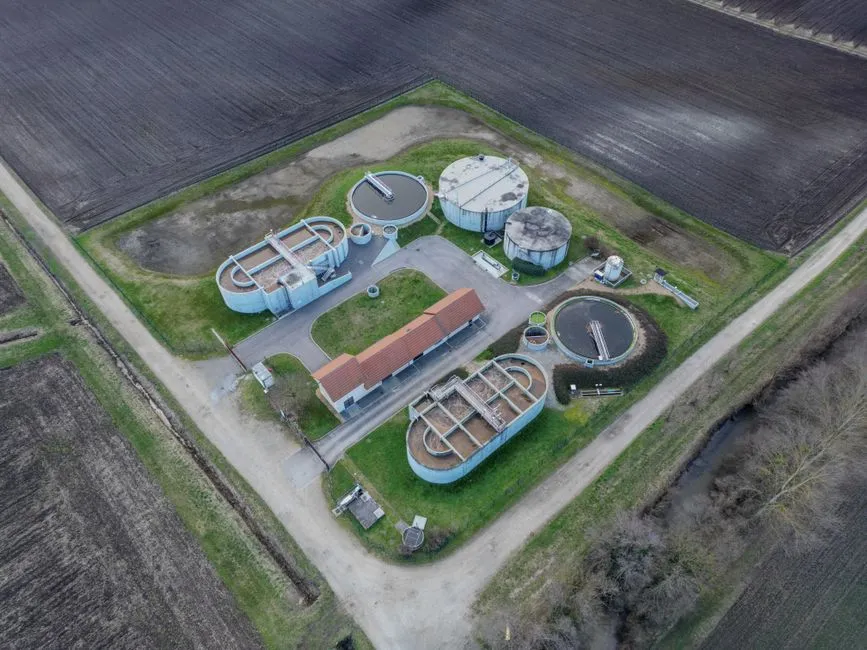
Nutrient removal is a separate decision from filtration, and it needs to be fixed at the front of the design because retrofitting biological nitrogen removal or enhanced biological phosphorus removal (EBPR) into an existing plant is markedly more expensive than specifying it in. The standard 2026 toolkit combines biological nutrient removal (BNR) — nitrification/denitrification and EBPR — with chemical phosphorus precipitation using metal salts, and on smaller flows with polishing steps such as microalgae reactors or constructed wetlands.
Quantified performance data exist for the polishing end of this train. A Carleton University study of microalgae-based tertiary polishing reported, on secondary effluent, removals of 27% total nitrogen, 51.7% total phosphorus and 29.5% soluble COD, and on centrate 49.4% TN, 78.6% TP and 32.8% soluble COD, with >99.5% total coliform reduction in both cases. These figures are useful as an order-of-magnitude benchmark for a polishing step, not as a design guarantee; site-specific values will differ with hydraulic residence time, temperature and influent variability. The same 2026 Environment International study (Feng et al., 2026-04) identifies constructed-wetland (CW) polishing as one of two tertiary options — alongside UV — that "continuously reduced the abundance and risk levels of potential-risk ARGs" in their metagenomic survey, which makes CW an attractive polish for sensitive reuse or hospital-adjacent discharges where ARG load matters as much as nutrient load. The 2026 study's variation partitioning further attributes 36.15% of the variation in potential-risk ARG profiles to upstream bacterial community composition, which means that fixing nutrients upstream changes the disinfection challenge downstream.
Disinfection: Chlorine, UV and Ozone Trade-offs
Disinfection is where the 2026 evidence base has moved furthest, and where the engineer's choice now carries a hidden antibiotic-resistance dimension. The SSI Aeration overview (2025-08) summarises the three dominant options: chlorine, which is cost-effective and widely deployed in North America but produces trihalomethanes and mutagen X when it reacts with residual organics and requires dechlorination before sensitive discharge; UV, which adds no chemicals, is effective against chlorine-resistant organisms such as Cryptosporidium and Giardia, but requires aggressive upstream treatment so that residual turbidity and organics do not shield microorganisms from the dose; and ozone, a strong oxidant generated on-site that does not form halogenated byproducts but carries higher capital and energy cost. Each option also has a supplier-side hardware story — packaged chlorine dioxide generation, skid-mounted UV reactors and ozone generators with oxygen-feed and off-gas destruct — and the right choice depends on the receiving environment and the target effluent class.
The 2026 Environment International study (Feng et al., 2026-04) adds a fourth axis to that decision. Across the tertiary trains it sampled, potential-risk antibiotic resistance genes (ARGs) accounted for 34.32±1.98% to 59.71±1.55% of total ARGs, meaning the public-health-relevant fraction is large, not residual. Disinfection by the chemical pathway the authors label "DB" significantly increased the relative abundance of potential-risk ARGs — particularly those conferring resistance to multidrug, bacitracin and aminoglycoside compounds — and elevated mobile genetic elements (MGEs), primarily transposase-related, which are the vectors for horizontal ARG transfer. DB treatment also enriched bacterial hosts such as Pseudomonas and Acinetobacter that carry these ARGs. By contrast, UV disinfection and CW polishing "continuously reduced the abundance and risk levels of potential-risk ARGs." Engineers writing specifications in 2026 should therefore ask suppliers not just for log-reduction of indicator organisms but for an evidence-based position on ARG dynamics, especially where the receiving water feeds irrigation, drinking-water abstraction or a sensitive ecosystem. For projects that need chemical disinfection's residual benefit, a HydropureWater chlorine dioxide generator combined with downstream UV is one configuration worth evaluating; UV alone is the option covered in detail in our 2026 UV disinfection comparison guide. Engineered choice of UV intensity, hydrodynamics and upstream filtration is essential because UV and ozone efficacy both collapse as turbidity or organics rise.
| Disinfection | Strengths | Limitations | 2026 ARG dimension (Feng et al., 2026-04) |
|---|---|---|---|
| Chlorine / chlorine dioxide | Low capital cost, residual in the network, widely understood | Trihalomethanes, mutagen X; needs dechlorination | DB pathway in the 2026 study increased potential-risk ARG and MGE abundance; Pseudomonas and Acinetobacter enriched |
| UV | No chemical addition, effective against Cryptosporidium/Giardia; see the HydropureWater UV sterilizer range | No residual; sensitive to turbidity, iron and organics; lamp maintenance | UV "continuously reduced the abundance and risk levels of potential-risk ARGs" (Feng et al., 2026-04) |
| Ozone | Strong oxidant, on-site generation, no halogenated byproducts | Higher energy demand; off-gas treatment; no residual | Oxidative pathway not classed with DB in the 2026 study; site-specific ARG data should be requested from suppliers |
| Constructed-wetland polish | Low operating cost, ecological co-benefits | Footprint, climate sensitivity, residence-time control | CW treatment "continuously reduced the abundance and risk levels of potential-risk ARGs" (Feng et al., 2026-04) |
Matching the Process Train to Discharge or Reuse in 2026
The unit processes above only make sense when they are tied to a defined effluent goal. The decision matrix below maps influent type to target effluent class and recommends a process train; it is a starting point, not a substitute for site-specific treatability work. The SSI Aeration overview (2025-08) specifically calls out textile and pulp-and-paper effluents as requiring tertiary treatment primarily for colour removal, which is typically addressed by coagulation plus sand/multi-media filtration followed by an oxidation step (ozone or advanced oxidation) or by membrane polishing. Hospital and pharmaceutical effluents, which the 2026 Environment International study treats as reservoirs of high-risk ARGs and resistant bacterial hosts, justify an explicit ARG-aware disinfection step — UV plus constructed-wetland polish, or ozone operated under controlled CT — rather than chlorine alone. For broader regulatory context, the EU Urban Waste Water Treatment Directive (91/271/EEC) addresses discharges to sensitive areas, and the EU industrial effluent framing is summarised in our EU industrial effluent compliance 2026 guide; for pharmaceutical streams, the submerged MBR for pharmaceutical wastewater guide sets out the relevant train-level decisions.
| Influent | Target effluent class | Recommended tertiary train | Key design risk |
|---|---|---|---|
| Municipal secondary | Sensitive-receiver discharge (estuary, coral-adjacent) | Multi-media filtration → UV (with chlorine residual trimmed to limit DBPs) → dechlorination | UV dose on worst-case turbidity; DBP control |
| Municipal secondary | Industrial cooling or process reuse | Multi-media filtration → chlorine dioxide residual | Corrosion control in reuse loop |
| Municipal secondary | Agricultural irrigation reuse | Filtration (UF or multi-media) → UV; optional CW polish for ARG reduction | ARG load; variability in irrigation water-quality criteria |
| Municipal secondary | Potable reuse (indirect or direct) | UF → RO → advanced oxidation → chlorine residual | RO fouling control; energy; full advanced-oxidation validation |
| Textile / pulp-and-paper secondary | Discharge or reuse | Coagulation/clarification → multi-media filtration → ozone or AOP (colour) → polishing | Colour breakthrough; ozone CT on coloured water |
| Hospital / pharmaceutical secondary | Discharge to sensitive receiver or reuse | MBR → UF → UV + CW polish (ARG-aware); ozone as alternative under controlled CT | ARG load; DB formation under chemical disinfection — see the submerged MBR for pharmaceutical wastewater guide |
Designing and Operating a Tertiary Train: Practical Steps
- Characterise the secondary effluent first. A representative sample set covering BOD, TSS, turbidity, ammonia, total nitrogen, total phosphorus, indicator organisms, and — for ARG-sensitive discharges — an ARG or MGE baseline. The 2026 Environment International study attributes 36.15% of potential-risk ARG variation to bacterial community composition, so the upstream biological signature sets the floor for what the tertiary train must manage.
- Fix the target effluent class, then choose unit processes to meet it. Reversing the order — picking a filter, then looking for a discharge limit it can meet — almost always produces a non-defensible design.
- Size disinfection on worst-case secondary quality, not average. UV transmittance and ozone CT both degrade with rising turbidity and organics; designing to the mean leaves a tail of non-compliant events. Supplier guarantees should be written against the worst-case envelope, not the average.
- Instrument for ARG-relevant indicators only when the receiving environment demands it. Routine intact-cell and MGE-proxy monitoring is justified for hospital, pharmaceutical or potable-reuse streams, where the 2026 evidence base makes the marginal cost of ARG-relevant data worthwhile. For standard municipal discharge, conventional BOD/TSS/coliform compliance is usually sufficient until a specific reuse or sensitive-receiver trigger applies.
Frequently Asked Questions
What budget should a municipal engineer plan for a tertiary train in 2026?
The supplied research does not quote CAPEX or OPEX figures for tertiary trains, so any number a buyer is offered should be treated as a quotation rather than a benchmark. A defensible budget conversation starts by fixing the target effluent class, the influent envelope and the duty cycle, then asking each shortlisted supplier for a priced bill of materials, a power and chemical consumption figure, and a five-year lifecycle cost tied to media or membrane replacement — that is the only way to make like-for-like comparisons.
How do I choose between UV, ozone and chlorine for the disinfection step in 2026?
Use the receiving environment and the 2026 evidence base as tie-breakers, not just price. UV and constructed-wetland polishing have been shown in the 2026 Feng et al. Environment International study to reduce the abundance and risk levels of potential-risk ARGs, while the chemical disinfection pathway labelled DB in that study increased potential-risk ARG and MGE abundance and enriched resistant hosts such as Pseudomonas and Acinetobacter. If the effluent enters a sensitive receiver or a reuse scheme where microbial risk is scrutinised, UV (with upstream filtration sized for low-turbidity duty) or UV plus a CW polish is the more defensible choice; chlorine remains appropriate where a residual is operationally essential and the receiving environment is not ARG-sensitive.
Can I retrofit nutrient removal onto an existing plant without redesigning the whole tertiary train?
Often no, which is why nutrient removal is fixed at the front of the design rather than added later. Biological nitrogen removal needs carbon, residence time and often anoxic volume; EBPR needs an anaerobic zone and a carbon source. Chemical phosphorus precipitation is the retrofit-friendly option but it generates sludge and shifts operating cost to chemicals. If the project timeline is tight, the realistic retrofit path is chemical P precipitation plus a polish step such as microalgae or a constructed wetland, with biological nutrient removal scheduled for a later upgrade — the Carleton microalgae study (S5) shows that polishing on secondary effluent can remove 27% TN, 51.7% TP and 29.5% soluble COD, which is useful as a screening number when sizing a polish but not as a guaranteed performance.
What is the right way to size a multimedia filter or UF unit in front of a UV or RO system?
Size the filter to the downstream unit's influent envelope, not the average secondary quality. For a multimedia filter feeding RO, the design check is the achievable SDI at peak flow and after backwash transient, and the supplier should be asked to guarantee that SDI value on a defined upstream water. For a UF system feeding UV or RO, the design check is trans-membrane pressure at the design flux, the cleaning frequency implied by that operating point, and the recovery — these belong in the supplier's technical schedule rather than in the marketing datasheet. Asking for these three numbers in writing is the simplest way to compare a HydropureWater multi-media filter or HydropureWater UF system against alternative bids.