Why a Faisalabad data center cannot copy a US, Gulf, or even Lahore brief
Faisalabad sits inside a textile-cluster water market that no generic Punjab brief captures. The 2022 Frontiers in Environmental Science study of textile SMEs in Lahore, Faisalabad, and Karachi found that systematic in-house resource efficiency cut water consumption 21% across five production units, saving roughly 1.3 million m³ of water and 34,600 tons of chemicals (Frontiers, 2022). That figure is a useful proxy for how much performance segregation alone can extract from a Faisalabad data center before any capital equipment is selected — it tells the engineer that the textile cluster is already operating in a regime where water is the binding constraint, not a footnote.
Three other local factors break a copied design. The Ravi and lower-Chenab feed carries a higher baseline TDS than a Lahore WASA intake in dry months, which raises antiscalant demand on the downstream RO stage and changes the realistic cycles-of-concentration target. Faisalabad's FESCO industrial-estate grid mirrors the 6-12 hours/day WAPDA/LESCO outage documented in the 2026 Lahore field data — both planned and unscheduled — so the plant must hold a 7-day chemical autonomy buffer and split the biological stage across dual MBR trains so one train can be offline without forcing a discharge permit excursion (S3, 2026 field data). Faisalabad summer ambient runs 38-45°C, which derates biological oxygen transfer and forces aeration equipment to be oversized 12-18% or specified with high-efficiency disc diffusers carrying a guaranteed SOTE above 6.5 kg O₂/kWh at design temperature (S3, 2026 field data).
The combined climate, grid, and Ravi-basin picture is the reason a US, Gulf, or even Lahore template fails on this site. A US cooling-tower water budget assumes a reliable grid and a non-stressed watershed, and a Gulf brief assumes higher ambient and shorter overland haul but not the same Punjab industrial-tariff envelope or the same permit regime. Faisalabad needs its own train.
The 2026 NEQS compliance envelope as a design input
Pakistan NEQS Schedule-I/II industrial-sewer discharge values are the binding envelope for a Faisalabad data center in 2026: BOD₅ ≤50 mg/L, COD ≤200 mg/L, TSS ≤50 mg/L, free Cl <1 mg/L, total Cr ≤0.5 mg/L, verified by 24-hour composite sampling (S3, 2026 field data, cross-walked to Pakistan). Enforcement sits under the federal Pakistan Environmental Protection Act 1997 framework, with provincial directorate responsibility carried by the Punjab Environmental Protection Directorate; 2023-2025 enforcement records show administrative penalties plus operational suspension as the default response to non-compliance (S3, 2026 field data).
The penalty math is what turns this limit table into a design constraint. On a USD-equivalent 5M/yr line at the typical 8-12% industrial margin, a two-week stoppage triggered by a failed 24-hour composite sample exceeds USD 75,000 in lost contribution margin (S3, 2026 field data). That is why dual MBR trains and refrigerated auto-samplers on the discharge line are mandatory at design stage, not optional retrofits. A 24-hour refrigerated auto-sampler with chain-of-custody logging is what makes the composite record defensible in a Punjab EPA audit; without it the discharge envelope is met on paper only.
Disinfection needs the same audit-defensible logic. An on-site ClO₂ generator handles the <1 mg/L free-Cl limit without THM formation risk, replacing gaseous chlorine or hypochlorite dosing that would breach the limit during a slug discharge (S3, 2026). The compliance envelope therefore drives the equipment list, the redundancy, and the record-keeping chain before any process-flow decision is made.
| Parameter | NEQS Schedule-I/II industrial-sewer limit (2026) | Verification method |
|---|---|---|
| BOD₅ | ≤50 mg/L | 24-hour composite sample |
| COD | ≤200 mg/L | 24-hour composite sample |
| TSS | ≤50 mg/L | 24-hour composite sample |
| Free chlorine | <1 mg/L | 24-hour composite sample |
| Total chromium | ≤0.5 mg/L | 24-hour composite sample |
The defensible four-stage treatment train for a Faisalabad site
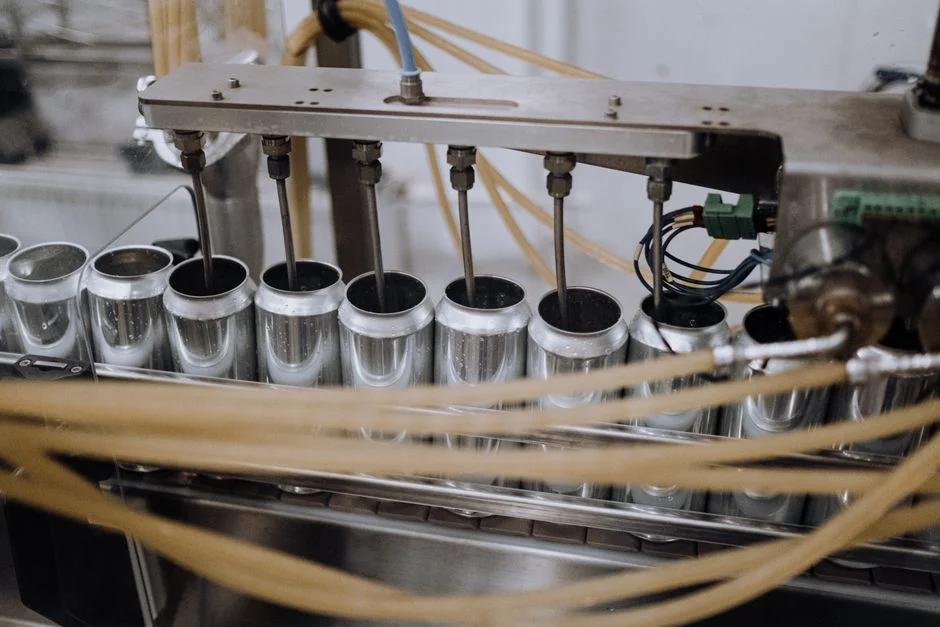
The defensible process flow is a four-stage DAF system → containerized MBR → multi-media filter → industrial RO layout, sized to the data-hall load rather than the cooling-tower load (S3, 2026). The four stages must be specified independently because each carries a different failure mode on Punjab feed chemistry, and the sizing must follow the data-hall load because the cooling-tower load is already being reused on-site.
Stage 1 DAF handles the 10-50 mg/L SS load — corrosion products and biofilm fragments that would otherwise blind the MBR — and buffers hydraulic surges from humidification drain cycles. Stage 2 is a containerized MBR operating at MLSS 8,000-12,000 mg/L with HRT 8-14 h, delivering BOD <10 mg/L, COD <60 mg/L, and TSS <5 mg/L in roughly 60% smaller footprint than conventional activated sludge (S3, 2026 field data). On a constrained Faisalabad industrial-park site, that footprint matters. Stage 3 multi-media filter holds SDI below 5 to protect the downstream RO from biocides and corrosion inhibitors that concentrate in the circulating water. Stage 4 industrial RO polishes cooling-tower blowdown at 65-75% recovery, returning polished flow to cooling-tower make-up or UPW make-up; the 2026 design envelope target is 85-90% overall site recovery once CTBD is folded in (S3, 2026; IDE 2026).
Automatic antiscalant and biocide dosing skids are mandatory at RO scale — without them the concentrate scales within hours on Punjab feed chemistry. Where partial softening rather than full demineralization is the goal, nanofiltration at 70-85% recovery and 75-150 psi produces permeate at 30-50% of feed TDS (S3, 2026). A softener train ahead of the RO takes the hardness load off the membrane and pushes recovery higher; the two are complementary, not substitutes.
| Stage | Unit operation | Key design value | Function |
|---|---|---|---|
| 1 | DAF system | Handles 10-50 mg/L SS | Removes corrosion products and biofilm fragments; buffers humidification surges |
| 2 | Containerized MBR | MLSS 8,000-12,000 mg/L; HRT 8-14 h | BOD <10 mg/L, COD <60 mg/L, TSS <5 mg/L; ~60% smaller footprint than CAS |
| 3 | Multi-media filter | SDI <5 | Protects RO from biocide and corrosion-inhibitor loading |
| 4 | Industrial RO | 65-75% recovery | Polishes CTBD; site recovery 85-90% with CTBD folded in |
Reuse or sewer: the 200 m³/day decision rule
The 2026 decision rule is straightforward: choose reuse when site flow exceeds 200 m³/day, or when the Punjab EPA renewal audit flags non-revenue water; choose DAF + MBR + ClO₂ to sewer when project flow is below 200 m³/day and on-site operators are limited (S3, 2026 field data, adapted to Pakistan). The threshold is not arbitrary — it is the flow at which on-site reuse begins to pay for the RO and dosing capital in a Punjab industrial-tariff regime, and the flow at which an audit will start asking why the site is not recovering water in a Ravi-basin sub-catchment.
For data centers the threshold almost always trips at roughly 5 MW IT load and up, because humidification drain and CTBD together exceed 200 m³/day once the site passes that load (S3, 2026). Reuse wins on three grounds in Faisalabad: Punjab's industrial tariff already rewards on-site recovery, Ravi-basin discharge is a permit liability even where numeric NEQS limits are met, and pushing cooling-tower cycles from 4 to 6-8 cuts make-up water demand 30-50% (Genesis Water Technologies 2026, cited in S3).
Right-sizing the reuse ladder to facility scale — not copying a hyperscale template — is the single most common mistake colocation and mid-scale operators make. A modular 100-300 GPM blowdown treatment system delivers immediate impact without operational complexity, while a hyperscale RO/IX build at 3-4× the per-gallon capital cost exceeds available staff expertise at smaller sites (Genesis Water Technologies 2026). The decision rule keeps the engineer from copying a Phoenix or Riyadh template that is sized to a different labour pool, tariff, and discharge-permit envelope.
CAPEX bands and 2026 logistics for a Faisalabad build
Present the CAPEX as a tiered envelope to the CFO: DAF + MBR + ClO₂ to sewer for <200 m³/day, limited-operator sites; $250,000-500,000 RO band + MBR scope for 5 MW IT load and up with on-site reuse; $3-8M full ZLD or $1-3M evaporator for closed-basin sites requiring >90% recovery (S3, 2026). Energy is a real second axis of CAPEX/OPEX trade-off, not a footnote — an MBR-equipped plant runs 0.8-1.6 kWh/m³, a DAF-only scope 0.4-0.9 kWh/m³, and at typical Pakistan industrial tariffs, energy alone runs 1.5-3× the unit cost seen in lower-tariff markets (S3, 2026 field data).
Sludge dewatering with a plate-and-frame filter press reaches 22-28% dry-solids cake, extending element life by 40% on abrasive feed (S3, 2026). A mechanical bar screen is mandatory at the head of the train to protect the membranes during overland transport debris; Karachi/Lahore ISO-container clearance plus a 500+ km overland haul runs a typical FOB-to-commissioned-ready lead time of 10-16 weeks. A 2-year consumables and critical spares kit — including RO/UF membrane elements and valves, instruments, and media — should ship in the same logistics window to avoid 6-10 week replacement-part waits from China or Europe (S3, 2026 field data, adapted to Pakistan).
| Tier | Scope | Trigger | CAPEX band (2026) |
|---|---|---|---|
| 1 | DAF + MBR + ClO₂ to sewer | <200 m³/day, limited operators | Lowest CAPEX; sewer-discharge only |
| 2 | RO band + MBR scope with on-site reuse | 5 MW IT load and up | $250,000-500,000 |
| 3 | Full ZLD | Closed-basin site, >90% recovery | $3-8M |
| 3 (alt) | Evaporator | Closed-basin site, >90% recovery | $1-3M |
Frequently Asked Questions
What is the minimum site flow that justifies a reuse train in Faisalabad?
Use the 200 m³/day rule: choose reuse when site flow exceeds 200 m³/day or the Punjab EPA flags non-revenue water at renewal audit. For data centers this typically trips at roughly 5 MW IT load and up, because humidification drain and CTBD together cross the threshold at that load (S3, 2026).
What discharge limits apply to a Faisalabad data center in 2026?
Pakistan NEQS Schedule-I/II industrial-sewer values: BOD₅ ≤50 mg/L, COD ≤200 mg/L, TSS ≤50 mg/L, free Cl <1 mg/L, total Cr ≤0.5 mg/L, verified by 24-hour composite sampling under the federal Pakistan Environmental Protection Act 1997 framework, with provincial directorate enforcement by the Punjab Environmental Protection Directorate (S3, 2026).
What CAPEX should a CFO expect for a 5 MW+ Faisalabad data center WWTP in 2026?
A $250,000-500,000 RO band + MBR scope covers 5 MW IT load and up with on-site reuse. For a smaller, limited-operator site below 200 m³/day, the DAF + MBR + ClO₂ to sewer tier is the defensible scope. For closed-basin sites with >90% recovery mandates, the envelope is $3-8M full ZLD or $1-3M for an evaporator alternative (S3, 2026). Buyers should request a site-specific influent test and tariff quote before fixing a tier, because the energy multiplier (1.5-3× lower-tariff markets) moves the OPEX line significantly.
How long does it take to deliver and commission a treatment plant in Faisalabad?
Karachi/Lahore ISO-container clearance plus a 500+ km overland haul runs 10-16 weeks FOB-to-commissioned-ready. A 2-year consumables and critical spares kit should ship in the same logistics window to avoid 6-10 week replacement-part waits from China or Europe (S3, 2026). Confirm factory acceptance test scope, inland transport insurance, and site civil-readiness milestones with the supplier before signing — these three items are the most common causes of Faisalabad schedule slippage.