The compliance chain a Sylvan Springs discharger must follow
Any U.S. mine generating wastewater needs a National Pollutant Discharge Elimination System (NPDES) permit that covers water and wastewater treatment scenarios, according to Fluence (2024); that permit is the federal floor. If a Sylvan Springs-area facility sends waste to a sanitary sewer rather than to a surface water body, the EPA pretreatment program under 40 CFR Part 403 and the local POTW's Sewer Use Ordinance add a second layer of limits. Those local numeric limits — metals, pH, TSS, oil and grease, COD — determine equipment selection, as the POTW sets them to protect its biological plant and sludge quality, and exceeding them triggers a Notice of Violation.
Mining and metals operations are also subject to EPA categorical standards, and the specific category controls the limit set. Active ore mines fall under 40 CFR Part 440 (Ore Mining and Dressing), while downstream metal-finishing shops fall under 40 CFR Part 433 (Metal Finishing); the limits differ enough that an operator must confirm which category applies before specifying equipment. The action step for a Sylvan Springs site is to obtain the current Sewer Use Ordinance from the receiving POTW, the pollutant discharge limits that apply to industrial users in the operator's category, and the monitoring and inspection schedule the authority enforces. Without those documents, equipment selection is guesswork, because a DAF system sized to 50 mg/L TSS will not pass a site whose local limit is 20 mg/L.
What is actually in the wastewater at a typical Sylvan Springs mining or metals site
Fluence (2024) characterizes mining wastewater as "highly acidic and high in suspended solids," commonly carrying organic compounds, metals, heavy metals, and metalloids such as arsenic, iron, and manganese. Sciential Solutions confirms that mine process water is used both to "separate the metal value" and to "transport slurries to the tailing impoundment," so any stream that touches slurry handling will carry high TSS and abrasive fines that the headworks must remove. For coal-handling or aggregate operations in the broader Alabama region, acid mine drainage (AMD) and elevated sulfates also appear, and the design must include a step for sulfate and acid neutralization where AMD is present.
For metals-recovery and downstream finishing operations, the contaminant list extends further. Process-specific ions such as zinc, lead, copper, nickel, and chromium appear, and oil and grease enter from mobile-equipment wash bays and rolling-mill coolants. The action step before sizing equipment is to pull a year of influent data, run composite sampling across production shifts, and submit for a full metals scan plus standard parameters (pH, TSS, COD, O&G, sulfides, total dissolved solids). Local POTW limits should also be confirmed at this stage so the influent map is compared against the actual discharge targets rather than generic industry numbers.
| Contaminant class | Likely source at site | Unit operation it points to |
|---|---|---|
| Acidity (low pH), sulfates | Acid mine drainage, ore leaching | Equalization tank with lime or caustic dosing |
| Suspended solids, abrasive fines | Slurry transport, tailings handling | Headworks screening, equalization, DAF |
| Oil and grease | Mobile-equipment wash, rolling-mill coolant | DAF with coagulant aid, oil-skimming |
| Iron, manganese, arsenic | Mineral oxidation, AMD | pH adjustment, oxidation, coagulation, media filtration |
| Zinc, lead, copper, nickel, chromium | Metal recovery, finishing | Precipitation, ion exchange, MBR polishing |
| Organics, ammonia (mine camp sewage) | Process chemicals, site sewage | MBR or MABR biological stage |
The pretreatment equipment train, stage by stage
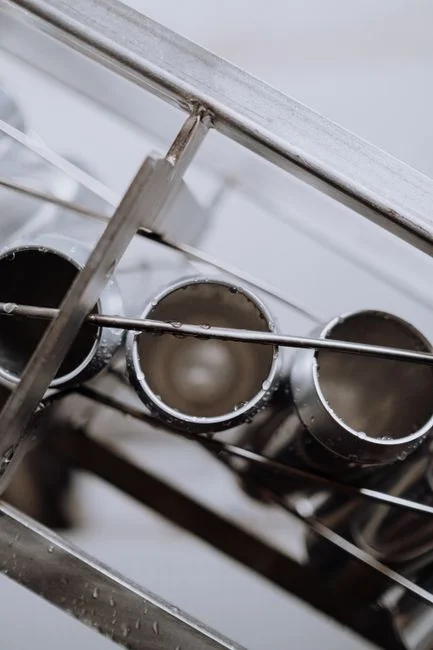
A defensible train for a Sylvan Springs-area site is built in six stages, each justified by the contaminant it removes. Stage 1 is headworks: a rotary mechanical bar screen for headworks protection that removes rags, plastics, and large debris before they damage downstream pumps or clog DAF nozzles. This stage is necessary at every site regardless of contaminant profile and is the cheapest insurance against unplanned shutdowns.
Following headworks, Stage 2 is equalization and pH adjustment: a buffered equalization tank with a PLC-controlled chemical dosing system for pH and coagulant feed smooths pH swings. Fluence (2024) notes that mine water is often highly acidic, so getting pH to a stable band before downstream chemistry is the single biggest determinant of whether the rest of the train performs. Stage 3 is coagulation and flocculation followed by a dissolved air flotation (DAF) system for suspended solids and oil/grease removal; this is the right point to dose coagulants such as ferric chloride or polymers. The DAF removes the bulk of TSS, floated metals hydroxides, and free or emulsified oil.
Stage 4 is biological polishing via a submerged MBR system for biological polishing, which delivers near-reuse-quality effluent and a substantially smaller footprint than conventional activated sludge. Fluence (2024) reports that its MABR variant delivers 90% aeration energy savings with simultaneous nitrification-denitrification, relevant for sites with ammonia limits or worker-camp sewage streams. Stage 5 is metals polishing: ion exchange or selective precipitation removes residual dissolved heavy metals to meet local limits; the choice depends on the target metal and on the site's ability to handle regeneration waste. Stage 6 is sludge handling with a plate-and-frame filter press for DAF and biological sludge dewatering, driven by cake dryness targets and haul-off cost. Aquatech documents the same train in operation at a leading global steel producer's cold-rolling mill and at a Zinc-Lead-Silver smelter complex where wastewater is recycled into cooling-tower make-up water.
| Stage | Unit operation | Target contaminant |
|---|---|---|
| 1 | Rotary mechanical bar screen | Rags, debris, large solids |
| 2 | Equalization + pH dosing | pH swings, acid load, flow variation |
| 3 | Coagulation/flocculation + DAF | TSS, oil/grease, floated metals hydroxides |
| 4 | MBR (or MABR) | Dissolved organics, ammonia, residual TSS |
| 5 | Selective precipitation or ion exchange | Residual dissolved heavy metals |
| 6 | Plate-and-frame filter press | Sludge dewatering for off-site disposal |
Choosing between centralized and modular or containerized treatment
Connecting a remote mine to a central treatment plant via pipeline is expensive, time-consuming, and requires negotiation of complex right-of-way issues, so mining operations typically require decentralized treatment. This framing is the default starting point for a Sylvan Springs site. Containerized or skid-mounted systems, including Fluence's Smart Packaged Aspiral, EcoBox, and NIROBOX lines, require little site preparation or construction, and delivery and installation are streamlined; the equipment is customized for specific types and concentrations of pollutants and varying degrees of salinity, which fits a greenfield operation or a space-constrained brownfield site.
For larger long-life operations with predictable flows and a stable site footprint, a fixed concrete plant is more economical over a 20-year horizon, because containerized skids carry a premium per cubic meter of capacity that compounds with scale. The modular approach remains attractive for temporary or mobile camps, for pilot-phase operations, and for sites where the regulatory or production volume may change before the next permit cycle. The action step is to model both options against a 10-year cash flow including hauling, energy, and operator labor: the modular option often wins on capex and schedule, the fixed plant on lifecycle cost, and the right answer depends on the specific site.
Designing the train to meet — and hold — the local limits in 2026
Each stage of the train should be designed to a verified influent concentration and a discharge target. Aquatech's QUA Q-SEP Ultrafiltration case study shows that advanced membranes are routinely used to meet stringent water quality standards at metal-finishing sites, a useful benchmark for residual TSS and turbidity. Build redundancy into the most failure-prone stages: a duty/standby DAF pump, dual chemical dosing skids, and a bypass with neutralization on the equalization tank, because a single equipment failure during a slug load is a common cause of Notices of Violation.
Online instrumentation matters as much as the hardware. Continuous pH, TSS, conductivity, and ORP on the discharge of each stage gives the operator lead time to intervene before the effluent reaches the POTW's compliance sampling point. Operators designing a 2026 upgrade should also review the BOD online monitoring system engineering guide alongside the mining/metals pretreatment in Coyanosa and Bettles mining pretreatment 2026 guide for comparable train configurations. The action step is to require the equipment vendor to provide a guaranteed-performance letter tied to the operator's actual influent characterization and the local POTW's numeric limits.
Frequently Asked Questions
What permits does a mining or metals plant near Sylvan Springs need before discharging to the sewer?
Every U.S. mine generating wastewater needs an NPDES permit, and any site discharging to a sanitary sewer must additionally satisfy the local POTW's pretreatment program and Sewer Use Ordinance, including its local numeric limits and categorical standard (Fluence, 2024). Operators should request those local limits in writing from the receiving POTW before any equipment is sized.
How much does a containerized pretreatment train cost for a small-to-mid mining site?
The research does not provide a per-unit or per-gallon cost figure for containerized mining pretreatment systems, so a buyer should request a written quote sized to the verified design flow and influent characterization. The comparison to use is not headline price but installed cost, startup duration, and lifecycle operating expense; containerized plants carry low startup costs and simple operation, which shifts the economic case toward capex and schedule.
How should a buyer select a pretreatment equipment supplier in 2026?
Ask for a guaranteed-performance letter tied to the buyer's verified influent and the receiving POTW's local limits, and ask for reference projects in the same contaminant class — metals or mining, not municipal sewage. Aquatech's published case studies at a steel-producer cold-rolling mill and a Zinc-Lead-Silver smelter are one example of the documented metals-track record a supplier should provide.
What is the lead time and how is throughput sized for a modular or fixed pretreatment system?
Containerized plants require little site preparation or construction and delivery and installation are streamlined, which materially shortens the schedule compared to a fixed concrete plant. Throughput should be sized to the verified peak design flow from one year of influent data, with redundancy on the most failure-prone stages (DAF pump, chemical dosing, equalization bypass) so a single failure does not cause a slug load to reach the POTW's compliance point.