
Why bakery wastewater needs a deliberately designed DAF
Dissolved air flotation (DAF) is a clarification process in which air is dissolved under pressure and then released as millions of micro-bubbles at atmospheric pressure; the bubbles attach to suspended matter and float it to the surface for skimming, with coagulant or flocculant addition used to encourage colloidal clustering. For bakery wastewater, DAF is applied as a pretreatment step on effluent that carries FOG, flour solids, sugars, and cleaning chemicals—a configuration documented in the academic literature as coagulation-flocculation followed by DAF. Because bakery effluent composition shifts with production campaigns (dough, wash water, sanitizers), a defensible DAF design must start from representative influent characterization, then specify chemistry, saturation/air-to-solids ratio, and surface-loading rate rather than copying a generic package. DAF units used in this duty typically fall in the 4–300 m³/h envelope seen in industrial DAF catalogs for food processing duty.
Bakery effluent is not one stream. A single plant discharges dough and proofer condensate, oven condensate, equipment wash water, and clean-in-place (CIP) chemicals at different times of day, and each carries a different mix of starches, flour fines, sugars, oils and shortenings, and surfactants. Sampling one composite and sizing a DAF to that number is the most common way bakery DAF packages underperform—the unit is either oversized for the dough shift or hydraulically shocked during a CIP discharge.
DAF is documented in commercial design literature as a clarification step for food processing wastewater, including a named bakery/dairy installation at Revela Foods using an Enhanced DAF system (Ecologix, 2026). The same configuration—coagulation-flocculation followed by dissolved air flotation—is documented in the academic literature for bakery wastewater specifically: "Pretreatment of bakery wastewater by coagulation-flocculation and dissolved air flotation" (Water Science & Technology, 2001). Without this pretreatment step, high FOG and suspended solids overload downstream biological or membrane units, so DAF is positioned upstream of further treatment.
Step 1: Characterize the bakery influent before sizing the DAF
A defensible DAF spec starts with influent data, not a borrowed cut sheet. The parameters the engineer must measure are pH, temperature, total suspended solids (TSS), fats/oils/grease (FOG), COD and BOD, residual surfactant, and the peak-versus-average flow profile. The research does not supply bakery-specific numeric ranges for these parameters, so the engineer must generate them on-site rather than assume them from a vendor table.
Because the dough, proofing, wash, and CIP streams differ in composition, 24-hour composite sampling is required across at least one full production campaign. A grab sample from a single shift will misrepresent either the organic load (high during dough) or the chemical load (high during CIP). The design margin flows directly from how the composite is built: a flow-weighted composite captures the hydraulic reality, while a time-weighted composite captures the chemistry. The engineer should run both and reconcile them before fixing the design flow.
Flow equalization upstream of the DAF is a design prerequisite. DAF performance is sensitive to hydraulic surges, and a bakery CIP dump can briefly double or triple the incoming flow. An equalization tank sized to buffer at least one CIP cycle allows the rest of the design—surface loading, retention time, air-to-solids ratio—to be specified at the average flow with a defined peak factor. The DAF selection logic in the later steps assumes this equalization is in place.
Step 2: Pick the coagulation and flocculation chemistry

The academic precedent for this exact duty is the Water Science & Technology paper "Pretreatment of bakery wastewater by coagulation-flocculation and dissolved air flotation" (Annet et al., 2001), which should be cited in the design basis. That work provides a published reference point that coagulation-flocculation combined with DAF is a defensible configuration for bakery effluent, allowing the engineer to anchor the chemistry choice to a peer-reviewed study rather than a vendor brochure.
Commercial DAF design practice commonly pairs the unit with a coagulant or flocculant to cluster colloidal particles and improve bubble attachment (Ecologix, 2026). The qualitative logic for a bakery stream is straightforward: metal-salt coagulants (alum, ferric chloride, PAC) neutralize the surface charge on emulsified FOG droplets and colloidal starch, while polymer flocculants (cationic or anionic, depending on the stream) build bridging flocs strong enough to hold attached micro-bubbles during the rise to the surface. Jar testing—not a vendor default dose—is the required sizing step for both coagulant and flocculant selection, because bakery influent varies enough between plants that a copied dose curve is unreliable.
The chemistry train needs to be metered reliably in front of the DAF. A PLC-controlled automatic chemical dosing skid sized for the design flow is the practical way to hold coagulant and pH adjuster feed rates proportional to influent, and it should be specified as a dependency of the DAF package rather than ordered separately after start-up.
Step 3: Apply the DAF design parameters that matter
The operating principle involves air dissolved under pressure, then released at atmospheric pressure as micro-bubbles that attach to and float suspended matter (Ecologix, 2026). The parameters that turn that principle into a defensible spec are saturation pressure, recycle ratio (A:P), contact-zone hydraulics, and surface loading rate. Each one should appear as an explicit line item on the data sheet to prevent the vendor from exercising excessive discretion.
Surface-loading rate (flow per unit flotation area) and hydraulic retention time are the two parameters most often left vague. Surface loading controls how much float the scraper can physically remove per unit area per hour; retention time controls whether the bubble-particle aggregate has time to reach the surface before exiting the tank. Bakery flows need a conservative retention assumption because the float layer is thick, the particles are a mix of light flour fines and heavier dough solids, and short-circuiting a poorly baffled contact zone is the fastest way to lose float to the effluent launder.
The documented design rule for the contact zone is direct: "Retention time is calculated based on a minimum velocity of 2 ft/second to avoid solids settling" (Ecologix, 2026). That 2 ft/s minimum is the single line item most often missing from a bakery DAF spec, and it should be written into the enquiry as a retention-time proof requirement. The pre-engineered selection window a bakery designer is mapping onto is the 4–300 m³/h envelope across 13 standard models in the HydropureWater DAF System (4–300 m³/h, 13 standard models)—the design flow after equalization must land inside that window with margin on the high side for peak shift production.
| Parameter | What it controls | Spec requirement for bakery duty |
|---|---|---|
| Surface loading rate | Float removal capacity per unit area | Conservative value at average flow, with peak-factor check |
| Hydraulic retention time | Time for bubble-particle aggregate to rise | Proof at minimum 2 ft/s contact-zone velocity (Ecologix, 2026) |
| Saturation pressure | Mass of air dissolved into recycle | Set by the recycle pump and saturator vessel; carry in vendor calc |
| Air-to-solids ratio (A:P) | Bubble mass per mass of floatable solids | Predicted value required as a bid deliverable |
| Design flow envelope | Maps equalized flow to a standard model | 4–300 m³/h across 13 standard models (HydropureWater DAF catalog) |
Step 4: Specify skimming, sludge handling, and downstream polishing
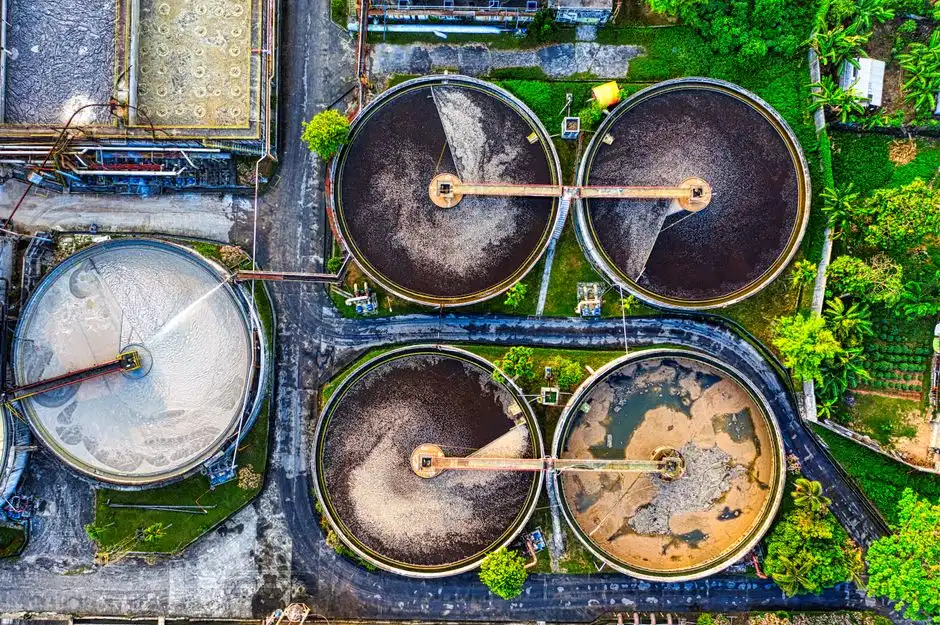
The skimmer is where the design loop closes. Countercurrent scraping is the mechanism cited in commercial DAF design as the most efficient way to separate float sludge from clarified effluent, and it minimizes the chance that broken float re-enters the clean-water launder (Ecologix, 2026). For bakery duty, the skimmer speed and blade depth should be specified rather than left at factory default, because the float layer from a dough/wash stream is mechanically different from a thin oil sheen—it is pasty, sticks to the blade, and benefits from a slower scraper advance and a heavier beach angle.
Float sludge from a bakery DAF is still mostly water by mass; the qualitative expectation is that dewatering is required before disposal. A plate-and-frame filter press for float-sludge dewatering is the standard downstream device for this duty, sized on a dry-solids mass balance the vendor should be required to deliver with the bid. Without that dewatering step, the float has to be hauled as liquid waste, which dominates operating cost in most bakery plants.
Clarified DAF effluent still carries dissolved BOD and COD from residual sugars and cleaning chemicals, so a downstream biological or membrane step is needed before discharge or reuse. If an ultrafiltration (UF) water treatment system follows the DAF, the design must prevent FOG breakthrough into the membranes—a residual-FOG sample port on the DAF outlet, and a polish guard filter ahead of the UF, are the standard mitigations.
Step 5: Equipment selection checklist for the bakery DAF
The selection decision is a mapping exercise: take the equalized design flow, apply the peak shift factor, and match it to the 4–300 m³/h pre-engineered envelope across 13 standard models in the HydropureWater DAF catalog. Selection should sit on the high side of the average flow, not the low side, because bakery campaigns run longer than scheduled and an undersized DAF is the single most expensive mistake to remediate after installation.
The must-have options to write into the enquiry are: integrated coagulant and flocculant injection with a defined pH-adjustment contact time (Ecologix documents an Enhanced Floctube assembly for the function, 2026), an automatic skimmer with adjustable speed and blade depth, and a sludge discharge piped to a dewatering device rather than to a sump. The vendor's reference for the floctube function is a design pattern to require, not a brand to specify.
Vendor questions the engineer should put in writing before issuing the RFQ: materials of construction for all wetted parts (sanitary stainless for bakery duty), the instrumentation list (TSS probe, FOG sample port, flowmeter on saturator recycle and on the main feed, pressure transmitters), and the PLC scope including I/O list and alarm philosophy. The bid must be returned with a P&ID, a saturated-air recycle calculation, a predicted air-to-solids ratio, a retention-time proof at the 2 ft/s contact-zone minimum, and a float-sludge mass balance closing back to the influent solids load. Cross-referencing the 2026 industrial DAF engineering specs and decision framework and the DAF working principle and zero-risk selection guide is the fastest way to fill the engineering basis; the food-and-beverage comparison in DAF vs. clarifier comparison for food and beverage plants is the supporting read when justifying DAF over a gravity clarifier to plant management.
Frequently Asked Questions
What does a bakery DAF package actually cost?
The HydropureWater DAF catalog covers a 4–300 m³/h envelope across 13 standard models (HydropureWater DAF catalog), so capital cost scales with the equalized design flow and the selected model. The buyer should send the design flow, peak factor, and influent data sheet to the vendor and request a budgetary proposal against the 13-model range rather than against a generic m³/h rate.
How do I size a DAF for a bakery plant without an existing spec sheet?
Size on the equalized design flow, not the peak CIP flow, and verify that the model selected sits inside the 4–300 m³/h envelope across 13 standard models (HydropureWater DAF catalog). The 2 ft/s minimum contact-zone velocity rule (Ecologix, 2026) must be proven at that design flow as a bid deliverable before the model is accepted.