
Why Beirut Changes the Wastewater Calculus in 2026
The TNFD February 2026 case study on tech-sector water dependency places the semiconductor industry on the same risk curve as Phoenix and Xi'an, with around 210 trillion litres of water consumed annually and almost half of that in higher-than-average water-scarcity areas (TNFD, Feb 2026). It also reports that 45% of data centres globally sit in basins at high risk of water-availability disruption, citing Hajonides et al. (2025), and that a single fab can use on the order of 14 billion litres of UPW per year, with 1.4–1.6 units of municipal water used per unit of UPW produced (TNFD, Feb 2026, citing IDE Technologies 2024).
Translated to a Mediterranean coastal site, those numbers stop being abstract. Beirut runs on a municipal supply that is regularly interrupted, a privately generated diesel layer that is expensive and unreliable, and a sea outfall that is the only realistic discharge pathway. Under those constraints, every cubic metre of UPW that becomes reject, every cubic metre of cooling-tower blowdown, and every cubic metre of CMP slurry wastewater carries a recovery premium that an inland grid-stable site does not face. The 2026 design target is therefore not "treat and dump" but segregate, recover, polish, and only then discharge what cannot be reused. The same principle is reflected in UPW scale-up and common failure modes, where feedwater variability and reject handling are treated as design-load cases rather than edge cases.
What Process Wastewater Actually Looks Like in a Fab and a Data Hall
SAMCO Technologies lists the typical fab stream set: UPW reject from the polishing loop, CMP slurry waste, acid and alkaline etch rinses, photoresist and developer waste, scrubber blowdown, and cooling-tower blowdown, each with a distinct contaminant profile (SAMCO). Treating these as one black flow is a common design mistake because it forces over-engineered chemistry on streams that could be reused directly.
The data-hall side is shorter but heavier on volume. The TNFD Feb 2026 case study reports that a typical data centre uses 25 million to 770 million litres of water per year, and that hyperscale facilities can exceed 2 billion litres annually (TNFD, Feb 2026, citing Ceres 2025 and Hines Research 2025). In Beirut, where most halls rely on adiabatic or evaporative cooling rather than direct expansion, the dominant liquid stream is cooling blowdown, not process chemistry. Humidification bleed-off and RO reject from on-site make-up water add to that volume but rarely change its character.
The chemistry that controls whether any of this can be discharged to the Mediterranean is well known and must be addressed explicitly by the segregated train: fluoride from etch steps, ammonia and total nitrogen from resist and developer streams, copper, nickel and cobalt from CMP, and total dissolved solids plus silica from cooling-tower blowdown. Each of those is a separate unit-process problem, which is why segregation is a prerequisite, a point reinforced in MBR module design criteria for fab polishing.
Segregate First, Treat Second: The Beirut Treatment Train
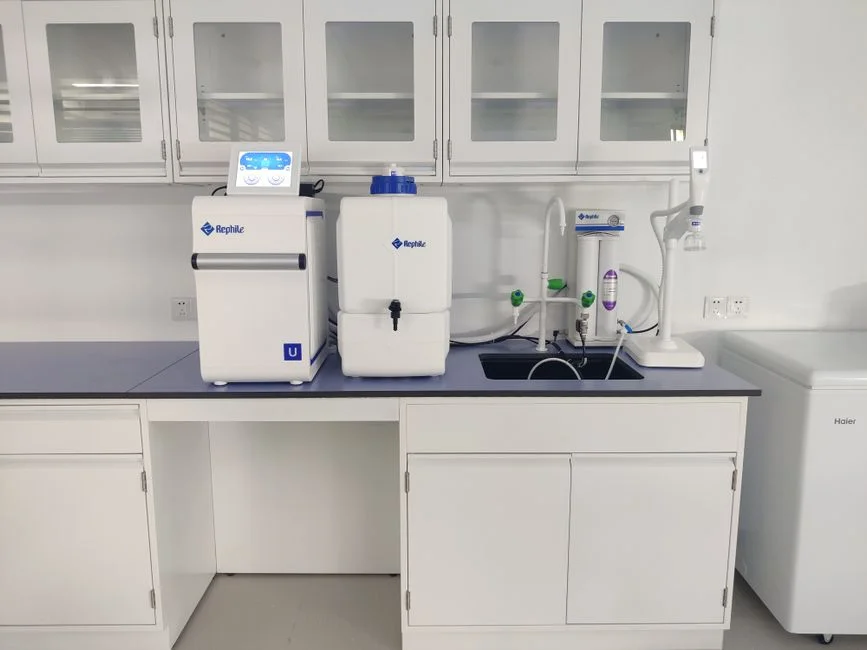
SAMCO's principle is explicit: segregate spent streams at source and treat them individually for recycling or reuse, because combining etch, CMP and UPW reject into a single mixed stream destroys the chance to reuse cleaner streams directly in cooling or scrubbing (SAMCO). A 2026 Beirut train built on that principle looks like this: equalization and pH correction at the head of each segregated line, chemical precipitation targeted at fluoride and heavy metals, a lamella clarifier for fluoride and metal-bearing fab streams or DAF for suspended solids and flocs, an MBR system for fab organics and TSS polishing (or UF where biology is not needed), an industrial RO system for fab and data-hall reuse configured for high-fouling feed, and an EDI polish for closed-loop UPW recovery on the reuse loop. Cooling-tower blowdown is handled on a parallel side stream, typically with softening ahead of RO.
Engineers can align these components into a cohesive system by matching specific unit processes to the chemical profile of each segregated waste stream. The reference benchmark for this train is the IDE Technologies case study, where the system treats around 720 GPM (≈4,000 m³/day) of cooling-tower blowdown and MBR effluent together with a variable, concentrated CMP stream, achieves 54% recovery that is silica-limited, delivers an 18% improvement over a pre-existing conventional RO that "could not operate reliably, even with weekly CIP", and reaches 88% overall recovery once the upstream treatment system brine is also processed (IDE Technologies). That is the kind of paired number — 54% RO, 88% total — that belongs in a Beirut tender.
Capex and opex numbers for this train on a Mediterranean coastal site are not present in the supplied research and must be requested from suppliers with site-specific feed analysis, peak and average flow, and a target recovery with its limiting species.
| Unit process | Target stream | What it removes | Key operating risk it controls |
|---|---|---|---|
| Equalization and pH correction | All segregated lines | Flow and pH swings | Downstream chemistry stability |
| Chemical precipitation | Etch, CMP, fluoride-bearing | F⁻, Cu, Ni, Co as hydroxides or CaF₂ | Metal and fluoride discharge limits |
| Lamella clarifier / DAF | Precipitation effluent | Suspended solids and flocs | Sludge handling and clarifier overflow |
| MBR or UF | Organics-bearing fab streams | COD, TSS, organics | RO feed SDI and biofouling |
| Side-stream softening + RO | Cooling-tower blowdown | Hardness, silica, TDS | Silica scaling, the recovery limiter |
| RO (main reuse line) | MBR/UF effluent | TDS, silica, residual organics | Recovery vs CIP interval trade-off |
| IX or EDI polish | RO permeate destined for UPW | Trace ions to UPW grade | Closed-loop resistivity |
Recovery Targets Beirut Buyers Should Demand in 2026
SAMCO reports that chip fab facilities can reach a recovery rate as high as 60% by simply re-routing spent process streams to less-demanding uses such as cooling, and frames this as a starting point that fabs can exceed by treating and recirculating streams for UPW production (SAMCO). That 60% is the floor for a 2026 Beirut design, not the ceiling, because segregation at source is what unlocks it.
The ceiling is set by the IDE Technologies reference train, with 54% RO recovery that is silica-limited and 88% overall recovery once the upstream brine is recovered (IDE Technologies). Pushing recovery past the silica limit forces anti-scalant dose up and CIP frequency up, which is the failure mode the same case study attributes to a pre-existing conventional RO that could not operate reliably even with weekly CIP (IDE Technologies).
The tender clause that follows is concrete. A vendor should be asked to declare the recovery-limiting species — silica, CaSO₄, organics — and the CIP interval they are designing to, not just a headline recovery percentage. This is the same decision logic used in DAF vs clarifier selection for fab streams, where the controlling parameter, not the equipment name, drives the choice.
Sizing, Redundancy, and What to Ask a Supplier Before You Buy
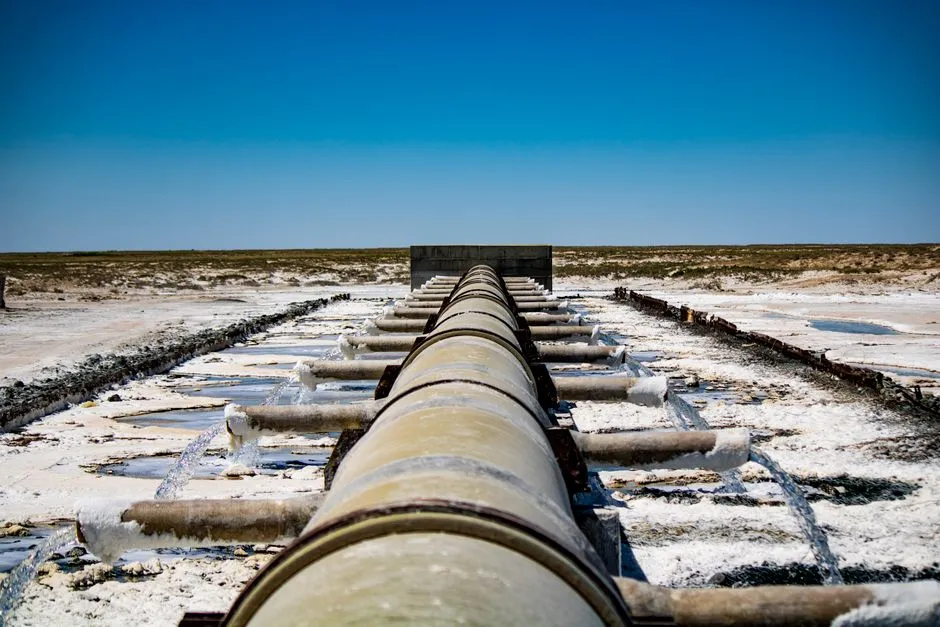
Sizing starts from two TNFD Feb 2026 numbers: a single fab on the order of 14 billion litres of UPW per year, with 1.4–1.6 units of municipal water used per unit of UPW, and a data-hall range of 25 million to 770 million litres per year that can exceed 2 billion litres for hyperscale facilities (TNFD, Feb 2026). From the site make-up flow, the engineer can back-calculate the expected UPW-reject stream and the cooling-blowdown stream and use those as the sizing basis for RO and side-stream softening rather than a generic nameplate.
Reliable operation requires planning for the specific site conditions of a Mediterranean coastal facility. The inputs a Beirut buyer must request from any supplier before quoting are the same regardless of brand: a full feedwater analysis for each segregated line, peak and average flow with daily and seasonal variation, the target recovery with its limiting species, the expected CIP interval under Beirut feed conditions, power and compressed-air consumption, and footprint including any containerized or buried option. Because municipal supply interruptions and grid gaps are daily operating realities, redundancy should be specified up front, not negotiated after a fault, and a PLC-controlled chemical dosing for pH, coagulant and anti-scalant skid should be paired with a second unit on the critical streams, with RO and UF membrane spares held on site, and a generator-backed control panel sized for the dosing and CIP loads. Sludge from the precipitation and DAF steps is normally dewatered with a plate-frame filter press to reduce hauling.
The decision framework to close on is short. Choose the unit process by the stream it sees, not by brand or country of origin: UPW reject goes to RO plus IX or EDI for closed-loop recovery, CMP and fluoride-bearing streams go to precipitation plus DAF or lamella plus MBR, and cooling-tower blowdown goes to side-stream softening plus RO. That mapping is what turns a vendor proposal into something a Beirut engineer can audit line by line, and it parallels the framing in semiconductor and data-hall wastewater in Nagoya, which applies the same segregated-train logic to a different coastal water-stress context.
Frequently Asked Questions
How much municipal water does a Beirut fab actually need to produce ultrapure water in 2026?
The TNFD Feb 2026 case study, citing IDE Technologies (2024), puts it at 1.4 to 1.6 units of municipal water per unit of UPW, so a fab sized for millions of gallons per day of UPW needs a correspondingly larger municipal or reused feed (TNFD, Feb 2026). That is the input a buyer should use to size the pretreatment and reject train.
What recovery rate should we put in a 2026 tender for a Mediterranean coastal site?
Use 60% as the floor and 88% as the ceiling, with the 54% RO figure from the IDE Technologies case study as the silica-limited anchor for the RO step itself (SAMCO; IDE Technologies). Ask the vendor to declare the recovery-limiting species and the CIP interval they are designing to, not only the headline percentage.
Which data-centre stream should dominate the wastewater design in Beirut?
Cooling blowdown. The TNFD Feb 2026 case study reports a typical data centre at 25 million to 770 million litres of water per year, with hyperscale facilities above 2 billion litres, and most Beirut halls rely on adiabatic or evaporative cooling rather than direct expansion, so the blowdown stream sets the hydraulic load (TNFD, Feb 2026).
What should we ask a supplier to quote before we sign, given Beirut's grid and water risk?
Request a feed analysis, peak and average flow, the target recovery with its limiting species, the CIP interval under Beirut feed, power and air consumption, footprint, and redundancy on dosing and membranes; the supplied research does not contain fab-specific capex or opex for the Mediterranean, so cost and lead time must be requested against those inputs rather than assumed. Also confirm that 45% of data centres globally sit in basins at high water-availability risk (TNFD, Feb 2026, citing Hajonides et