The Prattville Compliance Stack: 40 CFR Part 436, ADEM, and the Local POTW
Mining and metals plants near Prattville, Alabama meet 2026 sewer pretreatment limits by stacking three regulatory layers: the federal Mineral Mining and Processing Effluent Guidelines at 40 CFR Part 436, the Alabama Department of Environmental Management NPDES permit, and the local Prattville-area POTW pretreatment program. Operators first confirm whether their mineral falls under an active 40 CFR Part 436 subpart with numeric effluent limits or a reserved subpart with no current numeric effluent limits, then layer the regional POTW's local limits on top. The treatment train is a six-step sequence — equalization, pH correction, coagulation, DAF or lamella clarification, multi-media filtration, and RO polish — sized against the highest anticipated daily discharge, with the RO stage rated at >99% rejection of dissolved metals and salts at 50–70% recovery on AMD feed (AMPAC USA, 2025-09).
The federal floor is the Mineral Mining and Processing Effluent Guidelines and Standards at 40 CFR Part 436, which EPA promulgated in 1975 and amended in 1976, 1977, 1978, and 1979, covering wastewater discharges from mine drainage, mineral processing operations, and stormwater runoff, and the Mineral Mining regulatory requirements are incorporated into NPDES permits (EPA, 2026-02). The list of reserved subparts — Dimension Stone (A), Lightweight Aggregates (H), Mica and Sericite (I), Trona (P), Rock Salt (Q), Mineral Pigments (T), Lithium (U), Fire Clay (AA), Attapulgite and Montmorillonite (AB), Kyanite (AC), Shale and Common Clay (AD), Aplite (AE), Kaolin (AG), Ball Clay (AH), Feldspar (AI), Talc/Steatite/Soapstone/Pyrophyllite (AJ), and Garnet (AK) — carries no current numeric effluent limits, which means the federal layer does not supply a number for those minerals and the operator must rely on the state and local layers alone (EPA, 2026-02).
Alabama is an NPDES-authorized state, so the Alabama Department of Environmental Management issues the permit and reconciles federal categorical standards with state-specific conditions. On top of that, the Prattville-area POTW runs a pretreatment program under the General Pretreatment Regulations at 40 CFR Part 403 and layers locally developed numeric limits for heavy metals, pH, and TSS on top of the categorical standards — so the operator carries three sets of numbers, not one (EPA, 2026-02). Confirming which subpart applies, then reconciling ADEM's permit conditions with the local sewer authority's allocation, is the prerequisite before any equipment selection begins.
What a Prattville Mine Is Actually Discharging: AMD, Process, Tailings, and Dewatering
Acid mine drainage is the most prevalent mining water quality problem and shows up wherever sulfide minerals are disturbed. When sulfide minerals such as pyrite and pyrrhotite in waste rock and tailings are exposed to oxygen and water, oxidation reactions produce sulfuric acid that leaches into groundwater and surface water, creating highly acidic streams with dissolved heavy metals — iron, manganese, copper, zinc, arsenic, cadmium — at concentrations far exceeding regulatory limits (AMPAC USA, 2025-09). For a Prattville-area operator, AMD is rarely the only stream on the site, and that diversity is what defeats a single default treatment train.
Process water from ore processing — including flotation, heap leaching, cyanide gold extraction, and chlorination circuits — contains process chemicals, reagents, and dissolved ore constituents, typically high TDS, and often carrying cyanide, ammonia, or chloramines depending on the process (AMPAC USA, 2025-09). Tailings pond effluent is the liquid fraction of tailings impoundments and contains fine solids, processing chemicals, and leached metals, and management of tailings pond water has become a significant environmental and regulatory focus globally (AMPAC USA, 2025-09). Dewatering discharge, the water pumped from underground or open-pit workings to maintain access, varies by geology — in some settings it is relatively clean, in others it carries significant metal loading (AMPAC USA, 2025-09).
The combined message is straightforward: conventional settling ponds and basic filtration are not adequate for the dissolved salts and trace metals the Prattville operator will see, and the influent must be characterized stream by stream before equipment is selected. A copper mine, a coal operation, and a dimension-stone quarry produce fundamentally different wastewaters and cannot share a single default flow sheet, which is why a representative sampling round — at peak and average flow, across each stream — is the prerequisite for a defensible basis of design (AMPAC USA, 2025-09).
The Six-Step Treatment Train That Maps to the Permit Conditions
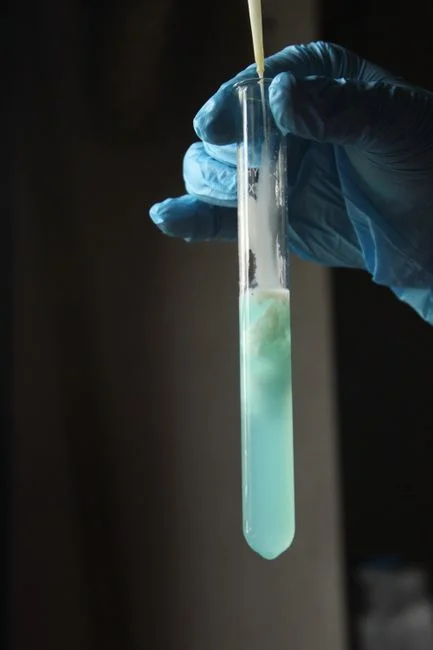
A defensible unit-operation sequence for a Prattville-area mineral mining or aggregate operation in 2026 has six steps, and each maps to a specific compliance condition. The basis-of-design logic is to size each step against the parameter that the next step depends on, and to write each row of the table so the engineer can paste it into a basis-of-design memo without rewriting.
| Step | Unit Operation | What It Removes | Design Parameter / Setpoint |
|---|---|---|---|
| 1 | Equalization basin | Flow surges; raw influent variability | Volume sized to highest anticipated daily discharge, not average (LiqTech, 2025-08) |
| 2 | pH correction and metals precipitation | Dissolved metals as hydroxides; gypsum | Lime raise to pH >10 before thickening (PMC review, 2024-02) |
| 3 | Coagulation / floc conditioning | Suspended solids, fine metal particles | Coagulant and flocculant matched to floc density driving Step 4 |
| 4 | Solids separation (DAF or lamella) | Bulk precipitated solids; oil/fines if DAF | DAF for buoyant floc; lamella for sludge volume and footprint (Genesis Water Technologies, 2025-11) |
| 5 | Multi-media filtration | Turbidity and colloids (RO feed protection) | Target SDI after the filter, not just inlet turbidity |
| 6 | RO polish | Dissolved salts and metals | >99% rejection; 50–70% recovery on AMD feed, 70–85% on a ZLD RO stage (AMPAC USA, 2025-09) |
Capacity bands are not published in the supplied research for Prattville-area operations, so throughput has to be framed qualitatively. Mining water treatment processes can vary significantly between operations, in both the required capacity and the wastewater content and the desired quality, which is why suppliers develop customized systems matched to specific needs (LiqTech, 2025-08). A single dimension-stone or sand-and-gravel site typically runs in the low-to-mid two-digit m³/h range, while a process plant with heap leach or milling sits an order of magnitude higher — and the operator should size against the highest anticipated daily discharge, not the average, because peak flows are what drive equalization basin volume and pump selection (LiqTech, 2025-08).
The control loop is a parallel requirement, not an add-on. PLC/HMI with continuous pH, flow, and conductivity ties the chemistry dosing, the membrane skid, and the self-monitoring records the Prattville-area sewer authority will require into a single integrated HMI (LiqTech, 2025-08). The Tenino mining pretreatment 2026 reference covers the same six-step logic and the same control-loop rationale for a Pacific Northwest operator discharging to a different POTW; the Prattville operator can use that piece as a structural template while substituting the Alabama-specific permit and local-limits math.
Why Reverse Osmosis Carries the Compliance Step Conventional Methods Cannot
Reverse osmosis is the polishing step that conventional methods cannot replace. RO and SWRO systems reject >99% of dissolved metals and salts, which is what allows the Prattville operator to meet dissolved-species sewer limits that chemical precipitation alone cannot reach (AMPAC USA, 2025-09). For an operation whose discharge limit is set in dissolved metal concentration rather than total recoverable metal, the RO stage is the unit operation that actually delivers compliance — everything upstream is conditioning the feed.
Recovery is set conservatively to manage scaling on the high-sulfate AMD feed. High sulfate concentrations, which are common in AMD, can challenge standard BWRO membranes through scaling, so proper antiscalant selection and system design — often targeting 50–70% recovery rather than maximum recovery — manages this risk while achieving consistent discharge quality (AMPAC USA, 2025-09). Where zero-liquid discharge is required, RO handles the bulk water recovery at 70–85% before the more energy-intensive thermal stages handle the remaining concentrate, and the operator should request a recovery curve rather than a single nameplate figure (AMPAC USA, 2025-09).
The same RO skid enables internal reuse, reducing freshwater consumption by 40–60% compared to once-through operations, which is the lever that turns compliance capex into a payback project (AMPAC USA, 2025-09). The economic logic is "reuse as much as operationally feasible, then polish the rest to sewer quality," and a packaged industrial RO system for mining wastewater backed by a multi-media filter for RO pretreatment and a PLC-controlled automatic chemical dosing skid is the core of that package. The upstream DAF system for mining wastewater solids separation and the lamella clarifier for metal hydroxide sludge then condition the feed to the SDI the RO membranes need to survive.
How the Prattville-Area POTW Sets the Local Limits the Operator Must Hit
40 CFR Part 403 is the General Pretreatment Regulations framework under which POTWs run their pretreatment programs, and EPA's Local Limits Development Guidance describes how POTWs derive local numeric limits on top of categorical standards like 40 CFR Part 436 (EPA, Local Limits Development Guidance). The Prattville-area POTW — operating its pretreatment program under 40 CFR Part 403 — applies a Maximum Allowable Headworks Loading (MAHL) approach to translate categorical standards and water-quality criteria into per-discharger local limits.
The MAHL approach is a five-step process: Step 1 determine Pollutants of Concern (POCs), Step 2 collect and analyze data at the POTW, in the collection system, and at industrial users, Step 3 calculate MAHLs for each POC against effluent-quality, sludge-quality, inhibition, and air-quality criteria, Step 4 designate and implement local limits, and Step 5 address collection system concerns (EPA, Local Limits Development Guidance). MAHLs are back-calculated from those criteria, and then the Maximum Allowable Industrial Loading (MAIL) is allocated to controlled sources with a safety factor and an expansion/growth allowance (EPA, Local Limits Development Guidance).
Pollutants of Concern are drawn from national POCs, NPDES permit conditions, water-quality criteria, sludge-quality standards, air-quality standards, resource protection criteria, and treatment plant interference prohibitions, plus scans of POTW influent, effluent, and sludge to identify priority pollutants (EPA, Local Limits Development Guidance). The Prattville-area operator's job is to show up at the POTW meeting with the influent characterization, the peak and average flow, and a defensible basis of design so the MAIL allocation leaves the operator with a workable compliance envelope rather than a forced retrofit. The Maple Valley 2026 pretreatment limits piece walks the same MAHL/MAIL logic for a different regional POTW and is a useful cross-reference for the math.
Equipment, Sludge, and Monitoring: Closing Out the Scope
Clarifier choice is driven by floc character. DAF is preferred when the floc is buoyant or the influent carries oils or fines that float; a lamella clarifier is preferred when sludge volume and footprint are the constraint, including the metal-hydroxide sludge produced by chemical precipitation (Genesis Water Technologies, 2025-11). For most Prattville-area mining trains, the DAF/lamella selection is set by the influent oil and fines content rather than by sludge volume alone.
RO pretreatment should be specified as multi-media filtration to a target SDI, with an ultrafiltration stage where colloids persist, and the membrane material and backwash cycle set to the feed water. Chemical precipitation produces metal-hydroxide sludge that has to be dewatered, and a plate-and-frame filter press is the standard fit for the cake volumes produced by mining trains. The full equipment chain — a DAF system for mining wastewater solids separation, a lamella clarifier for metal hydroxide sludge, a multi-media filter for RO pretreatment, an ultrafiltration system for RO pretreatment, a filter press for mining sludge dewatering, and a PLC-controlled automatic chemical dosing skid — should be specified with chemistry setpoints, controls, and the membrane skid tied into a single integrated HMI so the operator hands the inspector one coherent system rather than a set of unrelated skids.
Monitoring is the closing element, not an afterthought. PLC-controlled continuous pH, flow, and conductivity, plus the self-monitoring records the Prattville-area POTW will require, close the loop between process performance and permit reporting. The auto-dosing logic and the HMI architecture are covered in more depth in the auto dosing for wastewater treatment 2026 guide, which is worth putting into the basis-of-design appendix.
Frequently Asked Questions
What should a Prattville-area mining operator put into a 2026 RFQ to get a defensible pretreatment skid price?
The supplied research does not publish price points for a complete pretreatment train, so a buyer has to request a quotation against the operator's own basis of design rather than rely on a published range (AMPAC USA, 2025-09). The information to put into the RFQ is the peak and average flow in m³/h, the influent pH and metal profile from a representative sampling round, the Prattville-area POTW discharge limits for metals, pH, and TSS, and the desired RO recovery percentage if reuse is in scope. With that basis of design in hand, suppliers can quote a six-step train — equalization, pH correction, coagulation, DAF or lamella, multimedia filtration, and RO — at the >99% rejection of dissolved metals and salts that the literature reports. The 2026 ETP cost breakdown is a useful reference for how to structure the CAPEX/OPEX split in the RFQ appendix, but the actual numbers have to come from the quotation.
How does an operator select a pretreatment skid supplier in 2026 without buying a retrofit?
Look for a supplier that provides complete end-to-end service and helps the operator obtain the most durable and efficient mining wastewater treatment system, with a clear plan for how to operate and maintain it (LiqTech, 2025-08). The defensible checklist is that the proposed scope ties the chemistry dosing, the PLC/HMI controls, and the membrane skid into a single integrated control system, and that the supplier has installed the same unit operations — DAF or lamella, multimedia filter, UF, RO, and sludge dewatering — at flows in the same order of magnitude as the Prattville site. The operator should ask for a recovery curve rather than a nameplate figure, and should confirm the supplier can support the basis-of-design math against the MAHL/MAIL allocation the Prattville-area POTW will issue (EPA, Local Limits Development Guidance).
Why is RO the compliance step that conventional methods cannot replace for AMD streams?
RO and SWRO systems reject >99% of dissolved metals and salts, which is what allows the Prattville operator to meet dissolved-species sewer limits that chemical precipitation alone cannot reach (AMPAC USA, 2025-09). For an operation whose discharge limit is set in dissolved metal concentration rather than total recoverable metal, the RO stage is the unit operation that actually delivers compliance; everything upstream conditions the feed.
What is the highest compliance risk for a Prattville-area mining operator in 2026?
Compliance risk is highest when the operator skips the local-limits conversation and the RO sizing step, because the POTW's MAHL/MAIL allocation can force a retrofit if the operator's basis of design is not aligned up front (EPA, Local Limits Development Guidance). The practical consequence is a treatment train that meets the federal 40 CFR Part 436 layer but still fails the Prattville-area POTW local limit, and a forced upgrade six to twelve months after commissioning. The mitigation is to bring the influent characterization, the peak and average flow, and the basis-of-design math to the POTW before the RFQ goes out, not after.