Start with Hotel Loading, Not with the MBR
A Lusaka hotel's wastewater is the sum of guest rooms, kitchens, and on-site laundry, each with its own loading profile, and that characterisation must be done before any membrane area is selected. The first engineering task is to convert room count, bed-night occupancy, kitchen meal covers, and laundry kilogrammes per day into separate flow and load contributions, then add them into a single design basis.
EPA's MBR fact sheet states that peak design flow should be no more than 1.5 to 2 times the average design flow, otherwise equalisation or additional membrane area is required. For a Lusaka hotel, the wet-season occupancy surge and weekend banquet load usually push the design to the upper end of that 1.5–2× envelope. Tropical influent temperatures are favourable for the biological stage, but the same warm mixed liquor accelerates fouling if aeration falters, so blower redundancy in the package is non-negotiable. Bioreactor sizing is often limited by oxygen transfer rather than the volume needed for the required SRT, which means a well-aerated submerged cassette trains more efficiently than a textbook SRT calculation suggests.
Skip the kL/day rating on the brochure and build the load sheet first. That single step separates a defensible specification from a quote-driven one.
Pick a Membrane Configuration That Matches Your Site
Hollow-fibre and flat-plate membranes are both proven in packaged MBR plants, but they make different demands on the upstream screen, the footprint, and the operator. EPA's fact sheet specifies that hollow-fibre units typically need 1–2 mm fine screening, while flat-plate units need 2–3 mm, and that all MBR systems require 1–3 mm fine screens immediately upstream of the membranes. Hollow-fibre cassettes (the ZeeWeed-class design) tolerate slightly higher MLSS and pack more membrane area per cubic metre of tank; flat-plate cassettes (the Kubota-class design) keep wider inter-membrane spacing, which minimises debris accumulation and supports easier in-situ cleaning.
For Lusaka hotels, the deciding factors are usually screening reliability, footprint, and operator skill. A flat-sheet PVDF MBR module in a well-aerated chamber is individually replaceable, which matters when the only available technician is a general maintenance hire rather than a membrane specialist. Sigmadaf documents that the flat-plate arrangement sits vertically in the aeration chamber with air injected from below, generating the cross-flow that controls biofouling without requiring a high cross-flow pump. Confirm that the package includes auto-cleaning fine screens immediately upstream of the membrane train, because the screening step is the single most common cause of membrane damage in the field.
Whichever configuration is chosen, tie it to a rotary mechanical bar screen sized for the hotel's peak flow rather than its average — peak screening failures are what take membranes out of service.
Decide the Package Form: Skid, Container, or Buried
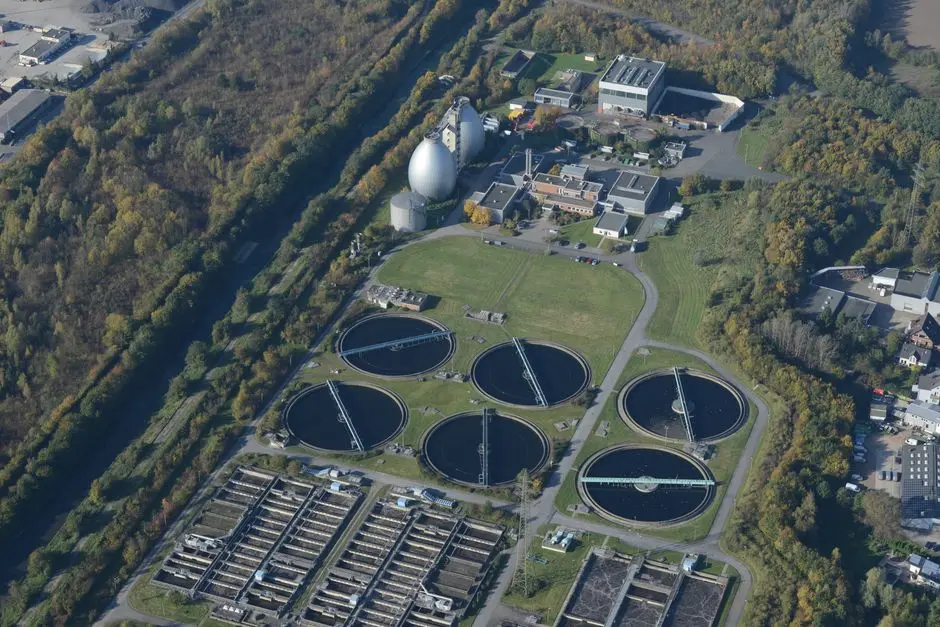
Three physical formats compete for a Lusaka hotel site: above-ground skid, ISO container, and underground package. Sigmadaf notes that MBR systems can be installed inside ISO containers, which simplifies transport, assembly, and later expansion, and that the package is delivered fully assembled and pre-tested so site work reduces to inlet/outlet piping and power. A containerised unit is well suited to retrofits where the hotel is already trading and a basement car park or service yard can accept a crane lift.
An underground packaged STP is preferable for new builds where landscaping must be preserved, but the buyer must confirm the water-table depth and specify buoyancy anchoring for the wet season. Above-ground skid packages are the most serviceable but require a dedicated plant room with ventilation for the blowers and overhead access for cassette lifting.
Whichever form is specified, the package should arrive fully assembled and pre-tested, not as a kit of loose components welded on site. That single contract condition typically halves the installation window and removes most of the commissioning risk on a Lusaka hotel project.
Anchor the Effluent to ZEMA Discharge Limits
The supplier must quote guaranteed values for BOD, TSS, total nitrogen, and faecal coliform against the Zambia Environmental Management Agency (ZEMA) discharge or reuse target, in writing, with the test method and the holding period stated. EPA case-study data for the Calls Creek facility in Georgia show BOD and TSS routinely sit near detection limits once the system stabilises, and ammonia-nitrogen averaged 0.21 mg/L against an influent of 14.8 mg/L, demonstrating the performance envelope a hotel buyer should be demanding on paper.
Where total nitrogen is on the limit, specify an anoxic pre-chamber to enable simultaneous nitrification-denitrification rather than relying on the aerobic stage alone. Sigmadaf documents that this configuration is offered when influent nitrogen concentrations risk breaching discharge limits, and it removes COD and nitrate in a single reactor pass. For hotel gardens or golf-course irrigation, MBR permeate is typically reusable, but a UV steriliser for reuse is normally required at the reuse point to satisfy the coliform target.
Ask for long-term operating data, not just commissioning values, and tie the performance guarantee to a 12-month defect-liability period so the supplier shares the early-life risk.
Build the Supplier Shortlist Checklist
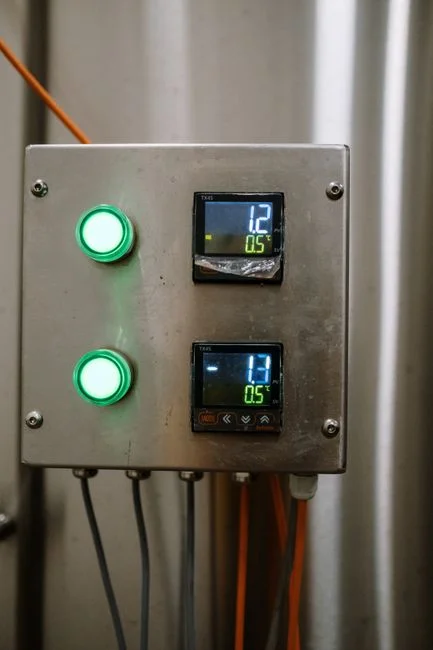
The technical specification becomes a procurement tool when it is converted into a ranked shortlist. EPA notes that municipal MBR membrane guarantees commonly run 3–5 years, with at least one manufacturer offering a 10-year guarantee, and that longer warranties are typically conditional on the smaller-cutoff fine screen being used. EPA also recommends the N+1 redundant train approach: an extra membrane tank or cassette beyond the nominal design, so one unit can be isolated for cleaning without shutting down the plant.
| Checklist item | What to ask the supplier | Acceptable evidence |
|---|---|---|
| Membrane warranty term | Written years, prorating terms, and the screen size that unlocks the longest term | Signed warranty schedule referencing EPA 3–5 year benchmark or longer |
| N+1 redundancy | Confirm an extra cassette can be isolated for service | GA drawing with one unit tagged "standby" |
| In-situ CIP system | Confirm chemical cleaning without lifting modules | Cleaning sequence in the O&M manual |
| Spare parts lead time | Regional stocking or air-freight commitment to Lusaka | Spares price list with delivery weeks |
| Effluent guarantee | ZEMA-aligned BOD, TSS, TN, faecal coliform values | Performance bond or liquidated-damages clause |
| Pre-tested delivery | Factory acceptance test before dispatch | FAT protocol signed at works |
An integrated MBR membrane bioreactor package that meets every line on this table is the basis for a defensible bid shortlist. For a parallel Southern Africa cost reference, the MBR cost reference for Southern Africa benchmark can be used to sanity-check the quoted figure before award, and a packaged MBR STP for a Yangon hotel 2026 guide provides a comparator for the supplier-due-diligence structure. Buyers who also need the broader design context can cross-check against this domestic sewage treatment engineering guide.
Frequently Asked Questions
How do I convert room count and occupancy into the kL/day rating for the MBR?
Build the load sheet from three line items — guest-room sewage (typically 150–200 L per guest per day for a Lusaka hotel), kitchen flow from meal covers, and laundry flow from kilogrammes processed — then apply a peak factor of 1.5 to 2 times the resulting average, per EPA design guidance. The kL/day rating on the supplier's nameplate should be quoted against the peak figure, not the average, and you should request the influent BOD and TSS assumptions used to derive it.
What CAPEX and OPEX line items should I request, and which need reference-project validation?
Ask for a split of equipment cost, freight to Lusaka, installation civils, membrane replacement reserve, blower energy, and chemical consumption per cubic metre treated. Validate the membrane-replacement reserve and the energy number against at least one operating reference project of similar size, because brochure kWh/m³ figures are not site-specific.
How do I confirm the packaged MBR will meet ZEMA effluent limits on BOD, TSS, and nitrogen?
Require the supplier to commit to ZEMA-aligned BOD, TSS, total nitrogen, and faecal coliform values in the contract, supported by a performance bond or liquidated-damages clause, and ask for long-term operating data from a comparable hotel installation rather than commissioning values alone. If total nitrogen is regulated, specify an anoxic pre-chamber in the package so simultaneous nitrification-denitrification is built in.
What warranty and lead-time evidence should I demand from a packaged MBR vendor before signing?
Require a written membrane warranty of 3–5 years as the EPA benchmark, with the screen size that unlocks the longest term stated explicitly, and confirm the N+1 redundant cassette is shown on the GA drawing. For a landlocked Lusaka site, demand a spares price list with delivery weeks to Lusaka and a named contact for air-freight emergencies, since membrane modules and dosing chemicals cannot be sourced locally at short notice.
Related Equipment
- flat-sheet PVDF MBR module — specifications, capacity range, and technical data