What "Packaged MBR STP" Means for a Yangon Hotel in 2026
A packaged MBR STP is a skid- or container-integrated membrane bioreactor that combines anoxic and aerobic biology with submerged PVDF membrane filtration at a 0.1 μm pore size, eliminating the secondary clarifier in a single factory-built unit. The operating envelope is 10–2,000 m³/day, with mixed liquor suspended solids held at 8,000–12,000 mg/L and air-scour energy demand of 1.2–1.8 kWh/m³ (HydropureWater, 2025). Twelve confirmed MBR systems were installed in Myanmar as of 2025, concentrated in Yangon, Mandalay, and Bago (UNIDO/MCDC, 2025), which means local service capacity — not just a spec sheet — is part of the selection filter for any 2026 project.
To choose a packaged MBR STP for a hotel project in Yangon, Myanmar, the comparison frame must hold three packaged trains in view: a skid-mounted MBR system, a buried A/O contact-oxidation package with integral sedimentation (the WSZ), and a sequencing batch reactor (SBR) with a separate clarifier. The packaged MBR differs from the WSZ in that it pushes the solid-liquid separation step onto a submerged PVDF flat-sheet membrane module instead of relying on gravity settling, so it sustains an MLSS roughly three times higher than a contact-oxidation tank and produces a sub-1 μm effluent suitable for toilet flushing or landscape irrigation. It differs from an SBR in that the membrane runs continuously under a slight vacuum rather than in batched fill-react-decant cycles, which removes the need for a dedicated operator to drive cycle timers and gives a stable permeate stream through peak-load windows.
Myanmar's 2026 Discharge Floor: NEQG vs ASEAN Green Hotel
Myanmar's National Environmental Quality Guidelines commit a hotel EMP to BOD ≤30 mg/L, TSS ≤50 mg/L, COD ≤125 mg/L, pH 6–9, and oil and grease (FOG) ≤10 mg/L (per Ministry of Hotel and Tourism, 2018). The ASEAN Green Hotel reuse criteria tighten those numbers to BOD ≤20 mg/L, TSS ≤10 mg/L, and FOG ≤5 mg/L for reuse applications (per Ministry of Hotel and Tourism, 2018), and only 5 of 1,500+ Myanmar hotels had won the ASEAN Green Hotel Award as of the 2018 ASEAN Tourism Forum, so the bar is a real tourism-marketing edge. The Environmental Conservation Department (ECD) under the Ministry of Natural Resources and Environmental Conservation (MONREC) must approve the Environmental Management Plan before the hotel construction permit and operating license are issued (per Ministry of Hotel and Tourism, 2018). The December 2017 Mandalay Department of Hotel and Tourism policy for the Bagan–Nyaung U region showed that license cancellation is the enforcement path for non-compliance.
The practical effect is that the EMP-committed numbers become the engineering floor regardless of award pursuit, so the MBR sizing must meet whichever limit is tighter for each parameter. A Yangon owner who plans to reuse permeate for toilet flushing or irrigation is committing to the ASEAN tier by default; a discharge-only project gets the NEQG tier but still owes an EMP that satisfies ECD review.
| Parameter | Typical hotel influent (2026) | Myanmar NEQG ceiling | ASEAN Green Hotel reuse target |
|---|---|---|---|
| BOD (mg/L) | 200–400 | ≤30 | ≤20 |
| COD (mg/L) | 400–800 | ≤125 | — |
| TSS (mg/L) | 150–300 | ≤50 | ≤10 |
| FOG (mg/L) | 50–150 | ≤10 | ≤5 |
| pH | 6.5–8.0 | 6–9 | 6–9 |
Sizing a Packaged MBR STP for a Yangon Hotel: A Worked 100-Room Example
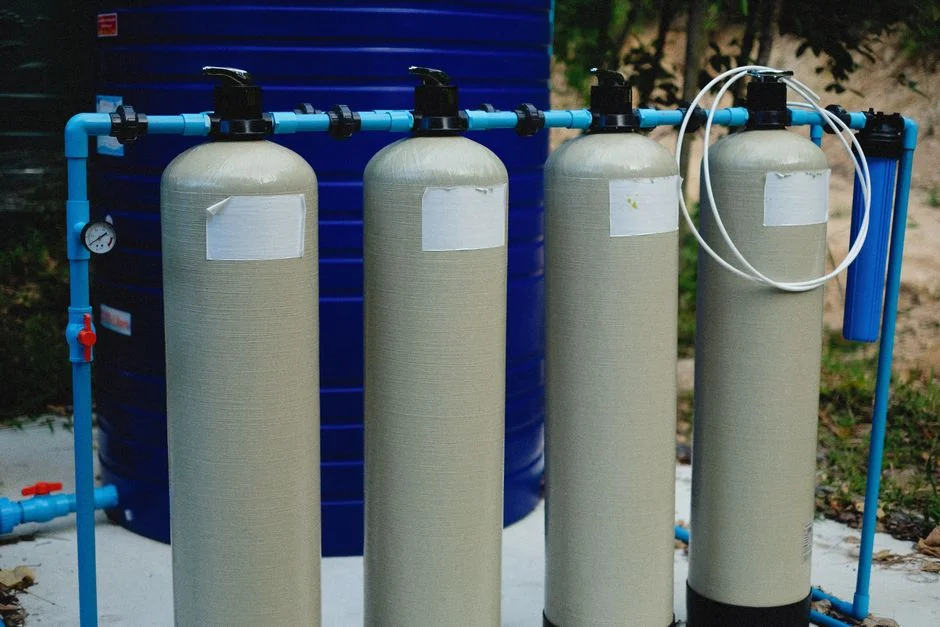
The 150–250 L per guest-day benchmark used across ASEAN hotel design guides is the starting point for any room-count tier (HydropureWater field data, 2026). For a 100-room property at 1.8 occupancy and 200 L per guest-day, the average dry-weather flow is 100 × 1.8 × 0.200 = 36 m³/day. Add a 15% restaurant allowance and a 10% laundry allowance and the design average rises to roughly 45 m³/day, with a peak of about 70 m³/day at a 1.5× peaking factor. The BOD load on the biological stage is 45 m³ × 250 mg/L = 11.25 kg BOD/day, which sits inside both the WSZ and MBR design envelopes. Hotel flow is violently diurnal — breakfast rush, check-in/check-out windows, and pool backwash routinely generate 2–3× peak spikes over a 24-hour average (HydropureWater field data, 2026) — so the equalization tank must absorb those spikes before the biological stage sees them.
Influent variability drives pre-treatment selection. BOD typically runs 200–400 mg/L, COD 400–800 mg/L, TSS 150–300 mg/L, and FOG 50–150 mg/L (HydropureWater field data, 2026). Where kitchen and laundry FOG load sits at the upper end of that range, a DAF pre-treatment unit ahead of the biological stage is the safer choice, paired with an automatic chemical dosing system to hold coagulant and pH correction on setpoint. The same tier-by-tier math applies to 20, 50, and 200-room properties; the table below translates the same multiplier into m³/day and kg BOD/day for the room counts a Yangon MEP sees most often.
| Room count | Avg flow (m³/day) | Peak flow (m³/day) | BOD load (kg/day) | Recommended pre-treatment | Recommended equalization |
|---|---|---|---|---|---|
| 20 | 9 | 14 | 2.3 | Manual bar screen | 10–15 m³ |
| 50 | 23 | 35 | 5.6 | Rotary bar screen | 25–35 m³ |
| 100 | 45 | 70 | 11.3 | Rotary bar screen + DAF (if FOG high) | 50–70 m³ |
| 200 | 90 | 140 | 22.5 | Rotary bar screen + DAF | 100–140 m³ |
MBR vs WSZ vs SBR: Which Packaged Train Fits Your Room Count
Three packaged process trains dominate the Yangon hotel market in 2026. The buried WSZ package plant is an A/O contact-oxidation unit with integral sedimentation and disinfection, sized 1–80 m³/h, installed below grade, and operable without a dedicated attendant — the right pick for 20–80 room properties on landscaped lots where reuse is not the target. The MBR delivers sub-1 μm effluent at 10–2,000 m³/day and cuts footprint by roughly 60% versus a conventional activated-sludge train, so it fits 80+ room urban sites, tight setbacks, and any project pursuing ASEAN Green Hotel reuse credits. An SBR is the flexible middle option for medium hotels with trained operators and lower peak variability, since it handles peak loads without a separate clarifier but needs a real operator to run the cycle timers.
Match the technology to the site constraint. A 30-room suburban guesthouse goes to a buried WSZ, since the lower peak flow and the absence of a reuse target keep the simpler train inside the design envelope. A 100-room urban property in Yangon — a downtown 3- or 4-star with 45 m³/day average and an ASEAN reuse target — goes to a skid-mounted MBR with a rotary bar screen on the inlet, an equalization tank for shock absorption, and a chlorine dioxide generator on the polished permeate to lock in fecal coliform compliance. A 200+ room resort with trained staff and a wide lot can justify a custom SBR or membrane plant with full automation, accepting a larger footprint to gain operational flexibility.
| Train | Typical flow range | Footprint vs ASP | Operator skill needed | Effluent tier | Best-fit room count | 2026 Yangon CAPEX band |
|---|---|---|---|---|---|---|
| Buried WSZ (A/O contact-oxidation) | 1–80 m³/h | ~40% smaller | Low (no attendant) | NEQG-compliant | 20–80 | US$8,000–$25,000 |
| MBR (PVDF flat-sheet, 0.1 μm) | 10–2,000 m³/day | ~60% smaller | Low–medium (PLC) | NEQG + ASEAN reuse | 80–200+ | US$60,000–$120,000 (80–150 rooms); $150,000–$300,000 (200+) |
| SBR (sequencing batch) | 10–500 m³/day | ~30% smaller | Medium–high (cycle timers) | NEQG-compliant | 80–200 | US$50,000–$100,000 (custom, 80–150 rooms) |
2026 Yangon CAPEX and OPEX Bands a CFO Will Sign
The 2026 Yangon CAPEX bands are US$8,000–$25,000 for a 20–50 room WSZ package, US$60,000–$120,000 for an 80–150 room MBR, and US$150,000–$300,000 for a 200+ room custom plant (HydropureWater field data, 2026). The 2018 Myanmar Ministry of Hotel and Tourism reported a K5M–K30M (US$3,761–$22,569) equipment floor for basic systems, which still anchors the small-guesthouse end of the range. A separate MBR turnkey cross-check sits at $300–$500 per m³/day for industrial systems (HydropureWater, 2025), which is consistent with the 80–150 room MBR band of $60,000–$120,000 against a 45–70 m³/day design envelope. The automatic chemical dosing system holds the dosing line item near the lower bound by removing manual error from coagulant and pH correction.
OPEX splits across electricity at US$0.04–$0.10 per m³ treated, chemical dosing at US$0.01–$0.03 per m³, and sludge hauling at US$0.02–$0.05 per m³, giving a total OPEX band of US$0.15–$0.40 per m³. For the 100-room MBR example, annual OPEX is 45 m³/day × 365 × US$0.25 ≈ US$4,100/year, which is trivial against the cost of an EMP rejection or license cancellation. The CFO-facing band sits in the table below; every cell links to a line item the owner can defend in a board paper.
| Line item | Unit basis | Lower bound (US$/m³) | Upper bound (US$/m³) | Driver |
|---|---|---|---|---|
| Electricity (blowers, pumps, control) | per m³ treated | 0.04 | 0.10 | Air-scour duty on PVDF membranes |
| Chemical dosing (coagulant, pH correction, CIP) | per m³ treated | 0.01 | 0.03 | PLC-controlled dosing skid |
| Sludge hauling and disposal | per m³ treated | 0.02 | 0.05 | Filter press cake to 20–25% dryness |
| Membrane replacement (amortized) | per m³ treated | 0.04 | 0.10 | 5–7 year membrane life, sinking fund |
| Labor and routine maintenance | per m³ treated | 0.04 | 0.12 | Trained attendant vs PLC-only |
| Total OPEX | per m³ treated | 0.15 | 0.40 | — |
Pre-Treatment, Disinfection, and Sludge: The Equipment That Has to Sit Around the MBR
Specifying a bare MBR is the most common way to fail an EMP inspection, because the headworks and end-of-pipe items are what the ECD field-checks first. On the inlet, a rotary mechanical bar screen removes rags and coarse solids that would otherwise blind the membranes, and an equalization tank sized for the 2–3× peak factor absorbs the breakfast-rush, check-in/check-out, and pool-backwash spikes before the biological stage sees them. Where kitchen and laundry FOG load runs at the upper end of the 50–150 mg/L range, a DAF unit ahead of the equalization tank protects the membrane and keeps the FOG line on the discharge table under 10 mg/L.
On the MBR permeate, a chlorine dioxide disinfection generator sized from 50 g/h to 20,000 g/h and aligned to EPA/EU/WHO benchmarks handles fecal coliform compliance for both discharge and reuse. A UV sterilizer is the standard complement or alternative where residual chlorine is undesirable — landscape irrigation, cooling-tower makeup — and is sized to the design flow. Waste activated sludge routes to a sludge dewatering filter press sized at roughly 1.5–2% of treated flow, bringing the cake to 20–25% dryness for compliant off-site disposal. The full train is bar screen → equalization → biological reactor → MBR → ClO₂ (or UV) → filter press, and any missing link in that chain is what the EMP reviewer will flag.
From EMP to Commissioning: The 5-Step Approval and Start-Up Sequence
- Commission the EMP. Engage a qualified Myanmar environmental consultant to draft the Environmental Management Plan covering wastewater, solid waste, chemicals, and community impact. The ECD reviews this document, so quality here drives the rest of the schedule (per Ministry of Hotel and Tourism, 2018).
- Submit the EMP to the ECD and obtain written approval before applying for the hotel construction permit. Operating without EMP approval is the single fastest path to license cancellation, as the December 2017 Mandalay Department of Hotel and Tourism policy for the Bagan–Nyaung U region demonstrated (per Ministry of Hotel and Tourism, 2018).
- Select the packaged treatment system sized to peak flow. Match the manufacturer-confirmed BOD, COD, TSS, and FOG removal to the room count and site using the MBR-vs-WSZ-vs-SBR matrix above. A 100-room Yangon urban property maps to a skid-mounted skid-mounted MBR system with a rotary bar screen, equalization tank, and ClO₂ disinfection on the permeate.
- Install headworks to end-of-pipe. Rotary bar screen → equalization → biological reactor → MBR or clarifier → ClO₂ disinfection, with waste activated sludge routed to a filter press for 20–25% dryness.
- Commission and run the 90-day parallel-testing period. Train on-site staff on pH, dissolved oxygen, residual chlorine, and weekly BOD monitoring, then run 90 days of parallel testing with monthly third-party lab verification. This is the standard ECD expectation for new hotel plants in 2026, and the monthly report file is the document the inspector pulls at the operating-license review.
Frequently Asked Questions
What is the difference between an MBR, a WSZ, and an SBR for a Yangon hotel STP?
A packaged MBR combines anoxic and aerobic biology with submerged PVDF membrane filtration at 0.1 μm pore size, producing sub-1 μm effluent with >95% BOD removal and roughly 60% smaller footprint than a conventional activated-sludge plant. A WSZ is a buried A/O contact-oxidation unit with integral sedimentation sized 1–80 m³/h, operable without a dedicated attendant. An SBR is a sequencing batch reactor that runs fill-react-decant cycles in a single tank; it is flexible on peak loads but needs a trained operator to drive the cycle timers. For 20–80 room properties the WSZ is the cost-effective pick; for 80+ room urban sites or any project chasing ASEAN reuse credits, the MBR is the defensible choice.
Does a hotel in Yangon need an EMP before the construction permit?
Yes. The Environmental Conservation Department under MONREC must approve the Environmental Management Plan before the hotel construction permit and the operating license are issued (per Ministry of Hotel and Tourism, 2018). The December 2017 Mandalay Department of Hotel and Tourism policy for the Bagan–Nyaung U region showed that non-compliant operators face license cancellation and charges, so the safe order is EMP submission first, construction permit second.
What is the 2026 Yangon CAPEX and OPEX for a 100-room packaged MBR STP?
CAPEX sits at US$60,000–$120,000 for an 80–150 room MBR and OPEX at US$0.15–$0.40 per m³ treated (HydropureWater field data, 2026). For a 100-room property at 45 m³/day average, annual OPEX is 45 × 365 × US$0.25 ≈ US$4,100/year, dominated by electricity at US$0.04–$0.10 per m³, chemical dosing at US$0.01–$0.03 per m³, and sludge hauling at US$0.02–$0.05 per m³.
What influent and effluent numbers must the EMP commit to?
Myanmar NEQG sets BOD ≤30 mg/L, TSS ≤50 mg/L, COD ≤125 mg/L, pH 6–9, and FOG ≤10 mg/L (per Ministry of Hotel and Tourism, 2018). The ASEAN Green Hotel reuse criteria tighten those to BOD ≤20 mg/L, TSS ≤10 mg/L, and FOG ≤5 mg/L for reuse applications, and only 5 of 1,500+ Myanmar hotels had won the award as of 2018, so committing to the ASEAN tier is a real tourism-marketing edge. The EMP-committed numbers become the engineering floor regardless of award pursuit.
What does a Yangon MEP consultant need to show ECD during the 90-day parallel-testing window?
Monthly third-party lab verification of BOD, COD, TSS, FOG, pH, and fecal coliform on the MBR permeate, with on-site logs of pH, dissolved oxygen, residual chlorine, transmembrane pressure, and flow. The standard ECD expectation for new hotel plants in 2026 is 90 days of parallel testing with monthly reports filed against the EMP-committed limits, and the report file is what the inspector pulls at the operating-license review.