Why Plastics and Rubber Wastewater in Karnes City Is a Different Decision
Plastics extrusion, injection molding, and rubber compounding plants in Karnes County generate a wastewater signature that does not match the food or mining analogies used in generic DAF-vs-clarifier guides. The influent carries free oils and release agents from mold lubricants, suspended polymer fines from rejected parts and purges, latex emulsions from rubber compounding, and intermittent heavy grit from calcium-carbonate filler, glass-fibre dust, or reworked scrap.
Karnes County plants also sit inside the Eagle Ford Shale operating envelope, so storm-water and wash-water streams can pull in produced-water carryover with high TDS and dissolved hydrocarbons. A 2025 commercial source-comparison from Ecologix Systems frames DAF and clarifier selection around food and mining case studies only, noting 95% oil removal for a DAF on a high-oil food stream and 70% for a clarifier, plus 90% sediment reduction for a clarifier on a heavy mining stream. None of those influents resemble a high-latex, polymer-emulsion, hydrocarbon-spiked plastics wash stream, so the simple "oil = DAF, grit = clarifier" rule breaks down. The defensible 2026 default for most Karnes City plastics and rubber plants is a hybrid configuration: a DAF primary unit to strip oil, FOG, latex, and floated polymer, followed by a lamella clarifier to polish residual TSS and grit before POTW discharge or on-site reuse under TCEQ-administered rules.
How a DAF System Removes Oils and Polymer Fines
DAF systems saturate a pressurized side stream of clarified water with air to lift contaminants. When that stream is depressurized into the contact zone, it releases micro-bubbles roughly 30–50 microns in diameter that attach to flocculated particles and float them to the surface, where a skimmer removes the sludge blanket (Clearwater Industries, 2025; plasticrecyclingmachine.net, 2025). Coagulants — typically polyaluminum chloride (PAC) — and polymer flocculants (PAM) are dosed upstream so fine polymer and latex particles agglomerate into bubble-attached flocs. Floc selection is critical for rubber-laden streams where the polymer being removed is itself a flocculant competitor, so jar testing on the actual plant feed is mandatory. Clarified water exits below the floating blanket; saturated water is recirculated through the air-dissolving tank, which on modern units includes anti-clogging microbubble generators that can be serviced without a full shutdown. A representative packaged layout is the plasticrecyclingmachine.net 20 m³/h DAF, which integrates a flocculation zone, contact zone, separation zone with chain-driven full-width skimmer, and a clean-water recirculation tank in one skid — a useful worked example of the contact-and-separation geometry a Karnes City engineer should expect a vendor to describe. For a broader overview of the equipment category, see this DAF system for plastics and rubber wastewater.
How a Gravity Clarifier Settles Heavy Solids
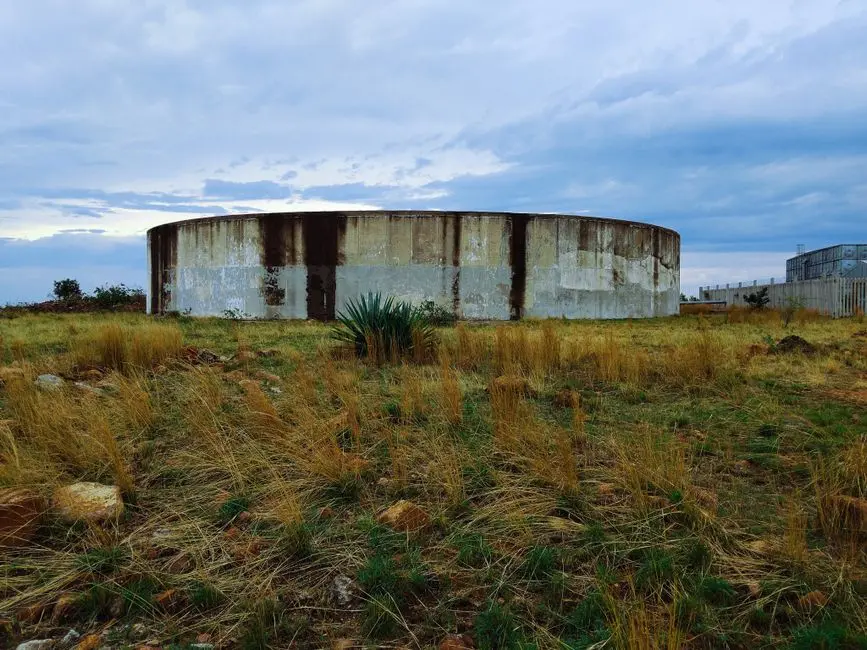
Gravity clarifiers rely on sedimentation, where heavier particles settle to a sludge bed at the bottom of the tank while clarified water overflows at the top (Ecologix Systems, 2025). Ecologix cites a mining facility that reached about 90% reduction of heavy sediment at lower cost using a clarifier, and the same logic applies directly to plastics-recycling wash streams that carry sand, calcium-carbonate filler, or glass-fibre dust — contaminants whose specific gravity is well above water. A lamella clarifier uses inclined plates to compress the equivalent settling area into a much smaller footprint; the lamella clarifier for polymer and grit polishing is rated for 20–40 m/h surface loading with up to 30% lower chemical consumption than conventional basins. Clarifiers do not remove free oil or low-specific-gravity polymer fines on their own, so any surface scum must be skimmed off or pre-treated with a DAF first. A clarifier serves as the right polishing or primary-grit tool, but it is not a stand-alone answer for a plastics/rubber influent that contains both oil and floating polymer.
DAF vs. Clarifier for Plastics and Rubber: Side-by-Side
The decision matrix below is tuned for a Karnes City plastics or rubber influent rather than the food-or-mining defaults in most vendor guides. Removal-efficiency numbers are drawn from the 2025 Ecologix Systems source-comparison and from manufacturer data on the DAF units cited. Hybrid systems address complex wastewater streams, combining DAF oil removal with clarifier sedimentation capabilities.
| Parameter | DAF system (primary) | Gravity / lamella clarifier (primary or polish) |
|---|---|---|
| Target contaminant | Free oil, FOG, latex, low-specific-gravity polymer fines | Heavy grit, mineral filler, glass-fibre dust, sand carryover |
| Oil/FOG removal | ~95% on a high-oil stream (Ecologix Systems, 2025) | ~70% on the same stream (Ecologix Systems, 2025) |
| TSS removal on a 2,000 ppm feed | 92–98% on the DAF Corp FC Maximizer family (dafcorp.com, 2025) | ~90% sediment reduction cited on a mining stream (Ecologix Systems, 2025) |
| Flow envelope | FC Maximizer skid 48–450 GPM; full family 10–11,000 GPM (dafcorp.com, 2025) | Lamella plate design, 20–40 m/h surface loading (HydropureWater catalog, 2025) |
| Hydraulic retention / footprint | Short retention, compact tank relative to a clarifier of equal flow | Lamella plates compress footprint; conventional clarifier needs larger floor area |
| Chemical demand | PAC + PAM dosing routine; sensitive to influent variability | Lower flocculant demand on grit-only streams; still requires coagulant for colloidal fines |
| CAPEX direction | Higher upfront for skidded unit, air-saturation system, controls | Generally lower upfront, especially for conventional concrete basins |
| OPEX direction | Air compressor, saturation pump, polymer, sludge handling | Lower energy, but sludge pumping and rake wear on conventional units |
| Sensitivity to influent variability | Tolerates oil and polymer spikes; performance drops if feed is dominated by heavy grit | Tolerates grit spikes; performance drops sharply if feed is dominated by oil or floated polymer |
| Best role in a plastics/rubber plant | Primary unit: strip oil, FOG, latex, and floated polymer | Polish: residual TSS, grit, and filler before POTW or reuse |
For most Karnes City plastics and rubber plants, the right 2026 answer is a hybrid: DAF as the primary treatment step, lamella clarifier as the polishing step, sized to the actual peak flow and the chosen discharge path.
Pretreatment and Compliance Path in Karnes County

Technology choice and discharge path are coupled: pick the path first, then size the train to hit it. The two realistic 2026 paths for a Karnes County plant are (1) discharge to a POTW under the local industrial pretreatment program, which typically tracks TSS, O&G, pH, and sometimes specific polymer parameters, or (2) on-site reuse or surface discharge under TCEQ-administered rules, where the binding constraints are reuse-side fouling (cooling-tower scaling, RO membrane fouling) rather than the POTW's daily limits. DAF effluent alone rarely meets a closed-loop reuse TSS target, so a lamella clarifier or MBR belongs in the train as the polishing step, not the primary one. A useful regional precedent for how fabricated-metals plants structure pretreatment documentation in 2026 is summarized in this piece on how fabricated-metals plants near London, OH meet 2026 pretreatment limits; the documentation pattern translates directly to a Karnes County submittal. For broader water-reuse context, the 2026 engineering guide on how to reduce water consumption in manufacturing provides relevant background. Two 2026 troubleshooting references that pair naturally with the hybrid train are the Dissolved Air Flotation Common Problems and Solutions (2026 Guide) and the Cavitation Air Flotation Common Problems and Solutions (2026 Guide).
Sizing, Pilot Testing, and What to Ask a Supplier in 2026
Treat every CAPEX quote as conditional on a jar test and an on-site pilot. DAF Corp states that a comprehensive wastewater study is often warranted before sizing (dafcorp.com, 2025), and the same logic applies to the lamella polish. Before any vendor talk, collect the inputs the supplier will demand: flow in GPM or m³/h, peak-to-average ratio, influent TSS, FOG, polymer/latex fraction, temperature, pH, and the target effluent quality for the chosen discharge path. Ask each vendor for bubble-size data in the 30–50 micron window (Clearwater Industries, 2025; plasticrecyclingmachine.net, 2025), air-to-solid ratio, polymer dosing envelope, and skimmer speed control — the COMPACT DAF's PLC-controlled dosing, skimmer speed, and sludge discharge is a useful benchmark feature (Clearwater Industries, 2025). Insist on documented removal efficiency on a polymer- or latex-rich feed similar to yours; a generic 90%+ claim on a dairy or food feed is not transferable. For chemical conditioning, the PLC-controlled coagulant and polymer dosing equipment should be specified as part of the same skid so that the jar-tested dose translates to the operating dose without manual drift. Finally, ask the supplier for a Karnes County or South Texas reference with a comparable influent; a vendor who has never started up a system on polymer-laden, hydrocarbon-spiked feed will underestimate the commissioning time.
Frequently Asked Questions
Is a DAF system or a gravity clarifier cheaper for a plastics or rubber plant in Karnes City?
Ecologix Systems notes that clarifiers generally have lower operational costs, but DAF systems may be more cost-effective for specific contaminants like oils (2025). For a plastics/rubber influent that contains both oil and grit, the comparison is not single-technology: the relevant capital question is the cost of the hybrid train (DAF primary + lamella polish) versus the risk of an under-sized single-technology system failing a POTW limit or a reuse TSS target. Request a line-item quote for the DAF unit, the lamella clarifier, the chemical dosing skid, and the installation labor separately, and ask each vendor to identify the line items they are estimating versus quoting firm.
How do I choose a DAF or clarifier supplier in Texas for a 2026 CAPEX project?
Shortlist suppliers who will provide both a jar test and an on-site pilot on your actual feed before issuing a firm quote, and who can document bubble-size data in the 30–50 micron window (Clearwater Industries, 2025; plasticrecyclingmachine.net, 2025). Ask for a South Texas or Gulf Coast startup reference on a polymer- or latex-laden stream; a vendor with only food or dairy references is a higher commissioning risk. Confirm the supplier's standard lead time for the specific model quoted, and whether the air-saturation system, skimmer, and PLC controls are part of the same skid or sourced separately, because split supply lines are the most common source of CAPEX overrun on hybrid trains.
What flow rate can a DAF system handle for a mid-sized plastics plant?
The DAF Corp product line spans 10 GPM pilot units up to an 11,000 GPM FC Maximizer, with skid-mounted FC Maximizers covering 48–450 GPM (dafcorp.com, 2025). On the HydropureWater catalog side, packaged DAF units are offered in