Why London, Ohio Fabricated Metals Shops Can't Discharge Straight to the Sewer
A fabricated metals job shop in or around London, Ohio cannot legally send mixed rinse water, pickling bath dumps, stamping lubricants, or plating rinses straight to a Madison County Sewer District manhole. The U.S. EPA categorical standards framework governs metal-finishing wastewaters, and most fabricated metals plants in Madison County are either directly covered by 40 CFR Part 433 (Metal Finishing) or generate waste streams that intersect those limits, including zinc, copper, nickel, and chrome. The Madison County Sewer District / City of London POTW runs a local Industrial Pretreatment Program that layers additional local discharge limits on top of the federal categorical standards, and the shop's compliance obligation runs to that local letter, not to a generic EPA number carried in a vendor brochure.
That second layer is the one engineers most often miss. A 2026 job shop must request the current local limits letter from the POTW and read it before any equipment is sized, because local limits can be tighter than the federal floor, and the POTW's sampling protocol (flow-proportional vs. grab) is what determines whether the shop passes a self-certification in any given month. The pollutant families that drive non-compliance are dissolved heavy metals, oils and grease, emulsified cutting fluids, pH excursions, and total suspended solids; any one of them on a single grab sample is enough to trigger a violation notice.
A 2026 pretreatment train is the only path between a working production floor and a clean discharge to the Madison County Sewer District.
The Pollutants a Fabricated Metals Pretreatment System Must Remove
Influent characterization determines the necessary pretreatment technology for specific waste streams. A fabricated metals plant near London, Ohio typically generates four overlapping waste streams: spent rinse water from plating and passivation, batch dumps from acid pickling baths, emulsified cutting fluids and stamping lubricants, and general shop floor wash-down containing metal fines. The regulated species in those streams, per ALAR's published target list for industrial metals wastewaters, are zinc, copper, nickel, and chrome. These are dissolved species at typical rinse-water pH and require chemical precipitation followed by physical separation.
Emulsified oils, soaps, and surfactants from cutting fluids and stamping lubricants require pH-driven breakage—acid first, to crack the emulsion—before any solid can be captured downstream. Skipping this step routes emulsified oil straight through a clarifier and into the POTW sampling point, where it shows up as FOG (fats, oils, and grease) and triggers a compliance violation.
Suspended solids, sludges, and metal-bearing fines are the third family, and they are often underestimated. They are coated in the same dissolved metals that triggered the categorical standard in the first place. Capturing them on a filter without first driving the dissolved fraction out of solution simply concentrates the compliance problem into a smaller waste stream.
Finally, pH excursions from acid pickling and passivation baths are the most common cause of POTW violations for job shops. Equalization provides insurance against a slug load and sits at the head of every defensible pretreatment train.
The pH-Driven Chemistry at the Heart of Metals Pretreatment
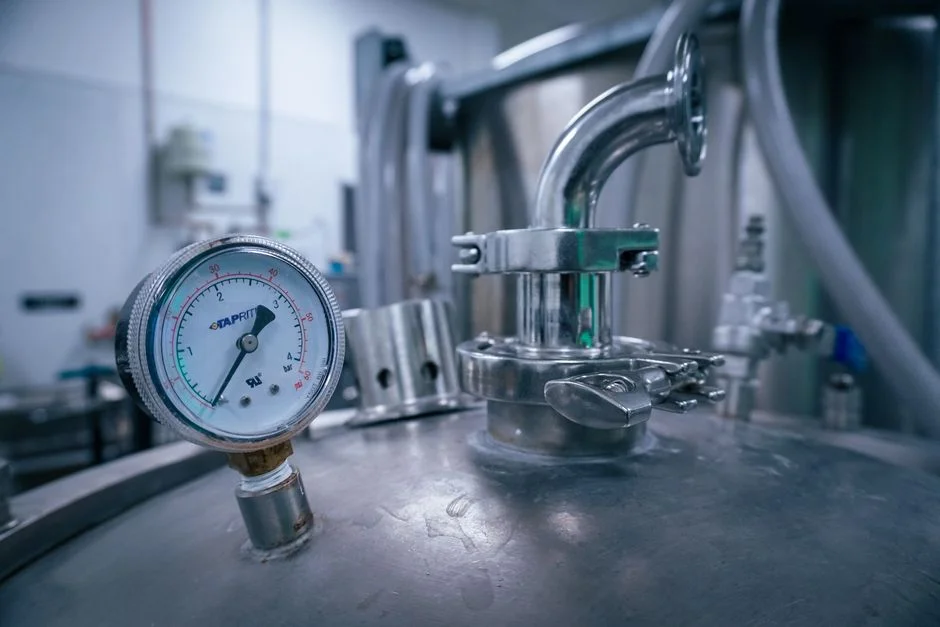
Most fabricated metals pretreatment is, at its core, a pH problem. The canonical sequence, as described by ALAR for industrial metal-bearing wastewaters, is acid first to lower pH and break emulsions, then caustic to raise pH and precipitate dissolved metals out of solution as insoluble metal hydroxides. Once the pH sits at the precipitation optimum for the target metal, the dissolved species becomes a solid, which can then be filtered.
This two-step logic explains why pH adjustment alone is sometimes sufficient for simple streams. ALAR's published guidance states that pH-adjusting wastewater through a neutralization system—without filtration—can meet city sewer discharge requirements where the influent is already low in dissolved metals and emulsified solids. For most job shops near London, Ohio, this condition does not hold, and the shop must add a mechanical separation step downstream of the chemistry.
Polymers and clay act as adjuncts to the pH swing. Coagulants neutralize the surface charge on the freshly precipitated hydroxide colloids, flocculants bridge them into settleable or filterable floc, and clay (in the Flex-O-Star chemical step) provides surface area and weighting. The result is a floc that can be floated in a DAF cell, settled in a clarifier, or captured on a 1-micron precoat filter.
The residual matters. Even after precipitation, the filtrate must be checked for residual dissolved metal, because metal hydroxide solubility is metal-specific and pH-specific. Zinc precipitates around pH 9, copper and nickel around pH 10 to 11, and chrome (trivalent) needs reduction plus an alkaline pH. A single setpoint does not solve a mixed-metal stream, and the engineer must verify residual against the POTW's local limits letter before signing off on a chemistry recipe. See the chemical sludge treatment and disposal guide for more on the solids side.
A Four-Stage Pretreatment Train for a 2026 Job Shop
The reference flow diagram below is the one-pager an engineer can hand to a plant manager, built from the unit operations a Madison County job shop can execute in the order the chemistry requires.
- Equalization / holding tank. Dampens pH and flow swings from batch dumps and rinse surges. A properly sized EQ basin prevents shock loads from blowing through the chemistry stage and protects downstream pumps and instruments from acidic excursions.
- Chemical pretreatment. Skid-mounted, PLC-controlled dosing of acid, caustic, coagulant, and flocculant. Functionally equivalent to the Flex-O-Star chemical step described by ALAR. A PLC-controlled acid/caustic and polymer dosing skid is the typical 2026 implementation for a London-area shop running batch or continuous flow.
- Solid–liquid separation. Choice of DAF for FOG and light floc, lamella clarifier for higher solids, or 1-micron precoat/plate-and-frame filter for the tightest residual. ALAR states that a 1-micron precoat is typically sufficient once chemistry is correct.
- Sludge dewatering. Plate-and-frame filter press or rotary vacuum drum to produce a dry cake for landfill disposal, with filtrate returned to the head of the plant.
A final effluent polishing step and pH verification sit immediately upstream of the POTW sampling point to catch a chemistry upset before it becomes a violation.
| Stage | Unit Operation | Function | Failure Mode If Skipped |
|---|---|---|---|
| 1 | Equalization basin | Dampen pH/flow swings | Slug load blows through chemistry |
| 2 | Chemical dosing skid | Acid → emulsion break; caustic → metal precipitation; polymer → floc growth | Dissolved metals pass to POTW |
| 3 | DAF / clarifier / precoat filter | Capture precipitated solids | High TSS, FOG, residual metals |
| 4 | Filter press or vacuum drum | Dewater cake for landfill | Excess sludge hauling cost |
| 5 | Effluent polish + pH verify | Final compliance check | Non-compliant discharge |
Choosing the Right Solids–Liquid Separation Step
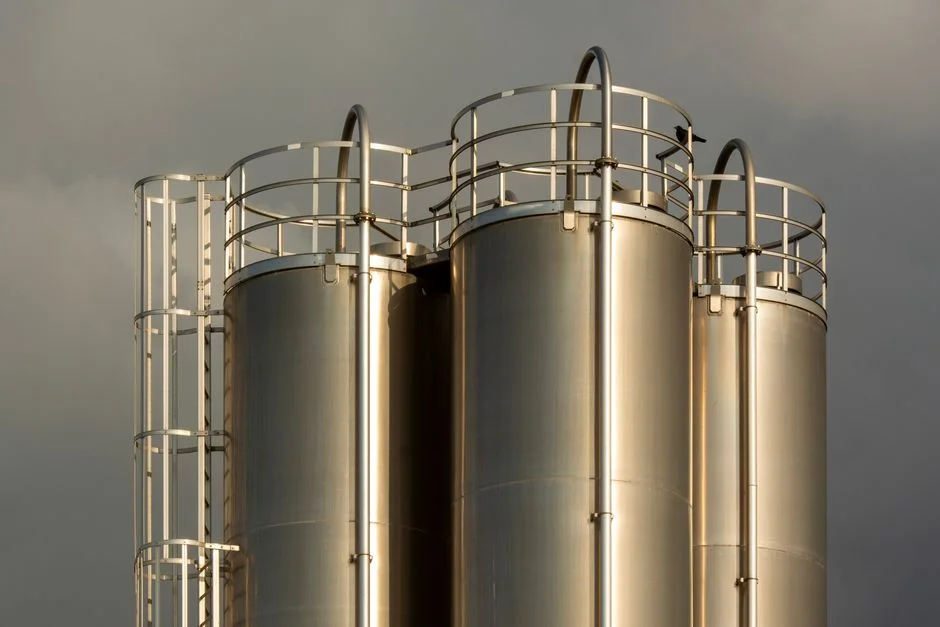
The DAF-versus-clarifier-versus-filter decision is the highest-impact equipment choice in the train, driven by the influent character rather than vendor preference. DAF excels when FOG, oils, and light floc dominate, which is the typical signature of stamping and washing wastewaters. The float layer is easier to skim than a settled sludge, and DAF handles flow surges from batch dumps more gracefully than a gravity clarifier. A DAF system for metals-finishing wastewater is the default 2026 choice for shops with significant cutting-fluid or stamping-lubricant load.
Lamella and plate clarifiers are gravity-driven and use less energy than DAF. They are suited to higher-solids streams where the metal-bearing sludge settles rather than floats. ALAR's Clar-O-Floc is positioned for this duty, and a lamella clarifier for fabricated metals wastewater pairs well with shops running heavy pickling and rinse loads with low FOG.
Plate-and-frame filter presses and 1-micron precoat filters (ALAR's Micro-Klean and Auto-Vac lines) deliver the lowest residual suspended solids and capture the precipitated metal hydroxides that DAF or clarifier may leave behind. A plate-and-frame filter press for metal hydroxide cake also produces a drier cake, which reduces landfill acceptance and hauling costs.
Many job shops combine DAF or clarifier as a primary stage with a filter press as polish, and the modular size ranges make staged builds economical. ALAR publishes 16 Auto-Vac filter sizes, 12 Flex-O-Star sizes, and Micro-Klean units from 2 to 20 ft³, allowing a shop to scale from a 75–100 gpm case to a smaller batch skid without redesigning the chemistry stage.
| Separator | Best Fit | Strength | Limit |
|---|---|---|---|
| DAF | FOG, light floc, batch surges | High FOG removal, small footprint | Higher energy than gravity |
| Lamella clarifier | Higher TSS, low FOG | Low energy, simple operation | Floor space, sludge scraping |
| 1-micron precoat / plate filter | Tightest residual, metal hydroxides | Lowest TSS in effluent | Media consumption, cake handling |
| Plate-and-frame press | Cake dewatering, polish | Driest cake, lowest hauling | Batch operation |
What the Engineer Must Pull From the POTW Before Sizing Anything
Replacing invented cost numbers with a real procurement checklist is the most defensible move a 2026 engineer can make on a fabricated metals CAPEX ask. The first item is the current local limits letter from the Madison County Sewer District / City of London POTW, including any categorical standards the POTW enforces beyond federal minimums. The local letter is the controlling document; vendor quotes that reference "EPA limits" without that letter are not credible.
The second item is the POTW's sampling protocol—flow-proportional versus grab, continuous monitoring versus periodic self-reporting, and whether the POTW applies 40 CFR Part 433 Metal Finishing categorical limits directly or substitutes local equivalents. The third item is the local slug-load and pH excursion thresholds, plus the allowed discharge pH window.
The fourth item is the POTW's waste-hauling rules for the metal-bearing dewatered cake. Landfill acceptance criteria—TCLP results, paint-filter test, moisture content—drive the dewatering target. A shop that buys a filter press capable of 60% dry solids when the local landfill only requires the paint-filter test has overspent. The fifth item is the local sewer rate structure, including any surcharges for high-strength discharges, which can swing OPEX materially.
Use these inputs together with documented modular size ranges to size a skid rather than designing from scratch. ALAR's published modular sizes—16 Auto-Vac sizes, 12 Flex-O-Star sizes, and Micro-Klean from 2 to 20 ft³—provide the scaling reference, and a vendor quote anchored to a real local limits letter is far more defensible in a CAPEX review than a generic price-per-gallon estimate. The stainless steel skid pricing factors guide details the drivers of these costs.
Frequently Asked Questions
What categorical standard applies to a fabricated metals plant near London, Ohio?
Most fabricated metals shops in Madison County are covered by 40 CFR Part 433 (Metal Finishing) because their waste streams contain zinc, copper, nickel, or chrome. The local Industrial Pretreatment Program enforced by the Madison County Sewer District may apply additional local limits on top of the federal floor, so the engineer must request the current local limits letter rather than rely on a generic EPA number.
How much does a fabricated metals pretreatment system cost in 2026?
There is no fixed 2026 price for a complete fabricated metals pretreatment skid. Cost is driven by flow rate, target effluent quality, local POTW limits, and the level of automation; a defensible budget requires a vendor quote anchored to the local limits letter and a confirmed flow rate. Buyers should request itemized quotes that separate the chemical dosing skid, the separator, and the dewatering stage.
Frequently Asked Questions
What federal categorical standards apply to a fabricated metals plant discharging to a London, Ohio POTW in 2026?
Fabricated metals facilities are primarily regulated under 40 CFR Part 433, the Metal Finishing Point Source Category. These standards establish stringent mass-based or concentration-based limits for pollutants including total chromium, copper, nickel, zinc, cyanide, and total toxic organics (TTO).
Because London, Ohio, operates under local sewer use ordinances that must be at least as stringent as federal guidelines, facilities must comply with the specific local limits set by the Madison County Sewer District. By 2026, many plants are facing tightened local limits for heavy metals, often requiring effluent concentrations below 1.0 mg/L for individual regulated metals depending on the specific industrial user permit.
Is a DAF system enough on its own to meet metals pretreatment limits, or do I also need a filter press?
A Dissolved Air Flotation (DAF) system is effective for removing oil, grease, and suspended solids, but it is rarely sufficient on its own to meet 2026 metals pretreatment limits. While DAF can help achieve initial phase separation, heavy metals usually require chemical precipitation to convert dissolved ions into solid hydroxide or sulfide sludges.
A filter press is essential for dewatering the resulting chemical sludge generated during precipitation. Without a filter press, your facility will be left with a high-volume liquid sludge waste stream that is prohibitively expensive to dispose of and fails to meet regulatory requirements for solid waste handling and effluent clarity.
How much does a fabricated metals pretreatment skid cost in 2026, and what drives the price?
In 2026, a comprehensive pretreatment skid for a mid-sized fabricated metals shop typically ranges from $150,000 to $450,000, depending on flow capacity and the complexity of the treatment train. Systems designed for higher flow rates (50+ gallons per minute) or those requiring complex automated chemical dosing and multi-stage filtration sit at the higher end of this spectrum.
Price is primarily driven by the degree of automation, the materials of construction (such as 316 stainless steel versus high-density polyethylene), and the specific instrumentation required for real-time compliance reporting. Integration of remote monitoring and automated data logging for EPA reporting also adds to the initial capital expenditure.
What information do I need from the Madison County Sewer District before I can size a pretreatment system?
Before sizing a system, you must obtain a copy of your industrial user discharge permit, which outlines your specific mass-based or concentration-based limits. You also need to confirm the district’s flow rate limitations, peak hourly discharge volumes, and any specific requirements for discharge monitoring points (DMP).
Additionally, you should request the local sewer district’s current analytical requirements for sampling frequency and any specific prohibited discharge standards—such as temperature, color, or specific chemical prohibitions—that may require auxiliary equipment like cooling towers or specialized monitoring probes to be integrated into your pretreatment skid.
Can pH neutralization alone — without a filter press — meet sewer discharge limits for a small job shop?
No, pH neutralization alone is insufficient for a fabricated metals job shop. While adjusting pH to the 6.0–9.0 range is a required step for compliance, it does not remove the dissolved heavy metals that remain in the water after neutralization.
To meet discharge limits, you must perform chemical precipitation to drop metals out of the solution, which creates a solid precipitate. Without a filter press to separate these solids from the water, the suspended metal particles will remain in your discharge, resulting in a violation of total suspended solids (TSS) and total metals limits. A filter press is the industry standard for removing these solids to achieve a compliant, clear effluent.