What Actually Drives Stainless Steel Process Skid Cost
Stainless steel process skid cost is driven mainly by alloy grade, wetted surface area, and welding or certification scope rather than frame steel alone. Upgrading tanks and piping from coated carbon steel to 304 or 316 stainless typically adds 30%–50% to skid price, while specifying 316L only on chloride, acid, or CIP wetted parts keeps CAPEX in check without sacrificing service life (Weilan, 2025). The mistake most buyers make is treating "stainless" as a single line item and then accepting whatever alloy the OEM defaults to.
Frame steel versus wetted surface is the first split to draw on a quote. Dry structural members — base frames, equipment skids, instrument brackets, cable trays — rarely need corrosion-resistant alloy; coated carbon steel performs for 10–15 years in mild indoor service (Weilan, 2025). Wetted parts are a different conversation: tanks, headers, pump casings, valve bodies, and membrane housings carry the process fluid and dictate the alloy decision. Buyers who ask for "a stainless skid" without splitting those two scopes routinely over-spec the dry frame and under-spec the wetted parts, ending up with the worst of both budgets.
The alloy hierarchy moves in measurable corrosion-resistance steps. 304 handles general-purpose water and low-chloride service; 316 adds 2–3% molybdenum for better chloride and acid resistance; 316L drops carbon to 0.03% max for welded sanitary service and improved resistance to intergranular corrosion; duplex 2205 roughly doubles yield strength and pushes chloride resistance further; super-austenitic grades (254 SMO, AL-6XN) target seawater, hot chloride, and strong acid service where 316L falls short. For typical water and wastewater skids, the decision almost always lives between 304 and 316L, and Action Stainless guidance confirms 304 for supports and frames in mild service, 316 for higher chloride or chemical exposure (actionstainless.com).
Older HydropureWater guidance treated a corrosive-service upgrade as a 10–20% compliance adder on the full package, but that figure assumed only a small portion of the skid was upgraded; when 304/316 replaces coated carbon steel on tanks and piping, the adder is closer to 30%–50% (Weilan, 2025). A useful rule of thumb: the larger the wetted surface you upgrade, the higher the percentage adder you should expect.
Alloy Grade, Wetted Surface, and Welding Scope
Wetted surface means every component in continuous contact with the process fluid: tanks, piping, headers, pump casings, valve bodies, instrument manifolds, and membrane housings. Everything else — frames, brackets, panels, control enclosures — is non-wetted. HydropureWater 2026 guidance is to specify 316L only where chloride, acid, or CIP chemistry justifies it, and keep coated carbon steel on dry frames and non-wetted supports. That single line on a P&ID can move the landed price by 20–30% on a typical 5 m³/h skid.
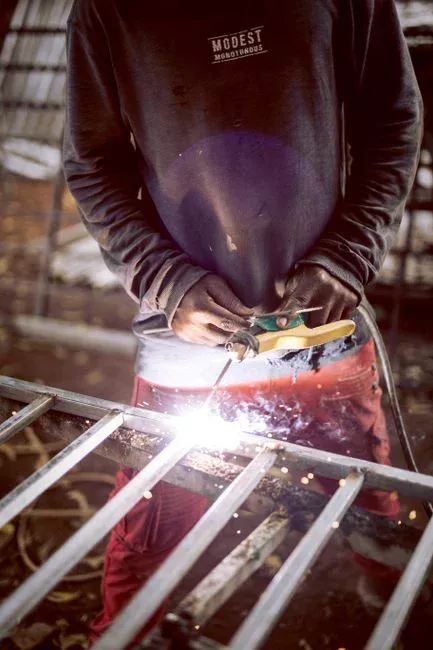
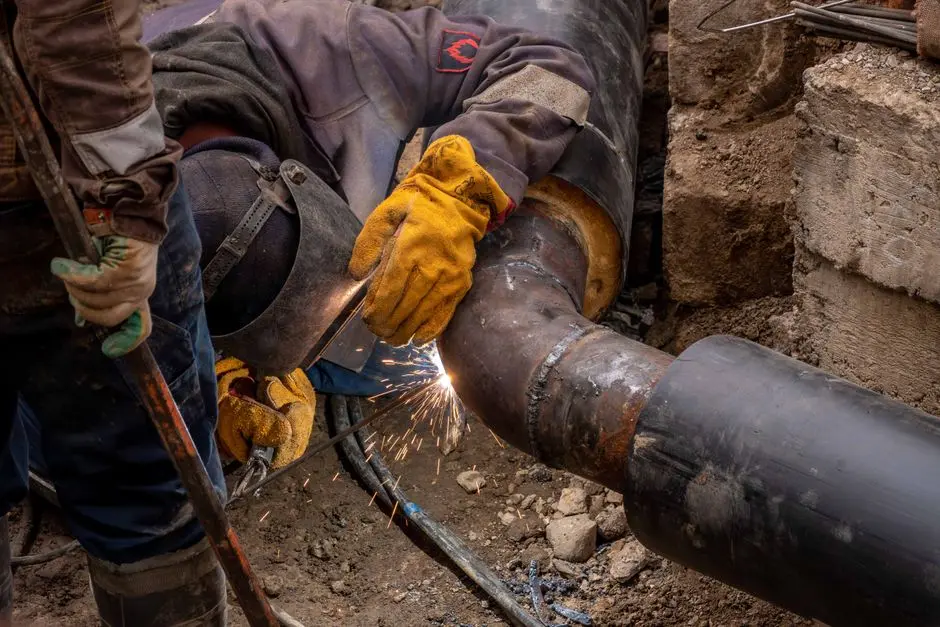
Welding scope is the second silent cost driver. Commodity plate is supplied as-rolled; the fabricator cuts, welds, then pickles and passivates to restore the chromium oxide layer. ASME B31.3 process piping welds require documented procedure qualification and welder continuity; orbital welding on sanitary tube adds 8–15% to piping cost but delivers the smooth, crevice-free internal bore that sanitary service demands. Radiographic (RT) and dye-penetrant (PT) testing on pressure-bearing welds are priced per joint, typically $80–$300 per weld depending on diameter and code. Buyers who do not name the NDT scope on the RFQ get whatever default the shop runs, then face change orders later.
Surface finish is a third line item that quietly doubles the price of "stainless" plate between commodity and sanitary. 2B is the standard cold-rolled finish, adequate for most industrial frames and tanks. 2D is a matte finish for heavy plate. Electropolished removes surface iron and improves cleanability for hygienic and pharmaceutical service. 32 Ra sanitary finish (or better) is the spec for food, beverage, and biotech skids, and is where tubing cost jumps from commodity to sanitary-grade. Pressure rating layers on top: higher pressure ratings require thicker walls, heavier flanges, and more rigorous NDT, all of which compound on a per-kilogram basis.
| Spec dimension | Entry / commodity | Mid-range | Sanitary / high-spec | Typical price step |
|---|---|---|---|---|
| Alloy on wetted parts | 304 | 316 | 316L | +10–25% per grade step |
| Surface finish | 2B / 2D | Pickled & passivated | Electropolished / 32 Ra | +8–20% per step |
| Welding standard | Shop standard | ASME B31.3 documented | ASME B31.3 + orbital + 100% RT/PT | +12–30% |
| Pressure rating | PN10 / 150# | PN16 / 300# | PN40 / 600# + full NDT | +15–35% |
Worked Example: Same 5 m³/h Skid in Three Material Specs
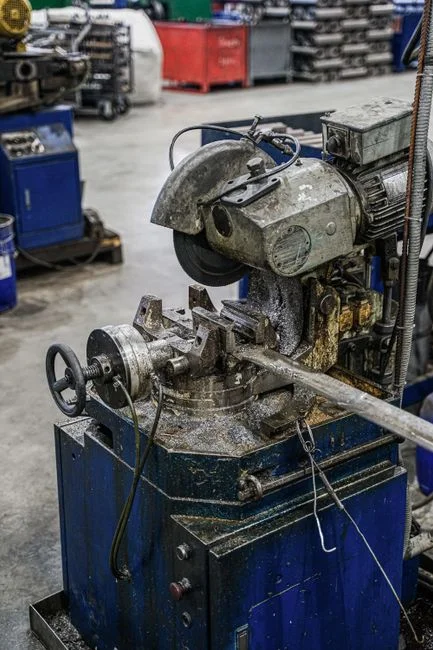
To make the alloy decision defensible in a budget meeting, the same skid has to be priced in three material configurations. The reference unit is a 5 m³/h packaged wastewater treatment skid with A/O biological treatment, MBR polishing, PLC with HMI, and 316L membrane housings — broadly representative of a small industrial or decentralized municipal duty. Pricing below is derived from manufacturer 2025–2026 FOB guidance and benchmarks a 10 m³/h integrated A/O + MBR + disinfection package at $50,000–$80,000 (HydropureWater 2026). The figures for the 5 m³/h variants are scaled to that band.
Spec A — Coated carbon steel baseline. Tanks, piping, and frames in coated carbon steel; 316L retained only on membrane housings and CIP lines where the chemistry demands it. Landed equipment price lands near the bottom of the range, around $42,000–$55,000 FOB. This is the cost-leader spec and is appropriate for non-corrosive influent with no chlorides above ~50 ppm and no hot acid or oxidizer cycling.
Spec B — Full 304 on wetted parts. Tanks and process piping upgraded to 304 stainless; 316L retained on membrane housings and CIP lines. Per Weilan 2025, the 304/316 step adds 30%–50% versus coated carbon steel on tanks and piping; for a skid that already carries some 316L content, the net adder on the full package typically lands around 20–30%. Landed price roughly $52,000–$68,000. Best fit for municipal or light-industrial influent with mild chloride exposure.
Spec C — Full 316L on all wetted parts with sanitary finish. 316L on every wetted component, sanitary tube, orbital welds, and 32 Ra finish on process piping. Once 316L covers the full wetted surface, the adder stretches to 60–80% over the coated carbon baseline (Weilan, 2025; HydropureWater 2026). Landed price roughly $68,000–$95,000. This is the right spec for pharmaceutical, food and beverage, or high-chloride industrial duty, but it is over-spec for the typical packaged wastewater duty it often gets applied to.
| Spec | Material on tanks & piping | Wetted alloy on membrane / CIP | Surface / welding | Landed price (FOB, 5 m³/h) | Premium over Spec A |
|---|---|---|---|---|---|
| A — Baseline | Coated carbon steel | 316L | Standard | $42,000–$55,000 | — |
| B — 304 upgrade | 304 stainless | 316L | Pickled & passivated | $52,000–$68,000 | +20–30% |
| C — Full 316L sanitary | 316L stainless | 316L | 32 Ra + orbital welds | $68,000–$95,000 | +60–80% |
An integrated MBR skid in any of the three specs above can be scoped against this same 5 m³/h reference; the table is the fastest way to defend the material line of a quote to a finance reviewer who only sees the bundled number.
Flow Rate, Automation, and Compliance Adders
Material is one of three or four stacked percentage adders on a skid quote. Flow capacity scales price directly: pumps, membranes, and tanks for a 10 m³/h system cost far more than those for a 500 L/h unit, and doubling flow rarely doubles price — it usually multiplies by 2.2–2.5 because header sizes, blower capacity, and control panel I/O all step up at once (HydropureWater 2026). On a $50,000 5 m³/h skid, the same unit at 20 m³/h typically lands $130,000–$180,000.
Automation is the second stack. A basic relay-controlled panel is often included in the base price; a full PLC with HMI touchscreen, data logging, and IoT monitoring typically adds 15–25% to base equipment cost (HydropureWater 2026). Remote SCADA raises capital further but pays back through reduced operator labor — typical mid-sized industrial skids run 2–4 hours of operator attention per shift with full SCADA versus 6–8 hours with local control only. An automatic chemical dosing skid is one of the most visible automation-driven adders, especially when leak detection and secondary containment are included.
Compliance is the third stack. Strict U.S. or EU compliance — including 316L upgrades for corrosive service and ATEX-rated parts for explosive atmospheres — often lifts material and safety scope 10–20% (HydropureWater 2026). ATEX-rated motors, panels, and instrumentation alone can add 8–15% on European-bound skids. MBR configurations also carry a 15–20% equipment premium over conventional clarifiers because of membrane cost and replacement cycle, but they shrink footprint and improve effluent enough to justify that premium on space-constrained sites (HydropureWater 2026).
| Adder | Typical range | Main cost drivers |
|---|---|---|
| Flow scaling (5 → 20 m³/h) | +160–220% | Pumps, blowers, header sizes, panel I/O |
| PLC + HMI + IoT automation | +15–25% | Controller, HMI, instrumentation, networking |
| SCADA / remote monitoring | +5–10% | Software, telemetry, cybersecurity |
| U.S./EU compliance (incl. ATEX) | +10–20% | 316L upgrades, ATEX motors/panels, certifications |
| MBR vs conventional clarifier | +15–20% | Membranes, housings, replacement cycle |
Hidden Costs That Change a Stainless Skid Quote
OEM quotes routinely omit line items that turn a "low" equipment number into a 25–35% budget overrun once the skid lands on site. International shipping is the first: skids ship as 20 ft or 40 ft containers, typically $2,000–$10,000 per container depending on route, weight, and port fees (Weilan, 2025). Customs and import duties add another 5–15% of equipment cost. For a $60,000 skid crossing the Pacific, the logistics line alone is often $7,000–$15,000.
On-site commissioning is the second hidden block. Technicians typically charge $300–$500 per day plus travel, accommodation, and per diem (Weilan, 2025). For mid-complexity skids, installation and commissioning often add 10–15% of equipment cost when civil and power upgrades stay modest (HydropureWater 2026); that figure rises quickly when a new foundation, high-voltage feeders, or process tie-ins are needed.
Scope omissions are the third block and the easiest to prevent. Confirm each proposal includes skid mounting, pre-wiring, the main control panel, and full factory acceptance testing (FAT). Omissions here can add 10–20% later. Ask for shipping, import duties, and on-site commissioning as separate lines; for international OEM orders, those items often exceed 15% of equipment cost (HydropureWater 2026). A starter spare kit (O-rings, gaskets, diaphragms, one membrane module) is also worth requesting as a priced line so downtime risk is captured before award, not after the skid is running.
Lifecycle Cost and TCO Check
Purchase price is often only 60–70% of the total financial commitment on a modular skid; a full lifecycle view is required before CAPEX approval (HydropureWater 2026). On the OPEX side, annual maintenance for a mid-sized skid averages $3,000–$7,000, covering membrane replacement, chemical calibration, and sensor checks. Energy is the dominant OPEX line for biological and membrane systems: MBR skids commonly use 1.2–1.8 kWh/m³, brackish RO skids use 2.5–4.0 kWh/m³, and on a 5 m³/h MBR running 16 hours a day that translates to roughly $4,000–$7,000 per year at industrial tariffs.
With proper maintenance, a well-maintained skid typically runs 10–15 years (HydropureWater 2026). A well-justified stainless upgrade often recovers 30–50% of the material premium through avoided corrosion-related downtime over that service life, which is the cleanest way to defend a 316L line in front of a finance reviewer. Sites currently trucking wastewater off-site or buying potable water for non-potable use frequently recover capital in 3–5 years once haul and purchase fees are eliminated (HydropureWater 2026); the stainless upgrade belongs inside that same payback logic, not on top of it. The wider TCO framing also benefits from the per-MGD cost benchmarks for water treatment infrastructure and the 20-year lifecycle cost estimation for UPW systems when the skid is part of a larger plant.
Quote Comparison Checklist for 2026
Before signing a PO, run each OEM proposal through the same gate so quotes are comparable on a line-by-line basis:
- Confirm alloy grade per surface — frame, tank, piping, membrane housing — not just "stainless construction."
- List pickling/passivation, weld procedure specification, and NDT scope as separate lines.
- Ask for FAT, skid wiring, commissioning travel, and a starter spare kit as separate lines.
- Verify which certifications (CE, ISO, NSF, ATEX) are standard versus paid options.
- Request shipping, import duties, and on-site commissioning as separate lines — together they often exceed 15% of equipment cost (HydropureWater 2026).
A single page with these five blocks, populated side by side from two or three OEMs, is the fastest way to neutralize a low equipment number that hides the real landed cost. The same side-by-side comparison framework for industrial wastewater solutions applies whether the underlying equipment uses commodity RO and UF membrane elements or full 316L sanitary construction.
Frequently Asked Questions
How much does stainless steel add to a process skid price?
Upgrading tanks and piping from coated carbon steel to 304 or 316 typically adds 30%–50% to skid price (Weilan, 2025). When 316L covers all wetted parts with sanitary finishing, the adder stretches to 60–80%.
Is 316L always required, or can 304 work?
316L is justified only where chloride, acid, or CIP chemistry exposes wetted parts; 304 is adequate for supports, frames, and low-corrosivity influent below ~50 ppm chloride (HydropureWater 2026).
What is the typical adder for PLC and SCADA automation on a skid?
A full PLC with HMI and IoT monitoring adds 15–25% to base equipment cost; remote SCADA adds another 5–10% on top (HydropureWater 2026).
How much do logistics and commissioning add to a stainless skid quote?
International shipping runs $2,000–$10,000 per container, duties 5–15%, on-site commissioning $300–$500/day plus travel; together they often exceed 15% of equipment cost (Weilan, 2025; HydropureWater 2026).
What is a defensible TCO for a 5 m³/h stainless MBR skid?
Equipment $50,000–$80,000, installation/commissioning 10–15% on top, annual maintenance $3,000–$7,000, energy 1.2–1.8 kWh/m³, and a 10–15 year service life; the stainless premium often recovers 30–50% through avoided downtime (HydropureWater 2026). For a packaged integrated water purification skid at similar scale, the same TCO logic applies with the RO energy figure instead.