The Dublin Water Paradox: Why 2026 Reuse Is No Longer Optional
Dublin looks water-rich from the outside, but the operational picture in 2026 is supply-stressed. Uisce Éireann argue that current supply shortfalls already put 1.7 million Greater Dublin Area residents at risk, and over 1,000 GDA households still lack piped running water (EASST 2026). Intel's Leixlip facility, operating since 1989, has become Ireland's largest single industrial water user; in 2022, its monthly water usage was equivalent to the monthly usage of over 96,000 households (EASST 2026). That single industrial footprint is the baseline a new fab or hyperscale hall must engineer against, not an exception.
On a national basis, the proportion of supply consumed by data centres looks small. Uisce Éireann supplies approximately 608,000 megalitres annually, of which about 0.13% (around 810 megalitres) is consumed across all known data centres (Veolia Water Technologies, citing Government of Ireland 2022 Statement on Data Centres). The misleading part of that ratio is locality: a co-located fab and a 22.5 MW data hall pull from the same Greater Dublin Area catchment that Uisce Éireann has already flagged as short, and a single hyperscale build can move the needle locally. Data centres are projected to account for nearly a third (32%) of Ireland's total electricity consumption by 2026, up from 21% in 2023 (Veolia Water Technologies, citing Carbon Brief 2025), so energy intensity and water intensity rise together on hyperscale sites.
Sixteen of the world's top twenty technology firms' European HQs or data infrastructure are already in Ireland (Veolia Water Technologies, citing IDA Ireland), which means any 2026 Dublin design must clear a regulator and a community that have already seen one large industrial user reshape the catchment. Reuse is therefore the design baseline, not an upgrade option. The engineering case for a 50–70% cooling-tower reuse target is downstream of a permit case that is itself downstream of a hydrology case — and the hydrology case is no longer comfortable.
The Irish Permit Stack a 2026 Dublin Site Must Clear
The 2026 Dublin permit stack runs through three EU instruments before it touches Irish law, and an engineer who does not map that order will under-budget the critical path. The Industrial Emissions Directive (IED) 2.0 recast BAT-AELs apply where the activity falls within Annex I, including surface treatment of metals and plastics using electrochemical or chemical processes; the BAT conclusions bind numeric limits on fluoride, total nitrogen, and heavy metals regardless of whether the final discharge is to sewer or to a surface-water body (HydropureWater 2026, transposed to the EU frame). The Urban Waste Water Treatment Directive 91/271/EEC, with the 2024 amendment, governs indirect-discharge pretreatment thresholds for any new 2026 submission routed to a municipal collection system (HydropureWater 2026, transposed to the EU frame). The Energy Efficiency Directive 2023/1791 requires annual waste-heat and water cost-benefit reporting for data centres above 1 MW from October 2025, and a PUE ≤1.2 target is live in 2026, which moves reuse from optional to baseline (HydropureWater 2026, transposed to the EU frame).
On the Irish transposition layer, the operative instruments stack: an Integrated Pollution Control (IPC) licence under the Environmental Protection Agency Act 1992 as amended for the fab envelope, a Wastewater Discharge Licence (WDL) under the Water Services Act 2007, and a connection agreement with Uisce Éireann for any municipal-sewer discharge. These stack on top of any planning permission under Dublin City Council or the relevant county council. The permit matrix below is the one to brief a board against.
| Instrument | Scope | Numeric hook | Trigger in Dublin |
|---|---|---|---|
| IED 2.0 BAT-AEL (surface treatment) | Fab co-locate, any discharge path | F, total N, heavy metals bind | Any fab using etch/CMP |
| UWWTD 91/271/EEC + 2024 amend. | Pretreatment thresholds to municipal sewer | Indirect-discharge ELVs | Any discharge to Uisce Éireann sewer |
| EED 2023/1791 | Data centres > 1 MW | Reporting from Oct 2025; PUE ≤1.2 | Any hyperscale or co-locate hall |
| IPC licence (EPA Act 1992 as amended) | Fab envelope | Site-specific ELVs and monitoring | Scheduled activity under EPA Act |
| WDL (Water Services Act 2007) | Discharge to Uisce Éireann sewer | Sewer-specific ELVs and trade-effluent rules | Any non-domestic discharge to municipal sewer |
| Uisce Éireann connection agreement | Physical tie-in and tariff | Capacity band and metering | Any new connection or load increase |
The permit lead time is the variable most buyers under-weight. A typical 2026 lead time runs 6–12 months depending on the Uisce Éireann connection route and the EPA licence review window, and the buyer should request a written critical-path schedule from a permitting consultant before locking Stage 1 equipment delivery dates (HydropureWater field data, 2026, transposed to the Irish administrative frame). Engineers working through a similar pretreatment and ion-exchange sequencing question can cross-check the 2026 ion exchange troubleshooting guide for the unit-operation pitfalls that surface during commissioning, not at handover.
Three-Stream Separation: The Engineering Prerequisite for Dublin Sites
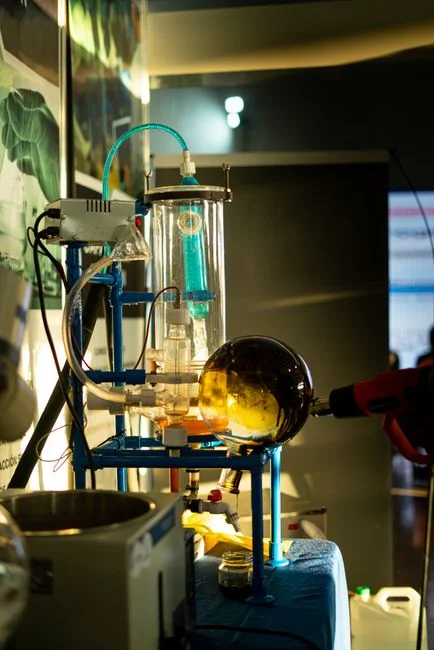
Stream separation is the engineering prerequisite; without it, neither the permit stack nor the reuse train can be made to hold. A Dublin fab and a co-located data hall must engineer three hydraulically independent wastewater streams before any combined unit operation is sized. The parameter matrix below is what a 2026 Stage 1 design brief has to clear.
| Stream | Typical load (2026 envelope) | Dominant chemistry | Stage 1 unit operation |
|---|---|---|---|
| 1 — Cooling-tower blowdown (CTBD) | 1,200–6,000 mg/L TDS, 10–50 mg/L TSS | Ca/silica hardness, ClO₂ and isothiazolinone biocides, phosphonate scale inhibitors, trace Fe/Cu | DAF or multimedia filter + UF; biocide quench |
| 2 — Fab UPW reject and condensate | F >50 mg/L, NH₃-N 50–500 mg/L, TSS 20–200 mg/L, Cu/Ni/Co 0.1–10 mg/L | HF/SC1/SC2 etches, CMP slurry, dissolved silica | CaCl₂/Ca(OH)₂ precipitation + lamella clarifier + UF |
| 3 — Sanitary / facility | Domestic-strength BOD/COD/ammonia | No cooling or etch chemistry | Packaged MBR, independent of cooling loop |
Stream 1 (cooling-tower blowdown) is dominated by calcium hardness and silica with residual ClO₂ and isothiazolinone biocides, phosphonate scale inhibitors, and trace Fe/Cu from corrosion, and is conditioned with DAF or multimedia filter followed by UF plus biocide quench (HydropureWater 2026). Stream 2 (fab UPW reject and condensate) carries fluoride often >50 mg/L as F from HF/SC1/SC2 etches, ammonia at 50–500 mg/L as N, dissolved silica, and CMP slurry carryover at low pH with 20–200 mg/L TSS and Cu/Ni/Co at 0.1–10 mg/L each; CaCl₂/Ca(OH)₂ precipitation plus a high-efficiency lamella clarifier plus 0.03 µm PVDF UF is the operative Stage 1 train (HydropureWater 2026). Stream 3 (sanitary/facility) is conventional domestic-strength and is the only stream routed through a packaged MBR held independent of the cooling chemistry — and it is the only stream that collapses when the site is data-hall only (HydropureWater 2026).
Blending untreated blowdown into fab reject loads the RO with biofouling precursors and destabilises fluoride rejection, because biofouling compresses the membrane's effective divalent-rejection surface area (HydropureWater 2026). Co-located Dublin sites where a fab and a 5–50 MW data hall share a single Uisce Éireann connection cannot drop any of the three streams without breaching IPC, WDL, or both — keep them segregated upstream of any combined unit operation. The full Stage 1 envelope for the fab reject side is held by a 0.03 µm PVDF ultrafiltration skid polishing clarifier overflow to TSS <10 mg/L and turbidity <1 NTU at the RO feed.
The 2026 Reuse Train: From Precipitation to Cooling-Tower Makeup
Stage 1 conditions each stream separately upstream of any combined unit operation. On the fab reject side, pH adjustment with CaCl₂ or Ca(OH)₂ precipitates fluoride to <15 mg/L and drops total metals to <1 mg/L, with a high-efficiency lamella clarifier handling the high-solids CMP slurry load and a 0.03 µm PVDF ultrafiltration skid polishing the clarifier overflow to TSS <10 mg/L and turbidity <1 NTU at the RO feed (HydropureWater field data, 2026). On the CTBD side, a DAF unit or side-stream multimedia filter strips TSS and oil carryover, downstream UF polishes to TSS <5 mg/L and oil <2 mg/L, and biocide residual is quenched ahead of RO to protect thin-film composite membranes (HydropureWater field data, 2026).
Stage 2 is a brackish-water industrial RO membrane system with up to 95% recovery on the combined feed. The operating setpoint sits at 70–85% depending on feed TDS, with the lower-TDS blowdown fraction used to lift overall recovery by diluting the fab reject's fluoride and silica load. Permeate TDS is held <50 mg/L, suitable for cooling-tower makeup at 50–70% reuse, transposed to the Irish context where the EED 2023/1791 PUE ≤1.2 envelope makes reuse the compliance baseline rather than a sustainability add-on. An optional MBR polish upstream drops TOC and ammonia where biological loads persist, ahead of the thin-film composite membranes; a PLC-controlled chemical dosing skid holds reagent stoichiometry tight on both streams and prevents overdosing from inflating both OPEX and downstream fouling (HydropureWater field data, 2026).
The full Stage 1 + Stage 2 train has been demonstrated on comparable high-purity reuse feeds at 99.8% contaminant removal, with fluoride <5 mg/L, total metals <0.5 mg/L, and concentrate TDS <1,500 mg/L at the discharge point, comfortably inside both an FCSM-equivalent sewer envelope and IED 2.0 BAT-AEL binding numeric limits (HydropureWater field data, 2026, transposed to Irish context). Engineers cross-checking the RO operating envelope and concentrate handling can use the hydropurewater industrial RO membrane system reference and the high-efficiency lamella clarifier specification to anchor their datasheet review. The PUE ≤1.2 envelope from EED 2023/1791 effectively mandates that the 50–70% cooling-tower reuse setpoint is reached, not approached.
Choosing the 2026 Posture: A, B, or C for a Dublin Site
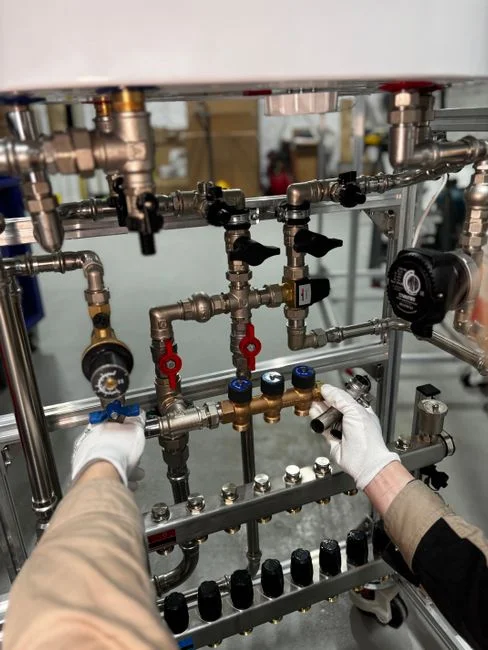
The three-way decision matrix below is what to brief a procurement committee against; pick the posture before you pick the equipment.
| Posture | Process train | Best fit in Dublin | Water-stress exposure |
|---|---|---|---|
| A — Direct sewer under WDL | Conditioning only, sewer discharge | Edge halls < 5 MW IT, short payback pressure | High — permit tightens in GDA summer low-flow |
| B — High-recovery RO + concentrate disposal | Full Stage 1 + RO; brine to sewer or solid waste | Most Dublin co-located sites | Moderate — controlled by 99.8% envelope |
| C — Hybrid ZLD | RO + evaporator or crystalliser | Water-emergency zones, net-zero binding sites | Lowest — only if EED heat credit applies |
Posture A is direct sewer discharge under a WDL and Uisce Éireann connection agreement: lowest CAPEX, highest water-stress exposure because the permit can tighten during a Greater Dublin Area summer low-flow event; it fits edge data halls under approximately 5 MW IT with short payback pressure (HydropureWater field data, 2026, transposed to Irish context). Posture B is high-recovery RO plus concentrate disposal to sewer or solid waste: the 2026 default for most Dublin co-located sites, demonstrated at 99.8% removal with 50–70% cooling reuse (HydropureWater field data, 2026, transposed to Irish context). Posture C is hybrid ZLD with RO plus thermal evaporator or crystalliser, only worth the CAPEX premium if the site sits in a declared water-emergency zone or a corporate net-zero water target is binding (HydropureWater field data, 2026, transposed to Irish context).
Three decision inputs a Dublin buyer must obtain explicitly: the Uisce Éireann sewer tariff band on the connection agreement, the evaporator steam tariff if ZLD is chosen, and the value of the EED 2023/1791 waste-heat credit where the concentrate evaporator is heat-integrated with a district-heating export loop (HydropureWater 2026, transposed to Irish context). For a Dublin 22.5 MW air-cooled adiabatic or chilled-water hall, the WUE design band sits at 1.8–2.5 L/kWh, giving 400,000–500,000 L/day — the train should be engineered to that band before any equipment is locked (HydropureWater field data, 2026, transposed to Irish context). A PLC-controlled chemical dosing skid is the reagent-stoichiometry safeguard that keeps both Posture A and Posture B inside the WDL envelope under variable fab load.
2026 CAPEX, OPEX, and Payback for a Dublin Build
Indicative 2026 CAPEX for a Dublin build sits at EUR 0.8M–1.5M for a small or edge data hall (below 5 MW IT) and EUR 1.5M–3.5M for a hyperscale cluster above 20 MW IT, with the scaling drivers being permeate quality, reuse rate, and concentrate handling (HydropureWater field data, 2026, transposed to Irish context). OPEX splits roughly 45% energy (pumps, RO high-pressure pump, optional evaporator), 25% membrane and media replacement, 20% chemical dosing, and 10% labour and monitoring (HydropureWater field data, 2026, transposed to Irish context). A 50–70% cooling-tower reuse target pays back the CAPEX in roughly 3–5 years on the water and sewerage line items alone, before EED 2023/1791 waste-heat credits are counted (HydropureWater field data, 2026, transposed to Irish context).
Because permit authority, Uisce Éireann sewer tariff, and evaporator steam tariff all move the number, the buyer must request a site-specific quote with feed-water analysis, target reuse percentage, and concentrate destination stated explicitly. The membrane and media replacement line can be benchmarked against RO and UF membrane replacement cycles; the chemistry line is dominated by CaCl₂/Ca(OH)₂ stoichiometry on the fab reject side, and that stoichiometry is what a chemical dosing skid has to hold tight under variable fab load.
The PFAS overlay is a 2026 procurement item, not an option: semiconductor PFAS discharges to wastewater are under active consortium survey in 2026, so any Dublin site using fluorinated chemistries in etch, CVD chamber clean, or fire-suppression should plan for a PFAS monitoring line item in the next WDL renewal (HydropureWater 2026, transposed to Irish context). The concentrate TDS ceiling in the WDL, the IED 2.0 BAT-AEL numeric values applicable to surface treatment, and the Uisce Éireann connection-agreement tariff band are the three numbers a Dublin procurement committee must see in writing before authorising Stage 1 release.
Frequently Asked Questions
What is the indicative 2026 CAPEX envelope for a Dublin fab or data-hall wastewater train?
Indicative 2026 CAPEX is EUR 0.8M–1.5M for an edge data hall below 5 MW IT and EUR 1.5M–3.5M for a hyperscale cluster above 20 MW IT, with the scaling drivers being permeate quality, reuse rate, and concentrate handling (HydropureWater field data, 2026, transposed to Irish context). The buyer must request a site-specific quote with feed-water analysis, target reuse percentage, and concentrate destination stated explicitly, because the Uisce Éireann sewer tariff and the evaporator steam tariff (if ZLD is chosen) both move the number.
How should a buyer qualify a wastewater equipment supplier for a 2026 Dublin submission?
Request written evidence of three things: a documented Stage 1 + Stage 2 envelope at 99.8% contaminant removal on a comparable high-purity reuse feed, a reference RO recovery setpoint of 70–85% on a fab reject blend, and a critical-path schedule showing how the supplier's Stage 1 delivery aligns with the IPC licence review window and the Uisce Éireann connection agreement lead time (HydropureWater field data, 2026, transposed to Irish context). Engineers cross-checking on a comparable Indian operating envelope can read the Pune semiconductor and data-hall process wastewater guide for a process-train parallel outside the Irish permit frame.
Which wastewater stream must be segregated first on a co-located Dublin site?
Cooling-tower blowdown, fab UPW reject and condensate, and sanitary/facility waste must be kept hydraulically separate upstream of any combined unit operation. Blending untreated blowdown into fab reject loads the RO with biofouling precursors and destabilises fluoride rejection, because biofouling compresses the membrane's effective divalent-rejection surface area (HydropureWater 2026). The sanitary stream is the only one that collapses when the site is data-hall only, and it is also the only stream that can pass through a packaged MBR held independent of cooling chemistry.
What discharge route should a 2026 Dublin site select — sewer or surface water?
The discharge route selection is set by the WDL and the Uisce Éireann connection agreement, not by the engineer's preference. IED 2.0 BAT-AELs bind regardless of route, so the train must satisfy them on the sewer envelope and on any surface-water envelope simultaneously; UWWTD 91/271/EEC plus the 2024 amendment covers indirect-discharge pretreatment thresholds (HydropureWater 2026, transposed to the EU frame). Buyers should confirm both the concentrate TDS ceiling in the WDL and the IED 2.0 BAT-AEL numeric values applicable to surface treatment at the submission date, because the stricter of the two will set the Stage 2 operating setpoint.
Related Equipment
- 0.03 µm PVDF ultrafiltration skid — specifications, capacity range, and technical data
- industrial RO membrane system — specifications, capacity range, and technical data
- high-efficiency lamella clarifier — specifications, capacity range, and technical data
- PLC-controlled chemical dosing skid — specifications, capacity range, and technical data