Why Saint Stephen dyehouses cannot skip chemistry before flotation or settling
For Saint Stephen textile and dyeing factories in 2026, neither a DAF nor a clarifier wins on its own — the answer depends on dye chemistry. Synthetic reactive, disperse, vat, acid and direct dyes resist biological treatment, so coagulation with ferric chloride or polyaluminum chloride is required before physical separation, and dye flocs are usually lighter than mineral solids (S1, lamella-clarifier.com). DAF uses micro-bubbles to float those light flocs, fibers and emulsified organics, with published TSS removal up to ~97% and COD removal of 60–80% (S3, wastewatermachinery.com). A clarifier alone settles heavier solids better than light dye flocs. For high-color dyehouses the robust 2026 choice is a DAF followed by a lamella clarifier as a polishing step, per S1.
Modern synthetic reactive, disperse, vat, acid and direct dyes are designed for color stability and resist conventional biological treatment — the same chemistry that keeps a T-shirt red also keeps that color in the wastewater (S1, lamella-clarifier.com). Reactive dyes on cotton release dissolved colored molecules; disperse dyes on polyester form fine colloids stabilized by dispersing agents. Both must be coagulated before any physical separator (S1). Ferric chloride and polyaluminum chloride are the standard coagulants, and for certain reactive dyes, acidic pH significantly improves removal by increasing the interaction between coagulant and dye molecule (S1). That means pH control is part of the equipment decision, not an afterthought — chemical dosing capacity, probe placement and probe-cleaning strategy need to be specified alongside the DAF or clarifier.
Jar testing on the actual dyehouse liquor must precede final sizing of either unit. S1 is explicit: chemical optimization should always be based on jar tests using actual wastewater samples from the production facility, not generic dosing tables. A typical RFQ workflow is to send three to five 20 L grab samples to a vendor bench rig, dose ferric chloride or PACl across a 4–9 pH sweep, dose a polymer flocculant, and measure ADMI color and TSS settleability before the in-house team commits to a hydraulic surface loading rate. Skipping that step is the single most common reason a DAF or clarifier arrives on site and underperforms. For automated pH and coagulant control, a HydropureWater automatic chemical dosing system sized to the bench-test results is the practical follow-on.
How DAF actually removes color and fibers from dyehouse wastewater
DAF dissolves air into a pressurized side-stream, then releases it through nozzles so micro-bubbles attach to chemically conditioned flocs and float them to the surface for skimming (S3, wastewatermachinery.com). Unlike gravity settling, flotation depends on bubble attachment, not particle weight, which is why DAF handles light flocs, fine fibers, oils/greases and unstable color compounds that would otherwise carry over a clarifier (S1).
Three operating variables govern textile DAF performance: chemical dosage, recycle ratio (the saturated "whitewater" stream that carries the bubbles), and hydraulic surface loading rate. S3 lists saturation pressure ≥ 5 bar as a typical minimum and notes that a low hydraulic surface loading rate with a VFD on the recycle pump and proprietary air-release nozzles is a marker of high-efficiency design (S3, wastewatermachinery.com). The air-to-solids (A/S) ratio should be set on the bench rig, not guessed.
For textile service, S3 publishes TSS removal up to ~97% and COD removal of 60–80%, and states in the same source that DAF can remove over 90% of harmful components from industrial effluents in general (S3, wastewatermachinery.com). The right way to read those numbers is as a vendor-published ceiling on a properly dosed stream — your jar test on your dyehouse liquor is the only data point that predicts your site. For a 50–500 m³/h Saint Stephen stream, the HydropureWater DAF system (4–300 m³/h) covers the lower half of that range, and two units in parallel cover the upper half.
How a clarifier (conventional or lamella) behaves on dyeing wastewater
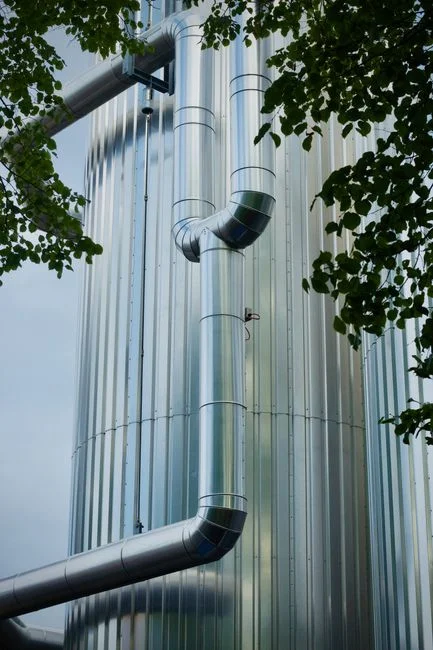
Clarifiers use gravity sedimentation: heavier solids settle to the bottom and are removed as sludge; lighter fractions — oils, fine dye flocs, fibers — tend to escape with the overflow (S5, ecologixsystems.com). That is the basic mechanism, and it explains why a conventional clarifier on a raw reactive-dye stream usually discharges colored overflow regardless of retention time.
A lamella clarifier settles on inclined plates, which shortens the effective settling path and lets the same job run in a much smaller footprint. Plate spacing, surface loading rate and hydraulics must be tuned carefully to prevent carryover when a lamella is used on textile streams, because dye flocs are usually lighter than mineral solids (S1, lamella-clarifier.com). The HydropureWater lamella clarifier (20–40 m/h surface loading) is rated for that higher hydraulic regime and is the lamella referenced throughout this article.
Where a lamella earns its place in a textile plant is downstream of a DAF. S1 describes a two-stage approach in which the first stage focuses on bulk color removal through coagulation and DAF flotation, and the second stage uses additional chemical polishing and lamella clarification to capture residual color compounds (S1, lamella-clarifier.com). On its own, a lamella after only polymer dosing will underperform on a high-color reactive stream; on a DAF effluent where the color load has already been knocked down, a lamella is a very effective polishing step.
DAF vs lamella clarifier vs conventional clarifier: a textile-specific matrix
Three physical mechanisms compete for the same job, and the choice depends on which contaminant is the bottleneck. The matrix below separates them on the dimensions a Saint Stephen dyehouse actually evaluates.
| Parameter | DAF | Lamella clarifier | Conventional clarifier |
|---|---|---|---|
| Mechanism | Float on micro-bubbles (S3) | Settle on inclined plates (S1) | Settle by gravity (S5) |
| Best-fit stream | Light flocs, fibers, emulsified organics, oils/greases (S1) | Fine flocs in compact footprint, often after DAF (S1) | Heavy mineral solids, high-TSS slurries (S5) |
| Published textile-relevant performance | TSS up to ~97%, COD 60–80% (S3); ~95% oil/grease on a food stream (S5) | Used as second-stage polish for residual color (S1) | ~90% solids on a heavy mineral stream (S5) |
| Footprint at 50–500 m³/h | Compact (S3) | Compact — 20–40 m/h surface loading | Largest plan area of the three (S5) |
| Sludge character | Low-density floated skimmings (S1) | Denser settled sludge | Densest settled sludge (S5) |
| Dewatering implication | Often needs a plate-and-frame press | Conventional thickener/press | Conventional thickener/press |
Two patterns are worth pulling out. First, the Ecologix case data shows DAF ~95% oil/grease removal versus ~70% for a clarifier on the same stream, while a clarifier hit ~90% solids on a heavy mining stream — the same physical principle (float vs. settle) decides the winner on different feeds (S5, ecologixsystems.com). Second, on a Saint Stephen dyehouse the bottleneck is usually color and light flocs, not heavy mineral solids, which is why DAF belongs in the train and a conventional clarifier alone usually does not.
Saint Stephen site factors that change the DAF-vs-clarifier answer
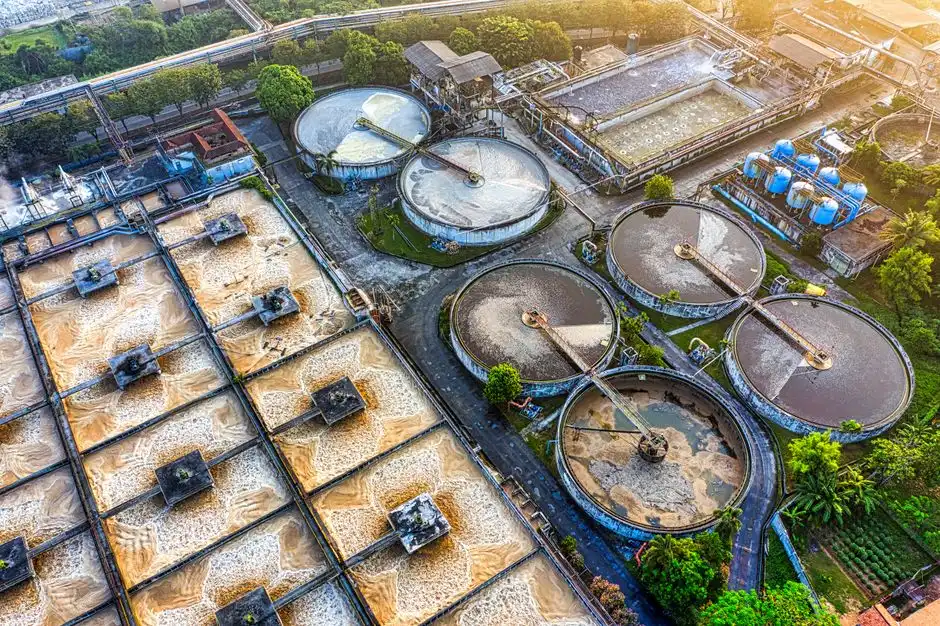
Saint Stephen winter temperatures lower biological activity and raise wastewater viscosity, which raises the bar for any downstream biological stage. Moving solids and color removal upstream to a physicochemical DAF (or DAF + lamella) protects an MBBR or activated-sludge step from color and fiber slug loads, consistent with S1's recommendation to reduce color load before biological treatment (S1, lamella-clarifier.com).
If the discharge is to a local POTW, the pretreatment program typically caps TSS and BOD, and frequently caps color on textile streams. A DAF first stage keeps the POTW out of trouble on color and fiber slugs, and a lamella polish step keeps residual TSS low enough to stay comfortably under the cap. The two-stage layout in S1 is the documented working pattern for that compliance posture (S1).
For mills targeting rinse-water reuse, DAF effluent is generally clearer of light flocs and is more amenable to an MBR or UF polishing step than a clarifier effluent, which usually needs an extra polishing stage on textile streams (S1). For sizing that downstream MBR, an MBR system for downstream polishing and reuse is the natural pairing after a DAF + lamella train. Many Saint Stephen dyehouses sit on tight urban-industrial lots where the compact footprint of DAF and lamella versus a conventional clarifier is the deciding physical constraint, not the chemistry.
Cost, lead time and sizing inputs to request from a DAF or clarifier supplier
HydropureWater's DAF line covers 4–300 m³/h and lists textile, food, pulp & paper, metalworking, petrochemical and municipal pre-treatment among proven applications (HydropureWater catalog, /product/4). For cross-reference, the DAGYEE DAF-003 through DAF-120 series on S3 covers ~3 m³/h to 120 m³/h per unit, in SS304, SS316, FRP or carbon-steel wetted parts, 380 V 3-phase, OEM accepted (S3, wastewatermachinery.com).
Use the table below to make sure every vendor's quote answers the same questions in the same units, so you can compare like for like.
| RFQ input | What to request from the supplier | Why it matters on a dyehouse stream |
|---|---|---|
| Bench / jar-test report | Coagulant dose, pH, polymer dose, ADMI/Pt-Co/true color, TSS on your actual liquor (S1) | Generic dosing tables underpredict reactive-dye performance; S1 requires jar testing |
| DAF hydraulics | Saturation pressure (target ≥ 5 bar), recycle ratio, hydraulic surface loading rate, A/S ratio (S3) | Drives bubble attachment and float quality on light dye flocs |
| Removal guarantee | Vendor-quoted TSS and color removal on your stream | Distinguishes a real performance warranty from a generic spec sheet |
| Materials of construction | Wetted-parts material (SS316 vs SS304 vs FRP), lining, skid vs field-assembled (S3) | Hot dyeing effluent and chloride dosing attack carbon steel; SS316 is the conservative default |
| Controls & instrumentation | PLC scope, VFD on recycle pump, pH/turbidity probes, chemical-control interface (S3) | Textile flows swing by style change; closed-loop dosing protects compliance |
| Sludge handling | Predicted skimmings yield, dewatering recommendation (S1) | Floated dye sludge is low-density; a plate-and-frame press is the typical follow-on |
| Lamella polish step (if used) | Plate spacing, surface loading rate (target 20–40 m/h for HydropureWater), dye-floc reference list (S1, catalog /product/10) | Proves the plate geometry was used on dye flocs, not just mineral solids |
| Lead time & spares | Manufacturing lead time, shipped spares kit, commissioning scope, on-site jar-test support | Saint Stephen winter commissioning windows are short; a vendor with a US service footprint reduces risk |
For DAF commissioning issues that surface after startup, the DAF troubleshooting guide for 2026 is a useful engineering reference to keep in the project folder. For chemical metering hardware specifically, the 2026 chemical metering pump comparison for US wastewater is the right place to compare pump types alongside the DAF RFQ.
Decision rule: DAF, clarifier, or both for a Saint Stephen dyehouse in 2026
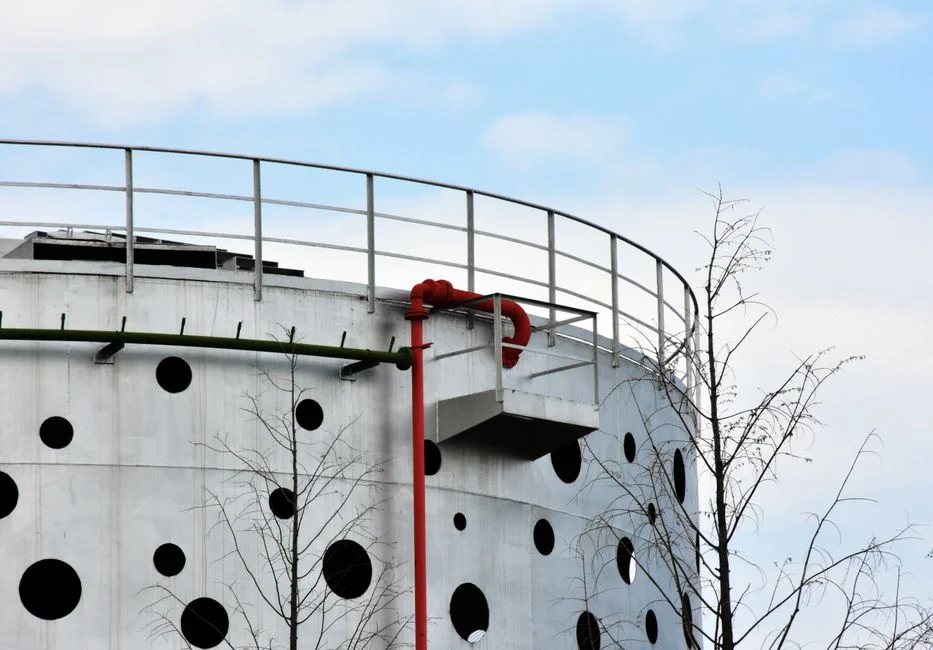
If the bottleneck is color and fiber removal on a reactive or disperse dye stream, the documented 2026 best practice is a DAF as the primary unit, with a lamella clarifier added as a polishing step if the discharge limit is tight (S1, lamella-clarifier.com). If the stream is dominated by heavy suspended solids such as cotton lint or mineral finishing residues with only moderate color, a lamella clarifier alone may suffice and will carry lower OPEX (S5, ecologixsystems.com). If the site has both tight color limits and a tight footprint, the published two-stage layout — DAF + Lamella, with an MBBR downstream and ozone or Fenton reserved for the most persistent fractions — is the integrated answer (S1).
Always run a jar test on the actual effluent first; no equipment choice is reliable without it (S1). And when the question is compliance posture rather than equipment selection, the US textile POTW pretreatment compliance guide lays out the documentation a Saint Stephen buyer should be ready to show a regulator.
Frequently Asked Questions
Is a DAF alone enough for a reactive-dye dyehouse, or do I need a clarifier too?
For a Saint Stephen reactive or disperse dye stream with tight color limits, S1 recommends a two-stage physicochemical layout: DAF for bulk color and fiber removal, then a lamella clarifier to capture residual color compounds (S1, lamella-clarifier.com). A DAF alone is the right answer when the discharge limit tolerates higher residual color or when the downstream MBBR is sized to absorb the residual load.
How much does a DAF system cost for a 50–500 m³/h textile stream?
No published price appears in S1, S3 or S5 for a 50–500 m³/h DAF on a textile stream, so treat any number you receive as a quote, not a benchmark. Ask each vendor for an itemized quote broken down by DAF unit(s), whitewater skid, chemical dosing skid, controls, commissioning and spares, and request the bench-test report that justifies the selected model. The HydropureWater DAF catalog covers 4–300 m³/h on a single unit, and the DAGYEE DAF-120 in S3 caps at 120 m³/h per unit, so 50–500 m³/h typically means either one mid-range unit or two units in parallel (HydropureWater catalog, /product/4; S3, wastewatermachinery.com).
How do I pick a DAF or clarifier supplier that will actually support a Saint Stephen dyehouse?
Run every vendor against the same RFQ input list (jar-test report, saturation pressure, A/S ratio, removal guarantee, MOC, PLC scope, sludge handling, lead time, spares), and weight their proposal on documented performance on dye flocs rather than on generic industrial references. S3 explicitly lists industry-specific references and guaranteed TSS/FOG limits as one of the four selection dimensions for a high-efficiency DAF (S3, wastewatermachinery.com), and S1 requires jar testing on the actual wastewater before sizing (S1, lamella-clarifier.com) — a supplier that does not lead with bench testing is the wrong supplier.
What compliance risks should a Saint Stephen dyehouse plan for in 2026?
Two are specific to the local context. First, POTW pretreatment programs typically cap TSS, BOD, and increasingly color on textile streams, so the DAF + lamella train needs to be sized with margin under those caps, not at them. Second, Saint Stephen winter cold snaps raise wastewater viscosity and slow biological activity, so a DAF first stage is the documented way to take the color load off the downstream MBBR before it gets overloaded (S1, lamella-clarifier.com). A useful operational habit is to keep the daily log of pH, coagulant dose, DAF surface loading and effluent color, because that is the documentation the regulator and the POTW will both ask for.