Why Muscle Shoals Pretreatment Compliance Is Different
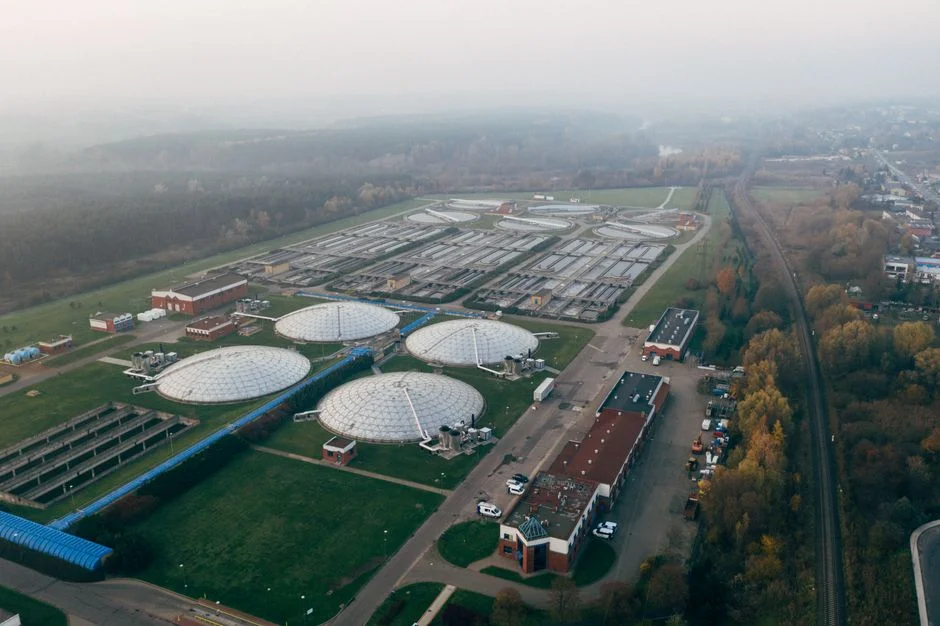
Mining and metals plants near Muscle Shoals, Alabama cannot rely on a generic "industrial wastewater" rule, because three layers of authority govern the same sewer discharge: the federal categorical standard at 40 CFR Part 436, the local POTW pretreatment program, and Alabama Department of Environmental Management oversight. The likely receiving POTW is the Muscle Shoals Utilities Board wastewater treatment plant, an activated-sludge facility that the utility describes in its public materials as operating under ADEM authority (S5). That utility is currently rebuilding for compliance: Engineers of the South documents a completed NPDES-compliance upgrade at the Muscle Shoals WWTP that also added 2 mgd of capacity, with Phase II adding a new sludge pump station, polymer feed system, and dewatering centrifuge — evidence that pass-through and hydraulic overload are live compliance concerns for any industrial discharger tied into the system (S3).
On the federal side, the EPA promulgated the Mineral Mining and Processing Effluent Guidelines and Standards at 40 CFR Part 436 in 1975 and amended them in 1976, 1977, 1978, and 1979; the rule covers wastewater discharges from mine drainage, mineral processing operations, and stormwater runoff, and its requirements are incorporated into the site's NPDES permit (S4). Many 40 CFR Part 436 subparts remain reserved, including Dimension Stone (A), Lightweight Aggregates (H), Mica and Sericite (I), Trona (P), Rock Salt (Q), Mineral Pigments (T), Lithium (U), Fire Clay (AA), Attapulgite and Montmorillonite (AB), Kyanite (AC), Shale and Common Clay (AD), Aplite (AE), Kaolin (AG), Ball Clay (AH), Feldspar (AI), Talc/Steatite/Soapstone/Pyrophyllite (AJ), and Garnet (AK) (S4). A facility has to match its actual mineral to the current subpart before it can claim a categorical limit applies. The EPA's broader policy framing for mining water management — reduce freshwater consumption, maintain regulatory compliance, and maximise the value of on-site water sources — is the lens against which any pretreatment design will eventually be evaluated (S1). Plants in the Shoals area handling similar feedstocks can compare notes with the Alabama mining pretreatment guide for Frisco City.
What Mining Wastewater Actually Contains Near a Quarry or Metals Plant
The peer-reviewed record on mining-influenced wastewater describes a consistent profile: the water is generally highly acidic, carries a high quantity of suspended solids, and becomes more acidic as the concentrations of sulfate and dissolved metals rise (S2). The metals most commonly associated with mining wastewater in the academic literature are arsenic, lead, cadmium, chromium, nickel, copper, zinc, mercury, manganese, and iron, with sulfate as the dominant anion driver of acidity (S2). The same review documents downstream cases where elevated Pt, Cu, Cd, Cr, Zn, and As were linked to upstream mining in the Hex River, South Africa, and where Cd, Pb, Zn, As, and Cr accumulated in agricultural soils around a phosphate mine in Sichuan, China, exceeding China's GB15618-2018 soil pollution thresholds (S2). These are not Muscle Shoals-specific numbers; they are the parameter list a compliance engineer should expect to see in routine sampling at any comparable operation.
Artisanal and small-scale gold mining introduces a separate contamination pathway through mercury and methylmercury; plants that blend legacy or recycled feedstocks should still test for total Hg and MeHg even when gold is not the primary product (S2). The Muscle Shoals Utilities Board has also been actively tracking PFAS in its Tennessee River source and is installing treatment to reduce PFAS in finished drinking water consistent with the EPA's Health Advisory, so any industrial discharger should confirm with the POTW whether PFAS in their influent is currently subject to a local limit (S5). The supplied research does not contain numeric influent data for any specific mining or metals facility in the Muscle Shoals area, so the only defensible starting point is a 24-hour composite sampling programme on the actual flow before any equipment is sized.
Federal vs. Local Limits: Which Number Do You Actually Have to Hit?
40 CFR Part 436 sets technology-based categorical effluent limitations for mine drainage, mineral processing, and stormwater runoff, and the EPA adds water-quality-based limits where needed before issuing the NPDES permit, so the permit document itself is the binding source of numeric limits — not the bare rule citation (S4). For a facility discharging to a sanitary sewer, that is only half the picture: the local sewer-use ordinance, enforced by the POTW, layers additional limits on top of the federal categorical standards, typically covering pH, sulfide, phenols, oil and grease, daily mass loading of regulated metals, and maximum daily or instantaneous flow (S5). The control authority for industrial pretreatment in this model is the POTW, with ADEM providing state oversight; the POTW issues discharge permits, performs sampling, and can revoke acceptance for pass-through or interference, which is the dynamic that drove the Muscle Shoals WWTP NPDES-compliance upgrade in the first place (S3, S5).
Stormwater runoff from active mineral-mining sites is regulated under 40 CFR Part 436, so segregation of process wastewater from stormwater, plus coverage under the Multi-Sector General Permit where applicable, is a separate compliance track that should not be conflated with the sewer discharge permit (S4). The reserved subparts in Part 436 — Dimension Stone, Lightweight Aggregates, Lithium, Kaolin, Talc, Garnet, and the rest of the list — mean the categorical limit for the operation may not even be a published number until the EPA completes that subpart; in the interim, the POTW local limits and the permit's water-quality-based effluent limits are doing the work. Confirming the exact subpart status against the current rule, and confirming the local limits on the discharge permit, is the only safe order of operations before any design calculation.
The Pretreatment Train Most Plants End Up Building
The treatment train that recurs across both the commercial mining-water literature and the peer-reviewed review organises around four stages: equalisation and pH correction, metals precipitation and suspended-solids removal, polishing and solids separation, and discharge monitoring (S1, S2). Stage one is chemical: the SAVMIN process demonstrated at South African coal, gold, platinum, and base-metal mines at a pilot scale of 4 m³ per hour raises pH above 10 with lime to precipitate metal hydroxides and gypsum, then uses a thickener to separate sludge before a second-stage supersaturation step for additional metal recovery (S2). That same logic — automated pH adjustment to a defined setpoint with sludge removal — is the entry point for most acid mine drainage and metals-fabrication flows. A PLC-controlled chemical dosing skid for pH and precipitation trim is the standard hardware at this stage.
Stage two is suspended-solids and colloidal removal. DAF units and lamella clarifiers are the workhorse options for metals-laden water after precipitation; ceramic ultrafiltration is used where tighter polishing or RO protection is required (S1). For plants that need to push further into brine concentration, total dissolved solids reduction, or selective lithium recovery, advanced reverse osmosis, evaporation, and crystallisation — the technologies integrated into Aquatech's Thacker Pass lithium project and the Controlled Thermal Resources Stage 1 Lithium Hydroxide Facility — show the upper end of the technology stack (S1). Solids handling at the back end should mirror the Muscle Shoals WWTP Phase II model of polymer-conditioned sludge dewatered on a centrifuge, then a filter press for the driest cake before disposal (S3). A typical sequence for a quarry or metals plant: equalisation → lime or caustic pH adjustment with automated chemical dosing → clarifier or DAF for metals-laden suspended solids after precipitation → sand or multimedia filtration → hollow-fiber UF polish before discharge or RO → flow-paced sampling at the POTW tie-in, with a plate-and-frame filter press handling the metal-rich sludge and a high-rate sedimentation tank providing primary clarification ahead of the DAF.
| Stage | Unit Operation | Compliance Problem It Solves |
|---|---|---|
| 1. Equalisation and pH | Equalisation basin; lime/caustic dosing with PLC trim | Acidity, metals solubility, pH local limit (S2) |
| 2. Precipitation | Reactor with pH > 10; thickener for sludge | Dissolved metals (Pb, Cd, Cr, Ni, Cu, Zn), sulfate as gypsum (S2) |
| 3. Solids separation | DAF or lamella clarifier; multimedia filter | Total suspended solids, oil and grease (S1, S2) |
| 4. Polishing | UF; RO; evaporation/crystallisation | TDS, sulfate, residual metals, brine volume (S1) |
| 5. Solids handling | Polymer feed; dewatering centrifuge; filter press | Sludge volume, landfill disposal, NPDES sludge reporting (S3) |
Choosing Between Inline Treatment, Off-Site Haul-Out, and Zero Discharge

Three options sit on the table once the influent profile and local limits are known: on-site pretreatment to the local limits, off-site hauling to a permitted treatment, storage, and disposal facility, and on-site reuse or zero liquid discharge. Small intermittent flows, or flows with contaminant spikes that would require oversized equipment to handle continuously, often favour hauling. Continuous high flows above an economic threshold favour on-site treatment because hauling costs scale linearly with volume. High-value brine streams — lithium-rich process water, for example — may justify ZLD, where evaporation, crystallisation, and advanced RO are integrated to recover water and saleable salts rather than send anything to the sewer (S1).
The reuse argument is the one finance teams respond to: integrated treatment systems have been documented as capable of recovering more than 95% of water plus saleable salts, which is a useful benchmark when justifying capital spend on a closed loop instead of a sewer tie-in (S2). Aquatech's commercial track record on lithium, zinc-lead-silver, and steel operations is the reference point for what a ZLD-style system looks like in practice (S1). The decision still has to be made on site-specific numbers, and the supplied research contains no Muscle Shoals-specific cost data. The inputs to request before committing are: average and peak daily flow, influent concentrations of the regulated metals and sulfate, the actual local limits from the discharge permit, the current hauling cost per gallon from a licensed TSDF, and itemised capital cost from at least two treatment vendors. With those in hand, a net-present-cost comparison resolves the question; without them, any number is a guess. A brackish or seawater RO system is typically the unit operation that determines whether the on-site path is economically viable.
Pretreatment Train Selection by Contaminant
The matrix below maps the regulated parameters most plants fail on to the unit operation that most often pulls them back inside the limit. The mappings are qualitative in the supplied research, so treat them as a decision aid, not a substitute for jar tests and on-site piloting (S1, S2). pH and acidity are addressed by chemical dosing; total suspended solids by DAF or lamella clarifier; dissolved metals (Pb, Cd, Cr, Ni, Cu, Zn) by pH-elevated precipitation and sludge separation; sulfate and TDS by RO or a desalination step; oil and grease by DAF with skimming; and mercury by dedicated precipitation or adsorption (S1, S2). Arsenic, lead, and cadmium removal is particularly sensitive to the final pH setpoint and to the oxidation state of the metal, so the chemical-dosing skid must be sized for trim control as well as bulk neutralisation, with a flow-paced dosing controller tied to the influent flow meter.
Mines whose process trains include flotation reagents introduce an organic load, and a biological polishing stage — analogous to the activated-sludge process used at the Muscle Shoals WWTP — can be appropriate for a high-flow, lower-concentration sidestream before the POTW tie-in (S2, S5). A multi-media filter ahead of the DAF or UF protects downstream membranes and keeps the polishing stage operating at design flux. The training data for the unit-operation mappings here is qualitative, so the table is a starting point, not a sizing tool.
| Parameter Driving Noncompliance | Primary Unit Operation | Secondary / Polishing Step |
|---|---|---|
| pH, acidity | Lime or caustic dosing, automated trim (S2) | Final pH adjustment before discharge (S2) |
| Total suspended solids | DAF or lamella clarifier (S1, S2) | Multi-media filtration (S1) |
| Dissolved metals (Pb, Cd, Cr, Ni, Cu, Zn) | pH-elevated precipitation with sludge separation (S2) | UF or RO polish for residuals (S1) |
| Arsenic (As) | Oxidation + co-precipitation with Fe or alum (S2) | UF or adsorption (S1, S2) |
| Mercury (Hg) and methylmercury | Dedicated precipitation or sulfide precipitation (S2) | Activated carbon adsorption (S2) |
| Sulfate, TDS | RO or desalination (S1) | Evaporation/crystallisation for ZLD (S1) |
| Oil and grease | DAF with skimming (S1) | Coalescer or multimedia filter (S1) |
| Organic load (flotation reagents) | Biological polishing — activated sludge analogue (S2, S5) | Sand filtration (S1) |
Frequently Asked Questions
What does a mining or metals plant near Muscle Shoals actually have to comply with before discharging to the sewer?
Three layers: 40 CFR Part 436 categorical effluent limitations for mine drainage, mineral processing, and stormwater runoff as incorporated into the site's NPDES permit (S4); the local sewer-use ordinance and discharge permit enforced by the Muscle Shoals Utilities Board under ADEM oversight (S5); and any water-quality-based limits added by the permit writer on top of the categorical standards (S4). The POTW's recent NPDES-compliance upgrade is the clearest signal that pass-through and interference are taken seriously (S3).
How much does a compliant pretreatment system cost for a small quarry or metals-finishing plant in the Shoals area?
The supplied research does not include pricing for any specific Muscle Shoals operation, so any number would be invented. The defensible move is to request itemised capital and operating cost quotes from at least two treatment vendors, scoped to the average and peak daily flow, the influent metals and sulfate concentrations from 24-hour composite sampling, and the actual local limits on the discharge permit. A net-present-cost comparison against the per-gallon hauling cost from a licensed TSDF then resolves whether inline treatment or off-site management is cheaper for that specific site.
Which 40 CFR Part 436 subpart applies if the facility processes a mineral on the reserved list, such as kaolin or talc?
If the mineral is on the reserved subpart list — Dimension Stone (A), Lightweight Aggregates (H), Mica and Sericite (I), Trona (P), Rock Salt (Q), Mineral Pigments (T), Lithium (U), Fire Clay (AA), Attapulgite and Montmorillonite (AB), Kyanite (AC), Shale and Common Clay (AD), Aplite (AE), Kaolin (AG), Ball Clay (AH), Feldspar (AI), Talc/Steatite/Soapstone/Pyrophyllite (AJ), and Garnet (AK) — there is no published categorical numeric limit (S4). The binding numbers then come from water-quality-based limits in the NPDES permit and from the POTW's local limits, not from the categorical rule. Confirm the subpart status against the current EPA rule before designing to any specific number.
How do I pick a supplier for a staged mining-wastewater pretreatment system without buying something that fails the discharge test?
Two checks cut most of the supplier-selection risk. First, ask for a reference installation on mining or metals-finishing wastewater with influent pH below 4 and measurable Pb, Cd, Cr, Ni, Cu, or Zn, and ask for the operating data from that site — not a brochure case study. Second, require a jar-test or on-site pilot on the actual flow before signing the purchase order, because the unit-operation mappings in the literature are qualitative (S1, S2) and only bench- or pilot-scale work on the real water will confirm the design pH setpoint, sludge production rate, and achievable residual metals. A vendor that will not commit to performance numbers on a pilot is the wrong vendor. The mineral processing ETP design guide walks through the design sequence in more detail.