Why Isfahan Treats Process Wastewater Differently in 2026
Any 2026 fab, OSAT line, or hyperscale data-hall project in Isfahan must treat the Zayandeh Rud basin as functionally closed: the river's allocation is already spoken for by agriculture, municipal demand, and existing industry, and provincial consent-to-operate text now anchors an 80% internal-reuse floor as a permit pre-condition rather than a corporate ESG preference. The same arithmetic appears across the wider region — 40% of existing fabs and over 40% of new fabs announced since 2021 are projected to sit in basins with high or extremely high water-stress risk by 2030 (Lepawsky, 2024 via TNFD, Feb 2026), and 45% of data centres globally already operate in river basins at high risk of water-availability disruption (TNFD, Feb 2026).
The volumetric reference is fixed by the literature: a single fab draws about 14 billion litres of UPW per year and pulls 1.4–1.6× that volume in municipal feed, while a hyperscale data hall can exceed 2 billion litres per year on the upper end (TNFD, Feb 2026). On the central Iranian plateau, the hot-dry April–September window pushes wet-bulb high enough that evaporative cooling becomes hostile part of the year, forcing a real choice between air-cooled adiabatic systems and water-cooled loops run at high cycles of concentration. Provincial DOE practice in 2026 treats that 80% reuse floor as the negotiation starting point, and an engineer designing the mass balance around 80–95% recovery from day one keeps the consent clock from resetting.
Two Streams, Two Trains: Segregating Fab and Data-Hall Wastewater
Mixing fab wet-process drains with data-hall cooling-tower blowdown is the single most common reason an ETP gets over-sized in central Iran. Fab wastewater carries HF-etch fluoride at 50–500 mg/L, TMAH from developer streams, CMP nanoparticles (silica, ceria, alumina), Cu up to 100 mg/L in untreated CMP effluent, ammonia, and mixed acids/alkalis (Lai & Lin, 2004; S2). Data-hall cooling-tower blowdown is fundamentally different: dominated by TDS, Ca/Mg hardness, silica, and trace oxidizing biocides, with TDS up to 2,000 ppm at 30–40 °C and 4–6 cycles of concentration (S2). AHU condensate (typically below 50 mg/L TDS) is segregated on its own line because glycol from coil leaks requires stripping, not blending into the main RO loop. Forcing the two streams through one neutralization/precipitation stage sizes the chemistry for fluoride and solvent upset, which over-specs the train for what is essentially a softened water stream. The defensible 2026 architecture is segregated drains at source, separate equalization, and only a final common RO or brine-concentrator polishing step if the upstream chemistries are genuinely compatible.
| Parameter | Fab wet-process wastewater | Data-hall cooling-tower blowdown |
|---|---|---|
| Dominant contaminants | Fluoride (50–500 mg/L), TMAH, CMP nanoparticles, Cu up to 100 mg/L, ammonia, mixed acids/alkalis | TDS, Ca/Mg hardness, silica, trace oxidizing biocides |
| pH range | Strongly acidic to strongly alkaline, highly variable | Near-neutral, buffered by treatment chemistry |
| Particulate character | Abrasive CMP nanoparticles, precipitated metal hydroxides | Mostly dissolved; minor suspended scale |
| Treatment objective | Toxicity removal + high-recovery reuse | Scale and silica control + cooling-tower makeup |
| End-of-pipe train | Precipitation + UF + RO + MVC brine concentration (full-stream ZLD when HF, TMAH, nanoparticles co-occur) | Softening + side-stream RO; brine haul-off or small MVC on RO brine only |
The 2026 Six-Stage Train for an Isfahan Site
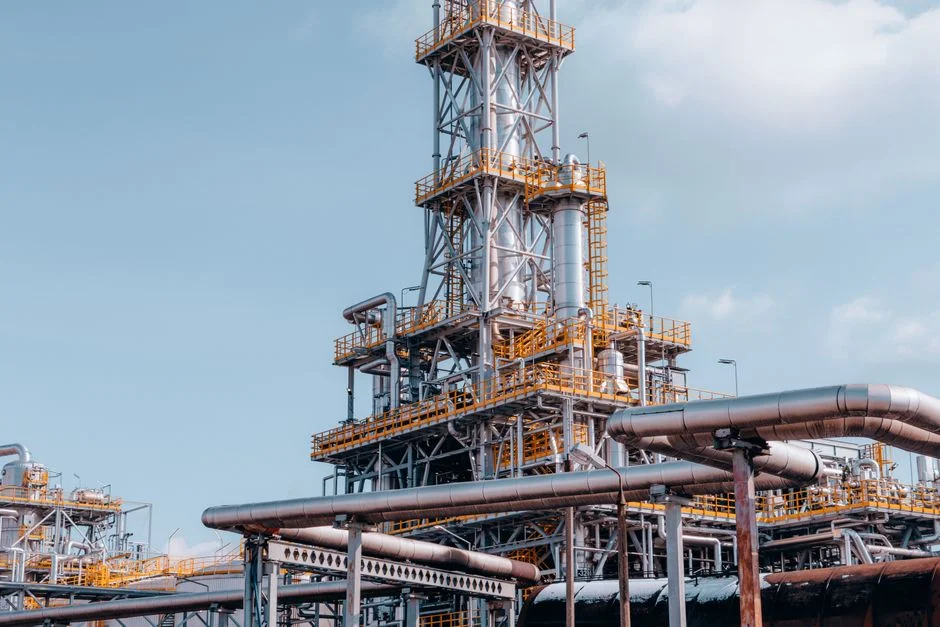
Each unit process in the Isfahan train must justify itself against a specific failure mode; the following sequence is what holds up in front of a provincial DOE reviewer.
- Segregation and equalization. A dedicated EQ tank with 4–8 h HRT and online pH/conductivity dampens the 1–5 pH excursions that follow chiller trips; fab and data-hall drains stay on separate headers from the source.
- DAF and multi-media filtration. A DAF unit in the 4–300 m³/h class floats oils, biofilm, and metal-hydroxide floc, followed by a multi-media filter that drops SDI below 3 and protects the RO from Cu, Fe, and Zn fouling. For fab trains with Cu-CMP load, a hollow-fiber UF pretreatment step upstream of the DAF improves colloid removal and stabilizes downstream RO performance.
- Softening and antiscalant dosing. A twin-tank industrial water softener targets hardness below 50 mg/L as CaCO₃ and silica below 10 mg/L as SiO₂, with PLC-controlled antiscalant dosing tied to RO feed flow to handle the residual scaling potential that softening cannot reach. On variable Zayandeh Rud intake, the softener needs to track seasonal silica swings rather than hold a fixed setpoint.
- MBR polishing or HF-removal + metals precipitation. A submerged PVDF MBR with 0.1 µm membranes delivers below 1 NTU and below 10 mg/L COD for stand-alone hall scope; on fab streams, MBR is replaced by a dedicated HF-removal and metals-precipitation step upstream of UF.
- Two-pass RO at 80–95% recovery. Two-pass industrial RO units run the first pass at 150–250 psi (10–17 bar) for bulk salts, with the second pass polishing to TDS below 200 mg/L and Cl⁻ below 100 mg/L. Above 95% recovery, silica scaling on the second-pass membranes drives CIP frequency up sharply, and 80–95% is the practical operating window.
- MVC brine concentration. Mechanical vapor recompression at 25–40 kWh/m³ of brine concentrated runs on the RO brine only for stand-alone halls; full-stream MVC ZLD is the non-negotiable baseline for any co-located fab.
Two auxiliary loops keep the train stable: a side-stream filtration step at 1–5% of total circulation using 10–25 µm self-cleaning spiral units drops suspended solids to levels the RO can handle without pre-coat, and a chlorine dioxide side-loop upstream of the RO controls biofouling without the isothiazolinone residual load that shortens RO membrane life.
Cooling-Tower Blowdown Math: Setting the RO Train Size
The first calculation on a hyperscale Isfahan project is the blowdown ratio that drives the RO train size. The formula B = E/(COC−1) converts evaporation rate E into blowdown volume: 25% blowdown at 4 cycles of concentration, 20% at 6 COC, and 17% at 7 COC, and that ratio drives the RO train size and the downstream brine volume. For an air-cooled Isfahan data hall, evaporative loss E is small and the wastewater envelope collapses to AHU condensate (below 50 mg/L TDS) and a small blowdown side-stream — this is the cheapest ZLD-style answer for a hyperscale site on the central plateau. For a water-cooled hall, target COC of 6–7 with a side-stream spiral filtration step at 1–5% of circulation to keep the RO feed within SDI spec. The softener setpoint should follow seasonal silica swings on the Zayandeh Rud feed rather than hold a fixed value, because silica breakthrough drives RO scaling faster than any other parameter. At 200–1,000 m³/day of blowdown, the receiving municipal sewer is not a design option: Isfahan's municipal WWTPs are not sized for cooling-tower chemistry or for that volumetric band.
When Full-Stream ZLD Is the Only Answer in Isfahan
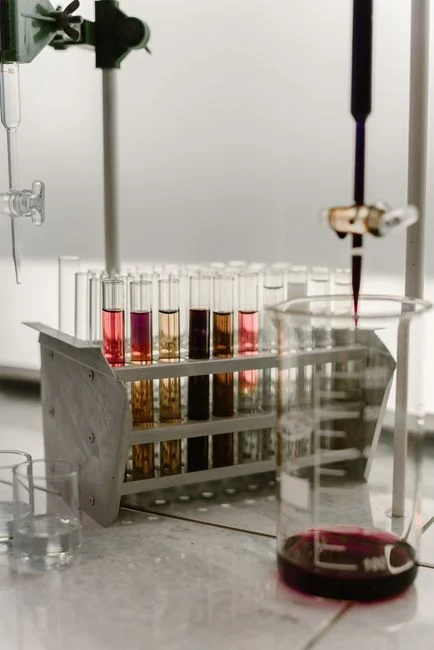
The decision between high-recovery RO with brine haul-off and full-stream ZLD is not a benchmark choice — it is a chemistry decision read off the influent. Whenever HF-etch fluoride (50–500 mg/L), CMP nanoparticles, and TMAH co-occur in the wastewater envelope, full-stream ZLD is the 2026 default because the combined load cannot be negotiated down to a receiving-water band. Stand-alone data-hall CTBD does not need full-stream ZLD: MBR plus two-pass RO at 80–95% recovery with MVC on the RO brine only is the right envelope. Co-located fab-hall hybrids must default to MBR plus two-pass RO plus full-stream MVC brine concentration, because the combined HF plus nanoparticle plus TMAH load cannot be diluted into a discharge consent. A small Isfahan OSAT or 150/200 mm legacy line can sit at 95% recovery with a small brine bleed sent for authorized evaporation or hazardous-waste disposal — the economic optimum when ZLD energy cost is hard to justify. The train should be designed so the recovery rate can be lifted later by adding a brine concentrator without re-plumbing the upstream.
2026 CAPEX, OPEX and Payback for an Isfahan Project
The numbers below are engineering estimates for the 2026 envelope, not firm quotes; a vendor proposal will move the band based on metallurgy, automation scope, and ZLD inclusion.
| Envelope | Capacity | CAPEX band (USD/m³/day installed) | Dominant OPEX lines | Decision driver |
|---|---|---|---|---|
| Small hall, package + haul-off | Below 200 m³/day | $150–300 | Brine haul-off, softener regeneration, antiscalant, ClO₂ residual | OSAT or legacy 150/200 mm line where ZLD energy cost is hard to justify |
| Mid-size 200/300 mm greenfield or 5–20 MW hall | 200–1,000 m³/day | $400–700 | RO CIP above 95% recovery, antiscalant, ClO₂ residual | The typical Isfahan hyperscale or new fab scope, where 80–95% RO recovery closes payback |
| Hyperscale or co-located fab with brine ZLD | Above ~1,000 m³/day or HF/TMAH/CMP co-occurring | $800–1,200 | MVC electricity at 25–40 kWh/m³ of brine, high-silica RO/UF membrane elements replacement | Required when HF, TMAH, and CMP nanoparticles co-occur; no discharge band is negotiable |
OPEX lines that push cost up: membrane CIP frequency above 95% recovery on the second pass due to silica scaling; isothiazolinone biocide residuals shortening RO life (use a ClO₂ side-loop instead); MVC electricity at 25–40 kWh/m³ of brine concentrated. The avoided-discharge math is what closes the case at hyperscale flow: at $5–15/kgal of treated water, 100 m³/day of untreated blowdown at the upper end is roughly USD 400/day, and an 80% recovery RO pays back inside about 24 months at hyperscale flow (S2). For an Isfahan fab, the practical decision is whether 95%+ recovery with a small brine bleed is enough, or whether brine crystallization to solids is required — read the answer off the consent text, not a benchmark. Demand vendor documentation for Iranian-provincial permitting, real-time OCEMS-ready pH/conductivity/TOC/fluoride monitoring, and ISO 14001 environmental management certification. For a parallel capital-case structure, the Pune semiconductor fab and data-hall 2026 engineering guide walks through a similar payback envelope under different ambient conditions, and the Mumbai semiconductor and data-hall 2026 engineering guide covers a comparable receiving-water baseline. For the chemistry step upstream of RO polishing, the AOP system design guide 2026 sets out process selection and sizing.
Frequently Asked Questions
What is a defensible 2026 CAPEX band for an Isfahan semiconductor or data-hall wastewater train?
Engineering estimates for 2026 sit at $150–300/m³/day installed for a small hall with package plant plus haul-off, $400–700/m³/day for a mid-size 200–1,000 m³/day MBR plus RO train, and $800–1,200/m³/day for hyperscale or co-located fab scope with brine ZLD. Final pricing depends on metallurgy, automation scope, and whether MVC is in or out of the package; request a line-item split of ZLD thermal equipment versus membrane equipment in any proposal.
How do I select a wastewater-treatment supplier for an Isfahan fab or hyperscale hall in 2026?
Shortlist vendors that can document Iranian-provincial permitting experience, supply real-time OCEMS-ready pH/conductivity/TOC/fluoride monitoring, and hold ISO 14001 certification. Confirm the UF membrane is rated for the fluoride and solvent excursions the equalization tank can deliver, and that the RO carries an energy-recovery device sized for sustained high-recovery operation rather than nominal flow. Ask for performance guarantees for chemical consumption and energy efficiency, and request a reference list with at least one operating site in a closed-basin permit environment.
Does a stand-alone Isfahan data hall need full-stream ZLD, or is high-recovery RO enough?
Stand-alone hall scope typically stops at MBR plus two-pass RO at 80–95% recovery, with MVC applied to the RO brine only when the discharge path is restricted. Full-stream ZLD becomes non-negotiable only when HF-etch fluoride, TMAH, and CMP nanoparticles co-occur in the wastewater envelope, which is a fab-stream problem rather than a data-hall problem. Air cooling collapses the wastewater envelope further and is the cheapest ZLD-style answer for a hyperscale hall on the central plateau.
What lead-time and compliance risks should an Isfahan project plan for in 2026?
Treat the 80% reuse floor as a permit pre-condition and brief the provincial DOE on it in the kickoff meeting rather than at EIA submission, so the consent clock does not reset. Confirm influent chemistry (especially fluoride, TMAH, Cu, and silica) with site-specific testing before locking the train, and verify that RO membrane elements are rated for the high-silica feed the Zayandeh Rud intake can deliver seasonally. Plan for a 90–180 day EIA review on hyperscale projects and budget the RO/UF membrane replacement cycle against the consent-monitoring schedule.