Why Jaipur Changes the Wastewater Math in 2026
Jaipur sits in a hydrogeological bind that no corporate ESG statement can reframe. Falling groundwater tables, recurring summer tanker dependence, and a regulatory environment that already pushes hard on effluent reduction mean a 2026 CAPEX case cannot be justified on "consent compliance" alone; it has to be anchored in freshwater avoidance per wafer or per MW of IT load. The global picture sharpens the case: the semiconductor industry consumes around 210 trillion litres of water annually, with almost half of that consumption concentrated in areas facing higher-than-average water scarcity (TNFD, Feb 2026). Data-hall water demand runs on a parallel curve — typical facilities use 25 million to 770 million litres per year, while hyperscale operators can exceed 2 billion litres annually (TNFD, Feb 2026).
For a Rajasthan-based OSAT, compound-semiconductor, or hyperscale data-hall campus, every unit process in the train must justify itself against one of two questions: does it cut freshwater draw, or does it protect a reuse loop that does? Discharge consent becomes a floor, not a target. RSPCB expectations, combined with the practical reality of intermittent tanker supply during the May–July peak, push the design baseline above the global 85–90% recovery benchmark that leading fabs report and into territory where brine minimization or ZLD is the only durable answer.
Two Wastewater Streams, Not One: Fab vs Data Hall
Engineering mixed-use campuses requires treating distinct wastewater streams separately rather than sizing a single ETP for the worst-case scenario. Fab wet-process wastewater carries fluoride from HF etching, TMAH and photoresist developers, ammonia, strong acids and alkalis, and CMP slurry with copper, nickel, and tungsten particles (Sim et al., 2023; IDE Tech). Data-hall cooling blowdown is fundamentally different: it is concentrated cooling-tower water dominated by TDS, calcium and magnesium hardness, silica, and trace oxidizing biocides. It contains none of the fluorides, solvents, or abrasive slurry particles that define a fab drain.
Mixing the two forces the neutralization and precipitation stages to be sized for fluoride and solvent upset tolerance, which over-specs the chemistry for what is essentially a softened water stream. It also forces any biological or downstream membrane step to handle fluoride spikes it was never designed for. The 2026 best practice is segregated drains at source, separate equalization, and only a final common RO or brine-concentrator polishing step if the upstream chemistries are genuinely compatible (Sim et al., 2023).
| Parameter | Fab wet-process wastewater | Data-hall cooling blowdown |
|---|---|---|
| Dominant contaminants | Fluoride, TMAH, photoresist, CMP slurry, Cu/Ni/W, ammonia, mixed acids/alkalis | TDS, Ca/Mg hardness, silica, trace oxidizing biocides |
| Typical pH range | Strongly acidic to strongly alkaline, highly variable | Near-neutral (7–9) |
| Solids character | Abrasive CMP nanoparticles, precipitated metal hydroxides | Mostly dissolved; minor suspended scale |
| Treatment driver | Toxicity removal + high-recovery reuse | Scale and silica control + cooling-tower makeup |
| Compatible end-of-pipe polishing | RO + AOP + brine concentration | Softening + single-pass RO (occasionally) |
The 2026 Treatment Train for Jaipur Fab Wastewater
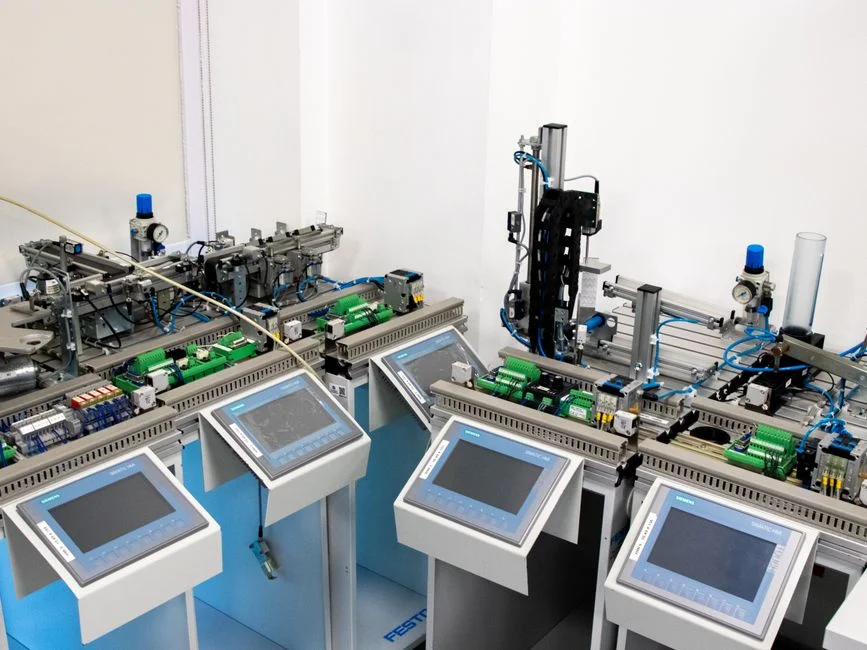
A defensible, RSPCB-credible unit-process list for a Jaipur fab runs in a fixed order, and each step is chosen for a specific failure mode.
- Source segregation. Separate drains for acid, alkali, fluoride-bearing, CMP, and solvent streams, each with its own equalization tank so slug discharges from a single bath do not shock downstream chemistry (Sim et al., 2023).
- pH adjustment and fluoride precipitation. Calcium- or alum-based precipitation drops fluoride to reusable levels and is the most widely reported chemical pathway in the literature (Sim et al., 2023).
- Solids removal. A DAF system for CMP slurry and fluoride precipitate removal, or a lamella clarifier for fluoride and metals precipitation, takes out precipitated solids and CMP particles before they blind the membranes.
- Advanced oxidation. UV/H2O2, ozone, or catalytic AOP breaks down TMAH, photoresist residues, and trace solvents that would otherwise foul downstream RO. See the AOP OPEX and ROI guide for photoresist and TMAH destruction for the operating-cost picture.
- Ultrafiltration. A PVDF hollow-fiber or flat-sheet UF stage at roughly 0.03–0.1 µm polishes clarifier overflow and protects RO from any residual fines (Sim et al., 2023).
- Two-pass reverse osmosis. The first pass does bulk desalination; the second pass polishes the permeate for UPW-grade reuse. The RO process removes over 99% of dissolved solids from the feedwater (IDE Tech), so a well-run two-pass train leaves almost nothing for the downstream brine stage to handle beyond concentration.
- Brine concentration and optional ZLD. A high-recovery brine concentrator (often mechanical vapor recompression) followed, if mandated, by a crystallizer; alternatively, partial brine reuse in cooling towers where the chemistry allows.
- Chemical dosing. PLC-controlled chemical dosing for pH, fluoride, and coagulant control ties the precipitation step to real-time influent load and avoids the over-dose waste that drives OPEX up on Indian sites.
| Step | Unit process | Target contaminant | Justification |
|---|---|---|---|
| 1 | Source segregation + equalization | Variable pH, slug loads | Prevents downstream shock; enables segregated reuse (Sim et al., 2023) |
| 2 | Ca/alum precipitation | Fluoride, phosphate | Established chemical route for HF waste (Sim et al., 2023) |
| 3 | DAF or lamella | CMP solids, metal hydroxides | Protects UF/RO from abrasive fines |
| 4 | AOP (UV/H2O2, O3) | TMAH, photoresist, solvents | Degrades fouling organics before membranes (IDE Tech) |
| 5 | UF (PVDF) | Submicron particles, colloids | RO pretreatment; preserves flux (Sim et al., 2023) |
| 6 | Two-pass RO | Dissolved ions, TOC | >99% salt rejection; enables UPW reuse (IDE Tech) |
| 7 | Brine concentrator / crystallizer | Concentrate volume | Path to ≥95% recovery or ZLD |
| 8 | Automatic dosing | pH, fluoride, coagulant | Stable chemistry under variable load |
Data-Hall Cooling Blowdown: A Lighter Train
Data-hall scope is smaller but not trivial, and treating it like a fab drain wastes both CAPEX and energy. Cooling-tower blowdown is dominated by TDS, calcium and magnesium hardness, silica, and trace oxidizing biocides; the flow follows ambient wet-bulb temperature, peaking in Jaipur's hot-dry April–June window when cooling towers work hardest (TNFD, Feb 2026). The two failure modes a Jaipur operator has to design around are silica scale on the RO membrane, which becomes a real risk once silica climbs into the higher range, and biocide slugs from routine cooling-water treatment.
The defensible train is a side-stream softening or chemical precipitation step ahead of a single-pass RO with an energy-recovery device. Permeate goes to cooling-tower makeup or toilet flushing; brine is either sent to a small authorized evaporation pond or, more commonly at hyperscale, trucked out as hazardous waste because ZLD energy cost at data-hall flow rates is hard to justify. A polishing carbon or UV stage handles biocide spikes rather than letting them into the RO. For hyperscale flow rates specifically, see the data-center cooling blowdown design for hot, dry climates for a comparable operating envelope. Sizing the softener correctly and specifying silica-tolerant antiscalant are the two decisions that determine whether the RO runs clean or scales up within six months.
Recovery Targets and the ZLD Question in Rajasthan
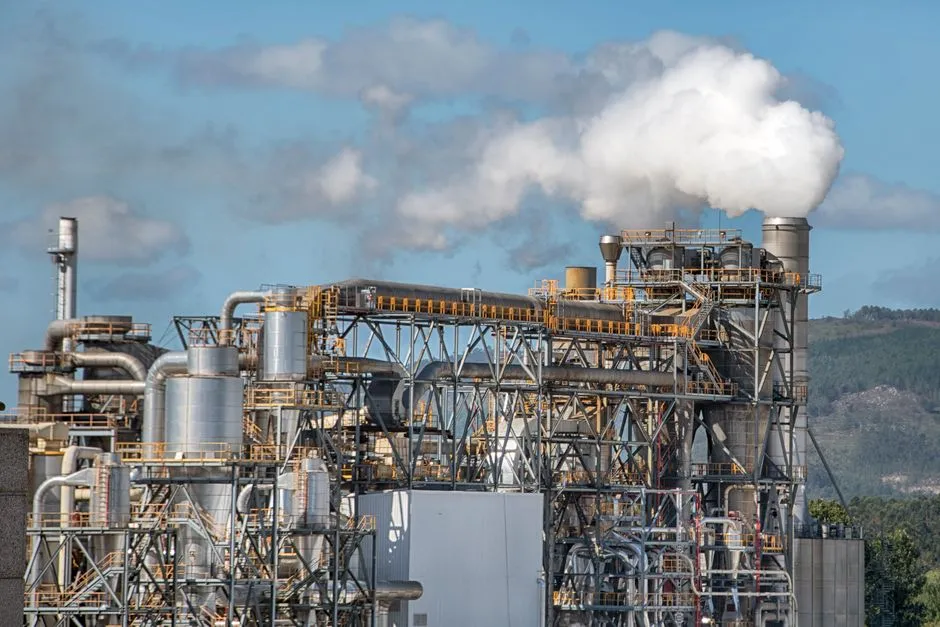
State-of-the-art fabs can recover up to 85–90% of their wastewater using high-recovery RO, advanced filtration, and thermal polishing technologies (IDE Tech). That figure is the 2026 baseline, not the ceiling. ZLD is a water treatment process in which all wastewater is purified and recycled, leaving zero discharge at the end of the treatment cycle (IDE Tech), and it is increasingly the expectation in water-stressed Indian states rather than the exception.
For a Rajasthan fab, the practical decision is whether 95%+ recovery with a small brine bleed is enough, or whether brine crystallization to solids is mandated by the consent. The answer is site-specific and must be read off the current consent text rather than assumed from a benchmark. For data halls, partial reuse plus a small brine stream sent for authorized evaporation or hazardous-waste disposal is usually the economic optimum; hyperscale flow rates push ZLD energy costs to a level that a recovery-only train avoids. Whichever route is taken, the recovery number itself is now a permitting artefact, not an engineering choice, and the train should be designed so the recovery rate can be lifted later by adding a brine concentrator without re-plumbing the upstream.
Designing for 2026: Modular Skids, Monitoring, and PFAS Readiness
For a project that needs to start production this year, pre-engineered modular skids for UF, RO, and brine concentration cut the field-work fraction of the schedule and shift the risk of late delivery from a civil contractor to an equipment vendor with a tested assembly. Confirm with the supplier that the UF membrane is rated for the fluoride and solvent excursions the equalization tank can deliver, and that the RO has an energy-recovery device sized for sustained high-recovery operation rather than nominal flow.
Real-time monitoring of pH, flow, conductivity, TOC, and fluoride is now standard, and advanced sites layer in AI-driven antiscalant dosing and membrane-fouling prediction to keep OPEX predictable (IDE Tech). For data halls, a softener ahead of the RO protects against silica scale, and a UV polishing step handles biocide carryover from the cooling loop. PFAS is the emerging permit risk worth designing in now even if current influent is below detection: PFAS compounds are chemically stable, resistant to conventional oxidation, and difficult to remove (IDE Tech). Leaving a slot for a high-pressure RO or granular activated carbon polishing stage is cheaper to do during build than to retrofit under consent pressure. For a current reading on removal options, the PFAS filtration options for semiconductor effluent summary is a useful starting point, and the 2026 CMP wastewater CAPEX and OPEX comparison gives the cost lens for the most water-intensive single step in the train.
Frequently Asked Questions
What RSPCB and central PCB consent conditions typically apply to semiconductor fabs and data halls in Rajasthan in 2026?
Consent text is site-specific and must be read off the current order, but the design should be sized to the most stringent of the fluoride, heavy-metal, ammonia, and TDS limits the regulator is likely to impose given the water-stress classification of the district. The Indian ETP buyer's guide with GPCB consent mechanics walks through how consent conditions are typically structured in western India; the Rajasthan equivalent follows a similar shape.
How is the treatment train sized for a 100,000 L/day fab wastewater flow in Jaipur?
Sizing is driven
Frequently Asked Questions
What consent conditions does RSPCB apply to a semiconductor fab in Rajasthan in 2026?
The Rajasthan State Pollution Control Board (RSPCB) mandates strict adherence to Zero Liquid Discharge (ZLD) for semiconductor facilities, requiring 100% recovery of process water. Consent to Operate (CTO) conditions typically include real-time online monitoring systems (OCEMS) linked to the RSPCB server, tracking parameters such as pH (6.5–9.0), Total Dissolved Solids (TDS < 2100 mg/L), Total Suspended Solids (TSS < 100 mg/L), and specific heavy metal limits for fluoride (< 2 mg/L) and ammonia nitrogen (< 50 mg/L).
How do I size a treatment train for a 100,000 L/day fab wastewater flow in Jaipur?
For a 100 m³/day flow, the treatment train must be sized with a 20% buffer to accommodate peak batch discharges, requiring a primary equalization tank capacity of 25–30 m³. The process design must incorporate specialized segments: a chemical precipitation unit for fluoride removal, a multi-stage neutralization tank, an ultrafiltration (UF) system for pre-treatment, and a two-pass Reverse Osmosis (RO) system followed by an Agitated Thin Film Dryer (ATFD) or Multi-Stage Flash (MSF) evaporator to achieve ZLD.
What is a realistic 2026 CAPEX range for a 50–200 m³/day modular fab ETP with two-pass RO and ZLD?
As of 2026, the CAPEX for a high-specification modular Effluent Treatment Plant (ETP) in the Jaipur region ranges from INR 4.5 crore to INR 12 crore, depending on the complexity of the influent stream and the metallurgy of the evaporation units. This estimate includes the civil works for storage, automated PLC/SCADA control panels, specialized corrosion-resistant piping, and the high-energy consumption components required for thermal ZLD systems.
How do I choose a reliable wastewater equipment supplier for a semiconductor project in Jaipur?
A reliable supplier must demonstrate a track record of executing projects compliant with the Bureau of Indian Standards (BIS) and international semiconductor grade water specifications (ASTM D5127). Prioritize vendors who maintain local service centers in the RIICO industrial zones, hold ISO 9001 and 14001 certifications, and offer a proven ability to provide validated documentation for RSPCB audits, including performance guarantees for chemical consumption and energy efficiency ratios.
Can treated semiconductor effluent be reused for cooling-tower makeup or horticulture in Jaipur?
Yes, treated effluent can be repurposed, provided the water meets the stringent quality requirements for cooling tower makeup to prevent scaling and biofouling. For cooling towers, the water must undergo additional demineralization to maintain silica levels below 10 mg/L and conductivity below 500 µS/cm. While horticulture reuse is permitted, it requires stringent monitoring of Sodium Adsorption Ratio (SAR) and Boron concentrations to ensure the effluent remains compliant with Central Pollution Control Board (CPCB) irrigation standards.