What Industrial Water Reuse Means for a Nashville Facility in 2026
Industrial water reuse is the EPA-defined practice of reclaiming water from a variety of sources, treating it, and reusing it for beneficial industrial purposes such as cooling, energy generation, food and beverage production, mining, and manufacturing (epa.gov, Water Reuse for Industrial Applications Resources). EPA notes that because industrial reuse streams typically have limited human contact, they can be less costly and less energy intensive to treat and reuse than potable reuse streams (epa.gov).
For a Nashville facility, the relevant supply picture is set by Metro Water Services' three water reclamation facilities — Central, Dry Creek, and Whites Creek — which together treat an average of 186 million gallons of water a day and can treat up to 500 million gallons a day during heavy rain, serving Davidson County and portions of Sumner, Robertson, Wilson, Rutherford, and Williamson counties (nashville.gov, Wastewater Treatment). EPA's Water Reuse Action Plan continues to position industrial, manufacturing, energy, and data-center cooling reuse as priority end uses, which is the policy backdrop any 2026 reuse project in Middle Tennessee will be evaluated against (epa.gov). The practical question for an engineer or EHS lead here is whether on-site reclamation of generated streams, off-take of Metro Water reclaimed water where a main is nearby, or a hybrid of the two produces a defensible fit-for-purpose supply for the plant's cooling, boiler, wash, or process demand.
Industrial End Uses That Make Sense in the Nashville Commercial Sector
EPA explicitly authorizes five industrial end uses — cooling, energy generation, food and beverage production, mining, and manufacturing — and notes that states vary in which of these they permit (epa.gov, Water Reuse for Industrial Applications Resources). For the Nashville commercial and industrial sector in 2026, four of those end uses line up directly with documented regional activity. Data-center cooling along the Nashville tech corridor maps to EPA's cooling category and to the Microsoft Quincy proof point, where Microsoft and the City of Quincy built the Quincy Water Reuse Utility to treat data-center cooling water and recirculate it to the same data center, reducing reliance on local potable groundwater while supplying cooling water of a more suitable quality for the cooling equipment than the mineral-rich groundwater (epa.gov). F&B producers in Davidson and Rutherford counties sit inside EPA's food and beverage production category. Auto parts manufacturing, metal finishing, and large-building HVAC cooling round out the manufacturing and cooling categories that EPA recognizes (epa.gov).
| EPA-recognized industrial end use | Nashville-area application | Documented reference case |
|---|---|---|
| Cooling | Data-center and HVAC cooling in commercial buildings | Microsoft/Quincy recirculation of treated cooling water to the same data center (epa.gov) |
| Energy generation | Power plant and CHP cooling makeup in the TVA-served region | EPA lists energy generation as a priority end use (epa.gov) |
| Food and beverage production | F&B processors in Davidson and Rutherford counties | EPA lists F&B as a priority end use (epa.gov) |
| Mining | Aggregate and mineral operations in surrounding counties | EPA lists mining as a priority end use (epa.gov) |
| Manufacturing | Auto parts, metal finishing, and discrete manufacturing | EPA lists manufacturing as a priority end use (epa.gov) |
| Industrial cooling via off-take | Reclaimed municipal wastewater delivered to an industrial user | Fairfax County reuses treated municipal wastewater for industrial cooling to meet TMDL requirements, reduce Chesapeake Bay nutrient discharges, and offset potable demand (epa.gov) |
EPA also notes that water used in industrial applications may be generated via on-site processes such as microchip manufacturing, food and beverage production, mineral extraction, and energy generation and then used elsewhere in the same facility, which is the on-site reuse case most Nashville plants will start from (epa.gov). For any facility evaluating off-take from a municipal reclaimed-water main, the Fairfax County case is the reference model: a municipality reused treated wastewater for industrial cooling specifically to avoid costly plant upgrades, to meet TMDL requirements, and to lower potable demand (epa.gov).
Building the Source-Stream Inventory Before You Design a Reuse System
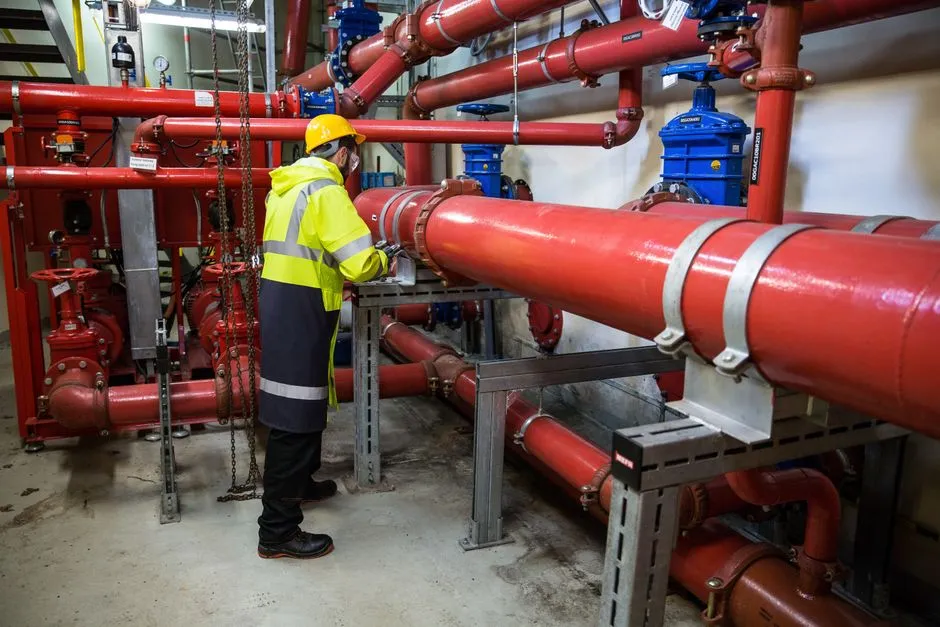
No reuse design is credible without a site water balance. The prerequisite is mapping every water inlet, use, and discharge point, then identifying which streams are high-volume, consistent, and close to a reuse demand (clearwatershelton.com, Industrial Water Recycling Solutions). The most common candidate streams in commercial and industrial plants are cooling tower blowdown, process rinse water, condensate, reject water from RO/UF, and treated wastewater — all characterized by relatively steady flow and known chemistry (clearwatershelton.com). Each candidate should be scored on flow rate, contaminant load, variability, temperature, and distance to the reuse point, because those five variables drive both equipment sizing and operating cost (clearwatershelton.com).
For a Nashville facility, two extra variables enter the inventory. First, proximity to a Metro Water reclaimed-water main matters: Metro's three reclamation facilities serve Davidson County and portions of Sumner, Robertson, Wilson, Rutherford, and Williamson counties, so off-take is only a realistic option inside that five-county footprint (nashville.gov). Second, the operator should size against Metro's published capacity envelope — 186 MGD average, 500 MGD peak — when evaluating whether regional headroom exists to support an additional reclaimed-water off-take, and against measured site flow when designing an on-site reuse loop (nashville.gov). Skipping the inventory and jumping to equipment selection is the most common reason first-time reuse projects either over-treat a stream or undersize a treatment train; both failure modes show up quickly in commissioning data.
Fit-for-Purpose Treatment: Matching Reuse Quality to the End Use
Fit-for-purpose treatment is the single biggest cost driver in any reuse project, and the core principle is that cooling tower makeup, boiler feed, equipment washing, irrigation, and manufacturing each have different quality requirements (clearwatershelton.com). Parameters to evaluate before selecting equipment include conductivity, hardness, alkalinity, silica, suspended solids, organics, and microbiological activity — and under-treating any of them contributes to scale, corrosion, fouling, deposits, or microbial growth inside the reuse loop (clearwatershelton.com). Treating every stream to the highest possible purity, by contrast, adds cost and energy use without providing an operational benefit, and is a common first-pass design mistake (clearwatershelton.com).
| End use | Key water-quality concerns | Typical treatment train |
|---|---|---|
| Cooling tower makeup | Hardness, alkalinity, silica, suspended solids, microbiological activity | Screening → DAF or lamella clarification → multi-media filtration → ultrafiltration → UV or chemical disinfection (final train depends on source) |
| Boiler feed | Conductivity, hardness, silica, dissolved oxygen | Pre-treatment above → RO → EDI polishing |
| Equipment wash | Suspended solids, oils, organics | Coarse screening → DAF → multi-media filtration |
| Manufacturing process | Application-specific ions, particulates, organics | Matched to spec; often RO + EDI for high-purity lines |
A worked example for industrial cooling reuse — the most common Nashville fit — is screening first to remove debris, then a DAF clarifier for industrial reuse pretreatment or lamella clarifier to drop oils and settleable solids, followed by a multi-media filter ahead of UF or RO to polish turbidity, then a UF polishing step for industrial cooling and process reuse (typical 0.03 µm PVDF membranes), with a UV disinfection step for reuse loops as the final barrier. The exact train and whether RO/EDI polishing is required depends on the source stream and the end-use specification; for high-purity manufacturing reuse such as boiler feed or electronics rinse, the train extends to RO and EDI polishing (clearwatershelton.com).
2026 Compliance Pathway for Industrial Reuse in Tennessee
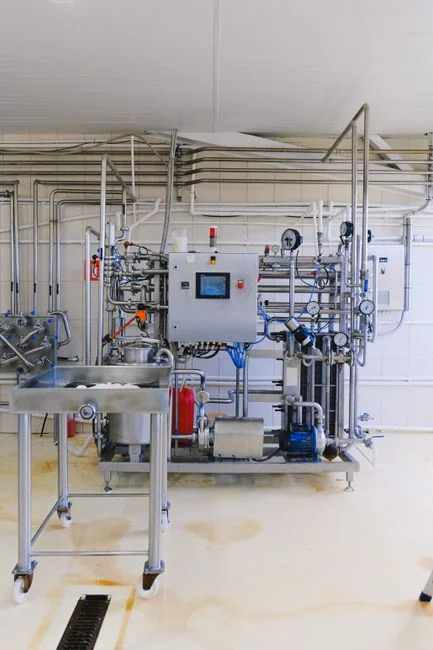
Industrial reuse in Tennessee sits at the intersection of EPA's end-use framework, TDEC's industrial pretreatment and water-quality rules, and Metro Water Services' industrial pretreatment program for any discharge to the sewer system. EPA explicitly notes that states vary widely on which industrial end uses are permissible and on the treatment specifications that apply, and publishes state-by-state summaries through its REUSExplorer tool that operators should pull before scoping a design (epa.gov). The first compliance step is therefore to request site-specific effluent limits from the Tennessee Department of Environment and Conservation for the planned end use, and to confirm with Metro Water Services whether the site is inside the service area that can receive reclaimed water — Davidson County plus portions of Sumner, Robertson, Wilson, Rutherford, and Williamson counties (nashville.gov).
| Compliance step | Who owns it | What to confirm before design |
|---|---|---|
| End-use permissibility check | TDEC | Whether the planned end use (cooling, boiler, process, irrigation) is authorized under current Tennessee rules |
| Site-specific effluent limits | TDEC | Numeric limits, monitoring frequency, and reporting format for the planned reuse or discharge |
| Off-take availability | Metro Water Services | Service-area confirmation and any reclaimed-water main proximity to the site (nashville.gov) |
| Pretreatment program compliance | Metro Water Services | Local limits, surcharge formulas, and any industrial user permit requirements |
| Operating monitoring plan | Plant engineering | Conductivity, hardness, suspended solids, and microbiological monitoring cadence (clearwatershelton.com) |
Defensible operating data is the second compliance pillar. A reuse program should establish clear water-quality targets for each application, select treatment technologies around those targets, and verify performance through routine monitoring (clearwatershelton.com). The operator will need that record to support any reuse claim to TDEC or to a corporate sustainability audit, and to defend any deviation from site-specific effluent limits during a pretreatment inspection.
Build, Buy, or Wait: A 2026 Decision Framework for Nashville Operators
The decision to invest now, defer, or partner should rest on three observable conditions, not on technology preference. Reuse makes sense when the facility has a high-volume, consistent source stream identified in its water balance, a steady in-plant demand (cooling tower, boiler, or wash), and a defensible path to TDEC and Metro Water approval for the planned end use (clearwatershelton.com; epa.gov). Defer the capital spend when source-stream variability is high, in-plant demand is seasonal, or the regulatory path is unclear — a partial reuse or side-stream treatment project is the lower-risk first step in that case (clearwatershelton.com). Where the numbers support investment, an MBR package plant for on-site industrial reuse is a modular first step that delivers near-reuse-quality effluent in a compact footprint and can be scaled as the source-stream inventory matures.
Capacity planning should split cleanly into two cases. For off-take scenarios, size against the regional envelope Metro Water Services has published — 186 MGD average and 500 MGD peak treatment capacity across the three reclamation facilities serving Davidson and parts of five surrounding counties (nashville.gov). For on-site reuse, size against measured source-stream flow from the water balance, not against a nameplate number from a pump curve. No top public source publishes 2026 reuse project CAPEX or OPEX for Nashville facilities, so the operator should request vendor-specific pricing on a m³/day basis for the candidate train and validate it against the facility's current discharge cost and freshwater purchase cost; without that comparison, a reuse business case cannot be defended. The deeper peer-reviewed guidance on operating an MBR system is captured in the MBR plant operation and maintenance guide, and the sector-specific compliance picture for petrochemical and process-water reuse is laid out in the petrochemical wastewater reuse compliance in 2026 reference. For operators looking outside Tennessee, the water reuse opportunities in Houston's industrial and municipal sectors piece is a useful cross-check on how scarcity pricing is reshaping reuse economics, and a DAF retrofit and upgrade guide is worth pulling if the existing clarifier is the bottleneck.
Frequently Asked Questions
What does industrial water reuse actually cost a Nashville facility in 2026?
No top public source publishes 2026 CAPEX or OPEX for industrial reuse projects in Nashville, so the operator should request vendor-specific pricing on a m³/day basis for the candidate treatment train and validate it against the facility's current discharge cost and freshwater purchase cost before committing capital.
Which treatment train should a Nashville engineer specify for cooling tower makeup reuse?
For cooling tower makeup from a typical on-site source stream, the conventional fit-for-purpose train is screening, a DAF or lamella clarifier, a multi-media filter, ultrafiltration (commonly 0.03 µm PVDF), and UV or chemical disinfection, with the exact train and any RO/EDI polishing decided from the source-stream water balance (clearwatershelton.com).
How does a facility choose between on-site reuse and off-take of Metro Water reclaimed water?
On-site reuse is the right starting point when the water balance shows a high-volume, consistent internal stream; off-take becomes viable only when the site sits inside Metro Water Services' service area — Davidson County plus portions of Sumner, Robertson, Wilson, Rutherford, and Williamson counties — and a reclaimed-water main is available nearby (nashville.gov).
What is the first compliance step before designing a reuse system in Tennessee?
The operator should request site-specific effluent limits and end-use permissibility from the Tennessee Department of Environment and Conservation and confirm Metro Water Services pretreatment obligations, since EPA notes that states vary widely on which industrial end uses are authorized and on the treatment specifications that apply (epa.gov).
Related Equipment
- UV disinfection for reuse loops — specifications, capacity range, and technical data