Why Petrochemical Wastewater Reuse Is a 2026 Compliance Issue, Not a Sustainability Choice
Petrochemical wastewater reuse compliance in 2026 is driven by permit terms, water-stress mandates, and disclosure rules — not by ESG optics. A refinery that still treats effluent as a waste stream now risks permit non-conformity, water-allocation cuts, and CDP water-disclosure penalties in parallel. The technical baseline matured in 2007 when Qin et al. demonstrated submerged MBR feasibility for petrochem reuse in the Journal of Membrane Science 293:161–166; nineteen years later, that same MBR is the workhorse inside permit-bound reuse trains, not an experimental option. Three forces have converted reuse from a "nice-to-have" into a permit condition: tightening China GB 31572-2015 effluent limits (COD ≤60 mg/L, petroleum ≤5 mg/L), the EU IED 2010/75/EU BAT conclusions 2024 update (COD BAT-AEL 25–40 mg/L, total hydrocarbons ≤0.1–0.5 mg/L), and water-stress allocation restrictions in operating regions such as Shandong, Sinopec's inland provinces, and the Gulf coast. Refineries that pass discharge tests but cannot meet reuse conductivity or TDS targets face intake curtailment under Tier 1 water-stress classifications. The 2026 design problem is therefore dual-objective: meet the discharge envelope and produce reuse-quality permeate from a single treatment train, with both streams audit-traceable to online analyzers.
2026 Effluent and Reuse-Water Limits: EPA, EU and China GB Compared
EPA 40 CFR 419, EU IED 2010/75/EU BAT-AELs (2024 BAT conclusions referenced), and China GB 31572-2015 with GB 39731-2020 do not align on a single number; an engineer defending a 2026 design basis must show all three side by side. The matrix below uses defensible 2026 values: EPA oil & grease ≤5–10 mg/L depending on free vs. emulsified category, EU IED BAT-AEL COD ≤25–40 mg/L, China GB 31572 COD ≤60 mg/L. Reuse-quality columns (cooling-tower makeup, boiler feed) reflect typical 2026 specifications rather than discharge standards, because discharge rules do not govern internal reuse. Note the 2024 EU BAT update tightened total hydrocarbons to ≤0.1–0.5 mg/L in treated effluent, which forces upgrades at EU refineries still operating legacy API/DAF-only trains without MBR or activated-carbon polish.
| Parameter | EPA 40 CFR 419 (refinery) | EU IED BAT-AEL (2024 update) | China GB 31572-2015 / GB 39731-2020 | Cooling-tower makeup (typical) | Boiler feed after polish (typical) |
|---|---|---|---|---|---|
| COD | ≤120 mg/L (BPT effluent) | 25–40 mg/L | ≤60 mg/L | ≤75 mg/L | ≤5 mg/L |
| BOD₅ | ≤30 mg/L | ≤10–15 mg/L | ≤20 mg/L | ≤25 mg/L | ≤1 mg/L |
| TSS | ≤30 mg/L | ≤10–15 mg/L | ≤50 mg/L | ≤10 mg/L | ≤1 mg/L |
| Oil & grease / petroleum | ≤5–10 mg/L | ≤2–5 mg/L total hydrocarbons; ≤0.1–0.5 mg/L post-polish | ≤5 mg/L petroleum | ≤1 mg/L | ≤0.1 mg/L |
| Phenol | ≤0.5 mg/L | ≤0.1–0.5 mg/L | ≤0.5 mg/L | — | — |
| Sulfide | ≤1 mg/L | ≤0.1–1 mg/L | ≤1 mg/L | — | — |
| Ammonia-N | ≤10 mg/L | ≤1–5 mg/L | ≤8 mg/L (GHGB 39731 ≤10) | ≤1 mg/L | ≤0.1 mg/L |
| TDS | — | — | — | ≤500 mg/L | <50 mg/L |
| Conductivity | — | — | — | <1,000 µS/cm | <1 µS/cm |
| Silica (SiO₂) | — | — | — | <30 mg/L | <0.7 mg/L |
| pH | 6–9 | 6–9 | 6–9 | 6.5–8.5 | 8.5–9.5 |
| Temperature | ≤40 °C | ≤35 °C (site-specific) | ≤40 °C | ≤40 °C | ≤30 °C |
Where EPA columns are blank for TDS/conductivity, that is intentional — the U.S. refinery effluent guideline does not set TDS, leaving reuse specifications to the cooling-tower or boiler vendor. EU refineries face tighter reuse pressure because the 2024 BAT conclusions effectively require membrane polish to meet the new hydrocarbon floor; the 2026 capex wave is concentrated in Spain, Italy, and Eastern Europe, where legacy activated-sludge + DAF still dominates. For a cross-jurisdictional 2026 oil and grease discharge limit comparison, the headline takeaway is that EU ≤0.5 mg/L is now the binding number, not the EPA 5–10 mg/L.
Influent Characterization: What Actually Comes Out of a Refinery
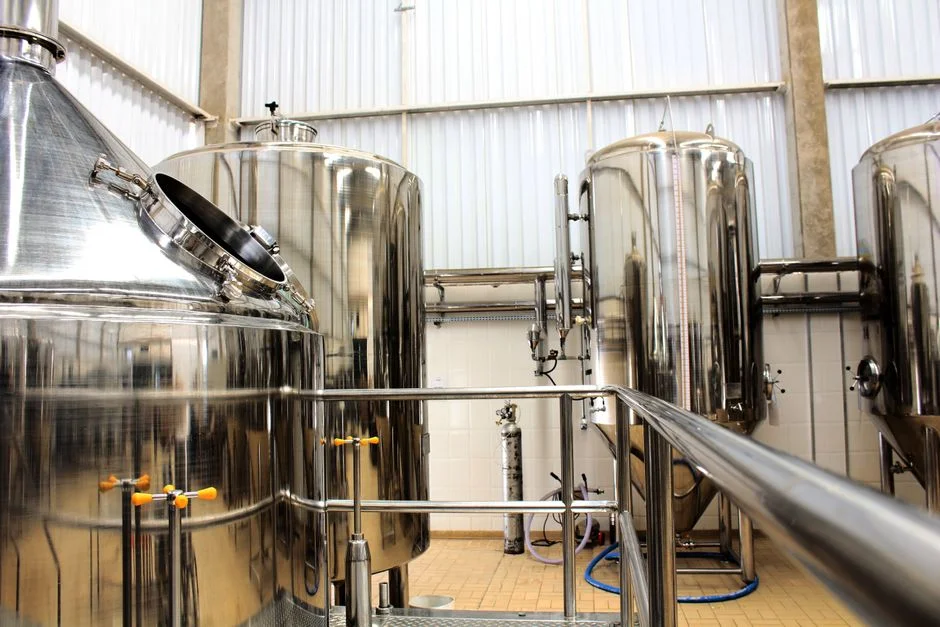
A refinery wastewater treatment train fails its design basis when influent characterization is borrowed from municipal defaults. The real feed carries free oil 50–500 mg/L, emulsified oil 200–1,000 mg/L, COD 500–3,000 mg/L, BOD₅ 200–800 mg/L, phenol 20–200 mg/L, sulfide 5–50 mg/L, ammonia-N 20–100 mg/L, and TDS 1,500–5,000 mg/L. Streams are not interchangeable: desalter brine runs hot (60–80 °C) with high TDS (often 30,000–60,000 mg/L) and is normally segregated; sour-water stripper bottoms carry 50–500 mg/L sulfide and require stripping before biological treatment; tank-farm draw contributes intermittent hydrocarbon slugs; spent caustic (pH 12–14, COD up to 50,000 mg/L) is segregated and oxidized separately; process condensate is low-COD but hot. Turnaround events drive slug loads of oil up to 5,000 mg/L into the equalization basin, and the downstream MBR must tolerate these without losing MLSS (typical operating range 6,000–12,000 mg/L, with oil-tolerant designs pushing to 12,000 mg/L).
| Stream | COD (mg/L) | Oil (mg/L) | Sulfide (mg/L) | TDS (mg/L) | Temperature (°C) | Treatment routing |
|---|---|---|---|---|---|---|
| Desalter brine | 200–800 | 50–300 | <5 | 30,000–60,000 | 60–80 | Segregate → oil removal → reuse as desalter wash or RO brine |
| Sour-water stripper bottoms | 500–2,000 | 20–100 | 50–500 | 2,000–5,000 | 35–50 | Strip H₂S → biological |
| Tank-farm draw | 300–1,500 | 200–1,000 (slug up to 5,000) | <10 | 500–2,000 | Ambient | Equalize → API/DAF |
| Spent caustic | 20,000–50,000 | 500–2,000 | 100–500 | 50,000–150,000 | 40–60 | Wet oxidation or segregated biological |
| Process condensate | 50–300 | <10 | 5–30 | <200 | 50–90 | Polish + reuse as boiler feed |
| Combined refinery wastewater | 500–3,000 | 250–1,500 (free + emulsified) | 5–50 | 1,500–5,000 | 25–45 | Primary oil removal → DAF → A/O-MBR |
If your design influent does not match these envelopes — particularly TDS below 1,500 mg/L or COD below 500 mg/L — you are probably looking at a specialty chemicals plant, not a refinery, and the biological sizing shrinks.
The 2026 Compliance Treatment Train: From Oil-Wet Influent to Reuse-Quality Permeate
The compliance train has four stages, each with parameters an engineer can defend in a PFD review. Stage 1 — primary oil removal — uses an API/CPI separator or corrugated plate interceptor to strip free oil with a residence time of 30–60 min and >95% free-oil removal; this is the cheapest unit on the train and the most often undersized. Stage 2 — DAF — employs a dissolved air flotation system rated 4–300 m³/h across 13 standard models, dropping emulsified oil to <10–20 mg/L at a surface loading of 5–20 m/h with a 30–50 mg/L polymer dose. Stage 3 — biological — runs A/O or A²/O with a submerged MBR using DF series PVDF flat-sheet membrane modules at 0.1 µm nominal pore size, achieving COD removal 90–95%, ammonia-N removal >95%, and BOD₅ <5 mg/L; MLSS runs 6,000–12,000 mg/L with aerobic HRT 6–10 h. The MBR effluent is <1 µm with a footprint roughly 60% smaller than conventional activated sludge. Stage 4 — membrane polish + RO — uses UF pretreatment (typically 0.01–0.1 µm) feeding an industrial RO system with up to 95% recovery, achieving TDS <50 mg/L, conductivity <100 µS/cm, with single-pass recovery 70–85% and two-pass up to 95%; CIP is scheduled every 4–8 weeks depending on feed SDI. The complete biological + membrane train is delivered as a skid-mounted integrated MBR membrane bioreactor system, with PLC automation on the RO for flux-stabilized recovery. Reference MBR effluent quality against industry benchmarks in our MBR effluent quality benchmarks and reuse standards write-up.
| Stage | Equipment | Key design parameter | Typical value | Output to next stage |
|---|---|---|---|---|
| 1. Primary oil removal | API / CPI separator | Residence time | 30–60 min | Free oil <50 mg/L |
| 2. Emulsified oil removal | DAF | Surface loading | 5–20 m/h | Total oil <10–20 mg/L |
| 3. Biological | A/O-MBR (DF series 0.1 µm) | MLSS / HRT | 6,000–12,000 mg/L; 6–10 h | COD <50 mg/L; NH₃-N <5 mg/L; BOD₅ <5 mg/L; turbidity <1 NTU |
| 4. Membrane polish + RO | UF + two-pass RO | Recovery / flux | 70–85% single pass; 95% two-pass; flux 15–25 LMH | TDS <50 mg/L; conductivity <100 µS/cm |
Sludge, Chemical Dosing and Reject-Stream Management
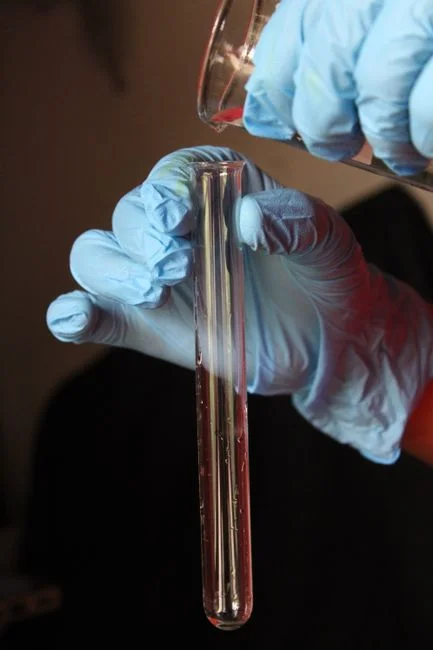
Sludge is where many 2026 reuse trains underperform in commissioning. Combined biological + DAF sludge yield runs 0.15–0.30 kg DS per kg COD removed, and the dewatering target is 22–28% dry solids using a plate-and-frame filter press for sludge dewatering sized 1–500 m² filtration area. RO reject is 15–30% of feed by volume and carries 3–5× the feed TDS; the 2026 decision is whether to send it to brine concentration (DTRO at 50–60% recovery, or MVR evaporation), blend it into cooling-tower blowdown, or push the plant toward ZLD. Where reuse recovery targets exceed 95%, MVR evaporators are the lowest thermal-energy route, and the OPEX benchmark for that addition is detailed in our MVR evaporator OPEX benchmark for 2026. Chemical conditioning is no longer optional at 2026 audit standard: coagulant, flocculant, pH adjusters, and antiscalant must be dosed through a PLC-controlled chemical dosing skid with flow-paced setpoints and SCADA-trended batch records; manual dosing fails most permit audit trails and is a known cause of permit non-conformity findings.
CAPEX, OPEX and the Reuse-Recovery Decision: When to Add ZLD
Procurement leads need a 2026 budget envelope before they go to the board. For a 500 m³/day reuse train, CAPEX benchmarks are: DAF + A/O-MBR + RO ≈ $1.0–1.8M; full biological + RO polished to cooling-tower quality ≈ $1.5–2.5M; ZLD with MVR evaporator ≈ $5–15M depending on brine volume and crystallizer scope. OPEX for a reuse train without ZLD runs $0.25–0.45/m³ treated: electricity $0.08–0.18/m³, chemicals $0.05–0.12/m³, labor + membrane replacement $0.10–0.20/m³. Adding ZLD via MVR lifts OPEX to $1.20–2.50/m³, with thermal energy (steam or mechanical vapor recompression electricity) the dominant term. The 95%-recovery cliff is the practical decision point: below 70% recovery, cooling-tower makeup reuse alone is justified; between 70% and 95%, RO + brine management is sufficient; above 95% recovery or under a zero-discharge mandate, MVR/crystallizer ZLD becomes unavoidable. Geography matters: refineries in Shandong, Sinopec inland provinces, and the Middle East operate under tighter reuse mandates than coastal facilities with cheaper intake; the 2026 industrial water-reuse market outlook documents the regional split.
| Recovery target | Configuration | CAPEX (500 m³/day, USD) | OPEX ($/m³) | Triggering condition |
|---|---|---|---|---|
| <70% (cooling-tower makeup only) | DAF + A/O-MBR + single-pass RO | $1.0–1.8M | 0.25–0.45 | Coastal sites, no zero-discharge mandate |
| 70–95% | DAF + A/O-MBR + two-pass RO + brine management | $1.5–2.5M | 0.40–0.70 | Water-stress region; intake allocation risk |
| >95% / ZLD | Full train + MVR evaporator + crystallizer | $5–15M | 1.20–2.50 | Zero-discharge permit; brine disposal cost >$5/m³ |
Pre-Commissioning Compliance Checklist for a 2026 Reuse Project
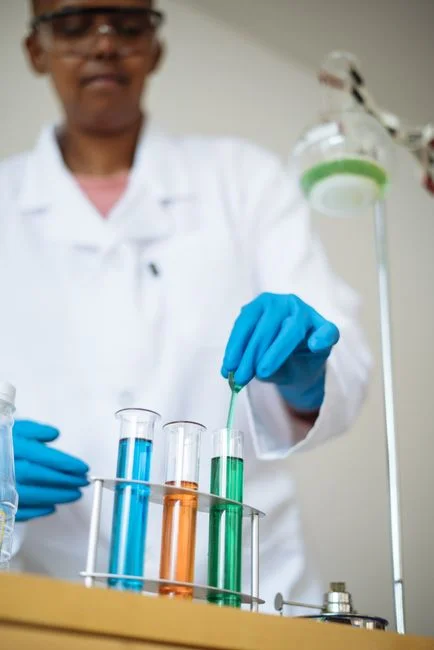
The handover dossier is what regulators actually read. Build it before mechanical completion, not after. Sampling protocol must include 24-h flow-weighted composite plus grab samples, with online analyzers for COD, TSS, pH, conductivity, temperature, and oil-in-water (fluorescence) feeding SCADA with a 1-year retention archive. Reuse-water hazard analysis covers cross-connection control between reuse and potable lines, Legionella management for cooling-tower makeup (monthly plate counts, biocide rotation), color/turbidity limits, and microbiological controls using either ClO₂ or UV disinfection — a chlorine dioxide generator rated 50 g/h to 20,000 g/h covers the duty range from a 100 m³/day skid up to a 50,000 m³/day site. Permit dossier items include design basis, mass balance, P&IDs, commissioning plan, operator training records, and the O&M manual with shut-down SOPs. The handover closes only after a 30-day performance test with third-party lab verification of all parameters in the limit matrix, signed off before commercial operation date.
| Checklist item | Owner | Acceptance criterion | Document reference |
|---|---|---|---|
| Online analyzer calibration records | I&E / Process | ±2% of lab; 1-year data retention | SCADA export, calibration logbook |
| 24-h composite + grab sampling SOP | Lab / EHS | EPA 40 CFR 136 methods; flow-weighted | SOP-WW-001 |
| Cross-connection control inspection | EHS / Mechanical | Zero potable cross-connections; backflow preventers on all reuse tie-ins | P&ID mark-up; inspection report |
| Legionella management plan (cooling-tower reuse) | EHS | Plate count <10³ CFU/L; biocide rotation monthly | LSI-Legionella-2026 |
| Disinfection performance (ClO₂ or UV) | Process | 0.2–0.5 mg/L ClO₂ residual or >40 mJ/cm² UV dose | Reuse permit appendix |
| 30-day performance test, third-party lab | EPC / Owner | All parameters in limit matrix compliant 95% of operating days | Third-party lab report; COD before COD |
| Operator training and O&M handover | Owner / EPC | Signed training records; SOPs in local language | Training matrix; O&M manual Rev.0 |
Frequently Asked Questions
What is petrochemical wastewater reuse compliance in 2026? It is the simultaneous satisfaction of discharge limits (EPA 40 CFR 419, EU IED BAT-AELs, China GB 31572) and reuse-quality targets (cooling-tower makeup TDS ≤500 mg/L, boiler feed TDS <50 mg/L) from a single treatment train, with online analyzers and 1-year data retention feeding permit audits. The compliance train is oil-separation → DAF → A/O-MBR → UF/RO, typically achieving 70–95% recovery with MBR effluent <1 µm and RO permeate <50 mg/L TDS.
What is the 95% recovery cliff that forces ZLD capex? Below 70% recovery, single-pass RO suffices; between 70% and 95%, two-pass RO plus brine management is economic; above 95% or under a zero-discharge mandate, MVR evaporation and crystallization become unavoidable, lifting OPEX from $0.25–0.45/m³ to $1.20–2.50/m³. The cliff is set by RO membrane flux limits, scaling tendency of concentrate, and brine-disposal cost.
Which 2026 EU BAT conclusions force refinery upgrades? The 2024 EU IED BAT conclusions (referenced in 2026 BAT-AEL tables) tightened COD BAT-AEL to 25–40 mg/L and total hydrocarbons to ≤0.1–0.5 mg/L in treated effluent, requiring membrane polish (MBR + RO) at EU refineries still running API/DAF-only trains.
How does a refinery meet China GB 31572-2015 reuse requirements in 2026? Compliance is achieved by DAF (oil <5 mg/L) → A/O-MBR (COD <50 mg/L, NH₃-N <8 mg/L) → two-pass RO (TDS <50 mg/L) with PLC-controlled chemical dosing and a 30-day third-party performance test before commercial operation.