Why Industrial Wastewater Reuse Is Now Non-Negotiable in Iran
More than 80% of Iran's industrial and domestic wastewater is already reused, almost entirely for uncontrolled agricultural irrigation, according to the municipal wastewater survey by Akhbari and Mirbagheri. That figure proves the country's real bottleneck in 2026 is not "whether to treat" but "whether to treat well enough to discharge safely or to reuse formally inside the plant." Formal industrial reuse — boiler-feed makeup, cooling-tower make-up, process water, green-belt irrigation — is the next engineering frontier, and it is being driven as much by hydrology as by law.
Iran's per-capita renewable freshwater has fallen below 1,500 m³/year, crossing the UN water-stress threshold, and central plateau provinces — Isfahan, Kerman, Yazd, South Khorasan — sit below 1,000 m³/year. The Iran Water and Wastewater Resources Statistics put the country's exploitable surface water at roughly 87 billion m³/year, but the distribution is so uneven that industrial users in the central plateau effectively compete with farmers for every cubic meter.
To put a single project into scale: 1,000 m³/day of treated industrial effluent, polished through an MBR and an industrial RO unit, yields enough demineralized water to supply a 50 MW combined-cycle cogeneration block (boiler feed at ~2% blowdown plus cooling-tower make-up) or to irrigate roughly 50 hectares of pistachio orchards under Kerman's standard 15,000 m³/ha/year duty. The 7th and 8th National Development Plans, anchored in the 1991 Environmental Protection Act, both name industrial water reuse as a measurable KPI — meaning the question at a DOE pre-meeting in Tehran, Isfahan, or Bandar Abbas is no longer "do you need a plant?" but "can your plant hit reuse-grade effluent on day one?"
Iran's 2026 Regulatory Framework: EPAct 1991, DOE Effluent Limits & Permits
The legal chain is short and old: the 1991 Environmental Protection Act (amended through 2017) authorizes the Department of Environment (DOE) to set industrial effluent standards, and provincial DOE offices issue the construction and operating permits. The Ministry of Industries, Mining and Trade (MIMT) gates new-plant approval, but the binding technical numbers come from the DOE effluent standard, last comprehensively revised in the mid-2010s and applied as the 2026 working limits by provincial inspectors. The table below summarizes the 2026 DOE industrial discharge ceiling — the numbers a process engineer must design to:
| Parameter | Existing plants (mg/L) | New plants (mg/L) | Notes |
|---|---|---|---|
| COD | ≤100 | ≤60 | Cr₆⁺ ≤0.5; CN⁻ ≤0.5 in applicable sectors |
| BOD₅ | ≤30 | ≤20 | Standard 5-day BOD at 20 °C |
| TSS | ≤40 | ≤30 | Reuse routes typically demand ≤10 |
| Oil & grease | ≤10 | ≤5 | Refinery/petrochem effluents |
| Total nitrogen | ≤25 | ≤15 | For surface-water discharge |
| Total phosphorus | ≤2 | ≤1 | Receiving-water eutrophication control |
| pH | 6.5–8.5 | 6.5–8.5 | Continuous monitoring required |
| Residual chlorine | ≤0.2 | ≤0.2 | Disinfection-stage only |
| Temperature | ≤40 °C | ≤35 °C | Surface-water receivers |
Two routing choices control the engineering envelope. Discharge to surface water requires hitting every parameter in the table and is becoming harder to permit in Isfahan, Yazd, and Kerman because provincial DOE offices increasingly reject new surface-water outfalls. Reuse for irrigation allows higher TDS — up to roughly 2,000 mg/L under the agricultural-reuse annex — but demands documented pathogen log-reduction (typically 5-log for fecal coliforms), a hydrogeological compatibility note, and a written end-user agreement. In the oil-and-gas cluster around South Pars and the Persian Gulf coast, and in the steel belt at Isfahan Mobarakeh and Kerman, ZLD is now treated as a de facto standard even when the law only requires ≤10 mg/L oil & grease on the discharge side.
The permit workflow itself is six stages and is the timeline an EPC project manager should plan around, not around construction alone: (1) feasibility study, (2) Environmental Impact Assessment report submitted to provincial DOE, (3) DOE technical-committee review (typical review 60–120 days), (4) construction permit, (5) commissioning with DOE-present pilot testing on real influent, (6) operating permit valid for 3 years and renewable on compliance evidence. Plant engineers who treat pilot testing as a checkbox consistently overrun by 8–12 weeks; treat it as a 4–6 week on-site campaign and the DOE sign-off moves faster.
Matching Treatment Trains to Iran's Main Industrial Sectors
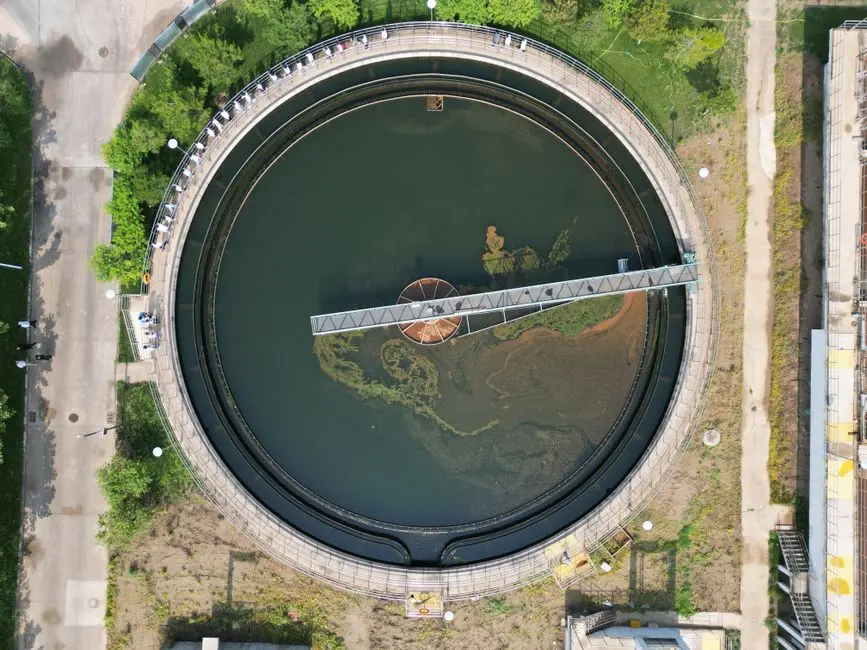
No single process train fits every sector in Iran, and the DOE reviewer will grade the proposal on influent characterization first, equipment list second. The decision matrix below pairs the four dominant industrial wastewater profiles with the treatment train most commonly accepted by provincial DOE offices in 2026:
| Sector | Typical influent (mg/L) | Core train | DOE-critical target |
|---|---|---|---|
| Refinery / petrochem (incl. South Pars) | COD 500–1,200; O&G 50–500; TSS 100–400; TDS up to 35,000 | Equalization → DAF → biological (MBR or SBR) → multimedia filter → RO; brine concentrator + crystallizer for ZLD | O&G ≤5 mg/L; COD ≤60 mg/L; TDS <50 mg/L for reuse |
| Steel / metals (Isfahan Mobarakeh, Kerman) | Acid pickling pH 1–3; Cr⁶⁺ 5–50; cold-rolling O&G 200–2,000 | pH adjustment → Cr⁶⁺ reduction (FeSO₄ at pH 2–3) → lamella clarifier → DAF for emulsions | Cr⁶⁺ ≤0.5 mg/L; SS ≤30 mg/L |
| Textile / dyeing | COD 1,500–5,000; color 500–2,500 Pt-Co; TDS 2,000–6,000 | Coagulation or electro-coagulation → UASB/IC anaerobic → MBR → ozone or RO for color & salinity | Color ≤50 Pt-Co; COD ≤100 mg/L |
| Food & beverage (dairy, poultry, date) | BOD 1,000–4,000; FOG 200–1,500; TN 50–200 | Rotating screen → DAF → anaerobic MBR with biogas recovery → RO if reuse | BOD ≤30 mg/L; FOG ≤10 mg/L |
| Pulp & paper | COD 1,500–3,500; TSS 500–1,500; color high | Primary clarification → DAF → MBR (black-liquor loop recovered upstream) | TSS removal >95%; COD ≤100 mg/L |
Two design rules from Iranian operating experience: route refinery desalter brine and RO concentrate through a forced-circulation crystallizer rather than a solar pond (solar ponds fail DOE inspection in most coastal provinces because of leachate monitoring), and treat textile dye-house effluent separately from the rest of the mill — mixed streams are the single biggest reason MBR plants in Isfahan textile parks do not meet color targets.
Core Equipment Stack: DAF, MBR, RO and When Each Earns Its Place
The mechanical package that carries most Iranian industrial WWTPs through a DOE inspection is a four-stage stack, and every stage has a defensible performance number behind it.
Dissolved Air Flotation (DAF). Micro-bubble flotation at 4–300 m³/h, sized on peak hydraulic load with a 20% recirculation rate, delivers 85–95% TSS removal and 90–98% oil-and-grease removal on refinery and food-industry influent. A properly designed DAF system with an integrated skimmer and lamella plate pack will routinely cut downstream biological loading by half, which is why DOE reviewers expect DAF pre-treatment in any oily stream and most food streams. For a deeper look at the design constraints, the DAF design for heavy-industry wastewater engineering guide covers the hydraulic and chemistry trade-offs in detail.
Membrane Bioreactor (MBR). Submerged PVDF hollow-fiber modules at 0.1–0.4 µm pore size produce COD ≤50 mg/L and TSS ≤5 mg/L in a single biological stage, with an effluent directly reusable for many in-plant duties. MBR consumes 10–20× less energy than cross-flow UF at the same flux (typically 15–25 LMH), and the integrated MBR system approach (membrane tank + aeration + backwash in one skid) is the lowest-risk way to hit DOE's ≤30 mg/L TSS ceiling in new-plant permitting. For plants with variable influent, an SBR upstream of the MBR is a cheaper buffer than equalization alone.
Industrial Reverse Osmosis. Recovery up to 95% on brackish industrial water, with permeate conductivity consistently below 50 µS/cm when paired with a multimedia filter and anti-scalant dosing. The industrial RO unit is the unit operation that converts an MBR effluent from "compliant discharge" into "reuse-grade boiler feed." For high-salinity refinery brine, a separate high-pressure RO (80–90 bar) precedes any thermal ZLD step.
Chemical dosing and sludge dewatering. PLC-controlled coagulant, pH-adjustment, and anti-scalant skids sit ahead of every DAF and every RO, and under-specified dosing is the #1 cause of membrane fouling in Iranian plants — not the membranes themselves. The PLC-controlled chemical dosing package should be specified with at least three dosing points (coagulation, pH correction, anti-scalant) and flow-pacing. Sludge dewatering on a plate-and-frame filter press delivers 18–25% dry solids cake, is mechanically simpler than centrifuges, and uses spare parts that are easier to source inside Iran. Operators looking to optimize the dewatering step further can cross-reference the sludge dewatering cost strategies breakdown. Plants evaluating electrocoagulation as a tertiary polish for textile or metal streams should also review the electrocoagulation OPEX analysis to size the kWh-per-m³ honestly against PAC dosing.
2026 CAPEX, OPEX and Sanctions-Aware Logistics for Iran Projects
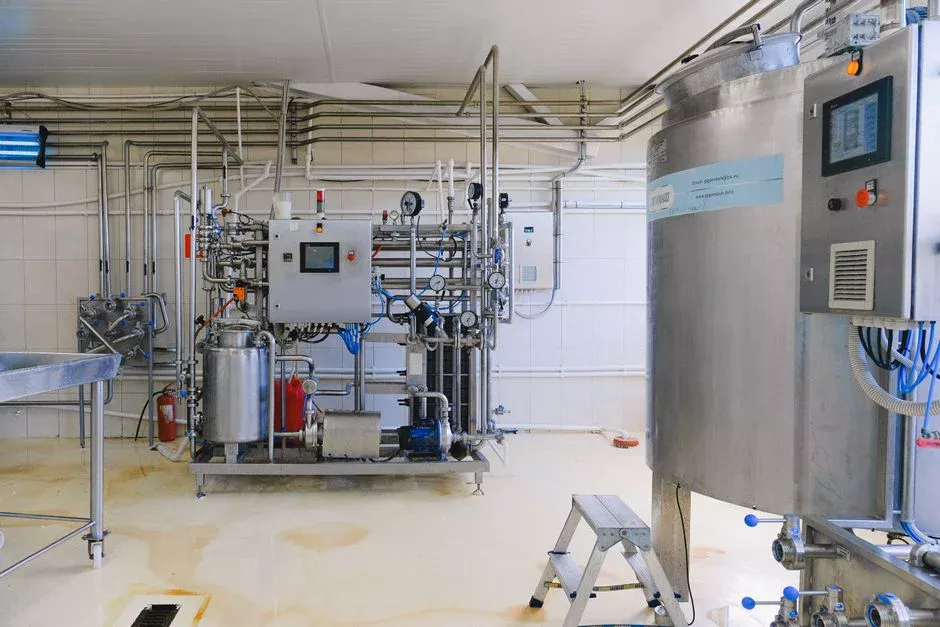
CAPEX in 2026 is best expressed as USD per m³/day of installed treatment capacity, on a turnkey basis including civil works, mechanical, instrumentation, and commissioning for a 100–5,000 m³/day plant:
- Food and beverage: 250–400 USD/m³/day
- Textile and dyeing: 350–550 USD/m³/day (color removal drives cost up)
- Refinery and petrochemical (no ZLD): 500–750 USD/m³/day
- Refinery with full ZLD (brine concentrator + crystallizer): 750–900 USD/m³/day
OPEX for an MBR-dominated plant typically breaks down as: energy 40–55% (aeration is the single largest line), chemical consumption 15–20%, membrane replacement amortized over 5 years 10–15%, labor 15–20%, with sludge disposal making up the balance. In a ZLD refinery train, thermal energy for the brine concentrator and crystallizer is the dominant OPEX line and can flip the energy share above 60% if heat integration is missed.
Logistics in 2026 are still the friction point most often underestimated by first-time exporters. Most Chinese and European equipment reaches Iran via Turkey (Mersin, Istanbul) or the UAE (Jebel Ali, Sharjah) under third-country invoicing, with letters of credit confirmed through Asian or Turkish banks rather than Iranian ones. Sea freight to Bandar Abbas runs 8–14 weeks from East Asia, plus 2–4 weeks for inland transport to Tehran, Isfahan, or Tabriz. On-site commissioning typically requires a 2-engineer mobilization of 6–10 weeks for a 1,000 m³/day plant — one visit for cold commissioning, one for pilot testing with DOE present. A procurement manager should budget the second visit as a fixed line, not as a contingency.
Supplier Evaluation Checklist for Iranian Industrial WWTPs in 2026
Score each vendor 1–5 on the criteria below; a total above 32 (out of 40) is a low-risk supplier for a 2026 Iranian industrial WWTP. The weighting is what experienced EPC contractors in the region actually use, not a generic procurement template:
| # | Criterion | Weight | What to look for in the answer |
|---|---|---|---|
| 1 | Influent characterization depth | 5 | Vendor asks for 24-h composite samples, not a single grab |
| 2 | Treatment train fit to sector | 5 | Reference list in your exact sub-sector (refinery, steel, textile, food) |
| 3 | References in Iran or comparable water-stressed regions | 5 | At least 2 operating plants visit-able or with published case data |
| 4 | After-sales response time, written | 4 | ≤72 h on-site response from Dubai or Turkey |
| 5 | Spare-parts inventory in Dubai or Turkey | 4 | Stock list with membrane modules, pumps, instruments |
| 6 | Sanctions-aware payment terms | 4 | LC via Asian or Turkish bank; third-country invoicing documented |
| 7 | DOE-acceptable pilot-testing protocol | 5 | Written 4–6 week pilot plan with sampling schedule |
| 8 | ESG and reporting documentation | 3 | ISO 14001, GRI water reporting, or equivalent |
| 9 | Mechanical-package integration with Iranian EPC | 3 | Willingness to work as sub-supplier to a local EPC for civil/permitting |
| 10 | Training and O&M documentation in Farsi or English | 2 | Operator-level P&IDs, fault tree, SOPs supplied |
The mechanical core of the train — DAF, MBR, RO, chemical dosing, and sludge dewatering — is the part a Chinese equipment manufacturer can deliver on time and at a defensible price point. Site integration, civil works, the EIA submission, and DOE liaison are almost always handled by an Iranian EPC partner, and the best outcomes come from vendors that accept this split explicitly in the contract rather than fighting it.
Frequently Asked Questions
Q1: What are the 2026 DOE industrial wastewater effluent limits in Iran?
The 2026 DOE working limits for new plants are COD ≤60 mg/L, BOD₅ ≤20 mg/L, TSS ≤30 mg/L, oil & grease ≤5 mg/L, total nitrogen ≤15 mg/L, total phosphorus ≤1 mg/L, pH 6.5–8.5, residual chlorine ≤0.2 mg/L, and temperature ≤35 °C. Existing plants operate against a relaxed schedule (COD ≤100, BOD₅ ≤30, TSS ≤40, O&G ≤10), but provincial DOE offices are closing the gap on renewal.
Q2: Is ZLD mandatory for Iranian refineries?
ZLD is not a single national mandate, but it is effectively required for inland refineries in water-stressed provinces (Isfahan, Kerman, Yazd) and for any new plant on the Persian Gulf coast where DOE has tightened brine-discharge permits since 2023. The South Pars and Bandar Abbas petrochemical clusters operate under site-specific ZLD conditions written into their operating permits.
Q3: How much does an industrial WWTP cost in Iran in 2026?
Turnkey CAPEX in 2026 runs 250–400 USD/m³/day for food and beverage, 350–550 for textile, 500–750 for refinery and petrochemical without ZLD, and 750–900 for full ZLD refinery trains. OPEX for an MBR-dominated plant is dominated by energy at 40–55% of total operating cost.
Q4: Which industries in Iran need pre-treatment with DAF?
Refineries, petrochemicals, steel cold-rolling mills, food and dairy, poultry processing, and any oily or high-FOG stream benefit from DAF pre-treatment. It is the de facto first stage before any biological unit in Iranian plants and is what provincial DOE reviewers look for in a process flow diagram.
Q5: Can international suppliers still ship wastewater equipment to Iran?
Yes, through third-country shipping from Turkey or the UAE with letters of credit via Asian or Turkish banks. Sea transit to Bandar Abbas is typically 8–14 weeks, and on-site commissioning is usually a 2-engineer mobilization of 6–10 weeks. Sanctions-aware payment terms and a Dubai or Turkey spare-parts depot are the two operational markers that separate workable suppliers from theoretical ones.