Why Indore's 2025–26 Sewage Crisis Changes How Domestic STPs Must Be Designed
On 2 January 2026, The Guardian reported that at least 10 people, including a five-month-old infant, had died and more than 270 had been hospitalised in the Bhagirathpura neighbourhood of Indore after a public toilet — built without a septic tank directly above a drinking-water pipeline — allowed sewage to seep into the municipal supply (The Guardian, Jan 2026). A one-member judicial commission of inquiry, headed by retired Madhya Pradesh High Court justice Sushil Kumar Gupta, subsequently confirmed 24 deaths between December 2025 and February 2026 and submitted a 150-page report to the Indore bench of the high court blaming a delayed tender process for replacing damaged sewage and drinking-water lines (Hindustan Times, 2026). Postmortem findings cited in the commission's report attribute the fatalities to gastrointestinal infection, diarrhoea, and dehydration following consumption of water in which E. coli, Salmonella, and Vibrio cholerae were detected (Hindustan Times, 2026).
The crisis is not an isolated lapse. A peer-reviewed environmental risk assessment published via PMC/NIH documents that more than 20% of sewage in Indore is dumped untreated into the water supply and that 80% of the city's sewers are underutilised or blocked, with seasonal overflow during the monsoon compounding the load on the Khan River and adjacent networks (PMC/NIH). The same source notes that both the Water (Prevention and Control) Act, 1974 and the National River Conservation Plan (1985) — the two instruments that should have prevented the situation — were effectively dismantled by 2014. For any consulting engineer, builder, or estate manager sizing a new domestic sewage treatment plant in Indore in 2026, the operational conclusion is uncomfortable but unavoidable: the municipal network can no longer be treated as a reliable downstream buffer. The on-site STP is now the primary compliance boundary, not a secondary safeguard.
Regulatory Framework for Domestic Sewage Treatment in Madhya Pradesh
The national instrument governing water quality and sewage discharge in India is the Water (Prevention and Control) Act, 1974, which empowers the Central Pollution Control Board (CPCB) and State Pollution Control Boards — including the Madhya Pradesh Pollution Control Board (MPPCB) — to set effluent standards and prosecute non-compliant discharges (PMC/NIH). The 1985 National River Conservation Plan, originally the funding vehicle for municipal STPs, has not been effective in delivering enforcement on the ground; the PMC/NIH assessment records that both the 1974 Act and the 1985 Plan failed to act against violators and were effectively dismantled by 2014. The policy gap that produced the Bhagirathpura outbreak is therefore a documented governance failure, not an academic concern.
For 2026 project specifications in Indore, the working compliance envelope is: discharge limits aligned to current CPCB norms for domestic sewage, mandatory disinfection of the treated stream, and sludge handling consistent with the Swachh Bharat and AMRUT 2.0 frameworks that govern municipal STP upgrades. Because the specific MPPCB notification in force at the time of commissioning determines the exact BOD, COD, total nitrogen, and faecal coliform limits that the plant must meet, designers should obtain the latest MPPCB order — and the latest CPCB consolidated effluent schedule — before freezing the design basis. The supplied research does not publish the numeric MPPCB limits, and the engineer should treat any vendor quotation that quotes a limit without a document reference as unverified.
Lab accreditation is the second compliance risk that surfaced in 2026. The Guardian reports that only 8% of public water-testing laboratories run by the Delhi government are accredited by the National Accreditation Board for Testing and Calibration Laboratories (NABL), and that 59% of public labs nationwide are accredited (The Guardian, 2026). In-house QA data from non-accredited facilities will not survive an MPPCB audit, so any commissioning report or periodic compliance test for an Indore STP should be issued by an NABL-accredited laboratory. The Bhagirathpura commission's findings have also made commissioning records and periodic testing logs part of owner liability, not optional paperwork (Hindustan Times, 2026).
Typical Design Loads for Domestic Sewage in Indore Projects
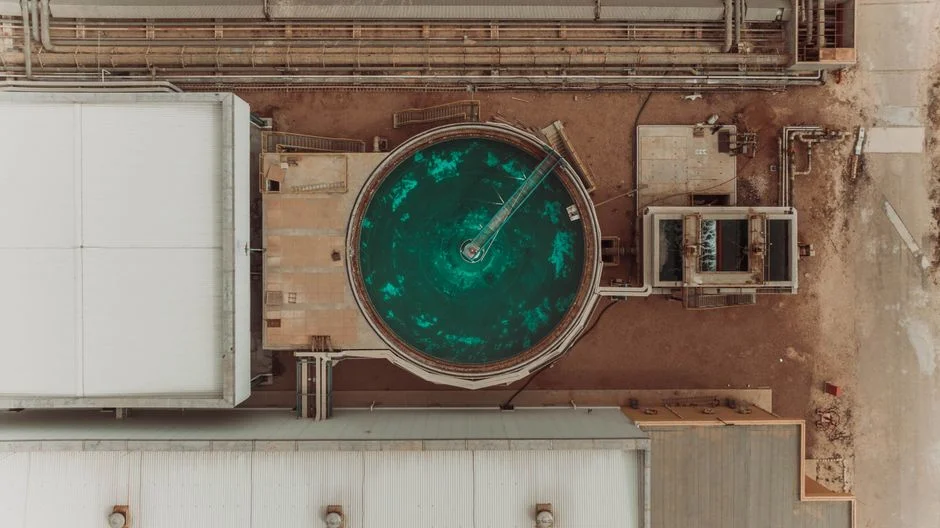
The supplied research does not publish Indore-specific per-capita sewage generation figures, BOD/COD concentrations, or peak-hour peaking factors. The engineer should therefore treat the latest IMC loading data, the current MPPCB design basis, and the IS 11702 / CPHEEO manual defaults as the design floor — and challenge any vendor that quotes an equipment rating without showing the load calculation behind it. The qualitative parameter set the designer must verify with the vendor before ordering is:
| Parameter | Why it matters for Indore design | Source / input the buyer must obtain |
|---|---|---|
| Average daily flow (m³/day) | Sets reactor volume, clarifier area, and pump duty | IMC sewer connection feasibility note; per-capita basis from CPHEEO |
| Peak hourly flow (m³/hr) | Equalisation volume, pump sizing, overflow risk | Site-specific peak factor; CPHEEO peaking curves |
| BOD (mg/L) and COD (mg/L) | Sizing of aeration tank, MBBR media, or MBR membrane area | Site influent sampling; CPHEEO defaults as floor — see BOD reduction methods for domestic sewage |
| TSS (mg/L) | Clarifier design and membrane protection in MBR trains | Site influent sampling |
| Total nitrogen and NH3-N (mg/L) | Nitrification stage sizing; critical in extended-aeration trains | Site influent sampling |
| Total phosphorus (mg/L) | Decides whether chemical precipitation is required | Site influent sampling |
| FOG (fat, oil, grease) (mg/L) | Pre-treatment guard for biological and membrane stages | Site influent sampling, especially for hotel and hospital projects |
| Faecal coliform (MPN/100 mL) | Disinfection dose; the pathogens of concern are E. coli, Salmonella, and V. cholerae (Hindustan Times, 2026) | Site influent and effluent sampling by NABL-accredited lab |
Peak hydraulic load deserves particular attention in Indore. With 80% of the city's sewers documented as underutilised or blocked and seasonal overflow during the monsoon already on record (PMC/NIH), the upstream municipal buffer cannot be relied on to absorb diurnal peaks or storm surges from a new project. On-site flow equalisation, with a hold-up time calibrated to the project's own peak factor, is therefore not optional. For any project that proposes a hybrid disposal strategy — partial reuse on-site and partial discharge to the IMC sewer — the engineer must obtain a current sewer connection feasibility note from IMC before sizing the equalisation tank.
Choosing the Right Treatment Train: MBBR, MBR, or Buried Package Plant
Three treatment-train architectures dominate the Indian domestic STP market for residential colonies, hotels, hospitals, and small commercial complexes. The selection should be driven by footprint, reuse intent, and operator capability — not by capex alone.
| Criterion | MBBR (Moving Bed Biofilm Reactor) | MBR (Membrane Bioreactor) | Buried package plant (WSZ / extended-aeration A/O) |
|---|---|---|---|
| Core process | Aerobic biofilm on free-floating carrier media | Activated sludge followed by submerged ultrafiltration membranes | Anoxic/aerobic contact oxidation with integral sedimentation and disinfection in one buried unit |
| Typical project fit | Mid-size residential and hotel projects with moderate reuse goals | Projects requiring near-reuse-quality effluent in a small footprint | Space-constrained residential colonies, hotels, hospitals, rural and commercial sites |
| Footprint | Moderate; open or containerised | Compact; membranes replace the secondary clarifier | Minimal at grade; full unit installed below grade with landscaping above |
| Operator skill | Moderate; routine media and DO control | Higher; membrane cleaning, integrity testing, permeate quality monitoring | Low; fully automated, no on-site operator |
| Sensitivity to load shock | Moderate; biofilm buffers short-term shocks | Higher; membrane fouling risk if MLSS or FOG spikes | Moderate; equalisation volume inside the buried tank buffers peaks |
| Reuse suitability | Flushing, irrigation, cooling after tertiary filtration and disinfection | Highest; near-reuse quality directly for toilet flushing, gardening, or boiler feed after polishing | Gardening and toilet flushing after the integrated disinfection stage |
For an MBR membrane bioreactor STP, the higher effluent quality comes with membrane integrity testing, periodic chemical cleaning, and a stricter influent specification — particularly on FOG and TSS — that must be built into the pre-treatment design. For a buried package sewage treatment plant, the operational advantage is the absence of an above-grade operator presence and the ability to landscape over the unit, which is often the deciding factor in dense residential colonies. Whatever the architecture, the shortlisted vendor in 2026 must demonstrate pathogen log-reduction data for the same agents confirmed in Bhagirathpura — E. coli, Salmonella, and V. cholerae (Hindustan Times, 2026) — not generic total coliform numbers. Any vendor that cannot show this traceable to an NABL-accredited lab test should be eliminated from the shortlist.
Disinfection and Sludge Handling — The Two Audit-Critical Stages
The Bhagirathpura outbreak is, at its root, a disinfection and containment failure. The pathogens confirmed by postmortem and water testing — E. coli, Salmonella, and V. cholerae (Hindustan Times, 2026) — are exactly the organisms that chlorine-, UV-, or ozone-based disinfection is designed to inactivate. A domestic STP specification that treats disinfection as a polish step rather than a primary barrier is therefore non-compliant with the post-2025 enforcement environment. The disinfection options the designer should evaluate with the vendor are chlorination (sodium hypochlorite or chlorine gas), chlorine dioxide, UV-C, and ozone. The dosing system must be PLC-controlled, with logged dose and contact time retained in the plant's data historian so that MPPCB auditors can verify the barrier performance against the design intent. An on-site chlorine dioxide disinfection system offers the advantage of generating oxidant on demand, which avoids the bulk storage and degradation issues associated with sodium hypochlorite. Where reuse-quality water is required, a UV steriliser downstream of secondary treatment provides a chemical-free final barrier, provided the upstream TSS is held within the manufacturer's transmissivity specification.
Sludge handling is the second audit-critical stage and the one most often left vague in vendor quotations. A domestic STP without a defined sludge-thickening and dewatering route is incomplete: accumulated sludge in on-site systems becomes its own contamination source, in exactly the way the missing septic tank under the Bhagirathpura public toilet did (The Guardian, Jan 2026). The engineer should verify the vendor's sludge scope in writing — thickened sludge storage volume, dewatering equipment, target cake moisture percentage, and final disposal route — rather than accepting "sludge management" as a single line item. A sludge dewatering filter press is a common choice for packaged plants above ~50 m³/day, but its sizing must match the expected dry solids loading, and the vendor must commit to cake moisture and solids capture figures, not just a daily throughput number.
Procurement and Compliance Checklist for Indore Projects in 2026
The following items should be put in writing in every vendor meeting and retained in the project file as the due-diligence record. The Bhagirathpura commission has made owner-side record keeping a defence, not an option (Hindustan Times, 2026).
- Written performance guarantee. Require vendors to demonstrate, in writing, treatment performance against the current MPPCB/CPCB discharge schedule — with the specific notification reference, not a generic "meets CPCB norms" verbal claim.
- NABL-accredited third-party testing. Require influent and effluent testing during commissioning and at the agreed periodic interval by an NABL-accredited lab, given the 59% national accreditation rate of public water-testing labs (The Guardian, 2026).
- Pathogen barrier evidence. Require the vendor to show how the proposed system would have prevented an E. coli / Salmonella / V. cholerae breakthrough of the kind confirmed in Bhagirathpura (Hindustan Times, 2026), with log-reduction data traceable to a recognised test method.
- Documented O&M protocol. Require operator qualifications, spares holding, alarm philosophy, and an escalation matrix. The MBR plant O&M manual is a useful reference benchmark for MBR scopes; equivalent protocols should be demanded for MBBR and buried package scopes.
- Handover and defect liability. Require as-built drawings, commissioning data, and a 12-month defect-liability period with response-time commitments. Where AMRUT 2.0 funding or co-funding is in scope, also verify vendor credentials against the latest AMRUT 2.0 vendor and pump performance data.
Frequently Asked Questions
What budget should an engineer in Indore plan for a packaged domestic STP in 2026?
The supplied research does not publish a current per-m³ capex or opex figure for packaged domestic STPs in Indore, and any vendor quote should be benchmarked against at least three recent comparable installations of the same architecture (MBBR, MBR, or buried package) before being accepted. The buyer must request an itemised quotation that separates tankage, blowers or aeration system, pumps, membranes or media, disinfection, sludge dewatering, instrumentation, and PLC — and must obtain a separate annual O&M cost with operator-days, power consumption, and chemical consumption broken out, so that the total cost of ownership over a 10-year horizon can be compared.
How do I select a compliant STP vendor for an Indore project without inheriting the Bhagirathpura risk?
Shortlist only vendors who can produce, in writing, (a) a performance guarantee tied to the current MPPCB/CPCB notification, (b) pathogen log-reduction data for E. coli, Salmonella, and V. cholerae from an NABL-accredited lab — these are the agents confirmed in the 2025–26 Bhagirathpura outbreak (Hindustan Times, 2026) — and (c) a documented O&M protocol with operator qualifications and a 12-month defect-liability period. Reject any vendor that relies on verbal compliance claims, cannot name the lab that issued their test reports, or has no installation reference within Madhya Pradesh.
Which treatment train is best for a space-constrained residential colony in Indore?
For a site where above-grade footprint is the binding constraint and reuse is limited to gardening and toilet flushing, a buried anoxic/aerobic package plant such as the WSZ-type A/O unit is typically the most defensible choice: it is installed below grade, fully automated, and avoids the operator-presence and membrane-cleaning burden of an MBR. For projects that require higher reuse quality — for example, a hotel or hospital where treated water is intended for cooling or boiler makeup — an MBR membrane bioreactor is the appropriate choice provided the operator capability and influent pre-treatment are designed accordingly.
What commissioning and testing records should an Indore STP owner retain for MPPCB audits?
Retain the design basis with the MPPCB/CPCB notification reference, the as-built drawings, the commissioning report with influent and effluent results from an NABL-accredited lab, the PLC data logs covering at least 90 days of operation, calibration certificates for online instrumentation, and the periodic compliance test results at the frequency required by the current MPPCB order. Given the documented enforcement gap that contributed to the Bhagirathpura outbreak (PMC/NIH) and the commission's emphasis on owner-side records (Hindustan Times, 2026), these documents are the owner's primary defence in any future audit or incident investigation.