How Lucknow Treats Domestic Sewage Today
Two centralised STPs serve Lucknow's municipal area: a 345 MLD UASB reactor and a 56 MLD FAB reactor, as documented in the Tripathi & Singal study published in Hydro Nepal, Journal of Water, Energy and Environment, Vol. 12, January 2013. The same study records a recurring operational issue — wastewater mixes with domestic effluent while travelling through the trunk network, which lowers the BOD concentration reaching the plant inlets.
Because the UASB design assumes a defined BOD load, this dilution cuts biogas generation below the design value, undermining both the energy balance and the treatment kinetics the reactor was sized for. The same 2013 work found that the UASB outperformed the FAB on treatability, while the FAB scored better on life-cycle assessment — a trade-off that still applies to any new UASB or FAB a developer specifies for a Lucknow catchment. The practical lesson for residential, hotel, hospital, and township projects is that any decentralised or package plant must be designed for true domestic-strength sewage, not the diluted composite the trunk network delivers to the two municipal works.
| Parameter | 345 MLD UASB | 56 MLD FAB |
|---|---|---|
| Operating capacity (MLD) | 345 | 56 |
| Process type | Upflow Anaerobic Sludge Blanket | Fluidised Aerobic Bed |
| Treatability performance | Better (per 2013 study) | Lower (per 2013 study) |
| Life-cycle impact | Lower score (per 2013 study) | Better score (per 2013 study) |
| Documented operational issue | Biogas yield below design due to influent dilution | Receives diluted composite feed |
| Source | Tripathi & Singal, Hydro Nepal, 2013 | |
Typical Design Parameters for Domestic Sewage in Lucknow
The 2013 Lucknow study identifies BOD, COD, and TSS as the parameters most affected when domestic effluent is diluted in the trunk network, so any Lucknow designer must establish the influent concentrations at the point of discharge, not borrow municipal composite values. For residential and mixed-use developments, a designer typically works from per-capita wastewater flow to derive the hydraulic load and then sizes biological stages on a domestic-strength BOD/COD/TSS profile. The buried A/O package sewage treatment plant in the WSZ series covers 1–80 m³/h, and the MBR membrane bioreactor system covers 10–2,000 m³/day, which together bracket almost every residential society, hotel, hospital, and small township project in the city. Lucknow ambient temperature is not reported in the research, so biological kinetics should be confirmed against the latest site data; warmer conditions accelerate biological reaction rates, which works in the designer's favour for most of the year. Designers should request four inputs from the client before sizing: population equivalent, peak factor, infiltration/inflow allowance, and any commercial or kitchen effluent blending that could shift organic loading.
| Design input | What to request from the client | Why it matters for Lucknow sizing |
|---|---|---|
| Population equivalent | Residents + floating population + staff | Drives BOD and hydraulic load |
| Per-capita wastewater (Lpcd) | Confirm against local practice and CPHEEO guidance | Sets daily flow in m³/day |
| Peak factor | Morning/evening peak ratio | Sets hydraulic peak in m³/h |
| Infiltration / inflow | Groundwater ingress and stormwater inflow | Can dilute feed (Lucknow trunk-network effect) or overload hydraulics |
| Commercial / kitchen blending | Food waste, laundry, lab effluent fractions | Raises BOD/COD above domestic baseline |
| Effluent target | Discharge to sewer, land, or reuse | Selects FAB/UASB, buried A/O, or MBR |
Process Options for Lucknow-Scale Domestic Sewage Treatment
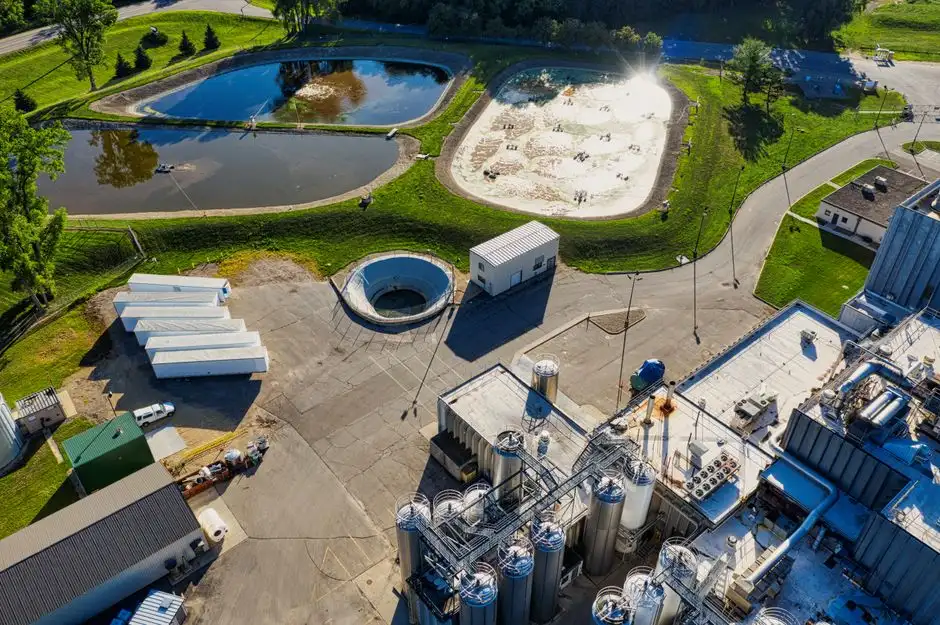
The 2026 process menu for Lucknow-scale projects starts with the same UASB vs FAB trade-off documented in the 2013 Tripathi & Singal study — treatability favours UASB, life-cycle impact favours FAB — so a developer who chooses either conventional reactor inherits the same engineering trade-off the city already lives with. The buried A/O package sewage treatment plant (WSZ series) is the small-to-mid decentralised option: a single buried A/O unit combining anoxic/aerobic contact oxidation with sedimentation and disinfection, fully automated, and rated 1–80 m³/h for residential communities, hotels, hospitals, factories, and rural areas (HydropureWater product catalog). The MBR membrane bioreactor system handles 10–2,000 m³/day, uses submerged PVDF membrane filtration to deliver near-reuse effluent, and achieves a substantially smaller footprint than conventional systems (HydropureWater product catalog). For very small or rural Lucknow sites, the academic literature describes vermifiltration as efficient, viable, and requiring less expertise while remaining decentralised. Constructed wetland–microbial fuel cell integration appears in the academic record (IntechOpen, 2018) as a research concept, not a deployed Lucknow supplier offering. A useful reference for designers comparing buried systems is the underground sewage treatment system working principle walkthrough, and the MBR plant operation and maintenance guide for membrane-stage detail.
2026 Decision Framework: Which System Fits Your Lucknow Project
Match the project to the process by flow band, effluent target, and O&M model. Small residential societies, hotels under ~50 rooms, and rural sites generating under 20 m³/h of true domestic-strength sewage sit squarely in the WSZ buried A/O range (1–80 m³/h) — below-grade siting keeps the site layout intact, the fully automated control philosophy removes the daily operator, and CAPEX scales linearly with flow. Hospitals, campuses, and small townships in the 20–200 m³/h band with reuse targets — flushing, gardening, or cooling tower make-up — justify the MBR membrane bioreactor system (10–2,000 m³/day) because submerged PVDF membrane filtration produces near-reuse effluent at a footprint that conventional activated sludge cannot match. Cluster-scale or municipal flows above 200 m³/h default to UASB or FAB, repeating the same treatability-vs-life-cycle trade-off Tripathi & Singal documented for Lucknow in 2013. For every decentralised plant, apply the 2013 dilution lesson: design on true domestic-strength BOD/COD/TSS, not on diluted municipal composite values, and include upstream grit removal and fine screening to protect both biological stages and downstream membrane modules. A useful cross-city benchmark is the domestic sewage treatment in Ahmedabad guide, which applies the same selection logic to a different trunk-network context.
| Project type | Typical flow band | Recommended process | Key reason |
|---|---|---|---|
| Small residential society, small hotel, rural site | < 20 m³/h | WSZ buried A/O package (1–80 m³/h) | Low O&M, below-grade, no operator |
| Hospital, campus, township with reuse | 20–200 m³/h | MBR membrane bioreactor (10–2,000 m³/day) | Near-reuse effluent, small footprint |
| Cluster / municipal scale | > 200 m³/h | UASB or FAB | Same treatability vs LCA trade-off documented in 2013 |
The WSZ unit is the buried A/O package sewage treatment plant for the small-flow row, and the MBR system is the MBR membrane bioreactor system for the reuse row.
Compliance, CAPEX Drivers, and O&M for 2026 Lucknow Projects
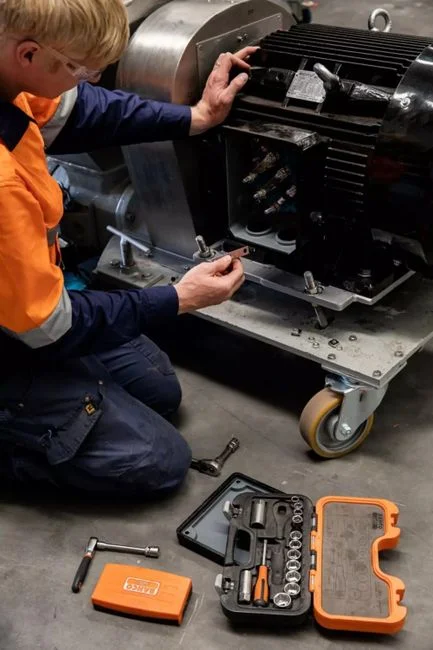
Any 2026 Lucknow project sits under UPPCB consent and the SBM/AMRUT sewerage framework, so the first buyer move is to request the supplier's consent-ready design hydraulic load, target effluent quality, and the documents that demonstrate alignment with the applicable consent conditions. CAPEX comparison should be done line by line across civil and buried works, bioreactor and membrane modules, screening headworks, disinfection, and sludge dewatering; a rotary mechanical bar screen, a plate-frame filter press, a chlorine dioxide generator, and a UV steriliser each map to a defined stage in the treatment train and should be quoted separately so the buyer can compare like-for-like. OPEX is dominated by aeration power, membrane scour air, periodic membrane replacement, sludge handling, and operator attention — the WSZ series' fully automated, no-operator-required design is the relevant differentiator for sites where skilled O&M staff are scarce (HydropureWater product catalog). Vermifiltration literature explicitly cites lower expertise and decentralised operation as advantages (IntechOpen, 2018), which a Lucknow buyer with limited O&M capacity should weigh against conventional plant footprint and discharge compliance. The rotary mechanical bar screen protects downstream stages, the plate-frame filter press handles sludge dewatering, the chlorine dioxide generator covers disinfection, and the UV steriliser covers the polishing step.
Frequently Asked Questions
What is the realistic CAPEX range for a domestic STP in Lucknow in 2026?
The research does not include 2026 Lucknow CAPEX figures, so no quotation can be stated. A buyer should request a line-itemised quote covering civil and buried works, bioreactor and membrane modules, screening headworks, disinfection, and sludge dewatering, then compare bids on the same line items against the WSZ 1–80 m³/h or MBR 10–2,000 m³/day flow band that matches the project's design load.
How do I choose between a WSZ buried A/O package and an MBR system for a Lucknow residential society?
Use effluent target as the deciding question. If the society only needs compliant discharge to the municipal sewer or an on-site soak pit, the WSZ buried A/O package (1–80 m³/h, fully automated, no operator) is the lower-OPEX fit. If the project specifies reuse for flushing, gardening, or cooling tower make-up, step up to the MBR membrane bioreactor system (10–2,000 m³/day) for its near-reuse effluent and small footprint, accepting higher membrane OPEX in exchange.
What influent values should I design for, given the dilution problem documented in Lucknow's trunk network?
Design on true domestic-strength sewage, not the diluted composite that the 2013 Tripathi & Singal study showed reaching Lucknow's 345 MLD UASB and 56 MLD FAB. Confirm BOD, COD, and TSS at the point of discharge for the specific project, and add upstream grit removal and fine screening to stabilise feed to the biological and membrane stages.
Which compliance documents should I require from a Lucknow STP supplier before placing an order?
Ask for the supplier's UPPCB consent-ready design hydraulic load, target effluent quality against the project's consent conditions, an O&M manual covering the WSZ or MBR scope, and a spare-parts schedule for membrane modules, aeration blowers, and the screening headworks. The SBM/AMRUT framework governs the broader sewerage context, so confirm alignment with the applicable central/state scheme requirements before finalising the procurement order.