The 2026 Regulatory Stack for F&B Discharges Near Luana
Food and beverage plants near Luana, Iowa meet 2026 sewer pretreatment limits by stacking three regulatory layers — the EPA National Pretreatment Program at 40 CFR 403, the F&B categorical standards at 40 CFR 405 (Dairy), 406 (Grain Mills), 407 (Canned Fruits & Vegetables), 408 (Canned Seafood), and 409 (Meat Products), and the local POTW discharge permit — and by running a six-stage train: screening, equalization (6–24 h HRT), dissolved air flotation, biological treatment (8–24 h conventional or 4–10 h MBR), chemical phosphorus precipitation (50–250 mg/L alum), and disinfection, with a typical 25–50 mg/L O&G and 50–100 mg/L TSS DAF effluent polishing into <30 mg/L BOD and <5 mg/L TSS biological effluent.
40 CFR 403 is the federal framework. It defines pass-through at 40 CFR 403.3(p) and interference at 40 CFR 403.3(k), and it delegates enforcement to local POTWs that act as control authorities with the power to issue permits, sample manholes, and levy civil penalties (per EPA, NPDES Pretreatment Standards and Requirements — Local Limits). On top of 40 CFR 403 sit the F&B categorical subparts, which set the numerical floor: 40 CFR 405 (Dairy Products), 406 (Grain Mills), 407 (Canned and Preserved Fruits and Vegetables), 408 (Canned and Preserved Seafood), and 409 (Meat Products). Plants with co-located rendering or hide processing also fall under adjacent 40 CFR 410 (Tanning). For a Luana dairy, meat, grain, or canning operation, the categorical subpart is the first line to read in the basis-of-design memo.
The third layer is the site-specific POTW permit, and this is where Luana-area plants most often get caught. The receiving POTW in this part of northeast Iowa sits inside the regional service area administered by an entity such as the Upper Explorerland regional planning commission, with Iowa DNR retaining state oversight authority. Iowa DNR's NPDES delegation operates on the same federal/state/POTW structure used in other delegated states, but the local limits — especially the headworks total-phosphorus ceiling near 1 mg/L — are tighter than the federal categorical floor for most food subparts. The controlling design rule is therefore dual: hit the categorical floor under 40 CFR 405–409 and hit the local ceiling, because the local permit is the enforceable document at the end of the pipe.
What the Categorical Standards and Local Limits Actually Require
The table below is the single most useful reference a Luana design engineer can put in front of a control authority. It places the 40 CFR 405–409 categorical floors next to the typical local POTW ceilings the engineer will actually have to hit on the day of a manhole sample. Numbers are engineering bands drawn from the categorical subparts and from typical Iowa-DNR-delegated local limits published in regional POTW sewer-use ordinances; site-specific permits may be tighter.
| Parameter | 40 CFR 405–409 categorical floor (F&B subparts) | Typical 2026 local POTW ceiling (Iowa-DNR-delegated) |
|---|---|---|
| BOD (mg/L) | 150–500 daily maximum, subpart-dependent (40 CFR 405, 407, 409) | 250–500 (permit-dependent) |
| TSS (mg/L) | 150–400 daily maximum | 200–400 |
| FOG / O&G (mg/L) | 50–150 daily maximum, with 40 CFR 409 (meat) among the strictest | 50–100; 25–50 achievable with DAF polish |
| pH | 6.0–9.0 standard range across all subparts | 6.0–9.0 (continuous) |
| Total phosphorus as P (mg/L) | No numeric floor in most F&B subparts; case-by-case BMP | 0.5–1.0 mg/L at the headworks |
| Temperature | Site-specific narrative limit | ≤ 40 °C at the POTW connection (typical) |
Raw wastewater from a Luana dairy or meat plant runs 1,000–10,000 mg/L BOD and several thousand mg/L FOG in fryer, stickwater, and rendering streams. To get from that raw profile to the table above requires roughly two logs of BOD removal, one log of TSS removal, and two to three logs of FOG removal — which is why a six-stage train exists. Total phosphorus in cereal, dairy, and meat wastewaters commonly runs 10–100 mg/L as P, well above the ~1 mg/L ceiling most delegated POTWs now apply at the headworks. The 2024 Nature Food analysis (Springer / Nature Food, 2024) concluded that US food loss and waste policy alone cannot meet the federal target of 74 kg per capita by 2030, with state-level diversion potential of only 5–14 kg per capita — which translates at the manhole as more organic mass reaching collection systems in 2026 and tighter scrutiny on high-strength F&B discharges. Pass-through and interference remain the two legal triggers: pass-through is a discharge that exits the POTW in concentrations that cause a violation of the receiving POTW's NPDES permit, while interference is a discharge that disrupts the POTW, its treatment processes, or its sludge handling (per 40 CFR 403.3(p) and 403.3(k)).
The Six Pollutants That Drive Every Luana F&B Design Basis
Six parameters govern almost every F&B pretreatment design basis for plants in northeast Iowa, in roughly the order the categorical standards and local permits treat them: BOD/COD, TSS, FOG, total phosphorus, pH, and temperature. Typical raw wastewater from dairy and meat processing runs 1,000–10,000 mg/L BOD, with FOG concentrations reaching several thousand mg/L in fryer, rendering, and stickwater streams — the kind of profile that passes through an under-sized DAF and shuts down a municipal trickling filter inside one shift. Total phosphorus in cereal, dairy, and meat wastewaters commonly falls between 10 and 100 mg/L as P, more than ten times the headworks ceiling most delegated POTWs now enforce.
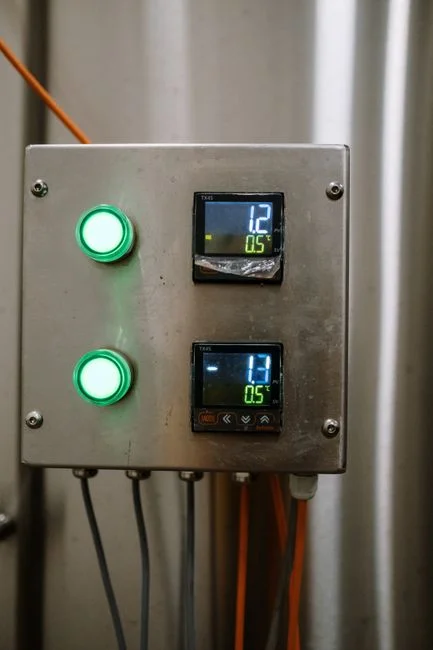
pH and temperature look uneventful on a 24-hour composite report, but they are the parameters that most often trigger an enforcement letter. CIP and cooking excursions routinely drive pH outside the 6.0–9.0 band and temperatures above 40 °C; if those excursions reach the biological stage, nitrification collapses and recovery takes days. The mapping is mechanical: DAF targets FOG and a fraction of TSS; biological targets BOD and a portion of TP through luxury uptake; chemical precipitation targets the residual TP; the EQ basin targets pH and temperature spikes before they reach anything alive. Get the EQ sizing wrong and no downstream optimization recovers the basis.
The Defensible 2026 Pretreatment Train, Stage by Stage
The defensible 2026 F&B pretreatment train for a Luana plant runs screening → equalization → DAF → biological → chemical precipitation → final polishing/disinfection, in that order. Each stage is justified by a specific pollutant and a measurable performance band, which is what a control authority expects in a basis-of-design submittal.
| Stage | HRT / loading | Key operating parameter | Effluent band at stage exit |
|---|---|---|---|
| Screening (rotary mech bar screen) | — | 1–3 mm aperture, GX-series duty | Rags, plastics, fibrous debris removed |
| Equalization | 6–24 h HRT | Mixing, pH/temperature trim | pH 6.0–9.0; T < 40 °C; damped CIP surge |
| DAF | Surface loading 4–25 m/h; air-to-solids 0.005–0.02; recycle 20–40% of forward flow | Coagulant/flocculant conditioning | O&G 25–50 mg/L; TSS 50–100 mg/L |
| Biological (CAS or MBR) | 8–24 h HRT (CAS) or 4–10 h HRT (MBR) | MLSS 3,000–5,000 (CAS) or 8,000–12,000 mg/L (MBR); DO 1.5–2.5 mg/L for nitrification | BOD < 30 mg/L; TSS < 5 mg/L (MBR) |
| Chemical P precipitation | 10–30 min flash mix + floc | Alum 50–250 mg/L or FeCl₃ 30–150 mg/L, PLC-proportional | TP 0.5–1.0 mg/L |
| Disinfection / polish | — | ClO₂ residual 0.1–0.5 mg/L or UV | Final pH 6.0–9.0; coliform within permit |
Screening is unglamorous but mandatory: a GX-series rotary mechanical bar screen at 1–3 mm aperture protects downstream pumps and biological reactors from the rags, plastics, and fibrous debris that show up in every F&B stream. Equalization at 6–24 h HRT absorbs a typical 4-hour CIP surge and dampens pH and temperature swings before the flow hits DAF or biology. A HydropureWater DAF system sized at 4–25 m/h surface loading with an air-to-solids ratio of 0.005–0.02 and 20–40% recycle of forward flow reliably drives dairy at 3,000 mg/L FOG to a conservative O&G and pushes meat rendering at 10,000+ mg/L FOG toward the high-recycle, long-retention end of the design range.
Biological treatment is sized at 8–24 h HRT for conventional activated sludge or 4–10 h HRT for a HydropureWater MBR system, with MLSS held at 3,000–5,000 mg/L conventional and 8,000–12,000 mg/L for MBR; MBR effluent routinely lands below 30 mg/L BOD and 5 mg/L TSS. Chemical P precipitation is where the local headworks ceiling gets met: HydropureWater PLC-controlled chemical dosing of 50–250 mg/L alum or 30–150 mg/L ferric chloride, flow-proportional, cuts chemical consumption 10–20% versus manual feed by trimming dose to actual load, and polishes TP to 0.5–1.0 mg/L. Disinfection is closed out with a HydropureWater chlorine dioxide generator holding 0.1–0.5 mg/L ClO₂ residual, or UV where the permit disallows a chemical residual. For older plants that need extra solids margin, a HydropureWater high-efficiency sedimentation tank at 20–40 m/h surface loading is a low-footprint polish step that fits between chemical precipitation and disinfection without expanding the building footprint.
Sizing the Train for a Luana F&B Plant: The Four Inputs
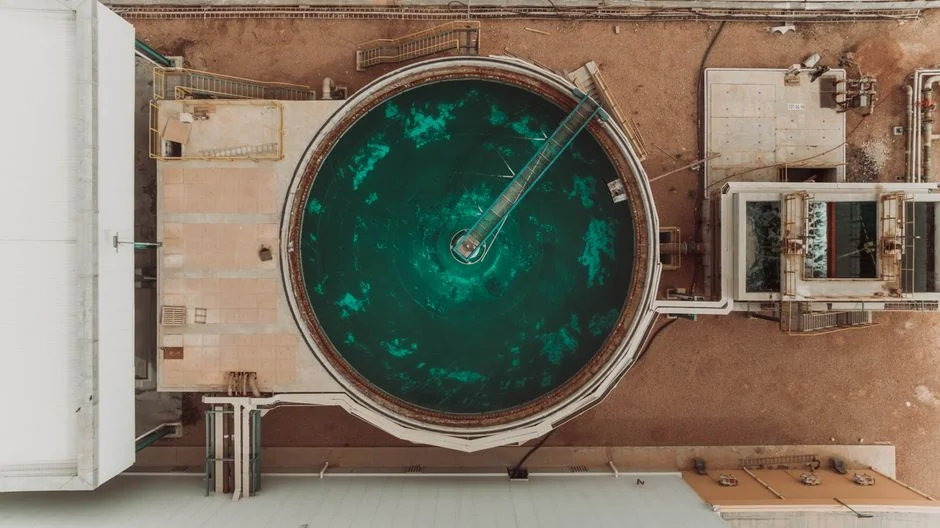
Four numbers drive every equipment selection on a Luana F&B basis-of-design memo: forward flow, peak-to-average ratio, raw BOD, and raw FOG. Forward flow and the peak-to-average ratio set the hydraulic sizing of the EQ basin and the DAF cell; raw BOD sets the biological HRT and MLSS target; raw FOG sets the DAF air-to-solids ratio and recycle rate. An engineer who cannot defend those four numbers in writing cannot defend the rest of the train.
The worked split is straightforward. A Luana dairy with 3,000 mg/L FOG in its waste stream sits at the conservative end of DAF design: surface loading around 10–15 m/h, recycle 20–25%, air-to-solids near 0.01, and a 4–6 hour DAF retention. A meat-rendering stream at 10,000+ mg/L FOG pushes the same DAF to the long-retention, high-recycle end: surface loading at the low end of 4–10 m/h, recycle 35–40%, air-to-solids toward 0.02, and a longer flotation zone. For biological sizing, raw BOD of 2,000–4,000 mg/L steers design toward 8–24 h HRT conventional activated sludge with 3,000–5,000 mg/L MLSS; raw BOD above 4,000 mg/L or a tight footprint usually justifies a HydropureWater DAF system plus MBR at 4–10 h HRT and 8,000–12,000 mg/L MLSS, with DO held at 1.5–2.5 mg/L where nitrification is required.
Sludge, Sampling, and the 2026 Reporting Stack
Designing the water side and forgetting the solids side is a 2026 design error. DAF skimmings combined with biological WAS dewater on a HydropureWater plate and frame filter press in the 1–500 m² area range to 22–28% dry matter — small enough to landfill or send to a digester without a second hauling contract. Solids handling capacity should be sized to roughly 30–60% of forward-flow mass load once DAF and biology are stabilized, or the sludge line becomes the new bottleneck on day 60.
On the sampling side, most F&B categorical permits require 24-hour composite sampling for BOD, TSS, FOG, and TP at frequencies ranging from monthly to quarterly, with continuous pH and flow monitoring for significant industrial users. The 2026 compliance stack is the SCADA event log, the eDMR submission, and the state noncompliance portal — Connecticut's RCSA Section 22a-430 electronic noncompliance notification is the cited parallel for what Iowa-area delegated POTWs now expect as the default. A passing sample is not enough; an unreported CIP excursion on a Saturday carries the same enforcement weight as a chronic violation, and any GX-series rotary mechanical bar screen upstream SCADA that cannot push compliant event data into state portals is now a compliance liability. If your team is still on manual logs, the upgrade path is documented in our sludge press equipment for food processing buyer's guide and the automatic samplers for wastewater buyer's guide.
Where Luana F&B Plants Most Often Fail the Headworks Test
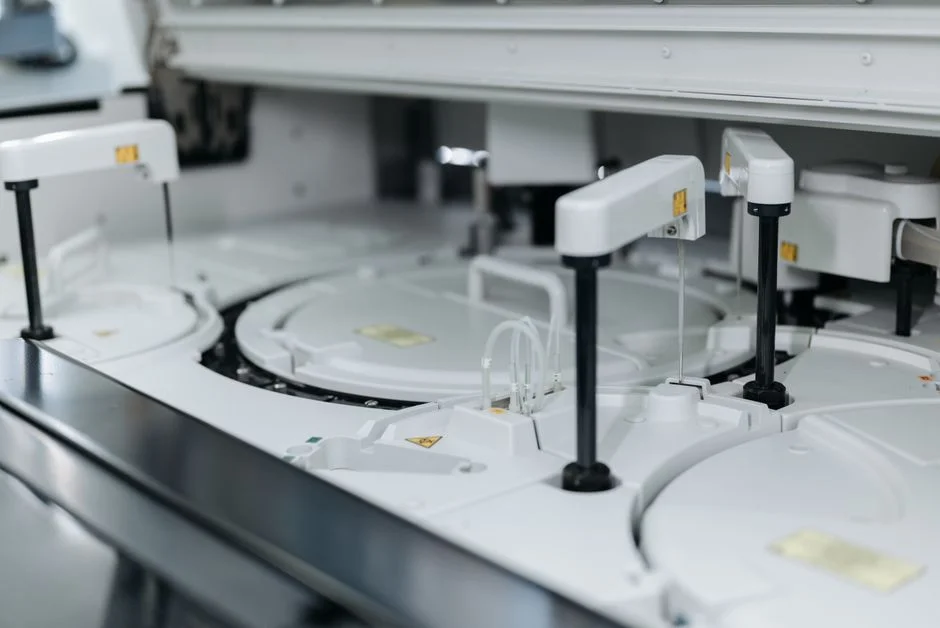
The five most common rejection reasons at the Iowa POTW headworks map directly to specific unit-process weaknesses, and the corrective action is usually one stage upstream of where the violation shows up. FOG pass-through points to under-dosed DAF coagulant or hydraulic overload on the flotation cell. pH excursions point to inadequate equalization or a failed trim loop. Hydraulic overload during a 4-hour CIP cycle points to an undersized EQ basin. Solids breakthrough on the TP limit points to poor flocculation control in chemical precipitation, not bad chemistry — residence time and mixing intensity are where the unit process is failing.
For older plants grandfathered on weaker permits that now need extra solids margin before the sewer, a HydropureWater high-efficiency sedimentation tank at 20–40 m/h surface loading is a low-footprint polish step that buys headroom without expanding the building. For tight TP permits driven by downstream TMDL work, the advanced phosphorus removal for TMDL effluent limits reference lays out the dose-response curves for alum, ferric chloride, and the emerging biopolymer coagulants that pair well with the existing biological reactor.
Frequently Asked Questions
Which federal subpart controls a Luana dairy discharging to a regional POTW?
40 CFR 405 (Dairy Products) is the categorical floor for BOD, TSS, FOG, and pH on a process-by-process basis, with a typical local ceiling of 250–500 mg/L BOD layered on top by the delegated POTW.
What HRT and mg/L bands define a defensible DAF stage in 2026?
Surface loading of 4–25 m/h, air-to-solids ratio of 0.005–0.02, and recycle of 20–40% of forward flow, producing 25–50 mg/L O&G and 50–100 mg/L TSS at the DAF outlet for dairy and meat waste streams.
Can a Luana F&B plant hit a 1 mg/L headworks TP limit with biological treatment alone?
No. Biological luxury uptake typically removes 5–15 mg/L of P; a downstream chemical precipitation stage dosing 50–250 mg/L of alum (or 30–150 mg/L of ferric chloride) is required to polish TP to 0.5–1.0 mg/L.
What is the 2026 reporting stack for a categorical F&B discharger in Iowa?
SCADA event log, eDMR submission to the delegated POTW, and the Iowa DNR noncompliance portal — Connecticut's RCSA Section 22a-430 is the structural parallel most delegated POTWs now expect as the default.
What biological reactor sizing fits a Luana meat-rendering stream at 10,000+ mg/L FOG?
An MBR at 4–10 h HRT with 8,000–12,000 mg/L MLSS and DO held at 1.5–2.5 mg/L is the typical defensible band, with DAF upstream running at 35–40% recycle and an air-to-solids ratio toward 0.02.