
Why Net Zero Starts at the Sewage Treatment Plant
Indian municipal water boards pursuing net zero in 2026 should treat energy neutrality as the first milestone — matching the EU Urban Wastewater Treatment Directive's 2045 target and the sequencing in Nature Water's 2024 net-zero review. Wastewater treatment is responsible for a relatively small share of global CO₂ but is one of the largest sources of methane and nitrous oxide, estimated at 6.9% and 8.1% respectively (US EPA, cited in Nature Water 2024). For a municipal water board, net zero means balancing three loops: plant energy (Scope 1+2), effluent reuse (offsetting freshwater pumping), and sludge-to-resource (biogas, cake, struvite). Carbon offsets sit downstream of these loops, not in place of them. Indian policy is pushing STPs in the same direction: SBM 2.0 funds reused-effluent infrastructure, Namami Gange Phase II retrofits under-performing STPs, and CPCB's reuse notification (2026) sets quality thresholds for gardening, cooling, and groundwater recharge. A chief engineer who wants to brief a general manager should lead with one sentence: net zero begins with energy and water balance, not with offsets.
What the IGBC Net Zero Water Rating Means for Municipal Utilities
The IGBC Net Zero Water Rating, launched in 2020, is a performance-based tool for buildings and built-environment projects that provides metrics applicable to municipal STPs. Two indicators drive certification: the Water Performance Ratio (WPR) — alternate water used divided by total water demand — and Water Back to Source (WBS), which credits returned water. Certification thresholds are WPR ≥ 0.75, or WPR ≥ 0.5 with WBS ≥ 0.75 (per IGBC). For a 50 MLD STP, map WPR to treated-effluent reused on-site or supplied to industrial/parks users, and map WBS to river or aquifer recharge meeting CPCB reuse norms. Certification is valid for 3 years, so any board that adopts this framework must plan recurring re-certification work and evidence trails. The current limitation is that IGBC rates buildings, not utilities, so the framework is directional. Boards that want a near-term credibility mark can still apply the WPR/WBS logic to a 1–5 MLD reused-effluent loop inside a campus, then scale the audit template to the full STP. A typical IGBC pilot project has shown 20–30% reduction in water consumption against national baselines, a useful internal KPI before formal certification.
The Five-Stage Equipment Upgrade Path for Indian Municipal STPs
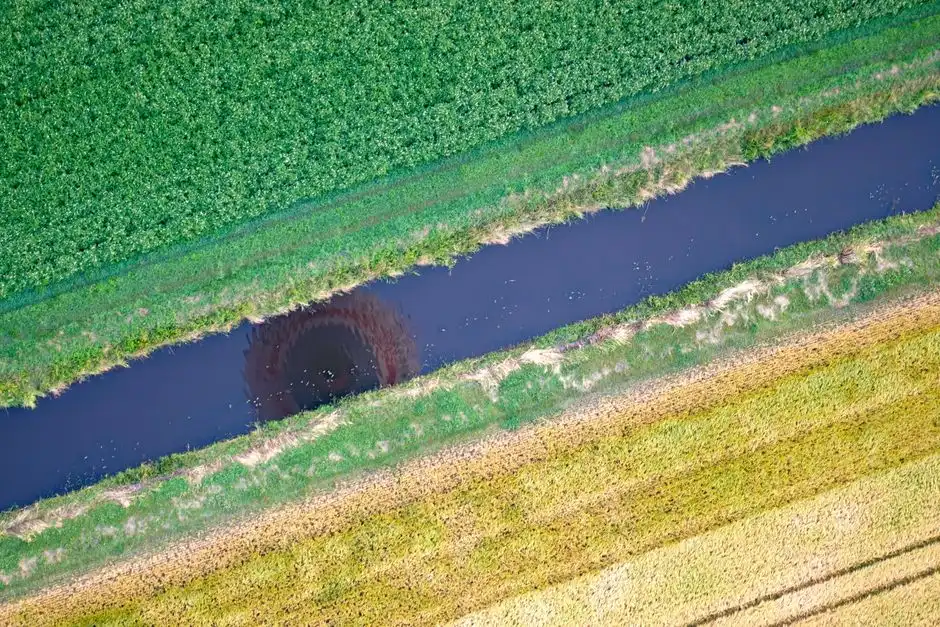
Most Indian STPs can move toward net zero through a sequenced five-stage upgrade. This framework provides a logical progression for facility improvements.
Stage 1 — Headworks. A rotary mechanical bar screen removes rags, plastics, and grit before they damage downstream equipment; 6 mm spacing is standard for Indian municipal duty with screenings loads of 0.02–0.05 m³ per MLD. This is the cheapest insurance in the plant.
Stage 2 — Primary clarification. A dissolved air flotation system or lamella clarifier drops TSS and FOG ahead of the biological step. DAF operates at hydraulic surface loadings of 20–40 m/h, roughly 10× a conventional primary clarifier, and cuts coagulant dose by 20–35% through air-flotated sludge blanket.
Stage 3 — Biological step. An MBR membrane bioreactor or SBR delivers near-reuse effluent; MBR's membrane cutoff of <1 μm typically achieves TSS < 5 mg/L and BOD < 5 mg/L. MBR footprint is 30–50% smaller than conventional activated sludge, which matters on space-constrained urban sites.
Stage 4 — Sludge and energy. A mesophilic anaerobic digester (35 °C, 15–20 day HRT) feeding a biogas-to-CHP unit typically recovers 20–35% of plant energy; surplus heat warms the digester. A plate and frame filter press dewaters the digestate to 22–28% dry solids for transport or co-processing.
Stage 5 — Disinfection and reuse. A UV sterilizer at 30–40 mJ/cm² handles chemical-free disinfection, while a chlorine dioxide generator provides residual protection for long distribution lines. Both feed reuse end-uses — gardening, toilet flushing, industrial cooling, and CPCB-compliant groundwater recharge.
Upgrade Technology Comparison: Capex, Payback, and Emissions Impact
The table below ranks the seven core upgrade technologies by qualitative capex band, typical payback, primary benefit, and India reference context. Exact capex varies with plant capacity, civil works, and tender terms.
| Technology | Indicative capex | Typical payback | Primary benefit | India reference |
|---|---|---|---|---|
| MBR retrofit | High | 5–8 yr | Reuse-quality effluent, small footprint | Used in Delhi, Bangalore recycle plants |
| SBR (sequencing batch reactor) | Medium | 4–7 yr | Lower energy than CAS, flexible operation | Common in SBM 2.0 small-town STPs |
| UASB + polishing | Low–Medium | 3–5 yr | Low energy, biogas byproduct | Standard under Namami Gange Phase II |
| DAF pretreatment | Medium | 3–5 yr | Reduces aeration load, FOG removal | Fits retrofit of overloaded primary tanks |
| Anaerobic digester + CHP | High | 6–10 yr | 20–35% plant energy recovery | Large STPs in Delhi, Hyderabad |
| UV disinfection | Low | 2–4 yr | Chemical-free, low O&M | Growing under CPCB reuse norms |
| ClO₂ disinfection | Low–Medium | 2–4 yr | Residual for long pipelines | Industrial reuse parks, cooling towers |
For a board chasing net zero, the highest-impact stack is MBR + anaerobic digester + CHP + UV or ClO₂. UASB + polishing is the lowest-capex path for towns under 20 MLD, but biogas utilization is the deciding factor for any net-zero claim.
Reading the International Roadmap: EU 2045, BIOFOS, and What India Can Skip
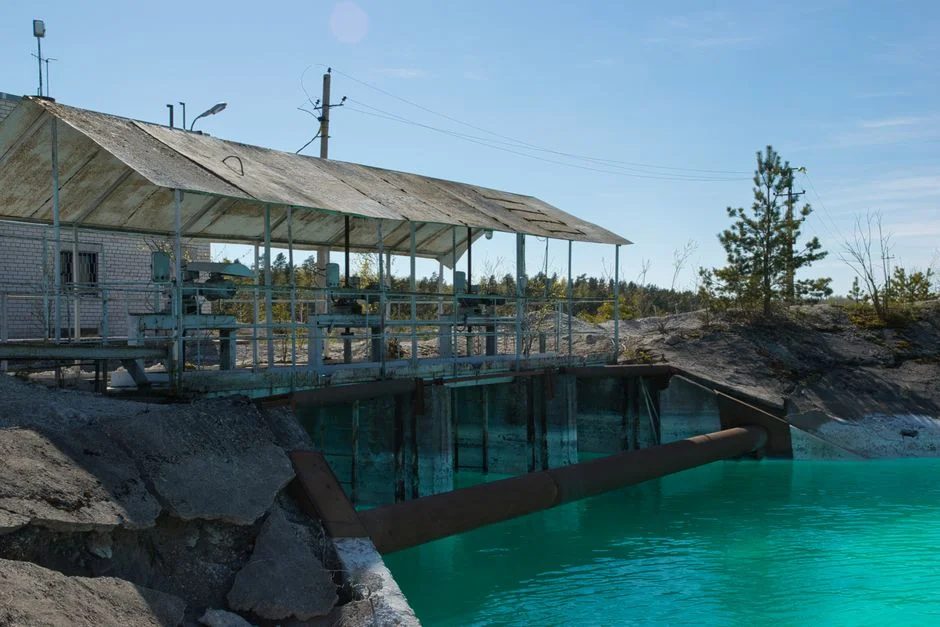
Two international benchmarks anchor the strategic case. The EU Urban Wastewater Treatment Directive sets a legal target of energy neutrality by 2045, and BIOFOS — operator of three major Copenhagen plants — achieved climate neutrality in September 2024, proving that large utility-scale plants can hit the target before 2045. Indian boards should adopt the EU sequencing logic rather than the specific deadline. The Nature Water 2024 review warns that Indian boards must broaden their reporting scope: currently, only direct treatment and purchased-energy emissions (Scope 1 and 2) are typically monitored. Value-chain emissions — sewer construction, chemical production, imported membranes — are often under-reported, which risks later restatement of net-zero claims. The practical response is to start a Scope 1 + 2 + partial-Scope 3 inventory in the audit phase, even if Scope 3 is reported separately for the first three years.
12–36 Month Action Plan for an Indian Municipal Water Board
This plan translates the framework into a phased capex schedule that aligns with SBM 2.0, AMRUT, Namami Gange Phase II, and state water-reuse windows.
- Months 0–6 — Audit and baseline. Run an energy and water audit; calculate a baseline WPR. Aeration is typically 50–60% of plant energy, so a blower audit is the first deliverable. File intent under SBM 2.0 or AMRUT 2.0.
- Months 6–18 — Phase 1 equipment. Headworks upgrade, DAF or lamella clarifier, VFDs on blowers, automatic chemical dosing. This provides the lowest capex and fastest payback.
- Months 12–30 — Phase 2 biological and reuse. MBR or SBR retrofit; UV or ClO₂ disinfection; SCADA with emissions and reuse telemetry. Tie to CPCB reuse-notification compliance.
- Months 18–36 — Phase 3 energy recovery and certification. Anaerobic digester with biogas-to-CHP, plate-and-frame dewatering, formal IGBC-style WPR audit, state water-reuse accreditation.
Phase the capex to match funding cycles: SBM 2.0 RFP windows typically open Q1 each year, Namami Gange Phase II tenders are batched, and state pollution control boards clear reuse proposals quarterly. A board that submits the audit in month 4 can usually commission Phase 1 by month 18 and reach energy neutrality on the headworks-plus-biological stack before month 30.
Frequently Asked Questions
What is the first step an Indian municipal water board should take toward net zero in 2026?
Run an energy and water audit and calculate a baseline Water Performance Ratio (WPR). Aeration alone is 50–60% of plant energy, so a blower and aeration-tank audit is the highest-value starting point before any equipment is procured.
Which upgrade gives the fastest payback for an Indian municipal STP?
UV or chlorine dioxide disinfection typically pays back in 2–4 years by eliminating chemical handling and enabling reuse revenue. A UV sterilizer is the lowest-capex, fastest-payback item on most retrofit lists.
How does the IGBC Net Zero Water Rating apply to a municipal STP?
IGBC's WPR ≥ 0.75 threshold (or WPR ≥ 0.5 with WBS ≥ 0.75) was designed for buildings, but the metrics map directly: WPR equals treated effluent reused, and WBS equals river or aquifer recharge meeting CPCB norms. Certification is valid for 3 years, so plan for recurring re-certification.
What is the biggest hidden risk in a municipal net-zero claim?
Under-reporting value-chain emissions. The Nature Water 2024 review notes that only direct treatment and purchased-energy emissions are typically monitored, so sewer construction, chemical production, and imported membrane manufacturing are usually omitted. Boards should adopt a Scope 1+2+partial-Scope 3 inventory from the audit phase to avoid restatement later.
Which funding windows support an STP upgrade in India in 2026?
SBM 2.0 (rural and small-town sanitation), Namami Gange Phase II (Ganga basin STPs), AMRUT 2.0 (urban water supply and reuse), and state pollution control board reuse grants. Align Phase 1 tenders to SBM 2.0 Q1 windows and Phase 3 digester-CHP packages to Namami Gange batched tenders for the best cost-recovery outcome.