Why Chemical Sludge Is the Industrial Plant's Most Expensive Waste Stream
Chemical sludge reduction in industrial wastewater is best solved through a four-level hierarchy: prevent sludge at the source (chemical substitution, water reuse), condition it (polymer flocculation, lime or Fenton pretreatment), dewater it (filter press or centrifuge to ~20-25% dry solids from 1-4% raw), and — only for recalcitrant residues — apply advanced oxidation (Electro-Fenton) to mineralize the organics. Combined, these steps typically cut sludge volume 60-80% and disposal tonnage 4-5 fold.
Chemical sludge is not biological sludge. It originates from coagulation-precipitation with FeCl3, alum, or lime; from dissolved air flotation (DAF) float laden with oils and emulsified solids; from ion-exchange regeneration brines; and from electrochemical cells that plate out metals as hydroxides. Per DAF vs. clarifier for chemicals wastewater guide field data, these streams carry heavy metals, oil-laden flocs, and inorganic colloids that resist biological treatment and will pass through an activated-sludge plant largely unchanged. Treating chemical sludge as if it were biosolids is the most common reason a CAPEX request fails to deliver the expected volume cut.
The water-content problem is the cost problem. Raw chemical sludge typically contains 1-4% solids, meaning a plant producing 100 m3/day of waste is hauling away 96-99% water at full disposal rates (Penn State Extension, 2024). To put the magnitude in context, Pennsylvania's publicly owned treatment works (POTWs) generate roughly 300,000 tons of sewage sludge (dry-weight basis) per year (Penn State Extension, 2024) — and industrial chemical streams routinely match or exceed that loading on a per-site basis. At US/EU disposal rates of $50-$200/ton (HydropureWater field data, 2026), every point of dry solids recovered in dewatering is worth roughly $40-$160/ton of avoided haulage. That number is the financial anchor for the rest of this article.
The Four-Level Sludge Reduction Hierarchy: Prevent, Condition, Dewater, Oxidize
Stop treating sludge as a hauling problem. Treat it as a four-level hierarchy: prevent it, condition it, dewater it, and only then — if a recalcitrant residue remains — oxidize it. Each level has a different cost profile, a different equipment footprint, and a different place in the process flow, and the cheapest lever is almost always the one furthest upstream.
Level 1 — Source control. Switch to higher-activity coagulants, recover and reuse clarified water, segregate incompatible waste streams, and substitute metal salts with polymers where the effluent allows. Level 1 typically carries the lowest CAPEX and the shortest payback because it removes sludge before it is ever generated. Operators who skip Level 1 and buy a larger dewatering press are paying to remove water they did not need to add in the first place.
Level 2 — Conditioning. Add 2-8 kg of cationic polymer per ton of dry solids to build 2-5 mm flocs, or dose lime to pH 12 for ~2 hours to stabilize biological fractions (Penn State Extension, 2024). Thermal pre-treatment at 60-90 °C breaks water binding and releases intracellular and bound water ahead of mechanical dewatering. Conditioning does not reduce mass on its own, but it sets the cake dryness that the next level can reach.
Level 3 — Dewatering. Thicken to 5-6% solids, then mechanically dewater with a plate and frame filter press, belt press, or decanter centrifuge to ~20-25% cake (Penn State Extension, 2024; Fehr Graham, 2024). Level 3 is where 60-80% of the practical volume reduction happens, and the decanter centrifuge working principle guide explains why continuous machines win on oily DAF float while batch presses win on metal-hydroxide sludge.
Level 4 — Oxidation / mineralization. Apply Electro-Fenton or wet air oxidation to the small residual stream that still cannot be landfilled cheaply. Evidence from pharmaceutical wastewater work (IDOSI, 2019) shows 40-60% volatile-solids destruction in recalcitrant matrices, but reagent demand is 1.5-3.0 kg H2O2 per kg dry solids oxidized. Reserve Level 4 for hazardous or pharmaceutical residues where landfill is restricted or tipping fees exceed ~$300/ton.
Source Control Levers: How to Stop Making Sludge in the First Place
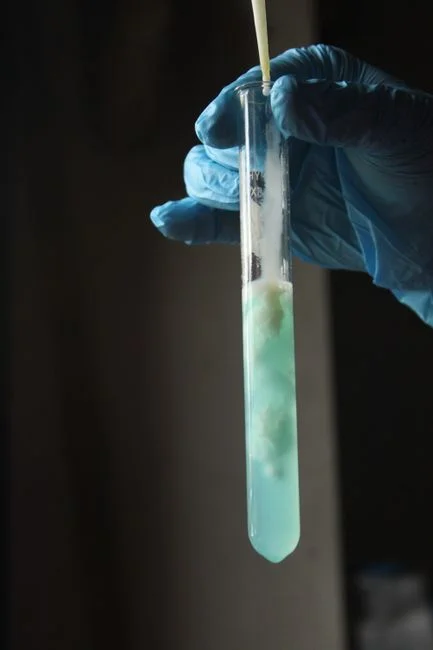
Source control delivers the largest unit-of-CAPEX volume cut because it prevents the water from ever becoming sludge. Most industrial sites leave 30-60% of their sludge-generating load on the table because they never look upstream of the clarifier (HydropureWater field data, 2026).
Chemical substitution. Replace FeCl3 and alum, which generate 2-4 kg of dry chemical sludge per kg of metal dosed, with polymer-only programs where influent allows. Typical polymer dose is 1-10 mg/L versus 50-300 mg/L for metal salts — a 30-100× reduction in coagulant mass and, by extension, a proportional cut in the metal-hydroxide sludge downstream. Where metal salts are unavoidable, an automatic chemical dosing system with feedback control typically cuts overdosing by 10-20%, which directly translates into less sludge (HydropureWater field data, 2026).
Water reuse and counter-current rinsing. In metal finishing, counter-current rinsing cascades reduce sludge-generating flow by 30-60% before the clarifier. The rinse water that never enters the treatment train never becomes sludge, never needs polymer, and never incurs a hauling charge. A reverse osmosis (RO) system or ultrafiltration (UF) system upstream of precipitation removes dissolved metals before they reach the precipitation step, and the permeate can be recycled to the process.
Stream segregation. Keep plating rinse water, oily DAF float, and biological effluent in separate streams so each is conditioned optimally rather than co-mingled. Co-mingling forces a one-size-fits-all polymer dose that is almost always wrong for at least one stream. A dissolved air flotation system dedicated to the oily sidestream and a separate high-efficiency sedimentation tank (lamella clarifier) for the metal-bearing stream typically outperforms a single combined clarifier by 15-25% on cake dryness at the press.
Conditioning and Dewatering: The 60-80% Volume Cut
Conditioning plus mechanical dewatering is where the bulk of the practical volume reduction is captured. The numbers below are the targets a process engineer should write into a P&ID before vendor selection.
Polymer conditioning. Dose 2-8 kg of cationic polymer per ton of dry solids, target floc size 2-5 mm, and aim for a capillary suction time (CST) reduction of 50-70%. Below 2 kg/ton DS, the cake will be wet and sticky; above 8 kg/ton DS, the polymer cost is wasted and the centrate or filtrate will carry re-dispersed fines. Jar tests with 4-6 candidate polymers across a 0.5-1.5× dose range are the only reliable way to set the operating point.
Lime dosing. Raising pH to 12 for 2 hours stabilizes biological sludge and eliminates most pathogens, but it does not reduce volume (Fehr Graham, 2024). Use lime only where the plant also needs pathogen control or vector attraction reduction; otherwise the dry-solids gain does not justify the reagent mass added.
Plate and frame filter press. Typical operating cycle 2-4 hours, achievable cake dryness 22-35% for chemical sludge and 18-25% for biological-chemical blends, with dry-solids capture above 95%. A plate and frame filter press is the workhorse for metal-finishing and chemical-plant hydroxide sludge because the high pressure (6-15 bar) and long cycle release bound water that a belt press cannot reach.
Decanter centrifuge. 18-28% cake dryness, continuous operation, small footprint, but polymer demand runs 10-20% higher than a press and the centrate typically carries 3-5% solids. The trade-off is throughput versus dryness; for an oily DAF float the centrifuge wins because the scroll conveys oil-laden flocs that would blind a filter cloth, and the decanter centrifuge working principle guide walks through the scroll differential settings that make this work.
Belt filter press. Lowest CAPEX of the three, but only 16-22% cake dryness and the highest polymer consumption per ton of dry solids. Belt presses earn their place on low-solubility, fibrous sludge where the belt can drain free water; for chemical hydroxide sludge they underperform a plate press by 4-8 percentage points of cake dryness, which compounds into 25-40% more disposal tonnage at the gate.
| Parameter | Plate & frame filter press | Decanter centrifuge | Belt filter press |
|---|---|---|---|
| Achievable cake dryness (chemical sludge) | 22-35% | 18-28% | 16-22% |
| Dry-solids capture | >95% | 92-97% | 90-95% |
| Polymer dose (kg/ton DS) | 2-6 | 4-8 | 5-10 |
| Operating mode | Batch, 2-4 h cycle | Continuous | Continuous |
| Best-fit waste | Metal hydroxide, chemical precipitation | Oily DAF float, biological-chemical blend | Fibrous, low-solubility sludge |
Advanced Oxidation for Recalcitrant Sludge Residue
Level 4 is a niche tool, not a default. Use it only when Levels 1-3 leave a residue that is hazardous, restricted from landfill, or expensive enough to tip the reagent math in your favor.
Electro-Fenton and UV-enhanced Electro-Fenton. The IDOSI 2019 study on pharmaceutical wastewater reported 40-60% volatile-solids reduction in recalcitrant matrices, with COD removals sufficient to push the residue below hazardous-waste thresholds in the test cases. Reagent demand runs 1.5-3.0 kg H2O2 per kg of dry solids oxidized, plus Fe2+ catalyst at 0.05-0.2 mol/L. At $0.80-$1.50/kg for 50% H2O2 (HydropureWater field data, 2026), the reagent OPEX alone is $1.20-$4.50/kg DS oxidized, before electricity, iron, and the safety footprint of a strong-oxidant skid.
Wet air oxidation. Operates at 180-220 °C and 20-80 bar, suitable for larger flows but with CAPEX an order of magnitude above Electro-Fenton. Choose wet air oxidation only for centralized treatment of a hazardous residue stream above ~5,000 kg DS/day, where the economy of scale absorbs the pressure-vessel cost.
When to skip Level 4. If disposal of a 20-25% cake costs less than ~$200/ton and the residue is non-hazardous, Level 4 is economically inferior to landfilling the dewatered cake. The Penn State Extension 2024 figure of "ash retains 10-20% of original volume" is the upper-bound reduction ceiling for any oxidation-plus-incineration chain — anything claiming higher volume destruction should be asked for the mass balance.
Process Comparison Matrix: Choosing the Right Combination
Use the matrix below as a one-page decision tool when you are sitting in front of a vendor. Every column is sized for a 5-15 m3/h sludge feed; rescale CAPEX roughly linearly outside that band.
| Process | Achievable cake / DS | CAPEX band (USD) | OPEX band (USD/yr) | Best-fit waste type |
|---|---|---|---|---|
| Belt filter press | 16-22% cake | $80,000-$200,000 | $15,000-$40,000 (polymer-heavy) | Fibrous, low-solubility biological sludge |
| Plate & frame filter press | 22-35% cake | $150,000-$400,000 | $20,000-$50,000 | Chemical precipitation, metal hydroxide, mixed chem-bio |
| Decanter centrifuge | 18-28% cake | $200,000-$500,000 | $30,000-$70,000 (energy + polymer) | Oily DAF float, continuous duty, abrasive sludge |
| Electro-Fenton (post-dewatering) | 40-60% VS destruction | $300,000-$800,000 skid | $80,000-$200,000 (H2O2 + Fe2+ + power) | Pharmaceutical / pesticide residue, hazardous landfill avoidance |
Rule of thumb: plate filter press for chemical precipitation sludge, centrifuge for continuous oily streams, Electro-Fenton for the residue that cannot be landfilled. A site that picks the wrong column usually pays for it in polymer OPEX, centrate clarity, or unnecessary reagent spend downstream.
ROI Mini-Example: 4,000 Ton/Year Raw Sludge, 12-Month Payback
The numbers below are sized for a mid-sized metal-finishing or chemical plant hauling 4,000 ton/year of raw sludge at 3% solids. Adjust feed concentration and hauling rate to match your site.
| Line item | Base case (no dewatering) | After plate filter press (22% cake) |
|---|---|---|
| Raw sludge volume | 4,000 ton/yr at 3% solids | 4,000 ton/yr at 3% solids |
| Dry solids produced | 120 ton DS/yr | 120 ton DS/yr (mass balance) |
| Disposal stream | 4,000 ton/yr wet sludge @ $80/ton | ~545 ton/yr cake @ $80/ton |
| Annual disposal cost | $320,000/yr | ~$43,600/yr |
| Annual polymer OPEX | — | $20,000-$50,000/yr (assume $35,000) |
| Net annual savings | — | ~$241,000/yr |
Plate press CAPEX for a 5-15 m3/h unit sits in the $150,000-$400,000 band (HydropureWater field data, 2026). At $241,000/yr net savings, simple payback lands in the 8-19 month range — comfortably inside the 12-24 month window that most plants require for a CAPEX release. Fehr Graham's 2024 framing applies directly: "lowering sludge volumes reduces the cost of pumping, storage, and disposal" — each of which is a line item you can put a number on.
Implementation Roadmap: From Audit to Commissioning in 90 Days
The roadmap below is a 90-day path from first sample to a running press, sized for a single site with one process engineer driving the project. Compress or expand each block to match your procurement cycle.
- Weeks 1-2 — Sludge audit. Quantify daily volume, % solids, metals, COD, current disposal route, and current $/ton. If the plant cannot produce these numbers from flow and haul tickets, the CAPEX request will not survive finance review.
- Weeks 3-6 — Bench-scale testing. Run jar tests across 4-6 candidate polymers, then a bench dewatering test on a filter-press leaf or a small centrifuge to confirm achievable cake dryness and polymer dose at site conditions.
- Weeks 7-10 — Equipment specification and bidding. Match cake dryness target and feed rate to a plate and frame filter press in the 1-500 m2 filtration-area range, finalize P&ID and site layout, and run a closed-bid vendor round.
- Weeks 11-12+ — Installation, commissioning, and training. If a further volume cut is required beyond mechanical dewatering, the next step is the sludge dryer installation and commissioning guide, which walks through thermal drying of the 20-25% cake to 60-90% dry solids.
Frequently Asked Questions
What is the maximum volume reduction achievable for chemical sludge?
Levels 1-3 of the hierarchy — source control, conditioning, and mechanical dewatering — routinely deliver 60-80% volume reduction and a 4-5× drop in disposal tonnage, taking raw sludge from 1-4% solids (Penn State Extension, 2024) to a 20-35% cake. Adding Level 4 oxidation plus incineration can push ash volume down to 10-20% of the original (Penn State Extension, 2024), but the reagent and energy cost only justifies that final step on hazardous or pharmaceutical residues.
Plate filter press, centrifuge, or belt press — which one fits chemical sludge?
For chemical precipitation and metal-hydroxide sludge, a plate and frame filter press is the workhorse: 22-35% cake, >95% solids capture, lowest polymer dose per ton of dry solids. A decanter centrifuge is preferred for continuous oily DAF float because the scroll conveys oil-laden flocs that would blind a filter cloth, at 18-28% cake. A belt press is the lowest-CAPEX option but typically loses 4-8 percentage points of cake dryness versus a plate press, which compounds into 25-40% more tonnage at the disposal gate.
How much does chemical sludge disposal cost per ton?
US/EU industrial disposal rates for chemical and hazardous sludge run $50-$200/ton for non-hazardous waste and above $300/ton for hazardous or pharmaceutical residues (HydropureWater field data, 2026). That is why a 60-80% volume cut at the press is the single largest line item a plant can move on its waste budget.
How is chemical sludge different from waste activated sludge?
Chemical sludge is produced by coagulation, precipitation, DAF float, or electrochemical processes and contains heavy-metal hydroxides, oil-laden flocs, and inorganic colloids that resist biological treatment. Waste activated sludge is biological — it is generated by a living biomass and is largely organic. They respond differently to conditioning: chemical sludge is best flocculated with high-molecular-weight cationic polymers, while biological sludge often benefits from polyacrylamide blends or anaerobic digestion upstream of the press.
When is Electro-Fenton sludge treatment worth the reagent cost?
Electro-Fenton is worth the 1.5-3.0 kg H2O2 per kg DS oxidized (IDOSI, 2019) only when the residue is hazardous, restricted from landfill, or carries a disposal cost above ~$300/ton. For non-hazardous chemical sludge that can be landfilled at 20-25% cake, the reagent cost of $1.20-$4.50/kg DS oxidized (HydropureWater field data, 2026) is rarely recovered against a $50-$200/ton hauling rate.