
Why Membrane Fouling Is the Bottleneck in Semiconductor Wastewater Reuse
Semiconductor wastewater carries four fouling modes that the upstream train must defeat before RO: particulate (silica fines, CaF2 carryover from fluoride precipitation, CMP slurry residues), organic (TMAH from photoresist developer, isopropanol, reclaim rinsewater surfactants), scaling (reactive silica polymerizing on the membrane, calcium phosphate, heavy-metal hydroxides), and biofouling (microbial consortia growing on feed spacer biofilm). Each mode follows a different diagnostic and a different unit operation, which is why "add more antiscalant" almost never fixes the underlying problem.
Fab streams are unusually aggressive. Semiconductor wastewater is characterized as highly turbid due to high solids content, with COD normally between 3,000 and 5,000 mg/L and particulates ranging from nano to micro-sized (Teow et al., 2022). That particle-size distribution is what makes flux decline steep on a polymeric UF or RO membrane that was specified for a municipal feed. A 2025 fab pilot documented in casework showed that inadequate fluoride and silica pretreatment led to "catastrophic RO membrane fouling," raising OPEX by 40% from weekly chemical cleanings and premature membrane replacement, an exposure of roughly $300,000 per year per affected line (HydropureWater field data, 2025-11).
Diagnosis starts with the right indices. SUVA and UV254 characterize the organic load (hydrophobic, humic-type material drives irreversible fouling). SDI and MFI characterize particulate and colloidal fouling potential. Zeta potential tells you whether colloids are stable (high absolute value) or destabilized (near 0 mV) and ready to be filtered. Operators who measure these before specifying equipment avoid buying a membrane they cannot keep clean.
| Fouling Mode | Fab-Specific Foulants | Diagnostic Index | Primary Pretreatment Lever |
|---|---|---|---|
| Particulate / colloidal | Silica fines, CaF2 carryover, CMP slurry | SDI, MFI0.45 | Coagulation + MF/UF |
| Organic | TMAH, IPA, reclaim rinsewater organics | SUVA, UV254 | AOP / biological, activated carbon |
| Scaling | Reactive silica, Ca2+, F-, copper-EDTA | Langelier Saturation Index, SiO2 saturation | Lime softening + antiscalant |
| Biofouling | Feed-spacer biofilm, SMP/EPS | ATP, TOC after biostable dosing | Biocide intermittent + biostable RO feed |
Pretreatment Indices Engineers Should Track Before RO
SDI and MFI are the two numbers an RO membrane manufacturer will ask for before honoring a warranty. SDI is a 15-minute, 30-psi pluggage test; MFI0.45 extrapolates cake formation at constant pressure and correlates better with long-term flux decline on UF-fed RO. RO membrane warranties are routinely voided above SDI 5, which means any pretreatment train that cannot reliably deliver SDI below 3 (ideally below 2) and MFI0.45 below 2 s/L2 is not finished (Tripathi & Mishra, 2026, integrated pretreatment review).
SUVA is the ratio of UV absorbance at 254 nm to dissolved organic carbon. Values above 4 L/mg·m indicate hydrophobic, humic-type organics that foul irreversibly; values below 2 indicate hydrophilic material that fouls more reversibly and is easier to clean. UV254 by itself is used to size AOP dose, since hydroxyl-radical demand scales with the absorbance baseline. Zeta potential near 0 mV (or matched to the coagulant charge) is the operational signal that colloids have been destabilized and will not redisperse after the backwash pulse (Tripathi & Mishra, 2026).
For fab engineers shortlisting equipment, a multi-media filter is the practical tool for hitting SDI targets on a back-grind or general service stream, while the RO system design parameters guide covers the downstream flux math that consumes these indices.
| Index | What It Measures | RO Feed Target | Failure Mode If Exceeded |
|---|---|---|---|
| SDI15 | Particulate pluggage at 30 psi / 15 min | < 3 (ideally < 2) | Warranty voided above 5 |
| MFI0.45 | Cake formation rate | < 2 s/L2 | Steady flux decline, more CIP |
| SUVA | Hydrophobic / aromatic organic fraction | < 3 L/mg·m for direct RO | Irreversible organic fouling |
| UV254 | Aromatic organic load | Site-specific; baseline for AOP dose | Under-sized AOP, RO throughput loss |
| Zeta potential | Colloidal stability | Near 0 mV post-coagulation | Colloids redisperse, SDI drifts up |
Stage-by-Stage Pretreatment Train for Fab Wastewater
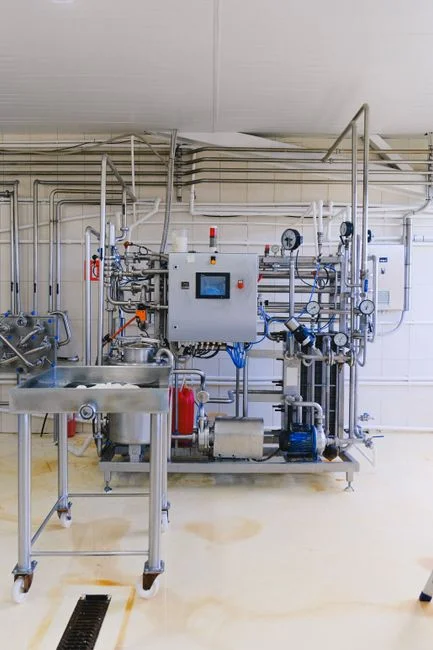
A defensible 2026 train runs in this order: equalization → coagulation/DAF → MF/UF → softening → antiscalant + 5 µm cartridge → RO. Each stage has a flux, TMP, and backwash or CIP window that should be written into the operating procedure, not discovered after commissioning.
Equalization. Hold 6–24 hours of HRT to dampen TMAH and COD spikes. TMAH concentrations in photoresist wastewater frequently exceed Taiwan EPA's 1 mg/L limit, triggering fines of up to $50,000 per month under 2025 enforcement data (HydropureWater field data, 2025-11). HRT smoothing is the cheapest insurance against that exposure.
Coagulation and DAF. Dose FeCl3, PACl, or alum to neutralize colloids; follow with a Dissolved Air Flotation (DAF) system when FOG from CMP is present. DAF is the right choice over lamella when the float load is high, in the 4–300 m³/h capacity class typical of fab side streams (Tripathi & Mishra, 2026).
MF/UF. Ceramic UF delivered 131.23–308.98 L/m²h permeate flux with the lowest relative flux reduction (8.22–57.59%) across DBGW, DCMPW, and CTW streams; PES spiral-wound polymeric UF still achieves 96–99% turbidity removal on fab reclamation (Teow et al., 2022). A hollow-fiber ultrafiltration system gives the operator backwash flexibility on the polishing stage.
Softening and antiscalant. Lime or weak-acid cation exchange drops hardness and reactive silica before RO. The 2025 fab pilot that originally suffered the $300K/year silica exposure fixed the problem by retuning antiscalant dosing and adding an intermediate softening step (HydropureWater field data, 2025-11). Pair softening with an automatic chemical dosing system for stable feed stoichiometry.
Cartridge and RO. A 5 µm cartridge guards the RO high-pressure pump. RO recovers 85–95% of rinse water for non-critical reuse; ceramic SiC flat-sheet pre-RO is used to reduce H2O2 to levels safe for downstream polyamide RO (Teow et al., 2022). The industrial RO system envelope covers that final barrier.
| Stage | Operating Window | Backwash / CIP Trigger | Target Output |
|---|---|---|---|
| Equalization | 6–24 h HRT | n/a | Damped TMAH, COD spikes |
| Coagulation / DAF | 10–80 g/m³ coagulant; 4–300 m³/h | Float scraper cycle | Turbidity < 5 NTU |
| Ceramic UF | 131–309 L/m²h; TMP 0.3–1.0 bar | TMP rise > 0.3 bar or 30–60 min | SDI < 3, turbidity < 0.2 NTU |
| Polymeric UF | 60–120 L/m²h; TMP 0.2–0.8 bar | Air-scour every 20–40 min | 96–99% turbidity removal |
| Lime softening | pH 10.0–10.5; Ca2+ < 20 mg/L | Sludge bed turnover | Reactive SiO2 < 20 mg/L |
| Antiscalant + cartridge | 1–5 mg/L dose; 5 µm absolute | ΔP > 1 bar | Stable saturation indices |
| RO | 85–95% recovery; 10–15 L/m²h flux | Quarterly CIP, normalized flux drop 10% | Rinse-grade reuse water |
Choosing UF Membrane Material: Ceramic vs Polymeric for Fouling-Prone Streams
Surface hydrophilicity is the single best predictor of UF fouling resistance in fab service. Membrane C (ceramic) had the smallest water contact angle at 51.5° ± 11.8°, the lowest relative flux reduction (8.22–57.59%), and the highest permeate flux (131.23–308.98 L/m²h) on DBGW, DCMPW, and CTW (Teow et al., 2022). Lower contact angle equals higher hydrophilicity, which equals weaker foulant adhesion and easier cleaning.
Polymeric UF still has a place. PES spiral-wound modules reach 96–99% turbidity removal at substantially lower CAPEX, which is defensible on back-grind waste or collection-tank waste where the foulant load is moderate and the operator can absorb a higher chemical cleaning frequency (Teow et al., 2022).
Durability tilts the decision further. Ceramic tolerates pH 0–14 and oxidizing agents including H2O2, which is the reason SiC flat-sheet pre-RO is used to knock down peroxide before polyamide RO (Teow et al., 2022). Polymeric UF cannot survive those conditions without rapid aging. A hybrid train, ceramic UF on DCMPW (heaviest solids) plus polymeric UF polishing for DBGW and CTW, is the configuration most 2026 fab pilots are converging on.
| Property | Ceramic UF | Polymeric UF (PES / PVDF) |
|---|---|---|
| Contact angle | 51.5° ± 11.8° (Membrane C) | Higher (less hydrophilic) |
| Permeate flux | 131.23–308.98 L/m²h | 60–120 L/m²h typical |
| Relative flux reduction | 8.22–57.59% | Higher under heavy solids |
| Chemical tolerance | pH 0–14; tolerant of H2O2 | pH 2–12; H2O2 limited |
| Turbidity removal | ≥ 99% on fab streams | 96–99% (Teow et al., 2022) |
| CAPEX vs. flux | Higher CAPEX, lower OPEX | Lower CAPEX, higher cleaning cost |
For engineers shortlisting equipment, the hollow-fiber ultrafiltration system product family covers both polymeric and ceramic configurations.
CIP and Backwash Chemistry That Actually Restores Flux
Cleaning recipes must match the dominant foulant, not the calendar. Alkaline CIP (NaOH at pH 11–12, 35–45 °C) recovered 96.93% of lost flux on DCMPW and 53.80% on DBGW, which makes it the default for organic- and silica-bound fouling (Teow et al., 2022). Acidic CIP (citric or nitric at pH 2–3) recovered 79.54% on CTW, the right call when metal-oxide and calcium scaling dominate.
Backwash on hollow-fiber UF should run 30–60 seconds every 20–40 minutes with air-scour, with the actual interval driven by TMP rise rather than a fixed clock. Trigger the backwash when TMP climbs 0.2–0.3 bar from clean-water baseline; ignore the timer and the membrane will compact and lose recovery. For RO, the 2025 fab pilot that added intermediate softening and retuned antiscalant extended the cleaning interval from weekly to roughly quarterly (HydropureWater field data, 2025-11), which is the right target interval for an aggressively softened feed.
| Foulant Type | CIP Recipe | Temperature | Documented Flux Recovery |
|---|---|---|---|
| Organic / silica-bound (DCMPW) | NaOH, pH 11–12 | 35–45 °C | 96.93% (Teow et al., 2022) |
| Organic / silica-bound (DBGW) | NaOH, pH 11–12 | 35–45 °C | 53.80% (Teow et al., 2022) |
| Metal-oxide / Ca scaling (CTW) | Citric or nitric, pH 2–3 | 30–40 °C | 79.54% (Teow et al., 2022) |
| Biofilm (UF / RO) | NaOH + surfactant, pH 11; biocide soak | 35 °C | Site-specific; verify with ATP |
| RO after softening retrofit | Alkaline then acidic, quarterly | 30–35 °C | Normalized flux restored (HydropureWater 2025-11) |
Cost, Footprint and Risk: A Pretreatment Selection Framework
CAPEX for a full ZLD fab train at 10,000 m³/d runs about $41.7M per 1,000 m³/d, with roughly 60% in BNR/MBR, 20% in RO, and 20% in thermal evaporation and crystallization (HydropureWater 2025-11). Pretreatment sits inside the BNR/MBR plus RO envelope, so the right unit-operation choice has an outsized effect on the remaining 20% thermal load.
OPEX lands at $2.5–$3.5 per m³, dominated by energy at 50%, membrane replacement at 20%, labor at 15%, and chemicals at 10% (HydropureWater 2025-11). Flux stability is therefore a direct OPEX lever: every additional CIP cycle is labor, chemical, energy, and lost runtime. Equipment that maps to each stage of the train: a Dissolved Air Flotation (DAF) system or high-efficiency sedimentation tank for clarification, a multi-media filter for SDI polishing, a hollow-fiber ultrafiltration system for the UF barrier, an automatic chemical dosing system for stable coagulant and antiscalant feed, and an industrial RO system for the final barrier.
| Decision Criterion | DAF + Ceramic UF + RO | Lamella + Polymeric UF + RO |
|---|---|---|
| CAPEX (relative) | Higher (ceramic UF premium) | Lower (lamella, PES modules) |
| OPEX (relative) | Lower (fewer CIP, longer life) | Higher (more cleaning, more replacement) |
| Fouling resistance | High (contact angle 51.5°) | Moderate |
| Chemical demand | Lower per m³ (less cleaning) | Higher per m³ (more frequent CIP) |
| Footprint | Compact per m² of flux | Larger settling footprint |
| Best fit | DCMPW-heavy, FOG-laden streams | DBGW, CTW, lower-solids polishing |
Frequently Asked Questions
What SDI should the RO feed hit to keep the membrane warranty valid?
RO manufacturers routinely void warranties above SDI 5, so a 2026 pretreatment train should be specified to deliver SDI below 3 and ideally below 2, with MFI0.45 below 2 s/L2 as a parallel target (Tripathi & Mishra, 2026).
Should a fab use ceramic or polymeric UF as the RO pretreatment?
Use ceramic UF on heavy-solids DCMPW streams where the lowest contact angle (51.5° ± 11.8°) and the 8.22–57.59% relative flux reduction deliver the lowest OPEX; use polymeric PES UF for back-grind or collection-tank polishing where 96–99% turbidity removal is sufficient and CAPEX is constrained (Teow et al., 2022).
Why is silica pretreatment non-optional for a fab RO train?
Reactive silica polymerizes on polyamide RO membranes and cannot be removed by standard antiscalant alone; a 2025 fab pilot showed that without intermediate softening and antiscalant retuning, weekly cleanings drove roughly $300,000 per year in unplanned membrane replacement per line (HydropureWater field data, 2025-11).
How often should the RO run a CIP cycle in a properly designed fab train?
With softening, tuned antiscalant, and stable SDI below 3, a quarterly CIP interval is the realistic target; the 2025 fab pilot moved from weekly to roughly quarterly cleaning after the softening retrofit (HydropureWater field data, 2025-11).
What does a defensible fab pretreatment CAPEX and OPEX look like in 2026?
For a 10,000 m³/d ZLD train, total CAPEX is approximately $41.7M per 1,000 m³/d and OPEX is $2.5–$3.5 per m³, with energy at 50%, membrane replacement at 20%, labor at 15%, and chemicals at 10% (HydropureWater field data, 2025-11). Engineers can extend the math into the next layer using the nanofiltration system design guide and the RO system design parameters guide.